Skip to content

In power electronics, few buying decisions are as common—or as misunderstood—as the choice between a switching power supply and a modular power supply. Many buyers assume they are interchangeable because both are designed to convert unstable input power into clean, regulated output. In reality, they solve different engineering problems, and selecting the wrong type can increase system cost, create thermal issues, complicate installation, or reduce long-term reliability.
As industrial automation, smart manufacturing, telecommunications, and embedded electronics continue to evolve in 2026, power system requirements are becoming more demanding. Customers now expect smaller equipment, higher efficiency, wider operating temperatures, lower standby losses, and faster product development cycles. That means choosing the correct power architecture is no longer a minor technical decision—it directly affects competitiveness.
So which option is right for your project? Should you use a centralized enclosed switching power supply, or a compact PCB-mounted module? This guide explains the real differences, practical advantages, and best use cases for each solution, helping OEM buyers, engineers, and distributors make informed decisions.
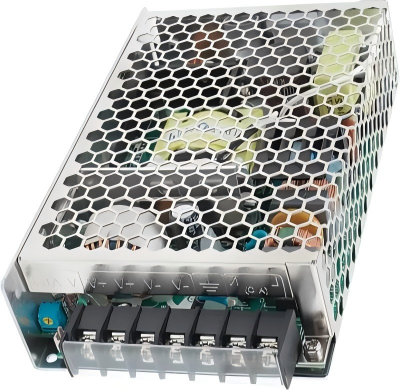
What Is a Switching Power Supply?
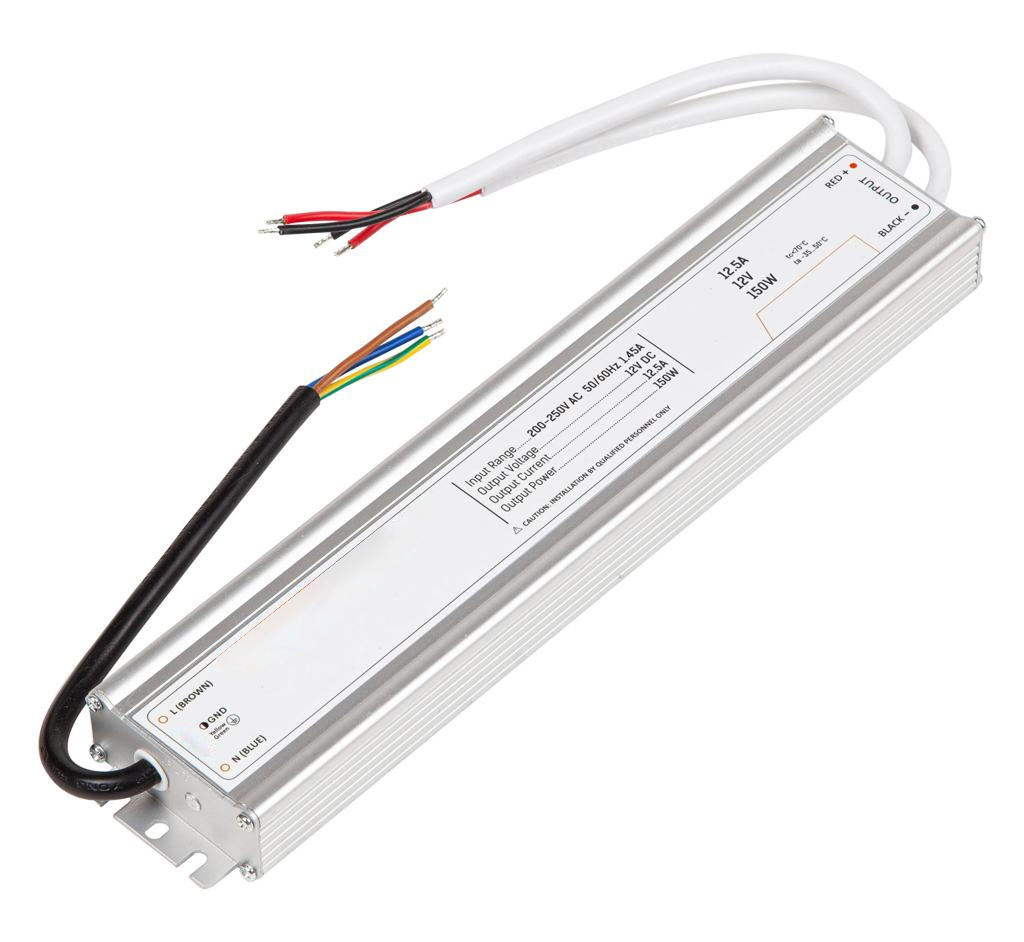
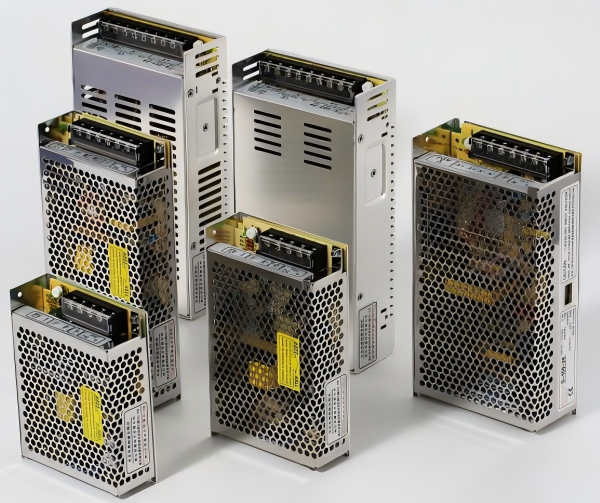
A switching power supply, often referred to as an SMPS, uses high-frequency switching technology to convert electrical energy efficiently. Instead of dissipating excess energy as heat like traditional linear power supplies, it rapidly switches transistors on and off, stores energy magnetically, and regulates output through feedback control circuits.
This design allows switching power supplies to achieve high efficiency while remaining relatively compact. Today they are the dominant power solution in industrial systems, LED lighting, communication cabinets, security equipment, CNC machines, battery charging systems, and many other commercial applications.
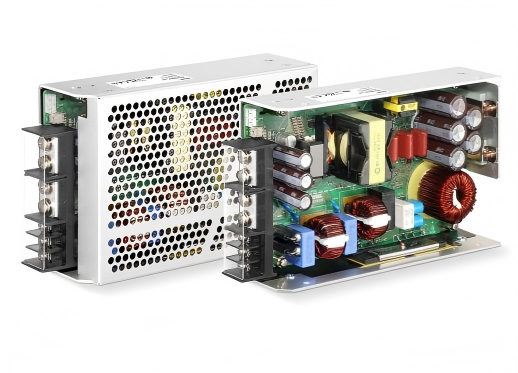
A modern industrial switching power supply from SIPURUI may include wide input voltage ranges such as 85–264VAC, overload protection, overvoltage protection, short-circuit recovery, high isolation strength, and fanless cooling designs for silent operation.
The reason these products remain so popular is simple: they deliver reliable medium-to-high power output at an attractive cost per watt.
What Is a Modular Power Supply?
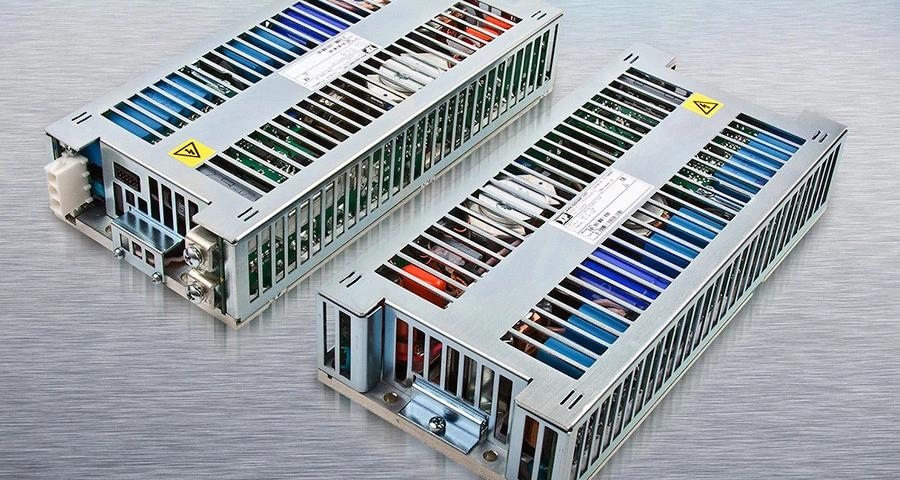
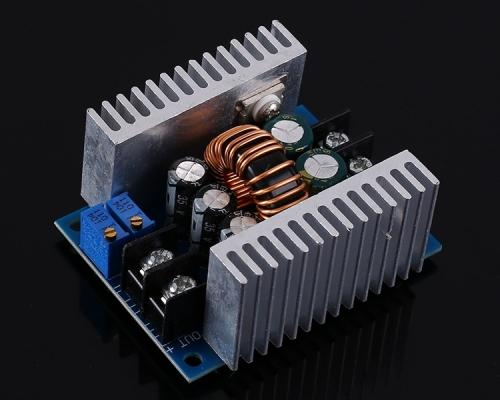
A modular power supply is typically a compact, self-contained power conversion unit designed for direct integration into an electronic system. Instead of installing a separate enclosed power supply and wiring outputs externally, engineers mount the module directly onto a PCB or inside a tightly packaged subsystem.
Modules are commonly used as AC-DC board-level converters or isolated DC-DC converters. Many include internal protection circuits, EMI filtering, isolation barriers, and tightly regulated outputs in a sealed package.
Because they are standardized and easy to integrate, modular power supplies are especially attractive when product development speed matters. Rather than designing a power stage from scratch, engineers can select a qualified module and focus on the rest of the system.
This makes modular designs common in telecom hardware, smart meters, IoT gateways, portable instruments, medical electronics, and embedded control boards.
Why Are These Two Power Solutions Often Confused?
The confusion usually comes from terminology. Many modular power supplies internally use switching technology. In other words, a module may contain a miniature switching power supply inside the package.
So technically, modular power supplies are often built on switching topologies—but they are packaged, applied, and selected differently.
A better way to understand the difference is this:
- A switching power supply usually describes the conversion technology or standalone product format.
- A modular power supply usually describes the integration style and physical packaging.
Once buyers understand this distinction, product selection becomes much easier.
Which One Is Better for Power Capacity?
Power requirement is one of the fastest ways to narrow your decision.
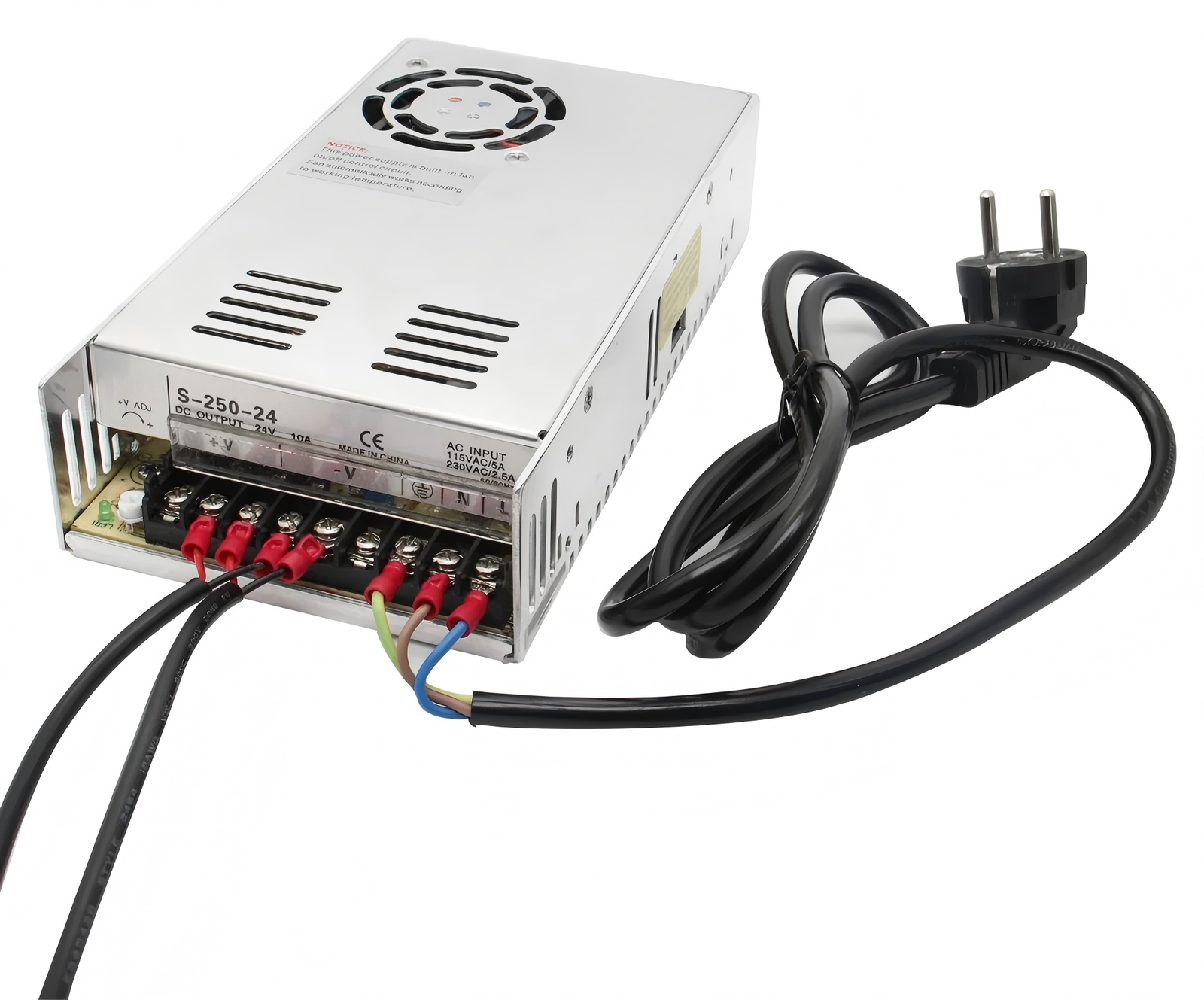
Standalone switching power supplies dominate medium and high wattage applications. If a machine needs 24V at 10A, 20A, or higher, an enclosed or DIN rail power supply is typically more economical, easier to cool, and simpler to service than combining multiple modules.
Modular power supplies are strongest in lower and distributed power ranges, especially where multiple localized voltage rails are needed. For example, a telecom board may require isolated 12V, 5V, and 3.3V rails near different loads. In that case, modules offer layout flexibility and lower distribution losses.
| Output Requirement | Recommended Choice | Typical Example |
| 1W–20W | Modular Power Supply | Sensors, IoT devices |
| 20W–100W | Depends on design | Embedded systems |
| 100W–500W | Switching Power Supply | Industrial control |
| 500W+ | Switching Power Supply | Machinery, charging |
When total system power increases, centralized switching power supplies usually become the more practical solution.
What About Size and Space Constraints?
Many buyers assume modules are always smaller. That is only partially true.
If you compare a module with a separate enclosed power supply, the module itself is certainly compact. But total system space depends on architecture. If a machine already has a control cabinet, installing one slim centralized power supply can save more space than scattering multiple modules across several boards.
On the other hand, if you are designing a handheld device, communication board, or smart controller where every millimeter matters, a modular solution may be ideal.
This is why the right question is not “Which is smaller?” but rather “Where does the power need to live inside the system?”
Which Option Offers Better Efficiency in 2026?
Efficiency has improved significantly across the industry thanks to LLC resonant topologies, synchronous rectification, improved magnetic materials, and wide-bandgap semiconductors such as GaN.
Modern industrial switching power supplies now commonly achieve efficiencies above 90%, while premium ultra-slim products can go higher. High-quality modules also perform well, especially DC-DC converters operating in optimized load ranges.
| Product Type | Typical Efficiency |
| Basic Low-Cost PSU | 82%–88% |
| Industrial Enclosed PSU | 88%–93% |
| Premium SIPURUI Industrial Series | Up to 94% |
| Small AC-DC Module | 78%–91% |
| High-End DC-DC Module | 90%–96% |
The practical takeaway is that product quality matters more than category alone. A well-designed switching power supply can outperform a low-cost module, and vice versa.
For industrial buyers, it is always wise to request full-load efficiency curves rather than relying only on catalog headline numbers.
Which Solution Handles Heat More Effectively?
Thermal management is one of the most overlooked purchasing factors.
Standalone switching power supplies usually benefit from larger metal housings, better airflow exposure, optional fans, and easier heat sink integration. This gives them an advantage in higher power continuous-duty applications such as automation cabinets or LED driver systems.
Modules, however, can be excellent thermal performers when power levels are moderate and PCB copper planes are designed correctly. But if board layout is poor or ambient temperatures are high, heat concentration can become a hidden reliability risk.
This is why many experienced engineers still prefer a centralized industrial power supply for 24/7 factory systems. Separating heat generation from sensitive control electronics often improves long-term durability.

Which Is Easier to Install and Maintain?
Installation environment matters greatly.
For electricians, panel builders, and maintenance teams, enclosed or DIN rail switching power supplies are usually the easiest solution. They mount quickly, wire clearly, and can be replaced in the field with minimal downtime.
Modules are ideal for factory manufacturing environments where boards are assembled in volume. Once soldered into the product, they create a neat integrated design. However, field replacement is more complex because servicing may require replacing an entire PCB assembly.
| Requirement | Better Choice |
| Fast field replacement | Switching Power Supply |
| PCB integration | Modular Power Supply |
| Maintenance-friendly factory equipment | Switching Power Supply |
| Compact embedded electronics | Modular Power Supply |
For OEM products sold in high volumes, modules may reduce assembly steps. For industrial equipment expected to run for years with periodic service, switching power supplies often win.
Which Option Is More Reliable?
Reliability is never just about topology. It depends on component quality, capacitor lifetime, surge immunity, thermal margin, and protection design.
A robust industrial switching power supply from SIPURUI may include long-life electrolytic capacitors, reinforced insulation, 4kV surge protection, overload auto-recovery, and stable output under wide temperature ranges. These features are critical in factories with unstable mains power, vibration, and dust exposure.
High-quality modules can also be extremely reliable, especially in telecom and medical systems. However, because they are deeply integrated into the host design, surrounding PCB conditions become part of the reliability equation.
In simple terms: modules rely more on the system designer, while standalone supplies carry more of that engineering burden themselves.
What Should OEM Buyers Choose in 2026?
If you are manufacturing industrial machinery, packaging equipment, CNC systems, security cabinets, or automation panels, a centralized switching power supply is often the smartest choice. It simplifies wiring, lowers service cost, and scales efficiently as power demand rises.
If you are designing compact electronics, smart communication hardware, portable instruments, or custom embedded controllers, modular power supplies can shorten development cycles and reduce design risk.
Increasingly, advanced products use both approaches together. A main switching power supply provides 24V or 48V bus power, while local modules generate isolated secondary rails exactly where needed.
This hybrid architecture is becoming standard because it combines serviceability with engineering flexibility.
Why More Global Buyers Are Considering SIPURUI
As many manufacturers look for alternatives to expensive legacy brands, they still need stable quality, export support, and predictable lead times.
SIPURUI focuses on practical industrial power solutions including enclosed switching power supplies, DIN rail models, LED drivers, and customized OEM power platforms. Buyers often value not only price competitiveness, but also consistent specifications, responsive technical support, and the ability to adapt products for real project requirements.
For distributors and machine builders, supply continuity has become just as important as electrical performance.

Final Verdict: Which One Should You Choose?
There is no universal winner between switching power supplies and modular power supplies because they are built for different priorities.
Choose a switching power supply when your project values higher wattage, lower cost per watt, easier maintenance, cabinet installation, and strong thermal performance. Choose a modular power supply when compact integration, rapid development, distributed rails, or embedded design flexibility matter more.
For many modern systems, the most effective solution is not choosing one over the other—but combining both intelligently.
If you are evaluating power solutions for your next project, selecting the correct architecture early can save cost, shorten development time, and improve long-term reliability.
For industrial-grade 12V, 24V, 48V, DIN rail, enclosed, or OEM customized power solutions, SIPURUI can help match the right platform to your application.