Skip to content


Why Is the Switching Power Supply So Important Today?
Many industrial systems are judged by their motors, controllers, sensors, or software, yet none of these can perform well without stable power. A machine may appear mechanically perfect, but if the power source fluctuates, overheats, or fails under load, the entire system becomes unreliable. That is why switching power supplies have become essential across automation, telecommunications, CNC machinery, LED infrastructure, transportation systems, and OEM equipment worldwide.
Compared with older linear power supplies, switching power supplies offer far higher efficiency, smaller size, lower heat generation, lighter weight, and wider input voltage compatibility. These advantages make them the preferred standard for modern electrical design.
At SIPURUI, we believe a power supply should do more than meet a voltage rating. It should support continuous operation, simplify integration, and protect the customer’s equipment over the long term.
What Is a Switching Power Supply and How Does It Work?
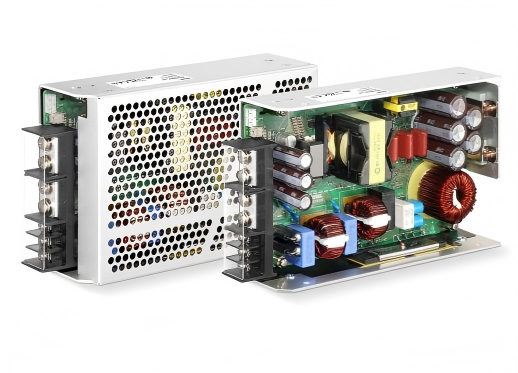
A switching power supply, also called an SMPS, converts incoming electrical energy into stable regulated output by using high-speed electronic switching devices. Instead of dissipating unused energy as heat, it rapidly transfers power through high-frequency conversion stages, dramatically improving efficiency.
In a typical AC/DC design, incoming AC power is first rectified into DC. A MOSFET or similar semiconductor then switches this energy at high frequency through a transformer or inductor stage. The output side rectifies and filters the waveform into clean DC voltage. A feedback circuit continuously adjusts the switching duty cycle so that the output remains stable even when load demand changes.
Because the internal devices operate mainly in full ON or full OFF states, wasted energy is minimized. This is one of the main reasons switching power supplies dominate modern industry.

| Feature | Linear Power Supply | Switching Power Supply |
| Efficiency | 30%–60% | 80%–95% |
| Heat Generation | High | Low |
| Size | Large | Compact |
| Weight | Heavy | Light |
| Input Range | Narrow | Wide |
| Industrial Suitability | Limited | Excellent |
Why Does Higher Efficiency Matter So Much?
Efficiency is not just a technical number on a datasheet. It directly affects operating cost, cabinet temperature, cooling requirements, and service life. A lower-efficiency power supply wastes more input power as heat. That extra heat increases internal stress on capacitors, semiconductors, and surrounding components.
For systems operating 24 hours a day, even a small efficiency difference becomes significant over time. In production facilities with many power supplies installed, the energy savings can be substantial.
| Efficiency | Input Power for 500W Load | Heat Loss |
| 82% | 610W | 110W |
| 90% | 556W | 56W |
| 94% | 532W | 32W |
This is why many professional buyers now prioritize efficiency as part of total ownership cost rather than focusing only on initial purchase price.

Why Is 24V DC the Most Common Industrial Standard?
Although many output voltages are used globally, 24V DC remains the most common standard in industrial automation. It offers a practical balance between electrical safety, transmission efficiency, and compatibility with industrial devices.
Control systems built around 24V often include PLC modules, relays, sensors, valves, industrial Ethernet devices, alarm systems, and HMIs. Standardizing around one voltage simplifies maintenance, spare parts management, and panel design.
| Output Voltage | Common Applications |
| 5V | Embedded logic boards |
| 12V | Cameras, networking, lighting |
| 24V | PLCs, sensors, automation |
| 48V | Telecom, battery systems |
For this reason, many of SIPURUI’s most requested products are 24V industrial series models designed for control cabinets and machine integration.
How Much Capacity Should You Reserve?
A common mistake is choosing a power supply equal to the exact rated load. If a system requires 10A, some buyers order a 10A unit and assume the selection is correct. In reality, equipment may have startup surges, temporary overload peaks, ambient temperature derating, or future expansion needs.
Professional practice is to include operating margin. Running continuously at 70% to 85% of rated capacity often improves thermal behavior and extends service life. This approach also gives the system more stability during sudden load changes.
A power supply should not only run the load today. It should continue doing so reliably years from now.
What Protection Features Should a Quality Power Supply Include?
Reliable operation depends not only on output voltage but also on how the unit responds to abnormal conditions. Industrial sites can experience overload, short circuits, unstable mains voltage, blocked airflow, or accidental miswiring.
A professional switching power supply should include over-voltage protection, over-current protection, short-circuit protection, and over-temperature shutdown. These protections help prevent damage to both the supply itself and connected equipment.
Well-designed startup behavior is also important. Controlled inrush current and smooth startup sequencing reduce stress on upstream breakers and downstream electronics.
At SIPURUI, protection design is considered a core requirement rather than an optional feature.
Why Do Some Systems Suffer from Interference Problems?
Many users first suspect PLCs, sensors, or software when random faults occur, but power quality is often the hidden cause. A poorly designed switching power supply can generate conducted or radiated noise that affects nearby electronics.

Symptoms may include false sensor signals, communication instability, HMI screen issues, encoder errors, or unexplained controller resets. This is why EMC performance matters greatly in modern systems.
A properly engineered power supply should include suitable EMI filtering, stable grounding architecture, safe internal spacing, and controlled switching transitions. Installation practices also matter. Separating power wiring from signal wiring and grounding the FG terminal correctly can significantly improve system performance.
Which Installation Style Is Best for Your Project?
Different applications require different mechanical formats. DIN rail power supplies are highly popular in automation cabinets because they install quickly, save space, and simplify service work. Enclosed chassis models are common in machinery, LED systems, and OEM assemblies where screw mounting is preferred. Fanless models are increasingly chosen for dusty, quiet, or maintenance-sensitive environments.
Selecting the correct format is not only about dimensions. It also affects airflow, cable routing, replacement speed, and long-term maintainability.

For many panel builders, SIPURUI DIN rail series products provide an efficient combination of compact size, stable output, and practical installation convenience.
How Long Should a Switching Power Supply Last?
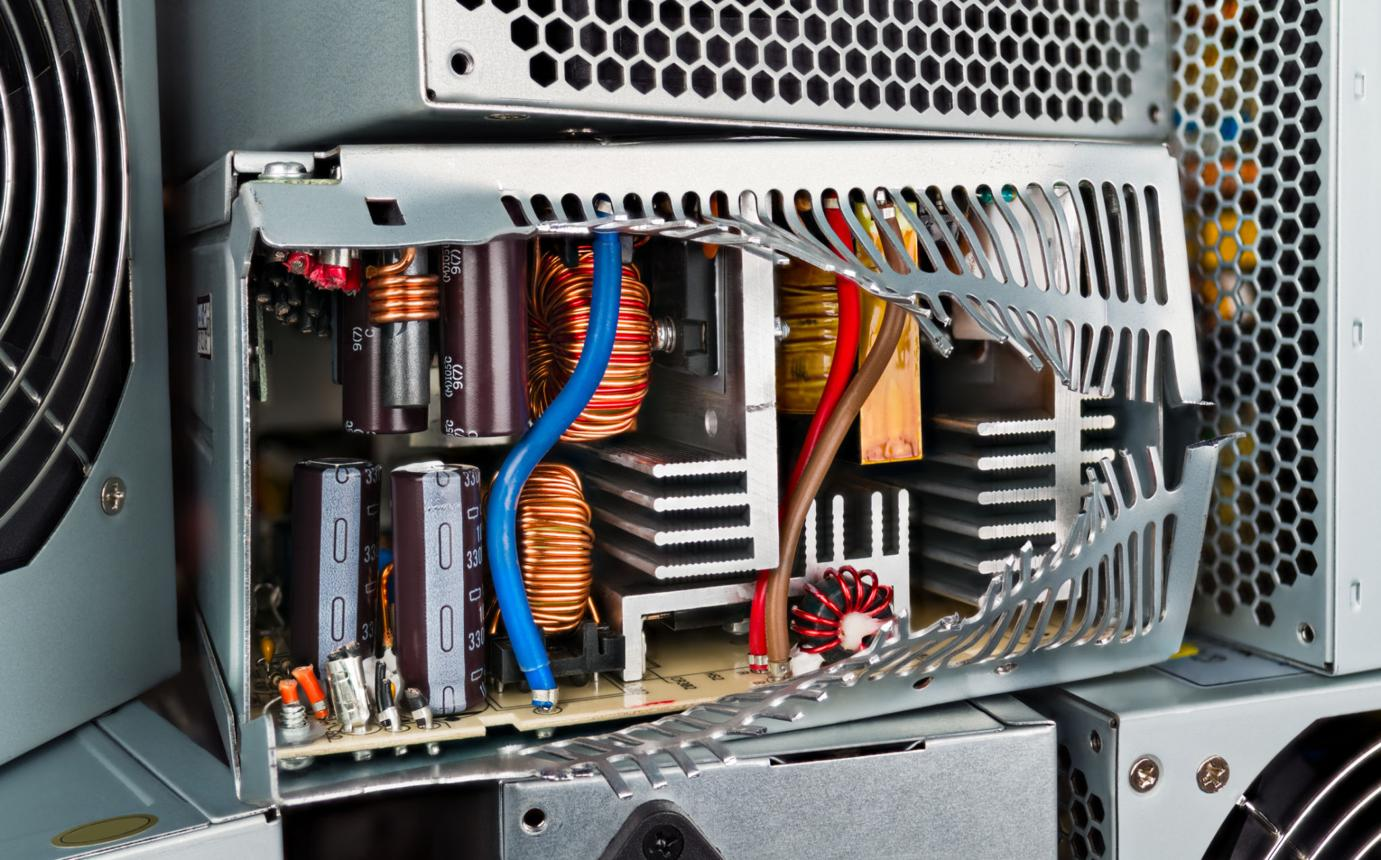
Service life depends on component quality, internal temperature, ventilation conditions, and operating load. In many designs, electrolytic capacitors are among the most life-sensitive components, and their longevity strongly depends on heat.
A cooler-running power supply often lasts significantly longer than a hotter-running one. That is why thermal design, efficient circuitry, and proper component spacing matter so much.
Choosing a power supply with margin, installing it with airflow clearance, and avoiding continuous overload are simple ways to increase service life dramatically.
What Trends Are Shaping the Industry in 2026?
The switching power supply market continues moving toward higher efficiency, greater power density, wider universal input ranges, and smarter diagnostics. Premium industrial models increasingly target 94% or higher efficiency, helping users lower heat and reduce operating cost.
Compact housings are delivering more wattage in less space. Fanless and low-noise platforms are becoming more popular. Some advanced systems now include alarm contacts, remote monitoring, and status signaling for predictive maintenance.
At SIPURUI, product development continues to align with these market demands by emphasizing practical reliability, efficient thermal behavior, and globally relevant industrial standards.

Why Choose SIPURUI as Your Power Supply Partner?
Selecting a supplier should involve more than price comparison. Consistent quality control, clear technical communication, dependable delivery, and stable long-term specifications all matter—especially for OEM and repeat-production customers.
Buyers choose SIPURUI because they need dependable industrial products supported by real manufacturing discipline. Whether the project requires standard 24V models, high-power platforms, DIN rail solutions, or customized specifications, our goal is to provide reliable power solutions built for actual operating environments.

Final Thoughts: Is Your Power Supply Supporting Growth or Creating Hidden Risk?
Power supplies often work quietly in the background, which is why they are easy to underestimate. Yet every controller, relay, communication module, and sensor depends on them. If power quality is unstable, the entire system becomes unstable.
The right switching power supply improves uptime, lowers maintenance cost, reduces thermal stress, and increases end-user confidence. The wrong one can create failures that are expensive, difficult to trace, and damaging to your reputation.
If you are sourcing dependable switching power supplies for automation, machinery, telecom, LED systems, or OEM production, SIPURUI is ready to support your next project with reliable solutions engineered for real industrial use.