Skip to content

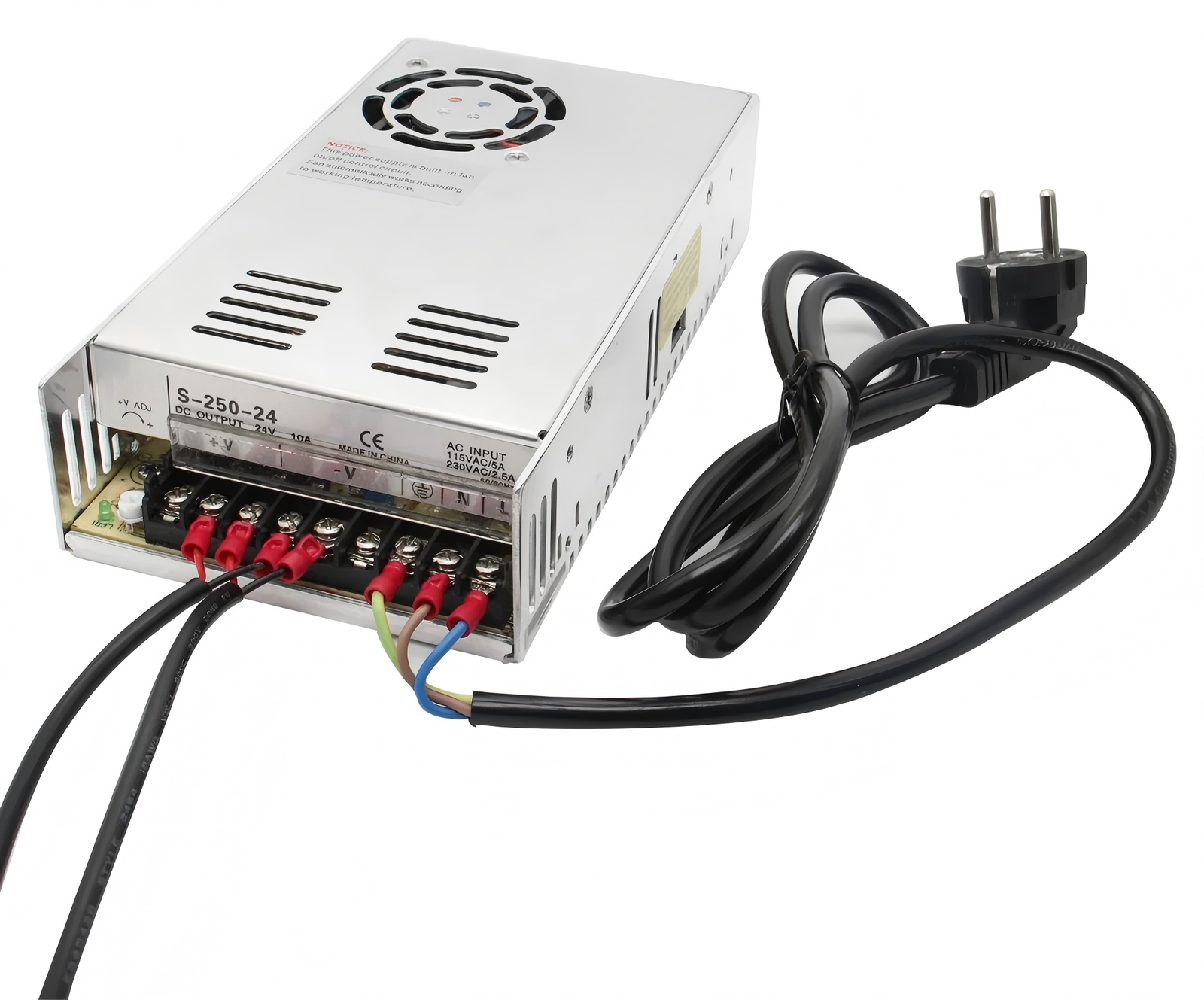
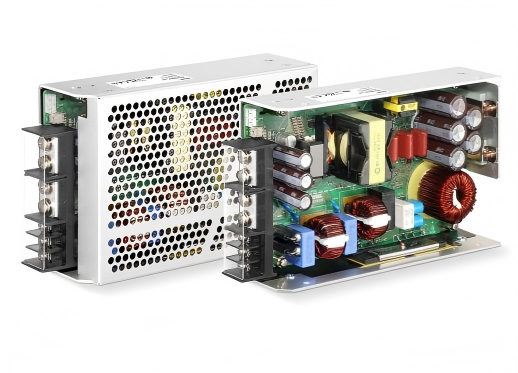
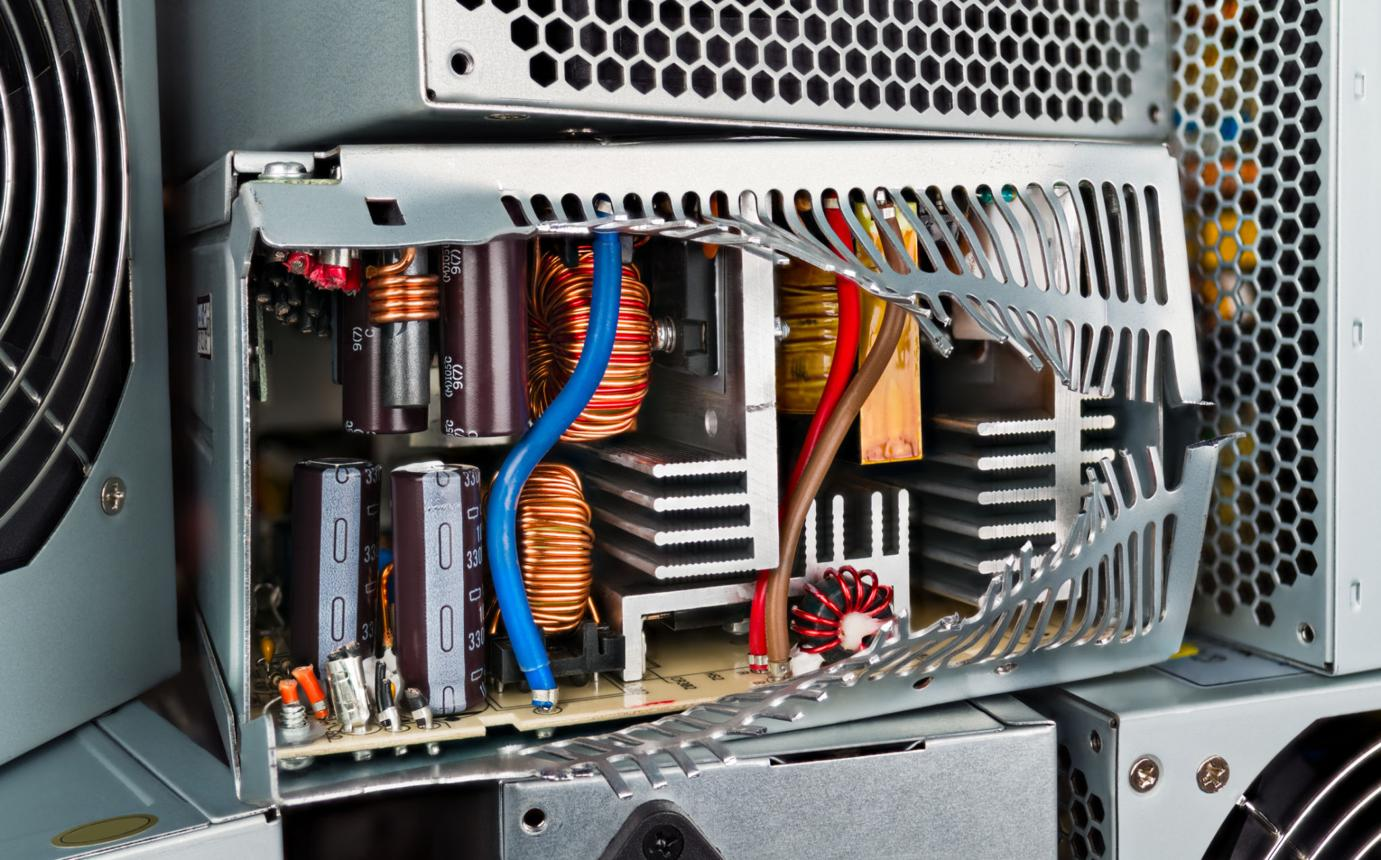
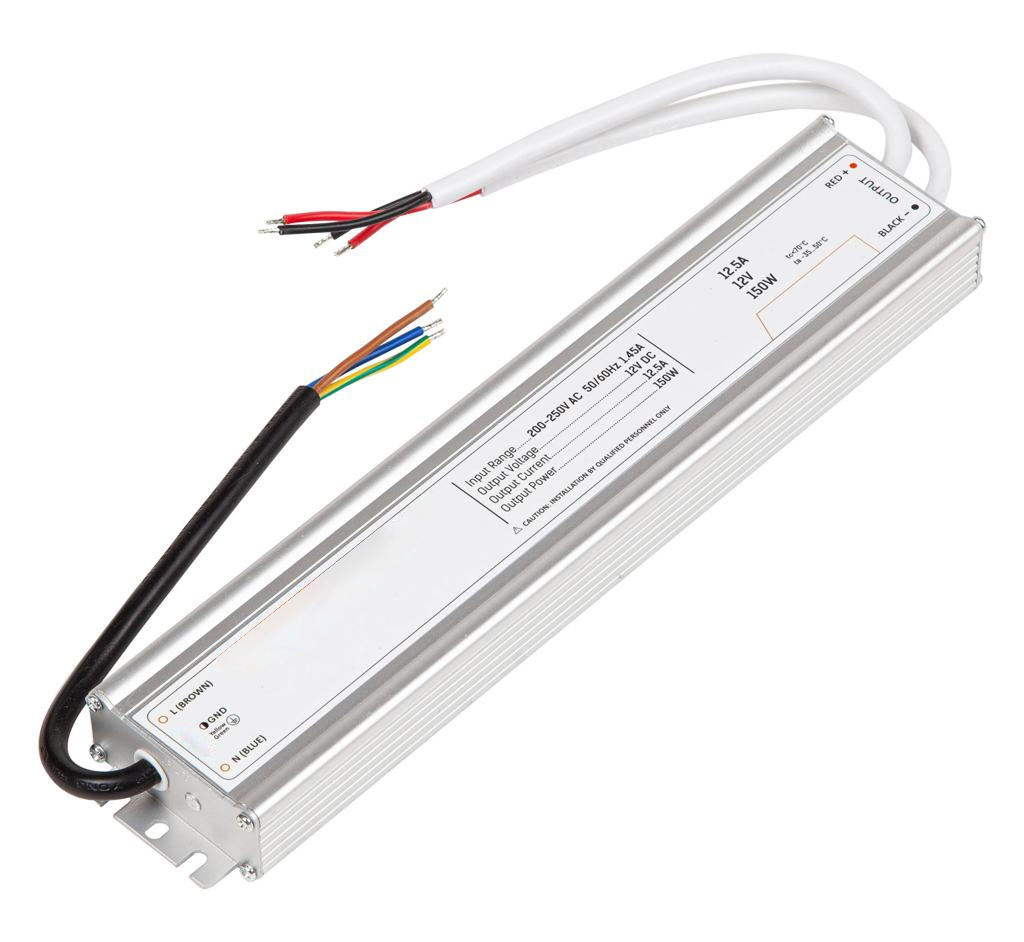
Modern electronics would not exist without switching power supplies. From compact smartphone chargers and industrial automation systems to AI servers and electric vehicle charging stations, almost every electronic device today depends on efficient power conversion.
But not all switching power supplies are designed in the same way.
Some are optimized for ultra-compact consumer adapters, while others are built for kilowatt-level industrial systems. Some prioritize low cost, while others focus on efficiency, thermal performance, or high power density. The difference comes down to topology.
In power electronics, topology determines how electrical energy moves through the converter. It affects efficiency, transformer size, EMI performance, switching loss, thermal management, reliability, and manufacturing cost. Choosing the right topology is often the first and most important decision in SMPS design.
As industries continue pushing toward higher efficiency, higher switching frequency, and more compact systems, engineers are increasingly combining traditional power architectures with GaN and SiC semiconductor technologies. Yet despite these advancements, the foundation of every modern power system still begins with understanding the core topologies.
In this guide, SIPURUI explains the 8 most important switching power supply topologies used in modern electronics, including their working principles, strengths, limitations, and real-world applications.
Why Are Switching Power Supplies Replacing Traditional Linear Power Supplies?
Traditional linear power supplies are simple and stable, but they waste a large amount of energy as heat. As electronic devices became smaller and more power-intensive, linear supplies could no longer meet modern efficiency requirements.
Switching mode power supplies solved this problem by rapidly switching semiconductor devices on and off at high frequency. Instead of dissipating excess energy as heat, SMPS systems transfer energy much more efficiently through inductors and transformers.
Modern switching power supplies can achieve efficiencies above 90%, while advanced telecom and server systems may exceed 96% efficiency. Higher efficiency reduces heat generation, decreases cooling requirements, improves reliability, and allows much smaller system designs.
Before exploring individual topologies, it is important to understand the two major categories of switching power supplies.
| Type | Isolation | Typical Applications | Main Advantage |
| Non-Isolated | No | DC-DC regulation, battery systems | Simpler and highly efficient |
| Isolated | Yes | AC-DC adapters, industrial systems | Improved safety and multiple outputs |
Non-isolated converters share the same electrical ground between input and output, making them compact and efficient for DC-DC applications. Isolated converters use high-frequency transformers to separate input and output electrically, improving safety and reducing noise coupling.
1. Why Is the Buck Converter the Most Widely Used SMPS Topology?
The Buck converter is the most common DC-DC topology in modern electronics. Its purpose is simple: convert a higher DC voltage into a lower DC voltage efficiently.
Examples include:
- 12V to 5V
- 48V to 12V
- 24V to 3.3V
Nearly every computer motherboard, FPGA system, industrial controller, and telecom board uses Buck conversion somewhere inside.

The Buck converter operates by rapidly switching a MOSFET while using an inductor to smooth current flow. Because switching losses are relatively low, modern synchronous Buck designs can achieve efficiencies above 95%.
This simple relationship between duty cycle and output voltage makes Buck converters highly controllable and ideal for digital power systems.
SIPURUI Buck power modules are commonly used in industrial automation equipment, embedded control systems, telecom infrastructure, and distributed DC architectures where stable low-voltage regulation is required.
The main limitation of the Buck converter is that it can only reduce voltage. When systems need voltage amplification, engineers typically turn to Boost topology.
2. How Does the Boost Converter Increase Voltage Efficiently?
The Boost converter performs the opposite function of a Buck converter by increasing DC voltage instead of reducing it.
This topology is widely used in battery-powered electronics, LED drivers, renewable energy systems, and power factor correction circuits. A common example is a portable power bank converting a 3.7V lithium battery into a stable 5V USB output.

The converter works by temporarily storing energy inside an inductor and then releasing it together with the source voltage. This creates an output voltage higher than the input voltage.
As the duty cycle increases, output voltage rises rapidly. This makes Boost converters highly effective in systems where voltage must be stepped up efficiently.
Modern SIPURUI Boost platforms are commonly integrated into LED lighting systems, industrial battery equipment, renewable energy systems, and active PFC stages used in high-efficiency AC-DC power supplies.
Although Boost converters offer excellent voltage amplification, they are not suitable when input voltage fluctuates above and below the target output voltage. In those situations, Buck-Boost topology becomes necessary.
3. Why Is the Buck-Boost Converter Important for Battery Systems?
Many electronic systems operate under unstable input voltage conditions. Battery voltage continuously changes during charging and discharge cycles, while automotive and renewable energy systems often experience wide voltage fluctuations.
The Buck-Boost converter solves this problem by allowing the converter to both increase and decrease voltage depending on operating conditions.
This flexibility makes Buck-Boost topology ideal for portable medical equipment, automotive electronics, industrial handheld devices, and battery-powered communication systems.
One important characteristic of traditional Buck-Boost topology is that the output polarity becomes inverted relative to the input voltage. Modern non-inverting Buck-Boost architectures are often used when polarity inversion is undesirable.
Compared with simple Buck or Boost converters, Buck-Boost systems introduce slightly greater design complexity, but they provide far greater flexibility under unstable voltage conditions.
4. Why Does Flyback Topology Dominate Consumer Power Adapters?
Among isolated power supply topologies, Flyback converters are the most widely used in consumer electronics.
Almost every smartphone charger, router adapter, smart home device, and low-power AC-DC adapter relies on Flyback architecture.

The popularity of Flyback topology comes from its ability to combine low cost, compact size, electrical isolation, and relatively simple circuitry into a highly practical design.
Unlike Forward converters, Flyback systems store energy inside the transformer during the ON cycle and transfer energy to the output during the OFF cycle. This allows the transformer to function both as an energy storage device and as an isolation component.
| Topology | Typical Power Range | Common Applications |
| Flyback | 5W – 150W | Chargers, adapters, IoT devices |
Modern SIPURUI Flyback platforms increasingly use GaN semiconductors to support higher switching frequencies and smaller transformer sizes. This is one of the main reasons modern USB-C fast chargers are dramatically smaller than older adapters while still supporting much higher power levels.
However, Flyback converters become less efficient at higher power levels due to increased transformer stress and ripple current. This is why Forward topology becomes more attractive for medium-power applications.
5. What Makes Forward Converters Better for Medium-Power Applications?
As output power increases, engineers often move from Flyback to Forward topology because Forward converters provide smoother energy transfer and higher efficiency.
Unlike Flyback converters, which temporarily store energy inside the transformer, Forward converters transfer energy directly to the output during the switch ON cycle. This improves efficiency and reduces output ripple.
Forward converters are widely used in industrial automation equipment, telecom infrastructure, networking systems, and medium-power AC-DC power supplies where stable output and better thermal performance are important.

One engineering challenge in Forward converter design is transformer reset. Because the transformer core becomes magnetized during operation, additional reset circuitry is required to prevent magnetic saturation.
Although the design complexity is higher than Flyback topology, Forward converters offer an excellent balance between efficiency, thermal behavior, and power capability in the 50W to 200W range.
6. Why Are Push-Pull Converters Common in Automotive Electronics?
Push-Pull topology uses two switches operating alternately to drive the transformer. This allows much better transformer utilization compared with single-ended topologies.
Push-Pull converters are especially common in automotive electronics, low-voltage industrial systems, and battery-powered DC-DC conversion equipment operating from 12V, 24V, or 48V input rails.

Because the transformer is magnetized alternately in opposite directions, Push-Pull topology can deliver higher power while keeping magnetic size relatively compact.
This makes Push-Pull converters attractive for:
- Vehicle inverters
- Industrial battery systems
- Low-voltage telecom equipment
- Medium-power DC-DC converters
However, engineers must carefully manage magnetic balance between the two switching paths. Flux imbalance can lead to transformer saturation and excessive switch stress if the design is not optimized properly.
Despite these challenges, Push-Pull topology remains an important solution in medium-power power electronics.
7. Why Is Half-Bridge Topology Popular in High-Voltage Power Supplies?
When power levels continue increasing, bridge-based topologies become increasingly important.
The Half-Bridge converter is widely used in high-voltage AC-DC systems such as desktop computer power supplies, industrial SMPS systems, display power platforms, and telecom infrastructure.
One of the biggest advantages of Half-Bridge topology is that each switch only experiences half of the input bus voltage. This reduces semiconductor stress and improves reliability in high-voltage applications.

Compared with Flyback and Forward designs, Half-Bridge systems offer:
- Higher power capability
- Better transformer utilization
- Improved efficiency
- Lower voltage stress
Modern SIPURUI Half-Bridge power systems increasingly integrate digital PWM control, active PFC, synchronous rectification, and high-frequency planar transformers to improve efficiency and reduce overall system size.
Half-Bridge topology is commonly used in power systems ranging from several hundred watts to multiple kilowatts.
8. Why Is Full-Bridge Topology Essential for EV Charging and AI Servers?
Full-Bridge topology represents one of the most powerful and scalable architectures in modern power electronics.
By using four switches operating in diagonal pairs, the converter applies the full input voltage across the transformer in alternating directions. This maximizes transformer utilization and enables extremely high power capability.
Full-Bridge converters are widely used in:
- EV charging stations
- AI server power systems
- Telecom rectifiers
- Renewable energy converters
- Industrial welding equipment
| Topology | Typical Power Range | Main Applications |
| Half Bridge | 200W – 2kW | Industrial systems, PC PSU |
| Full Bridge | 500W – 20kW+ | EV charging, telecom, AI servers |
Modern SIPURUI Full-Bridge systems increasingly adopt Phase-Shift Full Bridge (PSFB) architecture combined with SiC MOSFET technology. This enables zero-voltage switching (ZVS), dramatically reducing switching losses, heat generation, and EMI noise.
As AI infrastructure and EV charging continue expanding globally, Full-Bridge and PSFB systems are becoming some of the most important topologies in advanced power electronics.
How Are GaN and SiC Reshaping the Future of SMPS Design?
The future of switching power supplies is being driven by wide-bandgap semiconductors.
GaN devices support extremely high switching frequencies, enabling smaller transformers, higher power density, and compact charger designs. This is why GaN technology is now common in premium USB-C fast chargers and compact consumer adapters.
SiC semiconductors excel in high-voltage and high-temperature environments, making them ideal for EV charging systems, renewable energy infrastructure, and industrial motor drives.
At the same time, digital power management is becoming increasingly important. Modern digital controllers can optimize switching behavior dynamically, improve transient response, monitor thermal conditions in real time, and provide cloud-based telemetry functions.
These technologies are fundamentally reshaping industrial power electronics, and modern SIPURUI power systems increasingly combine advanced topology design with GaN, SiC, synchronous rectification, and digital control technologies to achieve higher efficiency and reliability.

Final Thoughts: Which SMPS Topology Is Best?
There is no universal “best” switching power supply topology because every architecture is optimized for a different engineering challenge.
Buck converters dominate low-voltage DC regulation. Boost converters efficiently raise voltage in battery-powered systems. Buck-Boost converters provide flexibility under unstable voltage conditions. Flyback converters remain the most economical isolated solution for compact adapters. Forward and Push-Pull converters bridge the gap into medium-power industrial systems. Half-Bridge and Full-Bridge architectures dominate modern high-power applications.
As industries continue demanding higher efficiency, higher power density, and smarter energy management, topology selection will remain one of the most important decisions in modern power electronics engineering.
At SIPURUI, we continue developing advanced switching power supply solutions for industrial automation, telecom infrastructure, renewable energy systems, AI computing, and EV charging applications by combining proven SMPS topologies with next-generation semiconductor technologies.