
ENGINEERING AND PROCUREMENT GUIDE
The wrong 24 VDC power supply rarely fails at a convenient time. It may reset a PLC when a contactor closes, overheat in a crowded cabinet, or pass a bench test and then misbehave beside a variable-frequency drive. That is why an industrial buyer needs more than a familiar logo and a wattage figure.
This guide presents ten established brands commonly considered for industrial DIN-rail power supplies. It is a shortlist, not a quality ranking: the best choice depends on the load profile, mains supply, cabinet temperature, approvals, maintenance strategy, and local availability. It also explains how to turn those requirements into a defensible specification.
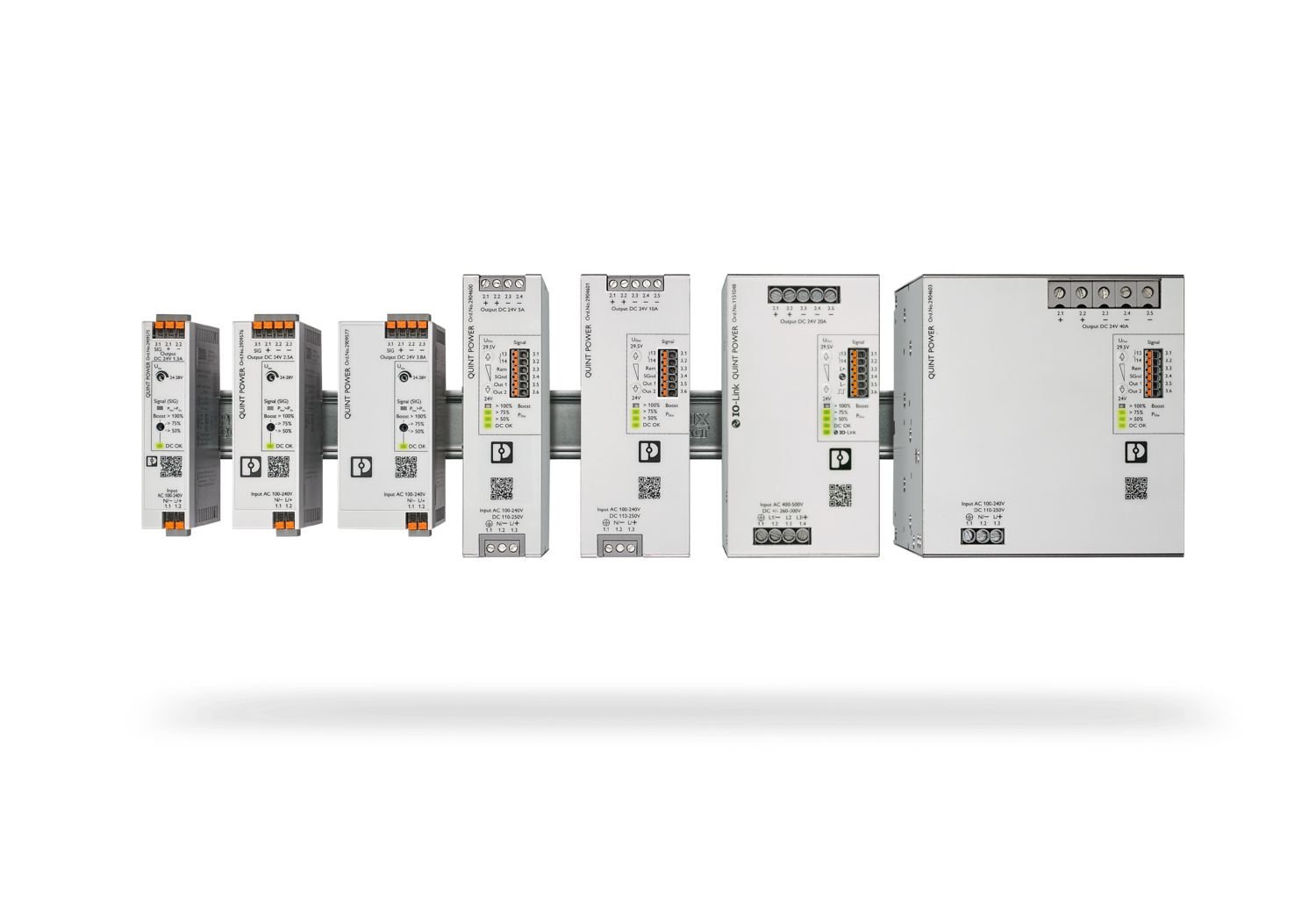
Ten Brands Commonly Shortlisted for Industrial Power Supplies
The list below focuses on manufacturers with identifiable industrial product families, broad channel visibility, and documentation suitable for engineering evaluation. Product availability and approvals vary by series and destination market, so always verify the exact part number.
| Brand | Representative industrial family | Often shortlisted when… | Check carefully |
|---|---|---|---|
| PULS | DIMENSION, PIANO, PLANET | Cabinet density, efficiency, service life, and power reserve matter | Required communications, marine/hazardous-location approvals, local stock |
| Phoenix Contact | QUINT, TRIO, UNO | The design needs diagnostics, boost capability, selective protection, or a wider automation ecosystem | Whether the selected tier includes the required monitoring and boost functions |
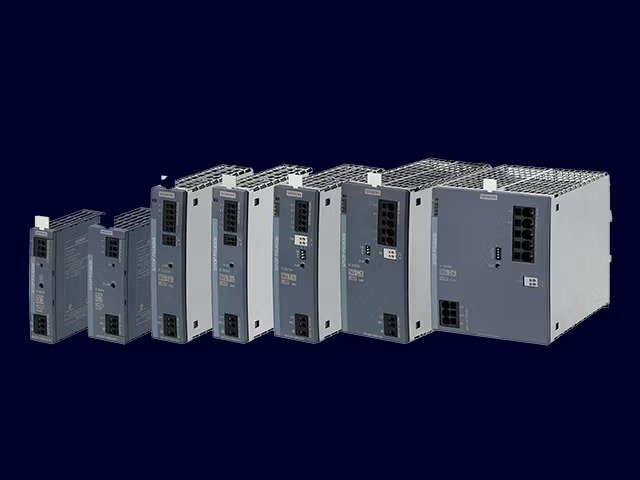
| Siemens | SITOP | The machine already uses Siemens automation, or integrated diagnostics and DC-UPS options are valuable | Series-specific input, expansion-module compatibility, lifecycle status |
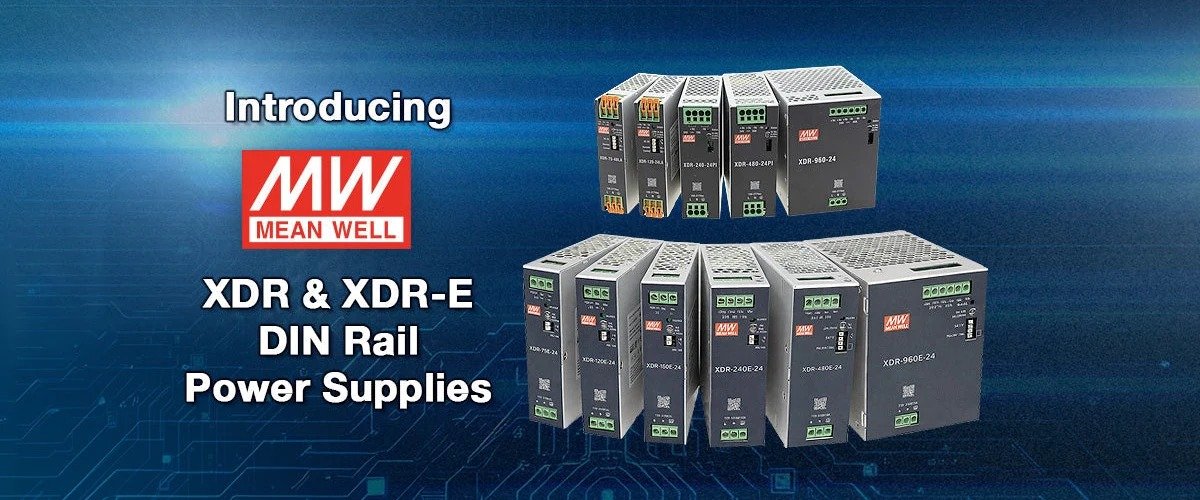
| MEAN WELL | HDR, NDR, SDR, TDR, XDR/XTR | Broad availability and a wide price/performance range are priorities | Series differences in temperature range, terminals, approvals, and peak-load behavior |
| TDK-Lambda | DRB, DRS, DPP | Global technical support, documented lifecycle support, and industrial reliability are important | Exact regional approvals and accessory availability |
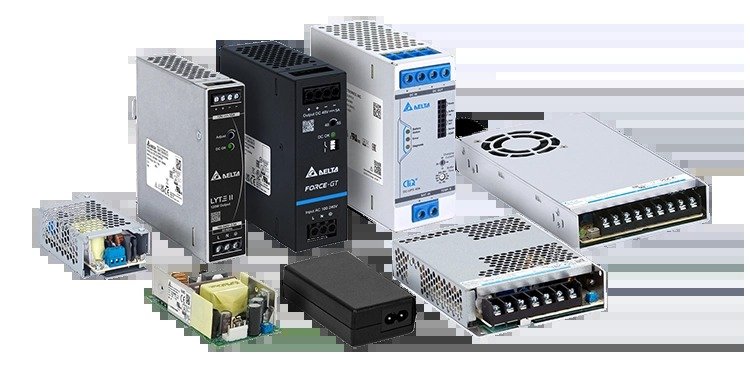
| Delta Electronics | CliQ, Force-GT, DIN Pro/DIN Eco | A buyer wants an industrial power specialist with automation-market reach | Generation changes, communications options, and distributor stock |
| Schneider Electric | Modicon/Phaseo | The panel is built around Schneider control and protection products | Product-family naming by region and fit with the required DC backup architecture |
| Omron | S8VK series | Compact control panels and Omron-centered automation systems are involved | Peak-current duration, terminal style, and exact environmental approvals |
| Weidmüller | PROtop, PROmax, PROeco | High pulse reserve, cabinet integration, or communications are important | Whether premium functions justify the system cost for the application |
| Murrelektronik | Emparro | Decentralized automation, machine-level installation, and system diagnostics matter | IP rating, mounting location, fieldbus/IO-Link requirements, and connector ecosystem |
There are other credible suppliers, including ABB, WAGO, TRACO Power, COSEL, Rockwell Automation/SolaHD, MORNSUN, and application-specific OEM manufacturers. A procurement team should treat any “top ten” as a starting pool rather than a closed league table.
What Separates One Brand or Series from Another
Basic, standard, and high-performance models are not interchangeable
Most large vendors offer several performance tiers. A basic supply may be entirely appropriate for a small, stable resistive load in a benign cabinet. A high-performance unit earns its price when it provides useful peak current, active load sharing, predictive diagnostics, redundancy features, communications, or approvals for a difficult environment.
For example, Phoenix Contact documents static and dynamic boost functions within its QUINT range, while Weidmüller positions PROtop around pulse reserves, communications, and higher system availability. PULS separates cost-oriented PIANO products from higher-feature DIMENSION and PLANET families. Siemens similarly offers several SITOP levels, from basic units to configurable and networked systems. These distinctions are more useful than comparing brand names in isolation.
Documentation quality affects engineering risk
A usable datasheet should state the full input range, efficiency at relevant loads, temperature derating, permissible mounting orientation and spacing, ripple and noise, hold-up time, overload behavior, expected life conditions, terminal data, and applicable approvals. If those details are missing, the engineering team cannot reliably predict cabinet behavior.
Channel and lifecycle support affect total cost
The cheapest unit price is not always the lowest installed cost. Consider distributor coverage, lead time, change-notification practice, counterfeit risk, technical support, and whether an equivalent form-fit replacement is likely to be available years later. Machine builders shipping globally also need consistent regional part numbers and documentation.
A Practical Selection Method
1. Define the AC or DC input—not just the nominal voltage
“230 VAC” is not a complete specification. Record the minimum and maximum steady-state voltage, line frequency, phase configuration, expected dips and interruptions, overvoltage category, and whether the supply may be fed from a generator, inverter, or DC bus.
A universal 85–264 VAC input is useful for globally shipped equipment, but it does not automatically cover every industrial condition. Three-phase plants may prefer a 400–500 VAC input supply to reduce input current and avoid a neutral conductor. For DC input, check polarity protection and the permitted range rather than assuming an AC-rated model accepts any DC bus.
2. Build a real load budget
For each DC load, record nominal current, maximum steady-state current, startup or inrush current, duration, duty cycle, and acceptable voltage tolerance. Then group loads that start simultaneously.
The basic continuous-power calculation is:
P = V × I
Suppose a 24 VDC panel has a PLC and I/O load of 2.2 A, sensors drawing 0.8 A, and valves drawing 2.0 A during normal operation. The continuous requirement is 5.0 A, or 120 W. A 24 V/5 A supply has no practical allowance for wiring losses, expansion, or elevated temperature. A 24 V/7.5 A or 10 A model may be appropriate—but only after checking the motor/solenoid starting profile and the selected unit's derating curve.
Do not apply a universal “add 30%” rule. A stable electronic load in a cool cabinet may need modest headroom; a motor, capacitive input bank, or high-temperature enclosure may need much more. Some supplies specify short-term boost capacity that can handle the event without permanently oversizing the unit. The duration and repetition rate must match the load.
3. Check load behavior and overload response
Power supplies do not all behave the same at overload. Depending on the model, the output may use constant-current limiting, hiccup mode, foldback, shutdown, or a boost regime before limiting. That behavior can determine whether a motor starts, a capacitive load charges, or the controller enters a restart loop.
| Load type | What happens at startup or fault | Specification to examine |
|---|---|---|
| PLC, I/O, sensors | Usually predictable; sensitive to voltage dips | Regulation, ripple/noise, hold-up time, DC-OK signaling |
| Solenoids and contactors | Short current peak during actuation | Dynamic current capacity and duration |
| DC motors | High starting or stall current; regenerated energy may return to the bus | Peak current, overload curve, reverse-energy tolerance or decoupling |
| Capacitive electronics | Charging surge may trigger current limit | Permissible capacitive load and startup characteristic |
| LED loads | Driver input can produce high inrush | Inrush compatibility and upstream breaker selection |
| Safety/control circuits | Loss of supply may create a hazardous state | Required architecture, diagnostics, redundancy, and relevant safety assessment |
Motor regeneration deserves special attention. A decelerating motor can raise the DC bus above the supply's acceptable reverse voltage. Use a decoupling element, brake circuit, or power architecture explicitly designed for the condition; do not assume output overvoltage protection absorbs regenerated energy.
4. Apply temperature derating using the actual cabinet conditions
Ambient temperature means the air around the power supply, not the room temperature outside the enclosure. Heat from drives, contactors, transformers, and neighboring supplies can make the internal cabinet temperature much higher.
Read the manufacturer's derating curve at the intended input voltage, mounting orientation, altitude, and spacing. A unit rated for 10 A at 40 °C may not deliver 10 A continuously at 65 °C. Also check whether the quoted operating-temperature limit represents full-load operation or merely survival with reduced output.
Efficiency affects this calculation. At 120 W output, a 90% efficient supply dissipates roughly 13.3 W; a 95% efficient unit dissipates about 6.3 W. The difference becomes meaningful in a sealed or densely populated enclosure.
5. Coordinate the power supply with protection devices
The upstream breaker or fuse must tolerate the supply's input inrush while still protecting the conductors. On the DC side, a supply may current-limit before a conventional branch breaker trips. That can pull down the entire 24 V bus during one branch fault.
Check the power supply's short-circuit current and time-current behavior against the selected DC protective devices. High-performance products may offer a brief, high-current pulse intended to trip downstream breakers selectively. Alternatively, use electronic circuit protection designed for current-limited DC supplies.
6. Match approvals to the end product and destination
CE or UKCA marking alone does not answer every compliance question, and a brand-level statement never substitutes for a part-number certificate. Confirm the applicable safety standard and certification file for the precise model.
Depending on the project, requirements may include UL/cUL listing or recognition, NEC Class 2/Limited Power Source circuits, IEC/EN industrial control standards, marine type approvals, railway standards, medical requirements, hazardous-location certification, SEMI-related expectations, or a specific EMC environment. Verify insulation class, protective-earth requirements, pollution degree, altitude, and spacing as part of the same review.
7. Evaluate EMC in the complete machine
A compliant power supply helps, but it does not make the finished panel automatically compliant. Cable routing, grounding, shielding, cabinet bonding, filter placement, switching loads, and the VFD installation all influence conducted and radiated emissions and immunity.
Follow the manufacturer's installation instructions. Keep noisy motor cables away from low-level signal wiring, make short low-impedance protective-earth connections, and avoid creating long shared return paths. If an external input filter is required, verify leakage current and protective-device compatibility.
8. Decide whether redundancy, hold-up, or DC UPS is necessary
Two power supplies connected in parallel are not automatically a redundant system. A proper design needs decoupling or an integrated redundancy function, current-sharing considerations, independent upstream feeds where appropriate, fault monitoring, and a maintenance test strategy.
Use buffer or DC-UPS modules when the process must ride through short dips, perform an orderly shutdown, or continue for a defined time. Size the storage element from the real load and required runtime, then account for aging and temperature.
9. Check the mechanical and maintenance details
Confirm DIN-rail type, width, depth, terminal access, conductor range, ferrule requirements, torque, airflow, and top/bottom clearance. A narrow supply can still be unsuitable if its depth clashes with the cabinet door or its terminals cannot be safely serviced.
Terminal style also affects production. Screw terminals are familiar and widely accepted; push-in or lever-actuated terminals can shorten assembly and simplify service when they match the plant's wiring practice. Standard output voltages and established footprints usually offer better lead times and replacement options than one-off custom designs.
Buyer RFQ Checklist
| RFQ item | Minimum information to provide |
|---|---|
| Input | Nominal voltage, min/max range, AC/DC, phase, frequency, dip/interrupt expectations |
| Output | Voltage tolerance, continuous current, peak current, peak duration and repetition |
| Loads | PLC/electronic, motor, solenoid, capacitive, LED, battery, or mixed |
| Environment | Cabinet ambient, altitude, humidity/condensation, vibration, contaminants, IP location |
| Installation | DIN rail or chassis, maximum dimensions, orientation, spacing, terminal preference |
| Protection | Upstream breaker/fuse, DC branch protection, OVP/OCP/OTP behavior, reverse-energy issue |
| Functions | DC-OK relay, remote on/off, remote sense, current sharing, redundancy, communications |
| Compliance | Destination markets, required safety/EMC files, marine/rail/hazloc or industry standard |
| Commercial | Annual volume, target lead time, lifecycle expectation, approved channel, change control |
Ask shortlisted suppliers for the datasheet, derating curves, safety certificates, EMC test references, 3D/CAD data, reliability assumptions, warranty terms, and product-change notification policy. For a critical design, test production-intent samples at low line, high line, maximum cabinet temperature, representative startup sequences, brownout, and branch faults.
Common Purchasing Mistakes
Selecting by wattage alone. Two 240 W supplies can have very different peak-current, temperature, and protection behavior.
Treating all approvals as equivalent. Approval scope belongs to a specific model, voltage configuration, installation condition, and certificate—not to a logo on a brand page.
Ignoring lifecycle and source authenticity. An inexpensive unit from an uncontrolled channel can create counterfeit, traceability, and replacement risk.
Oversizing without studying fault behavior. A much larger supply can increase available fault energy and may still fail to trip downstream protection selectively.
Customizing too early. A standard voltage, enclosure, and mounting format usually lowers qualification effort, cost, and lead time. Customization is justified when the application truly needs a special input, output, mechanical format, monitoring interface, or environmental design.
Final Recommendation
There is no universal “best” switching power supply brand. Start with the electrical and environmental requirements, shortlist product families with verifiable documentation, and compare exact part numbers under realistic operating conditions. A premium model is worthwhile when its efficiency, boost capability, diagnostics, approvals, or redundancy features solve a defined system risk. A simpler model may be the better engineering choice when the load and environment are modest.
For OEM projects that need an enclosed switching power supply, a non-standard output, or supplier-side configuration support, SIPURUI can review the load profile, installation limits, compliance target, and expected volume before recommending a standard or customized option. Send a complete load table and operating environment rather than only a wattage target; it will lead to a faster and more accurate quotation.