What Actually Keeps an Automation System Running?
When people talk about industrial automation, they often focus on PLC brands, sensor accuracy, or motor performance. But there is a more fundamental question that is often overlooked:
What ensures that all of these components work reliably together, every second of the day?
The answer is power quality.
In a typical automation system, PLCs act as the brain, sensors serve as the eyes and ears, and actuators or motors perform the physical work. However, none of these components can function correctly without a stable and continuous DC power supply. Even a brief voltage dip or ripple can cause a PLC to reset, a sensor to misread, or a communication module to fail.
This is why, in real-world industrial environments, engineers do not treat power supplies as simple accessories. Instead, they are considered a core reliability component of the entire system architecture.

Why Do Almost All Automation Systems Standardize on 24V DC?


A natural question arises: why does nearly every PLC, sensor, and control circuit rely on 24V DC?
The answer lies in a balance between safety, compatibility, and performance. At 24V DC, systems operate within the Safety Extra Low Voltage (SELV) range, which significantly reduces the risk of electrical shock. This makes installation, maintenance, and troubleshooting much safer for technicians.
At the same time, 24V provides enough voltage headroom to ensure stable transmission over longer cable distances compared to 12V systems, while avoiding the increased insulation and safety requirements associated with higher voltages such as 48V or above.
Another important factor is ecosystem standardization. Over decades, industrial manufacturers have aligned around 24V DC as a universal control voltage. This means PLCs, proximity sensors, relays, and communication modules are all designed to operate seamlessly within this standard. As a result, engineers benefit from simplified system integration and reduced compatibility risks.
In short, 24V DC is not arbitrary—it is the result of long-term industrial optimization.
Do All Devices Draw the Same Power? Why Sizing Matters More Than You Think
While voltage may be standardized, current consumption varies widely across devices. This creates a common misconception:
“If everything is 24V, any power supply will work.”
In reality, improper sizing is one of the most frequent causes of system instability.
| Device Type | Typical Voltage | Current Range | Practical Insight |
| PLC CPU | 24V DC | 100–500 mA | Requires very stable voltage |
| Digital Sensors | 24V DC | 10–30 mA | Often used in large quantities |
| Analog Sensors | 24V DC | 20–100 mA | Sensitive to noise and ripple |
| HMI Panels | 24V DC | 200–1000 mA | Combined display + communication load |
| Solenoids / Relays | 24V DC | 50–300 mA | Inductive, causes spikes |
| Control-side Motors | 24V DC | 0.5–5 A | High inrush current |
What makes this more complex is not just steady-state current, but dynamic behavior. When relays switch or motors start, they create inrush currents that can temporarily exceed nominal values by 2–3 times. If the power supply cannot handle these peaks, voltage drops occur—and that is when faults begin.
This is why experienced engineers always design with a margin, rather than relying on nominal calculations.
What Really Goes Wrong in Industrial Power Systems?

Industrial environments are far from ideal. Even if your system works perfectly in testing, real-world conditions introduce multiple risks.
Electrical noise is one of the most persistent challenges. Motors, frequency inverters, and switching devices generate electromagnetic interference that can propagate through power lines. Sensitive components such as analog sensors or communication modules are especially vulnerable.
Load fluctuation is another issue. Automation systems are rarely static. Machines start and stop, loads change, and control signals vary continuously. These fluctuations can cause voltage instability if the power supply response is not fast enough.
Then there is the question of downtime. In many production environments, a single power supply failure can halt an entire line. The cost is not just repair—it includes lost production, delayed delivery, and potential contractual penalties.
Environmental factors further complicate matters. High temperatures inside control cabinets, airborne dust, and mechanical vibration all contribute to long-term degradation of electronic components.
This leads to a critical realization:
Selecting a power supply is not about meeting specifications—it is about surviving conditions.
What Defines a High-Quality Industrial Power Supply?
Rather than thinking in terms of “24V output,” it is more useful to evaluate performance characteristics that directly impact system reliability.
| Parameter | Recommended Level | Why It Matters |
| Efficiency | ≥ 90% | Lower heat, longer lifespan |
| Voltage Accuracy | ±1–2% | Prevents PLC and sensor errors |
| Overload Capacity | 120–150% | Handles inrush current safely |
| Protection Functions | OVP / OCP / OTP | Prevents cascading failures |
| MTBF | >300,000 hours | Indicator of long-term reliability |
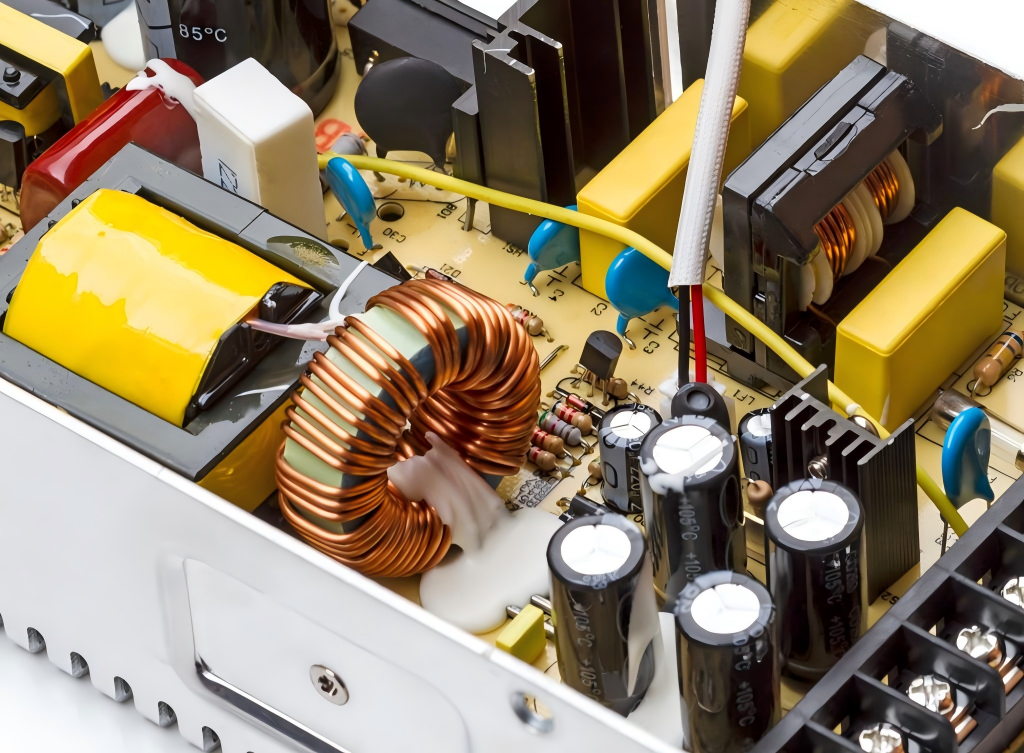
A high-efficiency power supply not only reduces energy consumption but also minimizes internal heat generation, which is one of the primary causes of failure in enclosed cabinets.
Protection mechanisms are equally important. Over-voltage, over-current, and thermal protection ensure that faults do not propagate through the system, protecting both the power supply and connected equipment.
Why DIN Rail Power Supplies Dominate Control Cabinets

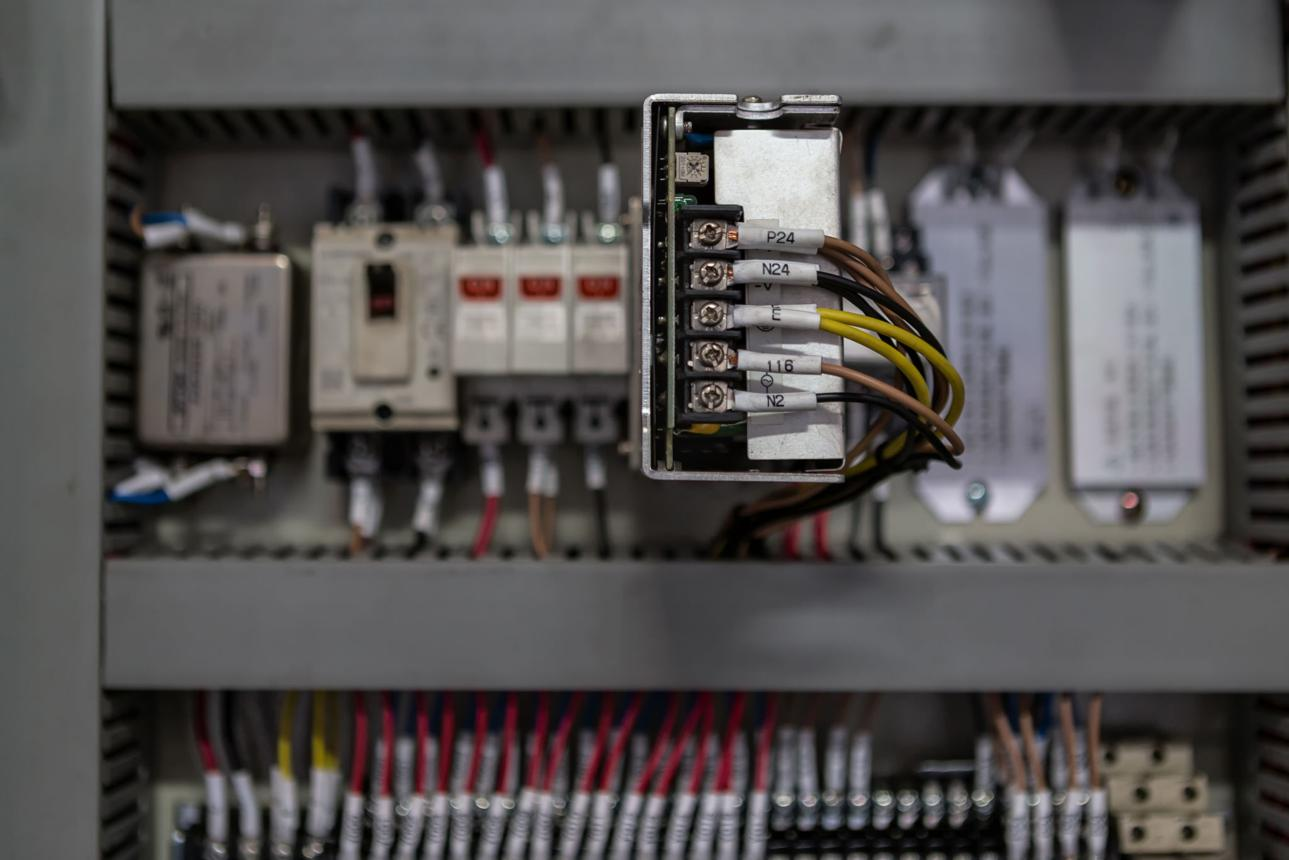
If you open almost any modern control cabinet, you will notice a common pattern: power supplies mounted neatly on DIN rails.
This is not just a matter of convenience. DIN rail systems enable modular design, allowing components to be installed, replaced, or expanded quickly. For maintenance teams, this translates into shorter downtime and easier troubleshooting.
DIN rail power supplies are also designed with compactness in mind. High power density allows more functionality to fit within limited cabinet space, which is increasingly important as automation systems grow more complex.
Centralized or Distributed Power: Which Architecture Is More Reliable?
Another important design decision is whether to use a centralized power supply or distribute power across multiple units.
| Feature | Centralized Power | Distributed Power |
| System Structure | Single PSU | Multiple PSUs |
| Reliability | Single failure risk | Higher redundancy |
| Wiring Complexity | Higher | Lower |
| Maintenance | More difficult | Easier isolation |
In smaller systems, a centralized power supply may be sufficient and cost-effective. However, as systems scale, distributed architectures become more attractive because they reduce single points of failure and simplify fault isolation.
In high-reliability environments, distributed power combined with redundancy is often the preferred approach.
How SIPURUI Power Supplies Address Real Industrial Needs
When designing automation systems, engineers increasingly look for solutions that go beyond basic specifications. This is where SIPURUI industrial power supplies are positioned.
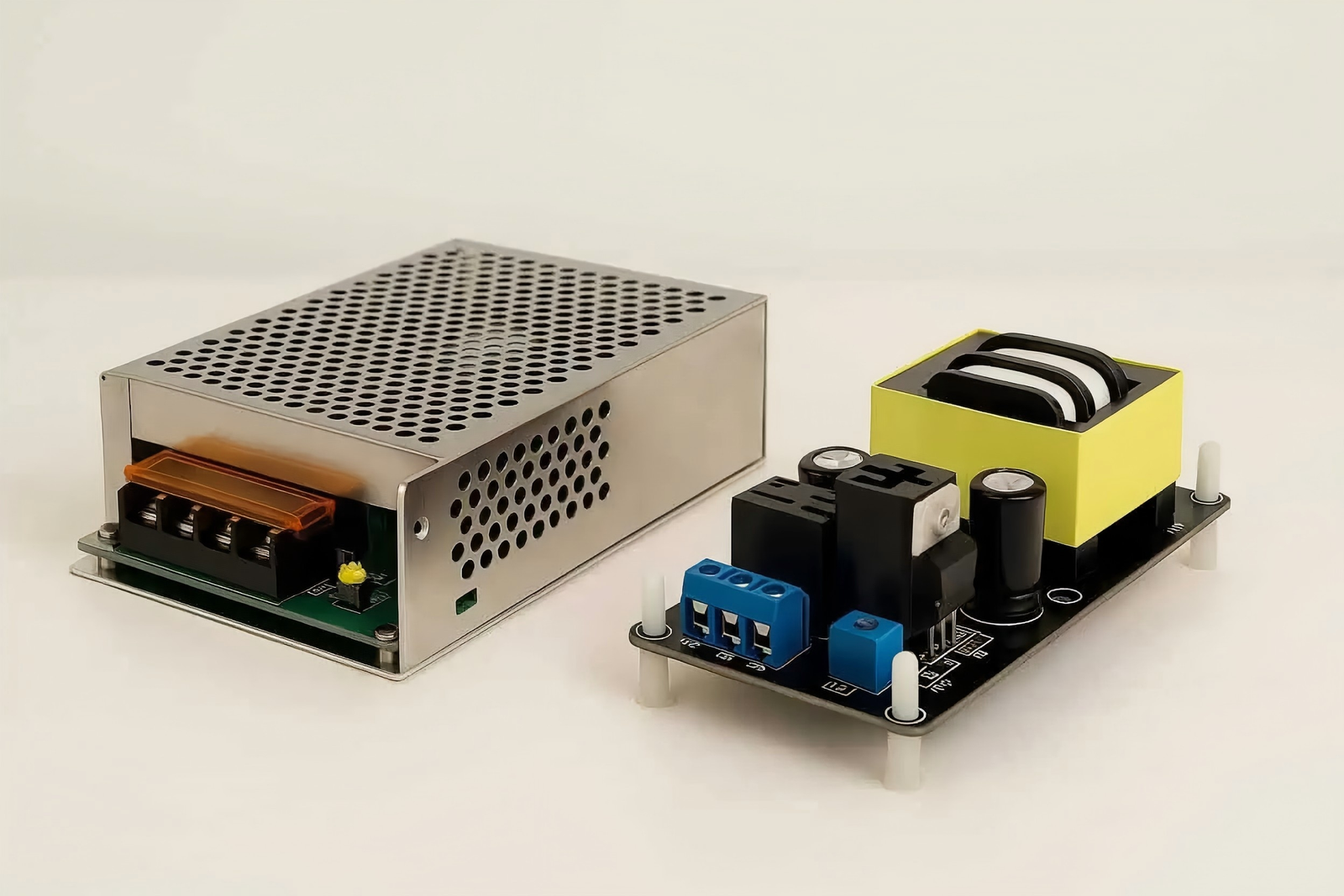
SIPURUI DIN rail power supply series are engineered specifically for demanding industrial environments. With wide input voltage ranges, high efficiency up to 94%, and precise 24V DC output regulation, they ensure stable operation across varying load conditions.
More importantly, SIPURUI products are designed with full protection mechanisms, including over-voltage, over-current, short-circuit, and thermal protection. These features are critical in preventing system-wide failures.
For applications requiring uninterrupted operation, SIPURUI also supports redundancy modules, enabling seamless power backup and eliminating single points of failure.
| Series | Power Range | Typical Application | Key Advantage |
| SIPURUI DR-75 | 75W | Small PLC systems | Compact and efficient |
| SIPURUI DR-240 | 240W | Medium automation | Balanced performance |
| SIPURUI DR-480 | 480W | Full production lines | High power density |
| SIPURUI Redundancy Module | — | Critical systems | Zero downtime capability |
What Are the Best Practices Engineers Should Follow?
In practice, system reliability often depends on design decisions rather than individual components.
It is generally recommended to leave at least a 20–30% power margin to accommodate future expansion and transient loads. Separating control circuits from high-power motor circuits helps reduce interference. Proper grounding and shielding are essential to maintain signal integrity.
For critical systems, redundancy is no longer optional—it is a necessity. Monitoring functions such as DC OK signals can also provide early warnings before failures occur.

Final Thought: Are You Choosing a Component or Protecting Your System?
At first glance, a power supply may seem like a small part of an automation system. But in reality, it plays a decisive role in determining whether the system operates reliably or fails unpredictably.
Choosing the right power supply is not just a technical decision—it is a strategic one.
A well-designed solution, such as a SIPURUI industrial power supply, does more than deliver voltage. It ensures stability, protects equipment, and ultimately safeguards productivity.
And in industrial automation, reliability is not a luxury—it is the foundation.