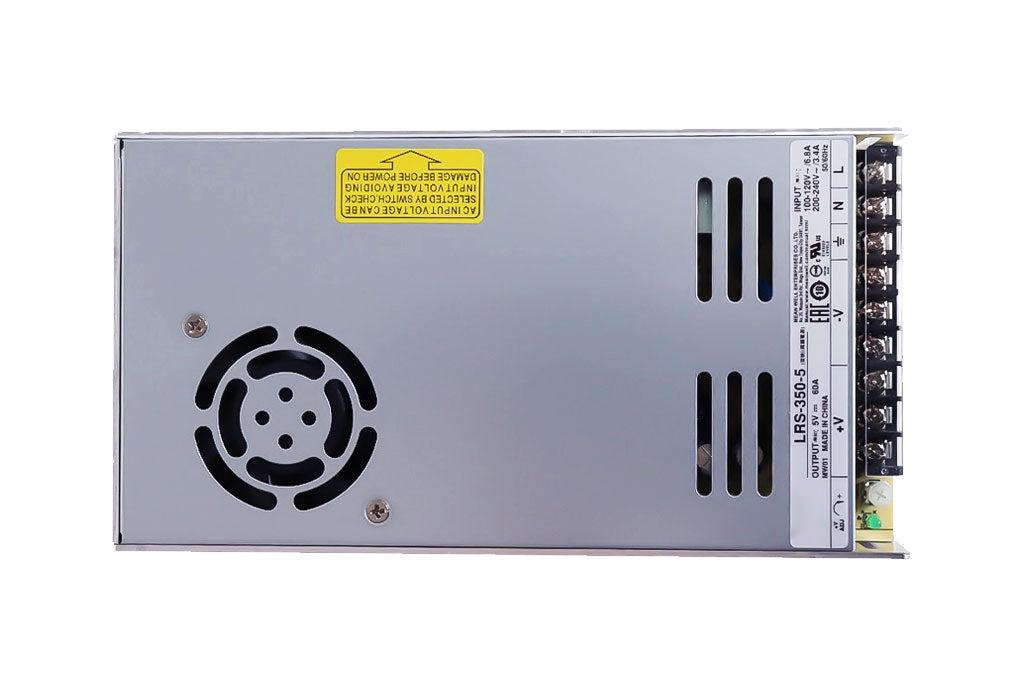
Why Do Some Power Supplies Waste Energy While Others Achieve 98% Efficiency?
If you are designing or sourcing a power supply, you have probably asked yourself:
- Why do some power supplies draw excessive current from the grid?
- Why do industrial systems require “PFC” while consumer devices sometimes do not?
- And more importantly—should your next product use a PFC power supply or a standard switching power supply?


The answer is not as simple as choosing one over the other. In modern power electronics, these two concepts are deeply interconnected.
A switching power supply is the core conversion system, while PFC is a critical efficiency-enhancing front-end stage that determines how cleanly and efficiently power is drawn from the grid.
Understanding how they work together—and when each matters—can directly impact:
- Energy efficiency
- Compliance with international standards
- Thermal performance
- Product reliability
- And even your electricity cost
This article goes beyond definitions. It explores real engineering trade-offs, product-level design decisions, and how modern SIPURUI switching power supplies integrate PFC for industrial-grade performance.

What Is a Switching Power Supply—and Why Has It Replaced Linear Designs?
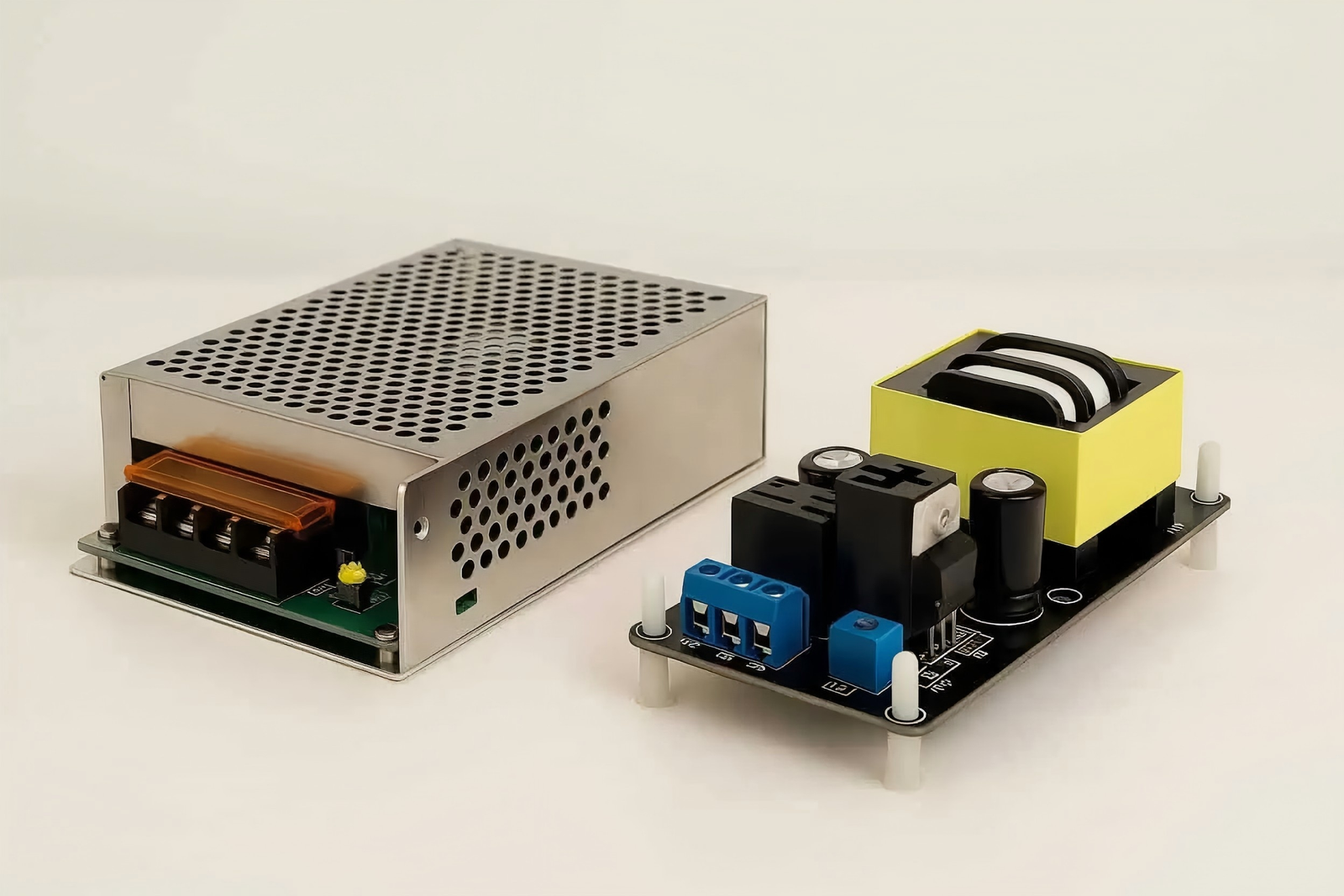
At its core, a switching power supply (SMPS) converts electrical energy by rapidly switching electronic components on and off, instead of dissipating excess energy as heat.
This simple idea fundamentally changed power electronics.
Unlike linear power supplies, which waste energy through heat dissipation, switching power supplies operate using high-frequency switching, allowing efficiencies approaching 98–99% in optimized designs.
What Actually Happens Inside an SMPS?


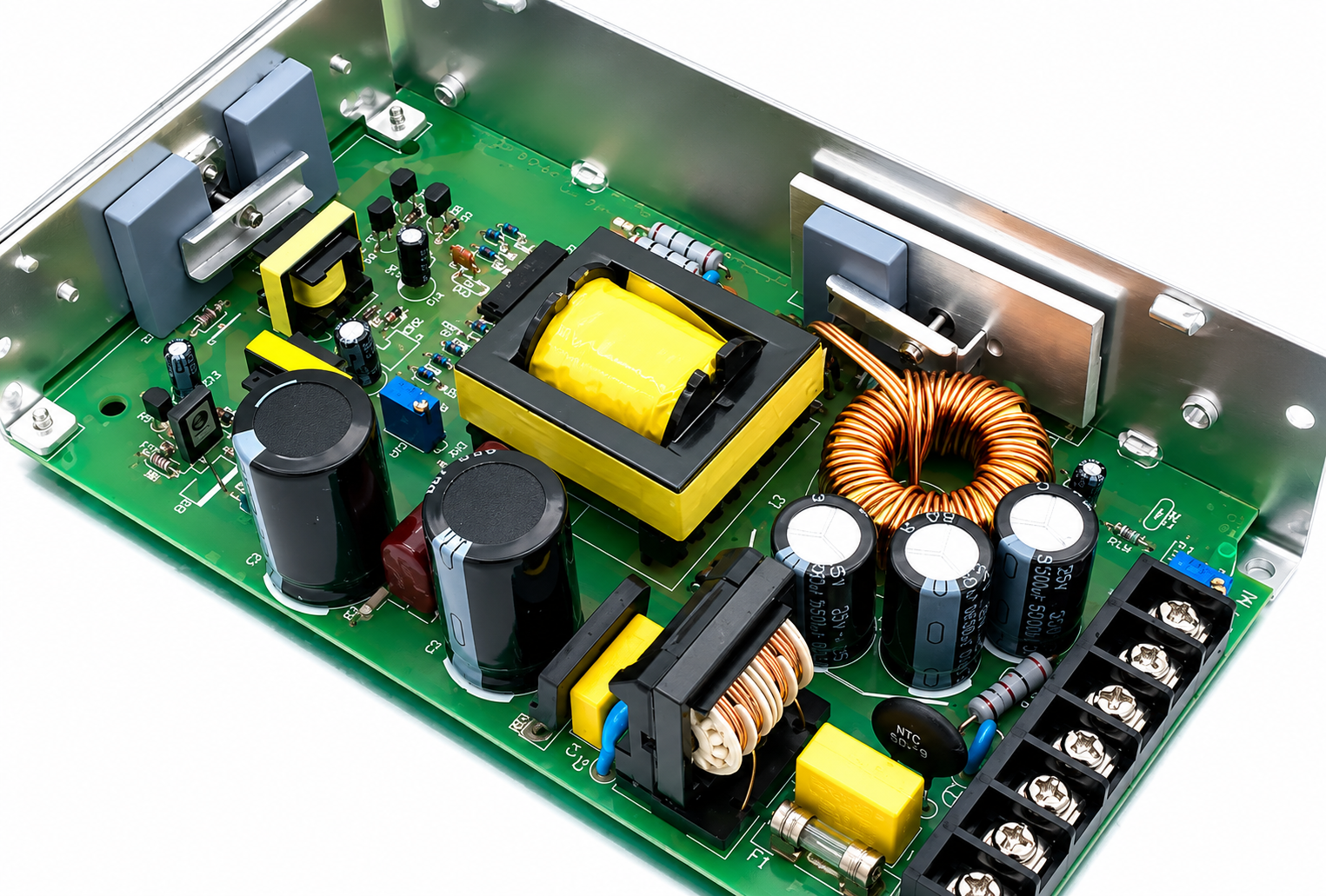
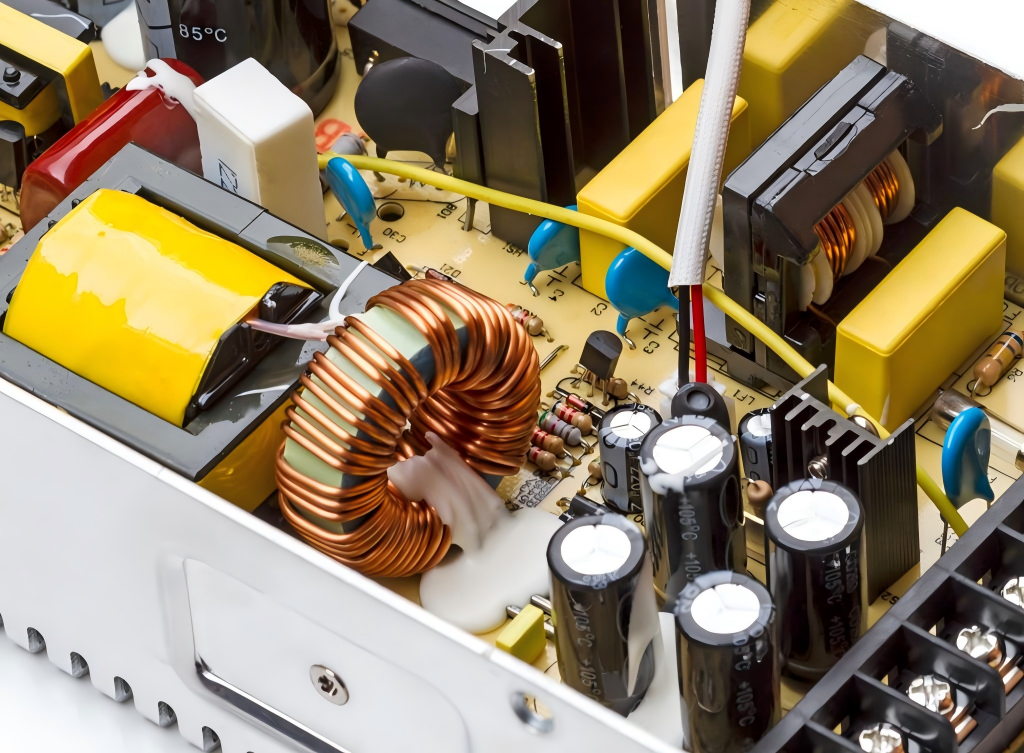
A typical switching power supply includes:
- AC rectification stage
- High-frequency switching stage (PWM control)
- Energy transfer via transformer or inductor
- Output rectification and filtering
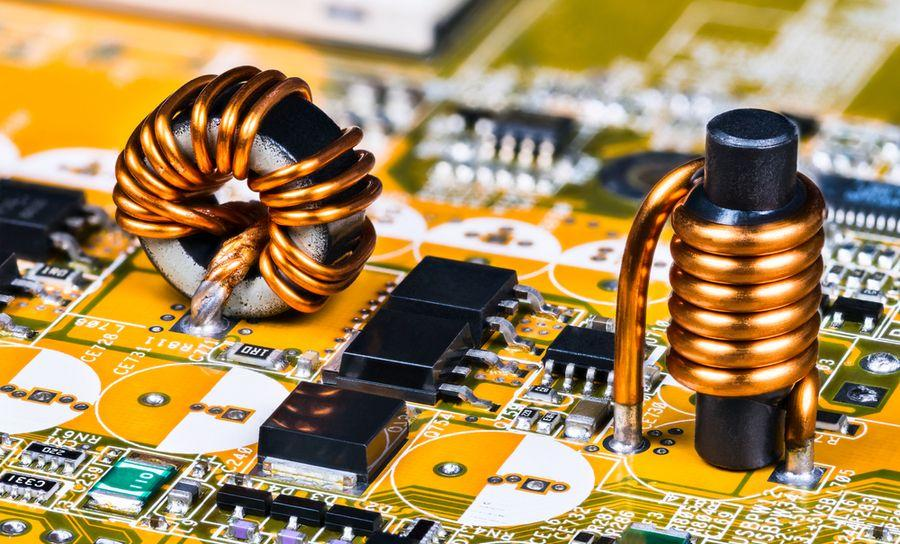
The key advantage is that energy is transferred using inductors and capacitors instead of resistive dissipation, drastically reducing losses.
Why Are Switching Power Supplies Dominating the Market?
Because they solve multiple engineering constraints at once:
| Feature | Linear Power Supply | Switching Power Supply |
| Efficiency | 40–60% | 85–98% |
| Size | Large (50/60Hz transformer) | Compact (high-frequency) |
| Heat generation | High | Low |
| Weight | Heavy | Lightweight |
| Flexibility | Limited | Wide voltage range |
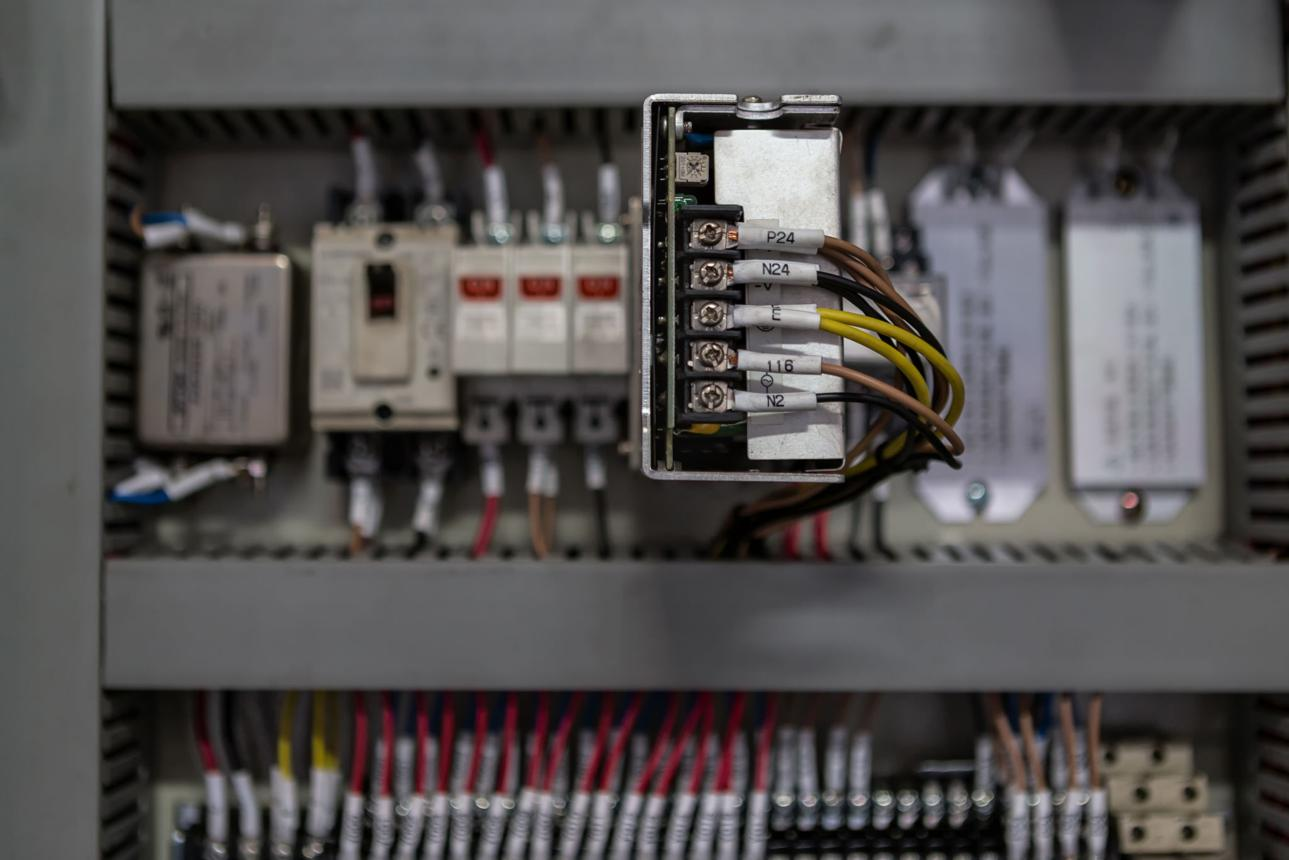
Modern industrial systems—from CNC machines to telecom infrastructure—depend almost entirely on switching power supplies.
And this is exactly where PFC becomes critical.
What Is PFC—and Why Is It No Longer Optional?
Why Does the Grid Care About Your Power Supply?


A standard switching power supply without PFC draws current in short pulses rather than a smooth waveform.
This leads to:
- Poor power factor
- Harmonic distortion
- Increased stress on the electrical grid
In fact, systems with low power factor draw more current for the same useful power, increasing losses in distribution systems and requiring larger infrastructure.
So What Does PFC Actually Do?
Power Factor Correction reshapes the input current so that it follows the voltage waveform.
Instead of spikes, you get a near-perfect sine wave.
Modern active PFC circuits use switching converters to actively shape the current waveform, minimizing harmonics and improving efficiency.
Passive vs Active PFC—Which One Should You Choose?
| Parameter | Passive PFC | Active PFC |
| Power Factor | 0.7–0.9 | 0.95–0.99 |
| Complexity | Low | High |
| Cost | Lower | Higher |
| Size | Larger (inductors) | Compact |
| Efficiency | Moderate | High |
Passive PFC is still used in low-cost or low-power applications.
But for industrial-grade power supplies, active PFC is now the standard.
Are PFC Power Supplies and Switching Power Supplies Actually Different?
This is where confusion often happens.
The short answer:
A PFC power supply is not a different category—it is an enhanced switching power supply.
In modern AC/DC systems, the architecture looks like this:
AC Input → PFC Stage → DC Bus → DC/DC Switching Stage
Without PFC, the switching stage still works—but the system becomes inefficient and non-compliant.
Key Differences Explained Clearly
| Aspect | PFC Function | Switching Power Supply |
| Role | Improves input efficiency | Converts voltage |
| Position | Front-end stage | Core system |
| Impact | Grid quality + efficiency | Output stability |
| Mandatory? | Yes (industrial/high power) | Always required |
A well-designed system integrates both seamlessly.
How Does PFC Work Inside a Real Power Supply?
Let’s go deeper—because this is where product quality is determined.
After AC rectification, instead of feeding raw DC into the switching stage, a PFC circuit:
- Chops the waveform at high frequency
- Shapes the current to match the voltage
- Produces a stable high-voltage DC bus
This DC bus is often higher than 300V and feeds the PWM stage.
Two Operating Modes Engineers Care About
| Mode | Description | Use Case |
| CCM (Continuous Conduction Mode) | Stable frequency, variable duty cycle | High power |
| DCM (Discontinuous Conduction Mode) | Variable frequency | Lower power |
These modes directly affect:
- Efficiency
- EMI performance
- Thermal behavior
Why Are High-Frequency PFC Designs Becoming the New Standard?

Recent industry trends show a clear shift toward high-frequency switching PFC designs.
Why?
Because they enable:
- Smaller inductors and capacitors
- Higher power density
- Better dynamic response
- Reduced system weight
High-frequency PFC designs (100kHz–MHz range) are rapidly replacing traditional bulky solutions.
This is exactly where modern brands differentiate themselves.
What Makes a High-Performance Switching Power Supply Today?
If you are sourcing or designing a power supply, the key question is no longer:
“Does it have PFC?”
Instead, ask:
- How efficient is the PFC stage?
- What topology is used in the DC/DC stage?
- How is EMI controlled?
- What is the thermal design?
Example: SIPURUI Industrial Switching Power Supply Design Philosophy
Modern SIPURUI switching power supplies are designed around three principles:
1. High-Efficiency Active PFC
- PF ≥ 0.98
- Reduced harmonic distortion
- Compliance with international standards
2. Optimized DC/DC Topology
- Flyback for low-power compact units
- LLC or full-bridge for high-power systems
- High-frequency switching for size reduction
3. Industrial Reliability
- Thermal protection
- Overvoltage/overcurrent protection
- Long lifecycle capacitors
How Do Different Applications Require Different Power Architectures?
Not all power supplies are created equal.
Application-Based Comparison
| Application | Recommended Architecture | Why |
| LED Drivers | PFC + Flyback | Efficiency + compact size |
| Industrial Automation | PFC + LLC | Stability + high power |
| Telecom | PFC + Full Bridge | High reliability |
| Consumer Electronics | Optional PFC | Cost sensitivity |
When Can You Skip PFC—and When Is It a Mistake?
You might be wondering:
“Can I reduce cost by skipping PFC?”
Technically yes—but practically risky.
PFC Is Optional Only When:
- Power < 75W
- No regulatory requirement
- Cost is the primary concern
PFC Is Mandatory When:
- Industrial applications
- Export to EU/US markets
- High-power systems
- Energy efficiency certification required
Without PFC:
- Efficiency drops
- Heat increases
- Grid interference rises
- Compliance becomes difficult

What Should You Look for When Choosing a Switching Power Supply Supplier?
This is where many buyers make costly mistakes.
Do not just compare price.
Instead, evaluate:
- Power factor performance
- Efficiency curve (not just peak value)
- Thermal design
- Protection features
- Long-term reliability
A supplier like SIPURUI should not just deliver a power supply—but a complete power solution.
Final Thoughts: Are You Designing for Cost—or for Performance?
The real question is not:
“PFC vs Switching Power Supply?”
But rather:
“How well are they integrated?”
Modern power systems demand:
- High efficiency
- Compact size
- Regulatory compliance
- Long-term reliability
And the only way to achieve all four is through advanced PFC + optimized switching topology.