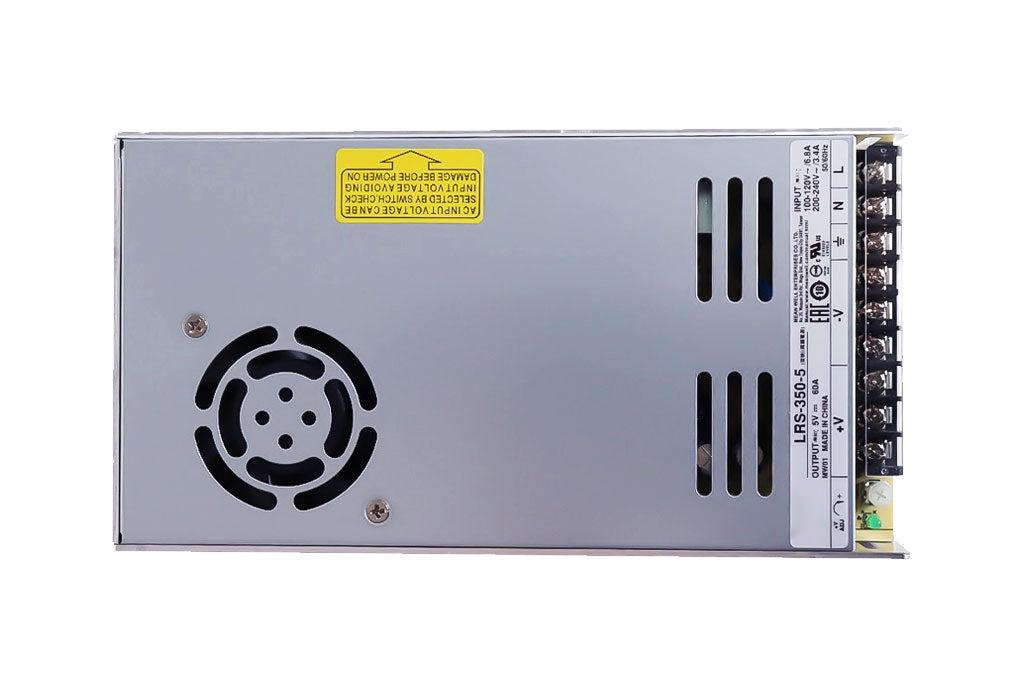
...

What Really Powers Your Devices? A Deep Dive into Switching Power Supplies

Have you ever stopped to think about what keeps your machines running continuously, your production lines stable, or your electronic devices functioning flawlessly?

Behind almost every modern electrical system lies a critical component that often goes unnoticed—the switching power supply.

But what exactly is it? Why has it become the industry standard? And more importantly, how do you choose the right one for your application?

In this comprehensive guide, we will explore everything you need to know about switching power supplies—from fundamental principles to advanced product selection—while highlighting reliable solutions from SIPURUI.


What Is a Switching Power Supply—and Why Has It Replaced Traditional Designs?

A switching power supply (SMPS) is an electronic device that converts electrical energy efficiently from one voltage level to another using high-frequency switching technology.

But why is it preferred over traditional linear power supplies?

The Key Difference: Efficiency and Design

Linear power supplies regulate voltage by dissipating excess energy as heat. In contrast, switching power supplies:

·Rapidly switch electrical current on and off

·Store energy in inductors and transformers

·Deliver only the required output power

This results in significantly higher efficiency and reduced thermal loss.

Performance Comparison

ParameterSwitching Power SupplyLinear Power Supply
Efficiency85% – 95%40% – 60%
Heat DissipationLowHigh
Size & WeightCompactLarge & Heavy
Input FlexibilityWide RangeNarrow
Reliability in IndustryHighModerate

So, if efficiency, compactness, and scalability matter—SMPS is no longer optional; it is essential.


How Does a Switching Power Supply Actually Work?

At first glance, a switching power supply may seem complex. However, its working principle can be broken down into a series of logical steps.

Step 1: AC to DC Conversion

The input AC voltage is rectified into pulsating DC using a diode bridge.

Step 2: High-Frequency Switching

A power transistor (typically a MOSFET) switches at frequencies ranging from 20 kHz to several hundred kHz.

Why high frequency? Because it allows:

·Smaller transformers

·Faster response

·Higher efficiency

Step 3: Energy Transfer Through Transformer

The high-frequency signal passes through a transformer, which:

·Adjusts voltage levels

·Provides electrical isolation

Step 4: Rectification and Filtering

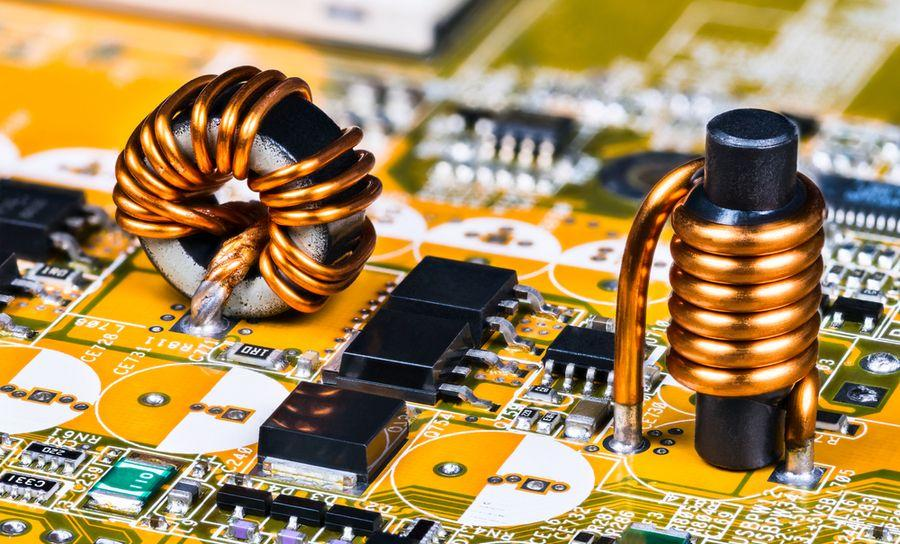
The output is converted back into DC and smoothed using capacitors and inductors.

Step 5: Feedback Control

A feedback loop continuously monitors output voltage and adjusts switching duty cycle to maintain stability.


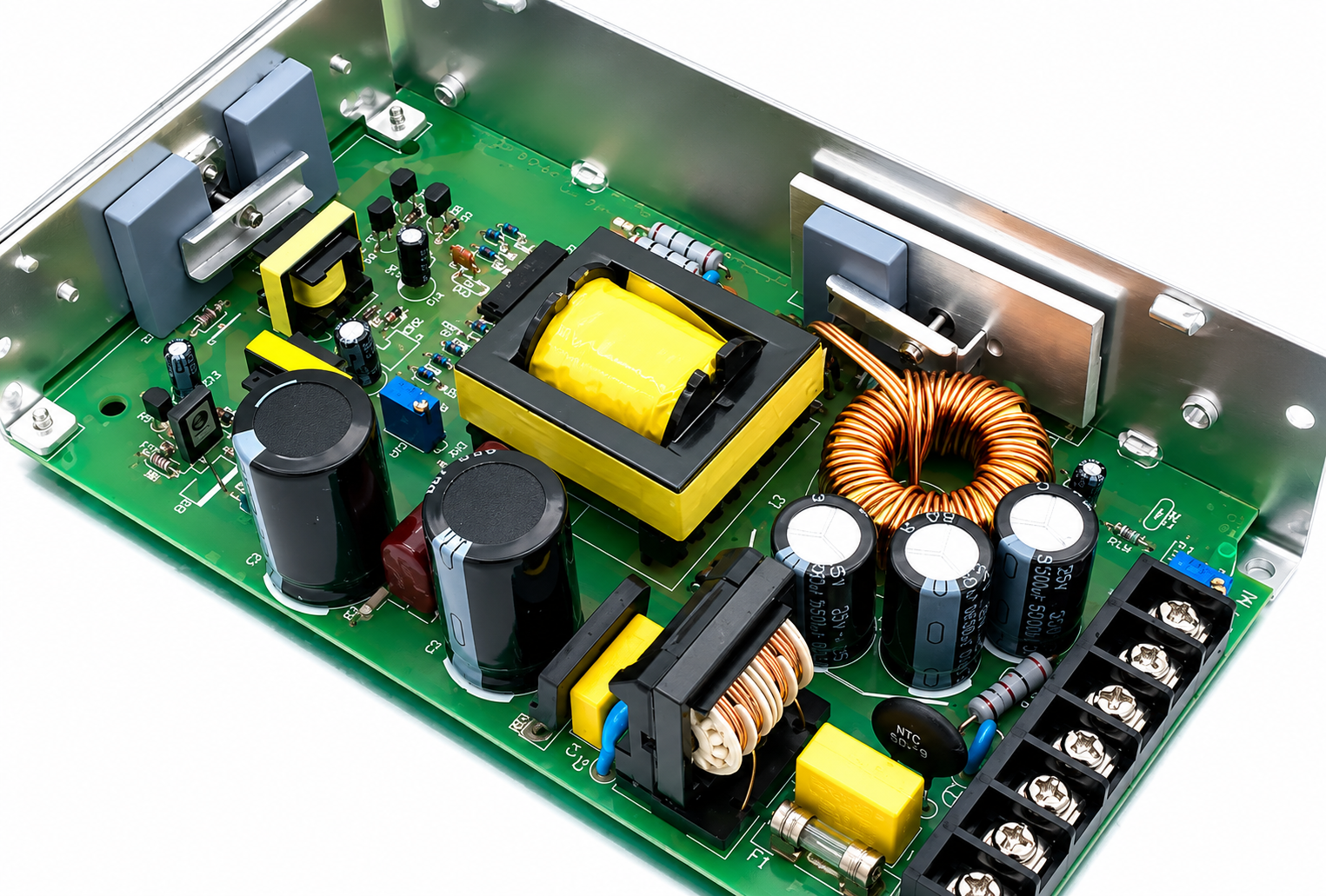
What Are the Core Components Inside an SMPS?

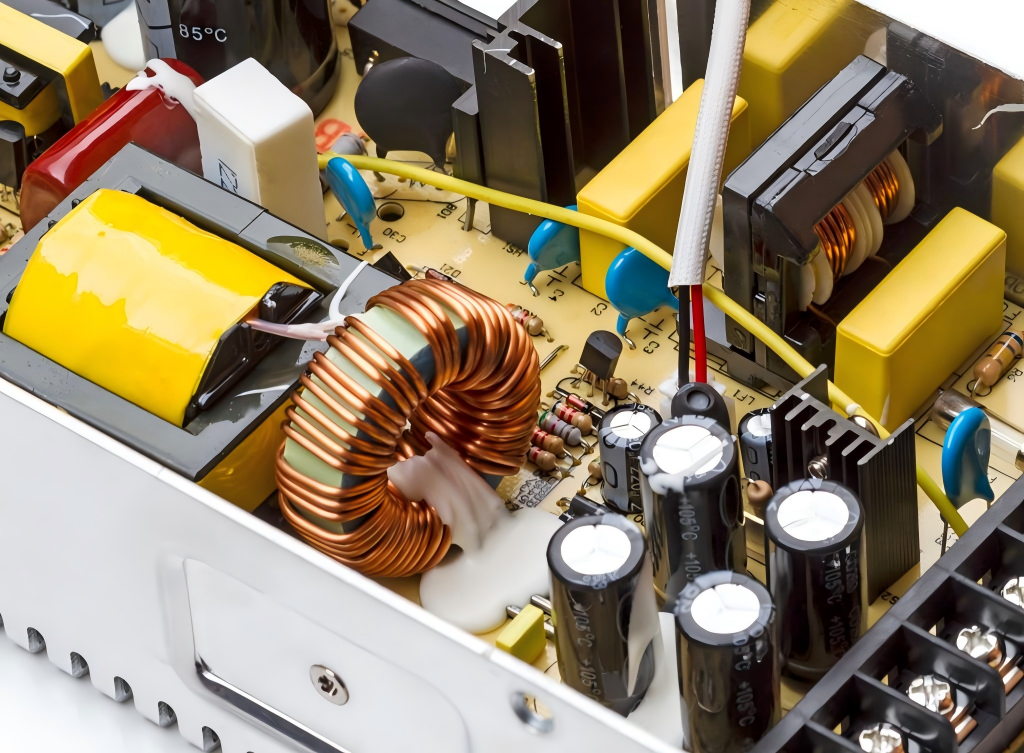
Understanding the internal structure helps you evaluate product quality and reliability.

Key Components and Their Roles

ComponentRole in the System
Input RectifierConverts AC to DC
Bulk CapacitorStabilizes input voltage
Switching TransistorControls energy flow
TransformerVoltage conversion & isolation
Output RectifierConverts HF AC to DC
Output FilterReduces ripple
PWM ControllerRegulates switching behavior
Feedback CircuitMaintains voltage accuracy

A well-designed switching power supply—such as those from SIPURUI—optimizes each of these components for durability and efficiency.


What Types of Switching Power Supplies Are Available?

Not all SMPS units are the same. Choosing the right type depends on your application.

Common SMPS Types

TypeDescriptionBest For
AC-DC Power SupplyConverts mains AC to DCIndustrial automation
DC-DC ConverterConverts DC levelsEmbedded systems
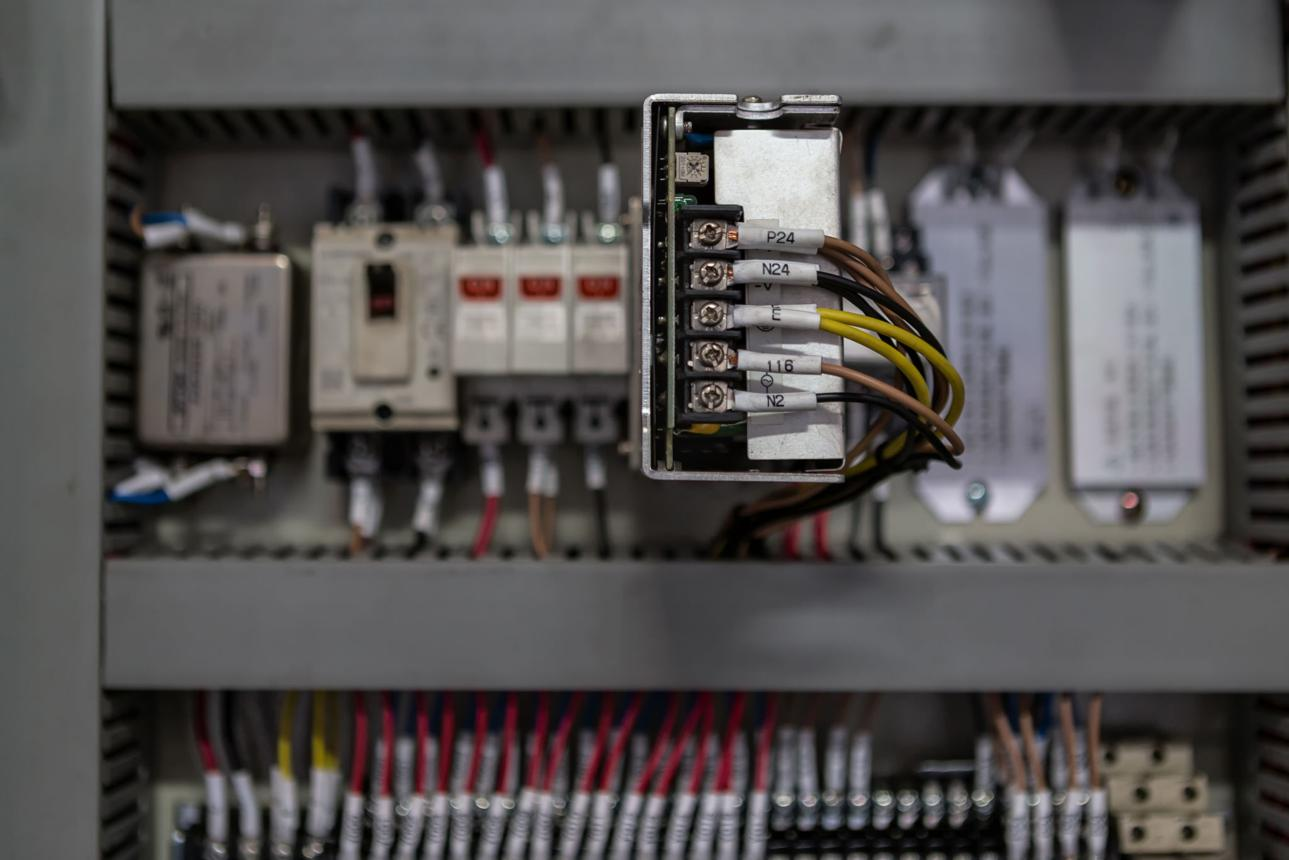
DIN Rail Power SupplyMountable industrial unitsControl cabinets
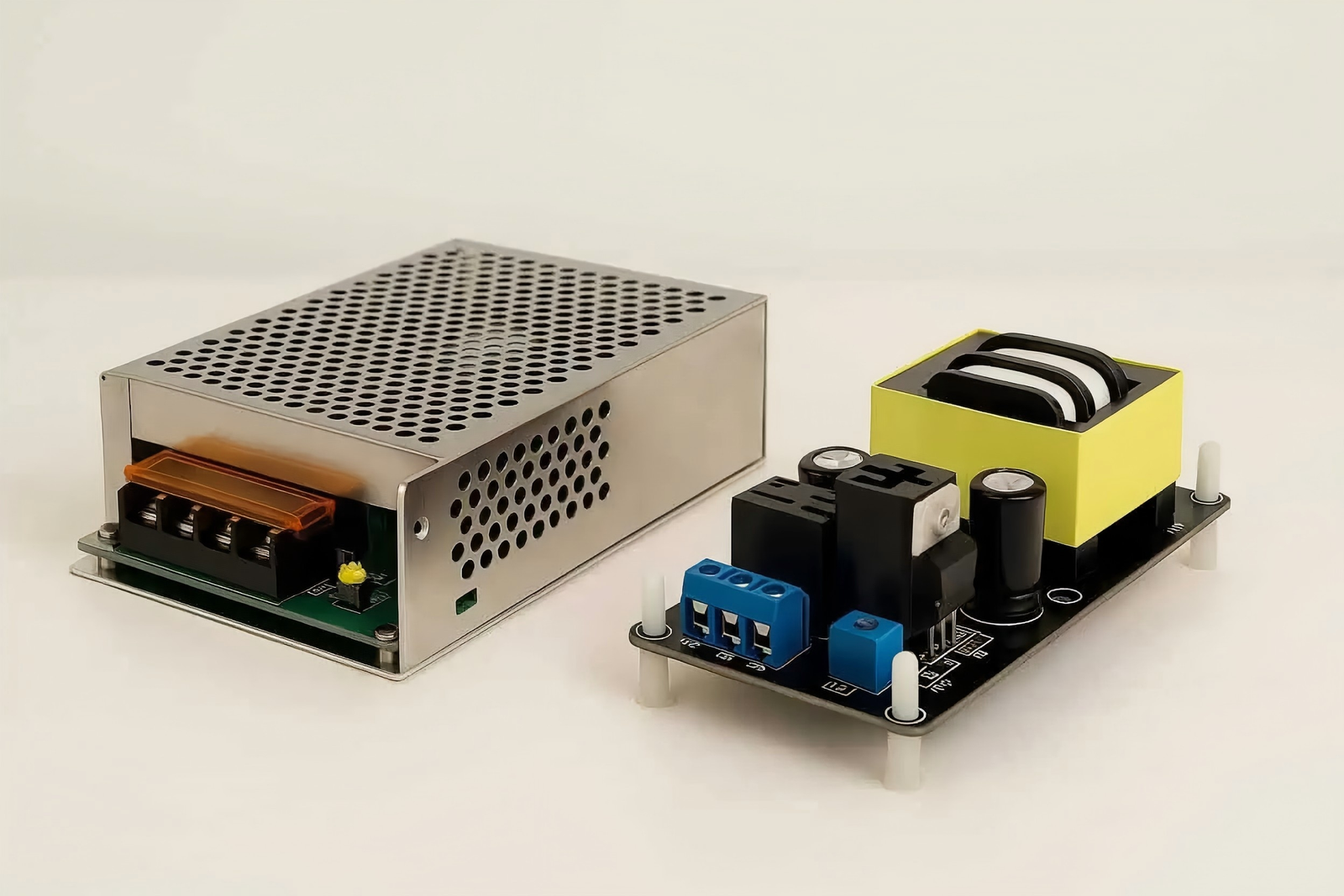
Enclosed Power SupplyMetal casing for protectionMachinery
Open Frame Power SupplyCompact, cost-effectiveOEM applications

Which SIPURUI Power Supply Series Should You Choose?

Selecting a switching power supply is not just about voltage—it’s about matching the right product series to your environment.

SIPURUI Product Positioning

Series TypeKey FeaturesTypical Applications
DIN Rail SeriesEasy installation, compactAutomation systems
Enclosed SeriesRobust metal housingIndustrial equipment
Open Frame SeriesSpace-saving designEmbedded/OEM
High Power SeriesHigh wattage outputCNC, heavy machinery

Why Engineers Choose SIPURUI

·Wide input voltage range (85–264V AC typical)

·High efficiency up to 92%

·Low ripple and noise

·Full protection (OVP, OCP, SCP, OTP)

·Long operational lifespan (>50,000 hours)


What Factors Should You Consider Before Buying?

Choosing the wrong power supply can lead to system instability or even failure. So what should you evaluate?


1. How Much Power Do You Really Need?

Always allow a safety margin.

Load TypeRecommended Margin
Standard Electronics+20%
Industrial Systems+30%
Continuous Operation+40%

2. Is Your Input Voltage Stable?

Look for wide-range input models, especially for global applications.


3. How Important Is Efficiency?

Higher efficiency means:

·Lower electricity cost

·Reduced cooling requirements

·Longer system lifespan


4. What About Environmental Conditions?

Consider:

·Operating temperature

·Humidity

·Dust and vibration

SIPURUI industrial models are designed to perform reliably under harsh conditions.


5. Do You Need Certifications?

Depending on your market:

·CE (Europe)

·UL (North America)

·RoHS compliance


Where Are Switching Power Supplies Used Today?

Switching power supplies are everywhere—but where do they matter most?

Key Application Areas

·Industrial automation systems

·CNC machines and tooling equipment

·Telecommunications infrastructure

·LED lighting systems

·Medical devices

·Consumer electronics

In modern manufacturing environments, stable power is directly linked to productivity and product quality.


What Are the Common Mistakes When Selecting an SMPS?

Even experienced engineers sometimes overlook critical details.

Avoid These Pitfalls

·Choosing insufficient power capacity

·Ignoring heat dissipation

·Overlooking ripple and noise requirements

·Selecting non-isolated designs where isolation is needed

·Underestimating environmental stress


What Makes a High-Quality Switching Power Supply?

A truly reliable SMPS is not defined by price—but by engineering quality.

Key Quality Indicators

·High-grade capacitors (long life, low ESR)

·Efficient thermal design

·Stable PWM control system

·Comprehensive protection features

·Proven reliability data

SIPURUI integrates these design principles into every product series.


How Is SMPS Technology Evolving?

The industry continues to evolve rapidly.

Emerging Trends

·Higher switching frequencies (GaN technology)

·Greater power density

·Digital control systems

·Smart monitoring capabilities

·Improved EMI performance

These innovations are shaping the next generation of power supplies—and influencing how manufacturers like SIPURUI develop future products.

Conclusion: Are You Choosing the Right Power Supply?

Switching power supplies are no longer just components—they are the foundation of modern electronic systems.

By understanding:

·How they work

·What components matter

·Which types are available

·How to evaluate performance

You can make a well-informed decision that ensures long-term reliability and efficiency.

If you are looking for a dependable solution tailored to industrial and commercial needs, SIPURUI switching power supplies offer a balance of performance, durability, and cost-effectiveness.

Related Posts

Need a Reliable Power Supply Partner?

Contact us today to discuss your project and get professional support.

“Wait! Don’t leave without your free quote”

“Get in touch now and we’ll provide a personalized solution for your project. Fill the form below to get started!”


Seraphinite AcceleratorOptimized by Seraphinite Accelerator
Turns on site high speed to be attractive for people and search engines.