...

Why Switching Power Supplies Dominate Modern Industry: A Deep Dive into SMPS Design, Performance, and Selection

What Really Powers Modern Electronics—and Why Should You Care?

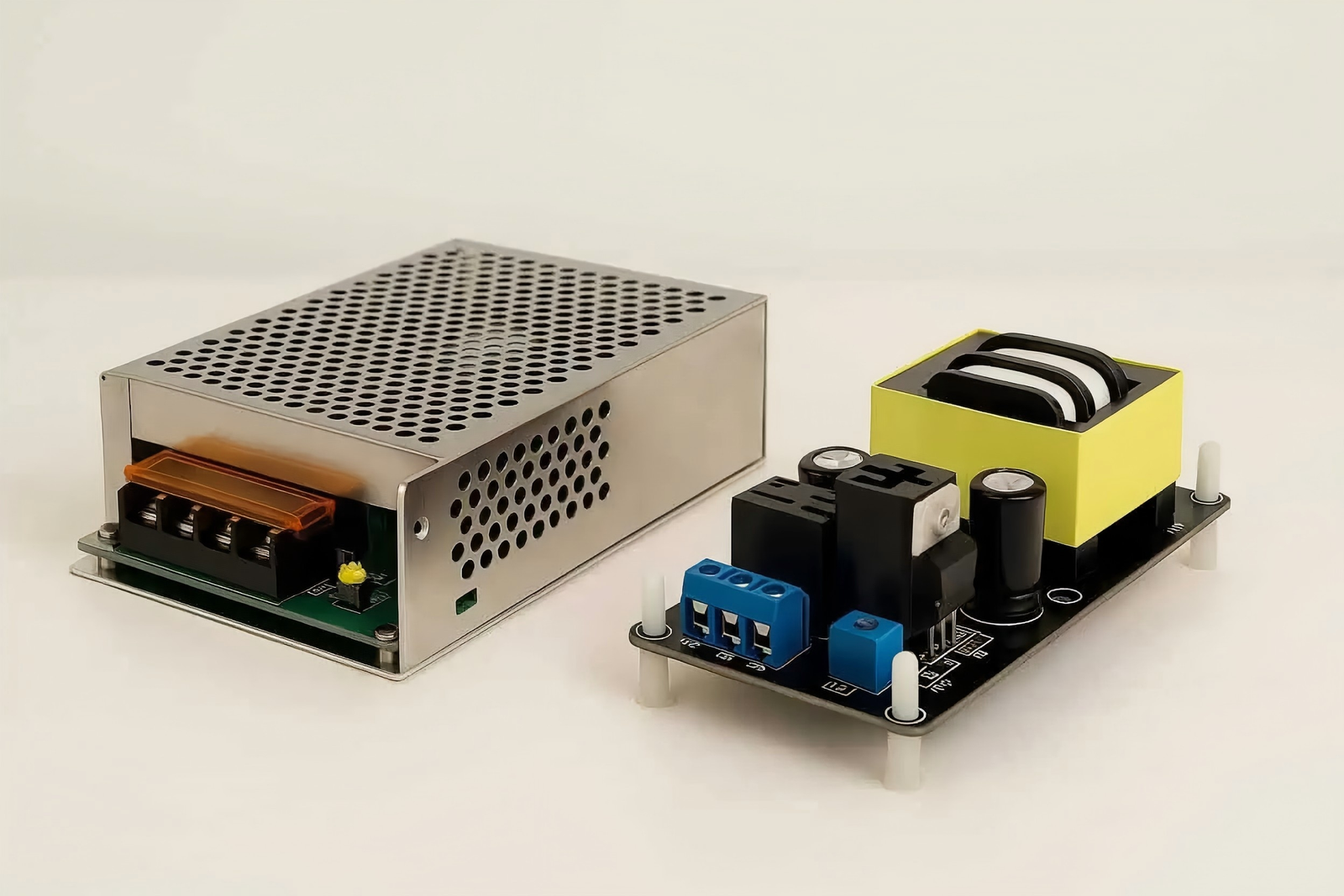
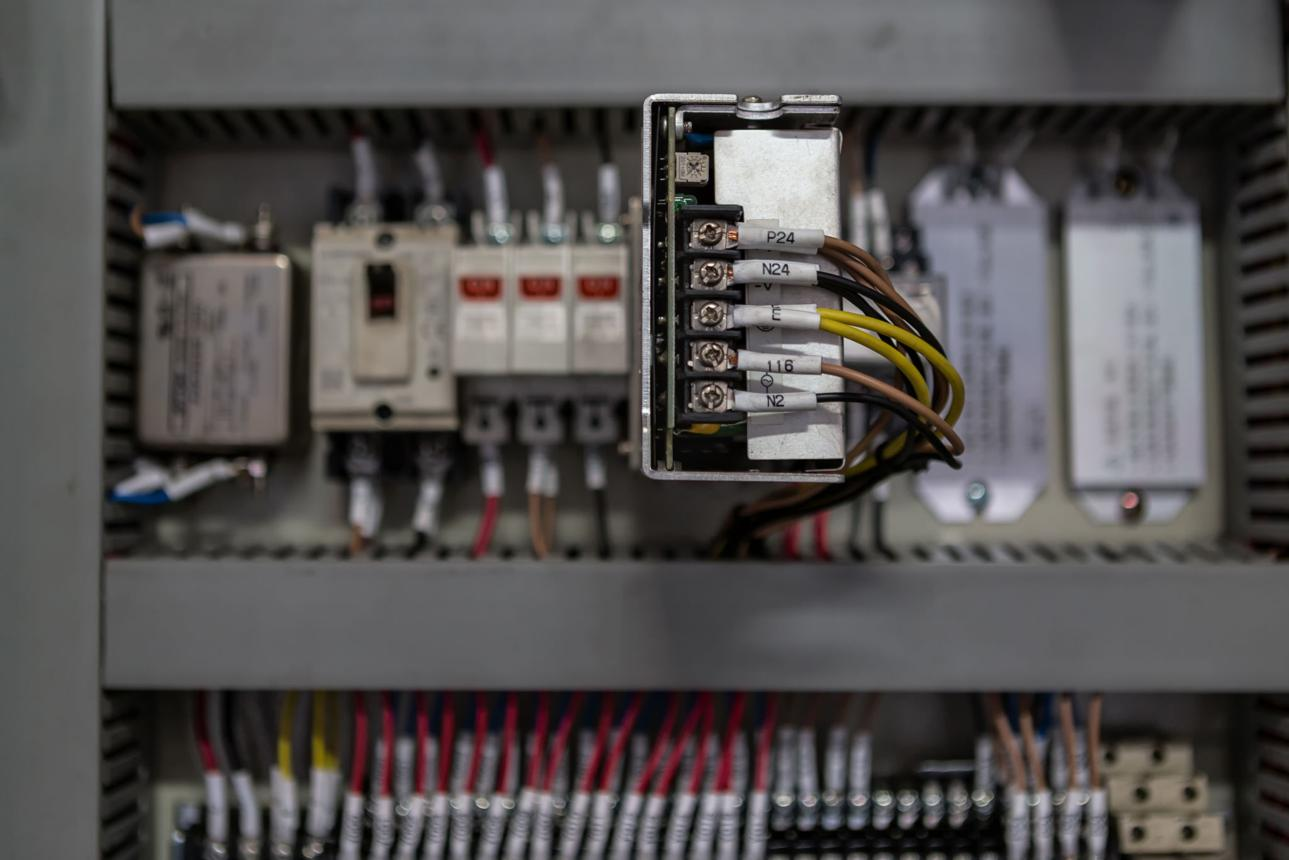
If you open any modern industrial system—whether it is a CNC machine, automation controller, or communication rack—you will almost certainly find a switching power supply at its core. This is not a coincidence, nor is it simply a matter of cost. The widespread adoption of switching mode power supplies (SMPS) reflects a fundamental shift in how electrical energy is managed, converted, and stabilized in high-performance environments.

Unlike traditional designs, a switching power supply does not passively convert energy. It actively regulates it. By using high-frequency switching techniques combined with intelligent feedback control, it is capable of delivering stable DC output while minimizing energy loss, heat generation, and physical size. This combination makes it indispensable in applications where efficiency and reliability directly impact productivity.

For industrial users, especially those working with precision equipment such as CNC systems, the quality of the power supply is not a background detail. It directly influences machine stability, signal integrity, and even tool lifespan. This is precisely why SIPURUI focuses on engineering SMPS solutions that are not only efficient but also robust under demanding conditions.


Why Did the Industry Move Away from Linear Power Supplies?

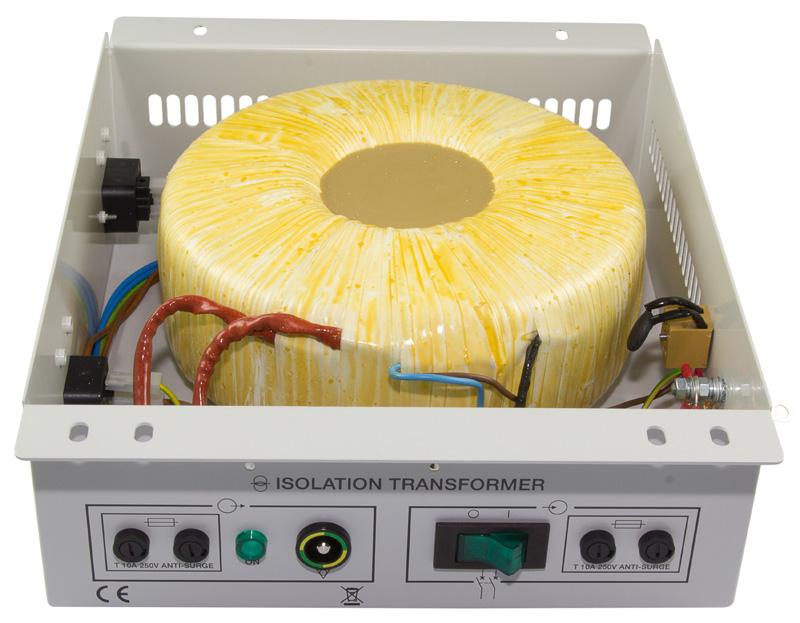
To understand the value of switching power supplies, it helps to revisit what came before them. Linear power supplies, once the standard, rely on low-frequency transformers operating at 50 or 60 Hz. This fundamental limitation forces the use of large magnetic components, resulting in bulky, heavy, and inefficient systems.

In a linear design, excess voltage is simply dissipated as heat. While this approach is simple and relatively low-noise, it becomes highly impractical as power demands increase. The inefficiency not only wastes energy but also introduces thermal challenges that require additional cooling solutions.

Switching power supplies take a completely different approach. Instead of relying on low-frequency transformation, they first convert incoming AC into DC and then rapidly switch it at high frequencies—often tens of kilohertz or higher. This allows the transformer to operate much more efficiently and at a dramatically reduced size. As a result, the entire system becomes lighter, more compact, and significantly more efficient.

The difference becomes especially clear when comparing performance characteristics:

ParameterLinear Power SupplySwitching Power Supply (SMPS)
Efficiency40–60%80–95%
SizeLargeCompact
Heat GenerationHighLow
Industrial SuitabilityLimitedExcellent

This transition is not just technological—it is economic and operational. In industrial environments, where systems may run continuously, even a small efficiency gain translates into substantial cost savings over time.


How Does a Switching Power Supply Actually Work in Practice?

At first glance, the internal operation of a switching power supply can appear complex, but its logic follows a clear and elegant sequence. The process begins as AC power enters the system and encounters an input filtering stage. This stage is critical, as it removes electromagnetic interference and suppresses voltage spikes that could otherwise propagate through the system or damage sensitive components.

Once filtered, the AC signal is rectified into DC. However, unlike in a linear power supply, this DC is not directly regulated. Instead, it is fed into high-speed switching devices—typically MOSFETs—which convert it into a high-frequency square wave. This transformation is the key to the SMPS advantage, because it allows the subsequent transformer stage to operate efficiently at much higher frequencies.

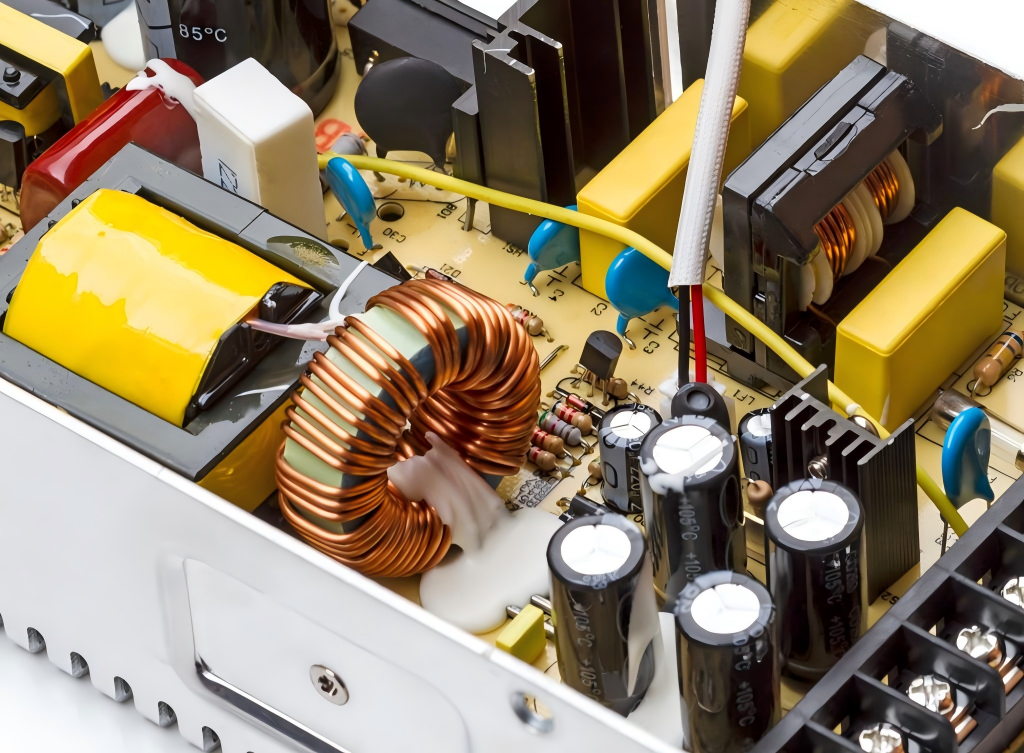
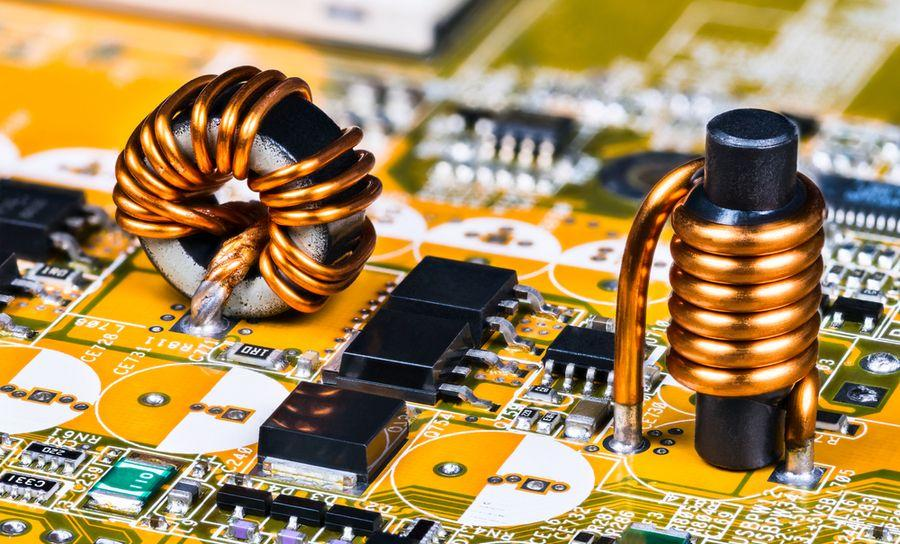
The transformer, now handling a high-frequency waveform, can be much smaller while still transferring significant power. After voltage conversion, the signal is rectified again on the secondary side, where fast-acting components such as Schottky diodes ensure efficient DC output. Finally, inductors and capacitors smooth the output, removing ripple and delivering a stable voltage suitable for sensitive electronic loads.

What makes this process particularly powerful is not just the sequence itself, but the control system that governs it.


Can a Power Supply Really Adapt to Changing Load Conditions?

The defining feature of a modern switching power supply is its ability to respond dynamically to changes in load, and this is made possible through pulse width modulation (PWM). Rather than operating at a fixed output, the system continuously monitors its own performance. If the output voltage begins to drift due to increased load, the control circuit adjusts the switching behavior in real time.

This closed-loop mechanism allows the power supply to maintain a stable output even under fluctuating demand. When load increases, the system responds by extending the conduction time of the switching devices, effectively delivering more energy. When load decreases, it reduces the duty cycle, conserving energy and minimizing stress on components.

This behavior can be summarized as follows:

Load ConditionPWM AdjustmentResult
IncreasingWider pulse widthVoltage stabilized
DecreasingNarrower pulse widthReduced energy output
Sudden changeRapid duty cycle correctionFast transient response

In SIPURUI designs, this control loop is optimized for industrial environments, ensuring not only stability but also fast response times, which are essential in applications involving motors, drives, and rapidly changing loads.


What Is Actually Inside a High-Quality SMPS?

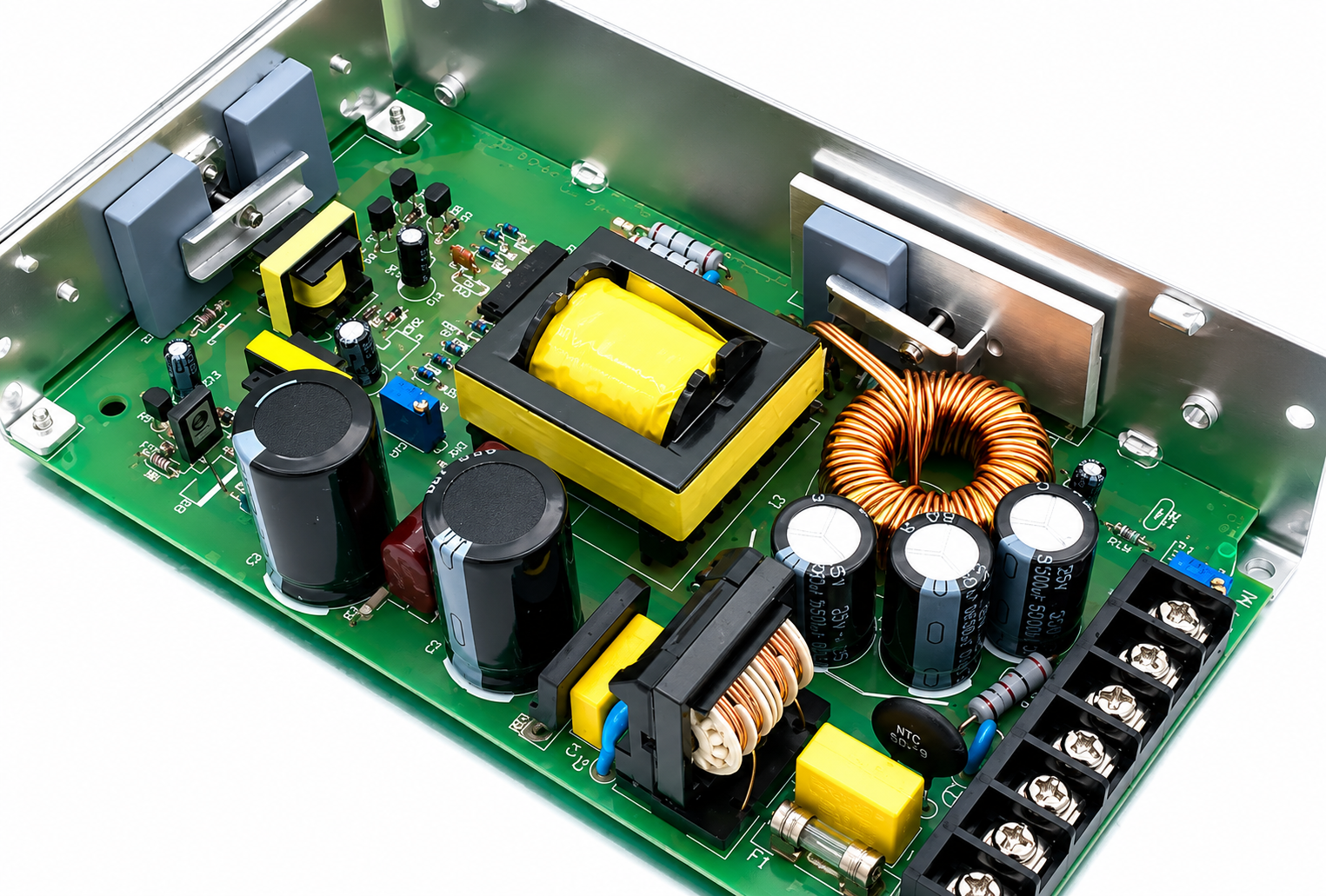
Internally, a switching power supply is divided into two main domains: the primary side and the secondary side. The primary side handles high-voltage input and includes components such as the EMI filter, rectifier bridge, power factor correction circuit, and switching transistors. This section is responsible for preparing and converting the incoming energy into a form suitable for transformation.

The secondary side, in contrast, deals with low-voltage output. Here, the focus shifts to rectification, filtering, and regulation. High-speed diodes, inductors, and capacitors work together to ensure that the output voltage is both stable and clean.

Separating these two domains is the transformer, which not only converts voltage but also provides electrical isolation. This isolation is critical for safety, especially in industrial environments where equipment may be exposed to high voltages or harsh conditions.


Why Is Power Factor Correction No Longer Optional?

In modern power systems, efficiency is not just about reducing losses—it is also about how effectively power is drawn from the grid. This is where power factor correction (PFC) becomes essential. Without it, power supplies can introduce harmonic distortion and inefficient current draw, leading to wasted energy and potential compliance issues.

Active PFC circuits, such as those integrated into SIPURUI products, address this by shaping the input current to match the voltage waveform more closely. The result is a power factor that approaches unity, typically between 0.95 and 0.99.

FeaturePassive PFCActive PFC (SIPURUI)
Power Factor0.6–0.80.95–0.99
Input Voltage RangeLimitedWide (90–264V AC)
EfficiencyModerateHigh

This improvement is particularly important in industrial installations, where multiple power supplies may operate simultaneously and regulatory standards are increasingly strict.


How Does SMPS Design Affect CNC Machine Performance?

In high-precision environments such as CNC machining, the power supply plays a far more critical role than is often assumed. Voltage instability can lead to inconsistent motor behavior, while electrical noise can interfere with control signals. Over time, these issues can result in reduced machining accuracy, increased tool wear, and even system downtime.

A well-designed switching power supply minimizes these risks by providing clean, stable, and responsive power. Low ripple output ensures that sensitive control circuits operate reliably, while efficient thermal design prevents overheating during extended operation.

SIPURUI power supplies are specifically engineered with these requirements in mind, offering high current capacity, stable voltage regulation, and long operational life. These characteristics make them particularly well-suited for demanding applications such as CNC systems, laser cutting machines, and industrial automation.


What Should You Consider When Selecting a Switching Power Supply?

Choosing the right SMPS is not simply a matter of matching voltage and current ratings. It requires a deeper evaluation of performance characteristics, reliability, and application requirements.

Efficiency is often the first metric considered, but it should be evaluated alongside thermal performance. A highly efficient power supply generates less heat, which in turn improves longevity and reduces cooling requirements. Output stability is equally important, especially in systems where even small voltage deviations can have significant consequences.

Protection features such as over-voltage, over-current, and short-circuit protection are essential safeguards that prevent damage under fault conditions. Finally, the quality of internal components—from capacitors to switching devices—plays a decisive role in determining overall reliability.


How Is SMPS Technology Evolving in the Future?

The evolution of switching power supplies is far from complete. Advances in semiconductor technology, particularly the adoption of gallium nitride (GaN) and silicon carbide (SiC), are enabling higher switching frequencies and greater efficiency. At the same time, digital control systems are making power supplies more intelligent, allowing for real-time monitoring and adaptive optimization.

These developments are driving a new generation of SMPS designs that are smaller, more efficient, and more capable than ever before. SIPURUI continues to invest in these technologies, ensuring that its products remain aligned with the future of industrial power systems.


Conclusion: Why SMPS Is the Backbone of Reliable Industrial Power

Switching power supplies have redefined what is possible in power conversion. By combining efficiency, compact design, and intelligent control, they have become the foundation of modern electronic systems.

For industrial users, the choice of power supply is not a secondary consideration. It is a critical component that influences performance, reliability, and long-term cost. A high-quality SMPS, such as those developed by SIPURUI, provides the stability and efficiency required to support advanced equipment in demanding environments.

Related Posts

Need a Reliable Power Supply Partner?

Contact us today to discuss your project and get professional support.

“Wait! Don’t leave without your free quote”

“Get in touch now and we’ll provide a personalized solution for your project. Fill the form below to get started!”


Seraphinite AcceleratorOptimized by Seraphinite Accelerator
Turns on site high speed to be attractive for people and search engines.