Skip to content


Introduction: Why Does a Quiet Power Supply Suddenly Start Making Noise?
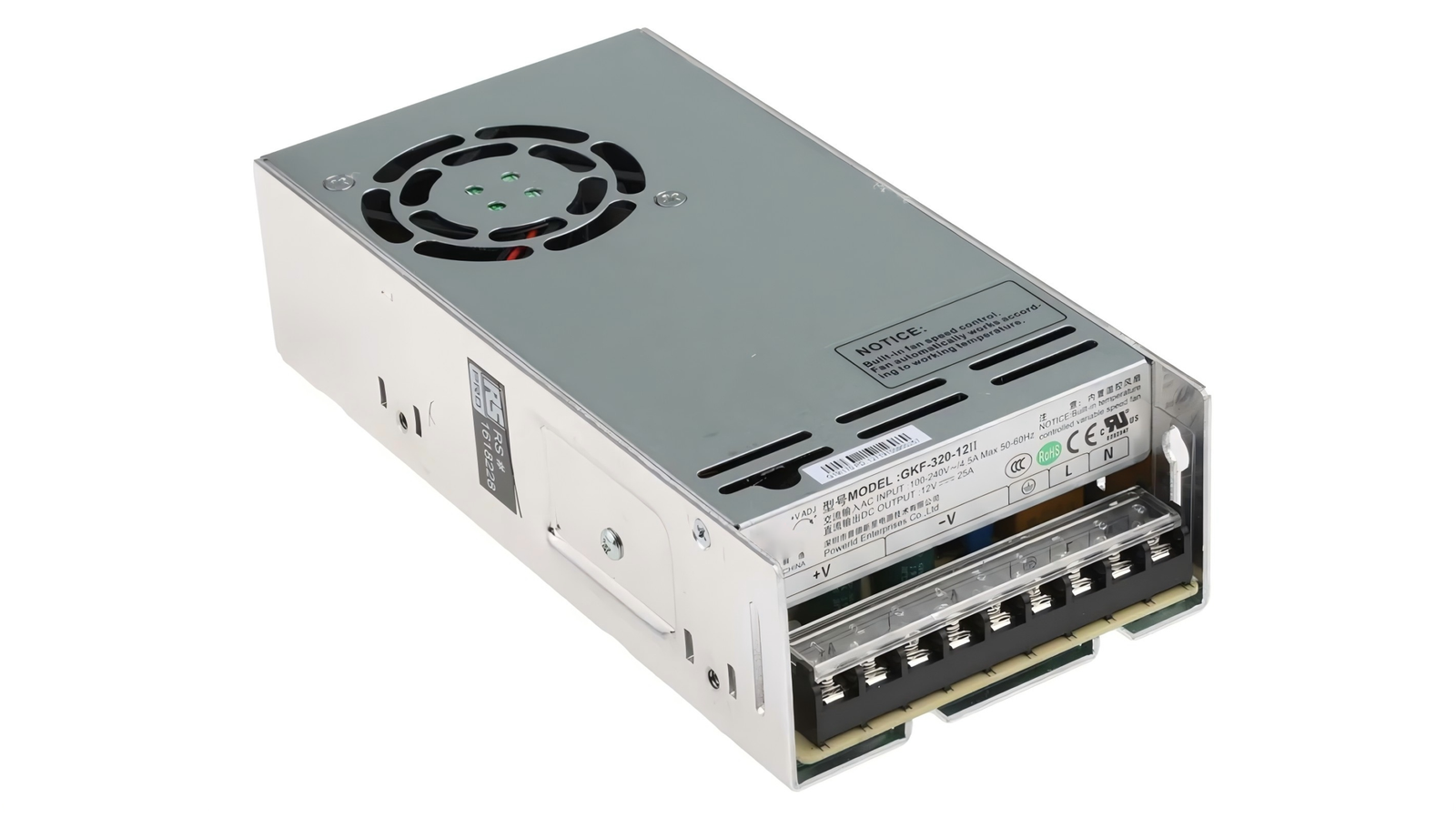
A switching power supply is expected to run quietly in the background while delivering stable and efficient DC power. Whether it is installed inside a PLC cabinet, powering CCTV equipment, supporting LED systems, or used in industrial automation, most users only notice the power supply when something goes wrong.
One of the most common complaints is unexpected noise.
Sometimes the sound is a faint high-pitched whistle. In other cases it becomes a buzz, a chirp, or a sharp squeal that increases under load. Some units only make noise during startup. Others become louder after months of operation.
These sounds should not be ignored. In many cases, audible noise is an early indicator of magnetic vibration, overload behavior, feedback instability, or component aging.
Understanding the source of that sound can help prevent field failures, reduce maintenance costs, and improve long-term system reliability.
Why Can a High-Frequency Switching Power Supply Be Heard at All?
Most switching power supplies operate at frequencies far above the range of human hearing, often between 40 kHz and 150 kHz. Since human hearing typically ends near 20 kHz, many users assume the power supply should be silent.
However, what users hear is usually not the switching frequency itself. Instead, the audible sound comes from secondary effects created during operation. Magnetic components such as transformers and inductors can physically vibrate. Control ICs may enter burst mode at light load. Harmonics and subharmonics can fall back into the audible range. Mechanical resonance inside the enclosure can amplify otherwise minor sounds.
This is why two power supplies with similar electrical ratings may sound very different in real-world use.
| Noise Type | Typical Meaning | Severity |
| Soft high-pitched tone | Light-load burst mode | Low |
| Buzzing or humming | Transformer vibration | Medium |
| Chirping | Restart cycling / overload | High |
| Squealing under load | Regulation instability | High |
| Crackling | Insulation or severe fault | Critical |
Is the Transformer the Most Common Source of Noise?
Yes. In many SMPS designs, the transformer is the main source of audible sound.
Inside the transformer, magnetic force repeatedly acts on the ferrite core and copper windings during every switching cycle. If windings are not tightly secured, if varnish impregnation is weak, or if the ferrite assembly has slight looseness, those repeated forces can create vibration.
That vibration may sound like buzzing, humming, or whining. The sound often becomes louder as output load increases because the magnetic stress becomes higher.
This issue is especially common in low-cost power supplies where transformer manufacturing quality is inconsistent. A unit may still pass basic voltage tests while producing noticeable noise during operation.
Industrial-grade manufacturers typically reduce this problem through tighter winding tension control, vacuum varnish impregnation, improved bobbin design, and stronger ferrite clamping.
For applications such as offices, laboratories, communication rooms, and automation cabinets, quieter transformer construction becomes an important quality factor.
Could PCB Grounding and Layout Really Cause Noise?
Many buyers assume that if all components are correct, the design must also be correct. In reality, PCB layout has a major effect on acoustic performance.
A switching power supply contains both power signals and sensitive control signals. If the PWM controller shares noisy return currents with switching devices, the controller may receive unstable feedback references. That instability can cause jitter in switching pulses, irregular duty cycles, and changing operating frequencies.
Once this electrical instability interacts with magnetic components, audible sound often follows.
The problem is common when a circuit is copied from a reference design but PCB routing is changed to reduce board size or cost. Two supplies using the same IC and transformer may behave differently simply because one board has poor grounding discipline.
Reliable industrial designs separate power ground from signal ground, shorten feedback paths, and carefully control high-current loops.

Is the Feedback Loop Hunting Instead of Regulating Smoothly?
In isolated switching power supplies, output voltage is commonly regulated through a feedback loop using an optocoupler and precision reference circuit. This loop continuously monitors output voltage and tells the primary-side controller how to respond.
When compensation values are poorly selected, sensing points are noisy, or component tolerances drift over time, the loop may begin to oscillate. That oscillation may be small enough that the unit still works, but large enough to create audible frequency changes.
Users often describe this as a squeal that rises and falls with load, or a tone that appears only during certain operating conditions.
The problem is more likely in:
- Units pushed close to rated power
- Low-cost designs with weak validation
- Aging supplies with degraded capacitors
- Systems with dynamic load changes
Professional power supply design requires loop stability across full input voltage range, temperature range, and load range—not only at one test condition.
Why Does the Noise Get Worse Near Full Load?
A switching power supply near its limit experiences much higher internal stress. Semiconductor temperature rises, transformer flux increases, output rectifiers heat up, and safety margins shrink.
If the connected equipment creates surge currents or temporary overload spikes, the controller may enter current limiting or hiccup protection. Those protection cycles often create chirping, ticking, or squealing sounds.
For example, a 24V 10A power supply is rated for 240W. If a motorized load or capacitor bank briefly demands 260W or more during startup, the unit may repeatedly protect and recover. To the user, it sounds like intermittent noise. Electrically, it is a warning that the power supply is undersized or stressed.
| Load Level | Typical Condition |
| 0–70% | Cool, quiet, stable |
| 70–90% | Normal industrial operation |
| 90–100% | Higher thermal stress |
| 100–120% | Current limit may begin |
| Above 120% | Protection cycling likely |
For long-term reliability, many engineers size power supplies with 15% to 30% headroom rather than selecting the exact calculated wattage.


Can a Power Supply Also Make Noise at Light Load?
Yes, and this surprises many users.
Modern energy-efficiency standards encourage low standby consumption. To reduce losses when little power is needed, many controllers enter burst mode, skip-cycle mode, or reduced-frequency operation.
These modes are efficient, but they may create audible tones.
This often happens when a very large power supply is used for a very small load. For example, installing a 600W supply to power a 20W monitoring circuit can keep the unit in light-load mode for most of its life.
If noise only appears when equipment is idle and disappears once load increases, light-load operating mode is a likely explanation.
In such cases, selecting a more appropriate wattage model or using an industrial fixed-frequency design can improve acoustic performance.
Which Components Usually Produce the Sound?
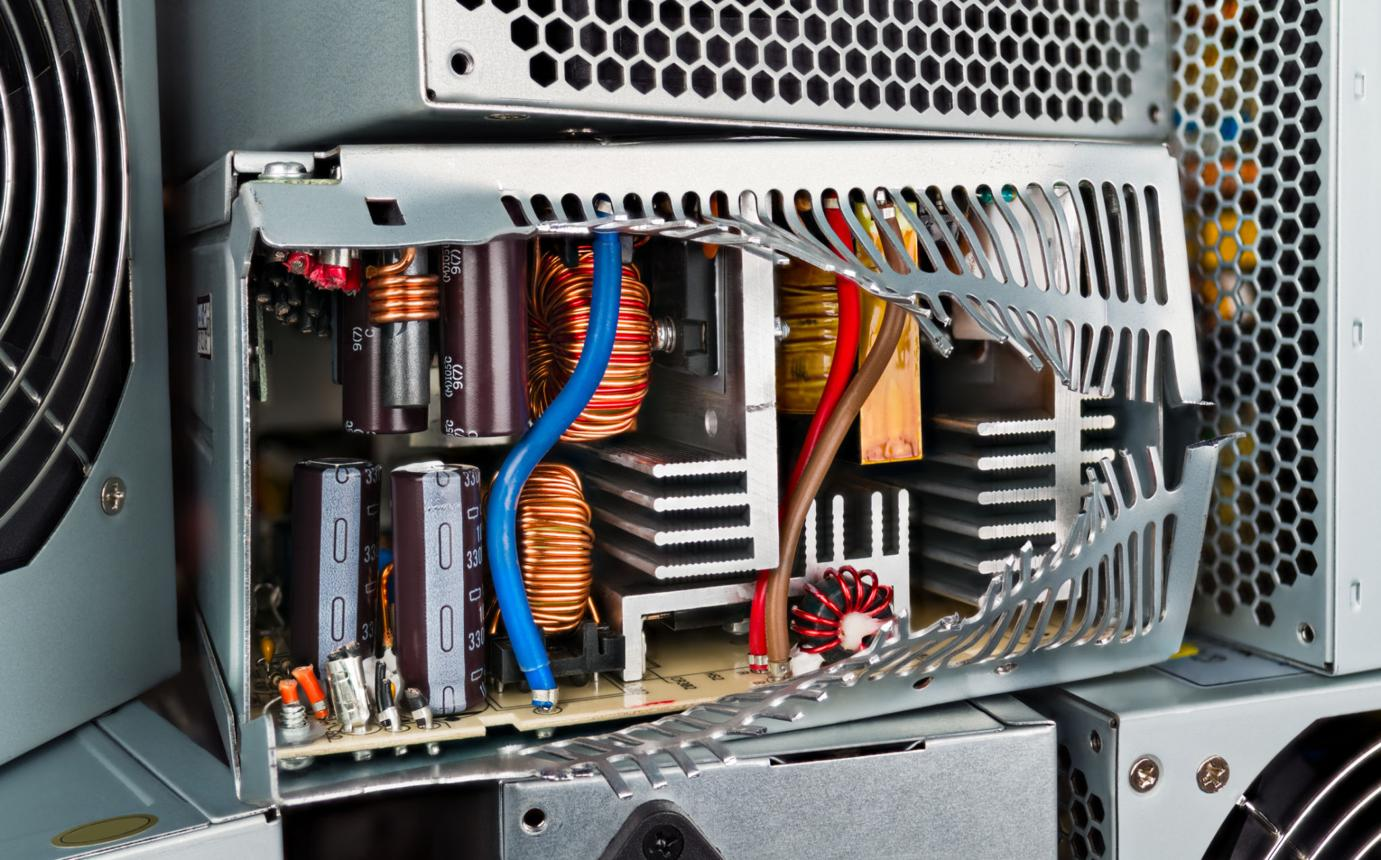
While the transformer is the most common source, it is not the only one. Output inductors can vibrate under ripple current. Ceramic capacitors may create faint tonal noise through piezoelectric effects. Fans can introduce mechanical hum. Even sheet metal enclosures may resonate and amplify small vibrations.
| Component | Likelihood | Typical Sound |
| Transformer | Very High | Buzz / Whine |
| Output Inductor | High | Tone |
| Ceramic Capacitor | Medium | Singing |
| Cooling Fan | Medium | Hum |
| Metal Chassis | Medium | Resonance |
| Relay | Low | Click |
How Should You Diagnose the Real Cause?
The fastest method is to observe when the sound changes.
If it increases with output load, suspect transformer stress, overload margin, or feedback instability. If it appears only with no load, burst mode is likely. If it changes with AC input voltage, the switching operating point may be moving.
If sound is accompanied by voltage fluctuation, heat rise, restart cycling, or burning smell, the issue should be treated seriously.
Technicians often confirm the source through thermal inspection, ripple measurement, and localized listening tools rather than replacing parts blindly.
How Does SIPURUI Reduce Noise in Industrial Power Supplies?
Quiet operation usually comes from better engineering rather than luck.
SIPURUI switching power supplies are developed for industrial users who need stable DC output with lower acoustic disturbance in control rooms, machinery panels, telecom racks, security systems, and commercial installations.
Key design practices include stronger transformer fixation, optimized switching frequency placement, stable feedback compensation networks, improved PCB grounding structure, thermal margin planning, and burn-in screening under load.

This approach helps reduce the risk of coil whine, intermittent chirping, and load-related noise that often affect lower-grade products.
When Is Noise a Serious Warning Sign?
Not every sound means immediate failure, but some conditions require immediate attention.
If audible noise appears together with overheating, unstable output voltage, random shutdowns, restart cycling, swollen capacitors, or burning odor, the power supply should be inspected or replaced.
A unit that suddenly becomes much louder after months of stable service may also indicate aging materials or reduced internal margin.
In industrial systems, replacing a questionable power supply early is often far less costly than an unexpected production stop.

Final Thoughts: Noise Is Information
A switching power supply should not be judged only by whether it turns on. Acoustic behavior often reveals hidden stress before total failure occurs.
Buzzing may indicate transformer vibration. Chirping may suggest overload protection. A high-pitched tone may result from light-load burst mode. Squealing under load can point to regulation instability or insufficient power margin.
Selecting a properly engineered industrial model greatly reduces these risks from the start.If your project requires dependable and quieter DC power solutions, SIPURUI offers switching power supplies designed for demanding real-world applications.