Skip to content


When a switching power supply is labeled 500W, most buyers naturally assume it can continuously deliver 500 watts in real working conditions. In practice, that assumption is not always correct. Many users have purchased a “500W” unit only to find that it struggles to run a 300W load, overheats after short operation, or causes connected equipment to restart unexpectedly. In most cases, the issue is not the load itself, but an overrated power supply.
This problem still exists in many low-cost markets because wattage is one of the first specifications customers compare. If two products appear similar and one claims higher power at a lower price, it often attracts attention quickly. Some suppliers take advantage of this by labeling short-term peak output as continuous power, testing under unrealistic temperatures, or using theoretical current values that the internal design cannot sustain for long periods.
For professional buyers using switching power supplies in LED systems, CNC controls, industrial automation, communication devices, battery charging systems, CCTV networks, or motor-driven applications, this is more than an inconvenience. It can lead to downtime, unstable operation, shortened equipment life, and repeated replacement costs. Understanding how to identify true wattage is therefore essential.

Why Does Fake Wattage Matter So Much?
A switching power supply is the heart of the electrical system. If it cannot provide stable voltage and sufficient current, everything connected to it becomes unreliable. In LED applications, brightness may flicker or controllers may reset. In industrial cabinets, PLC systems may lose communication or sensors may behave erratically. In motor applications, startup current may trip the supply or cause sluggish performance. Even when the system appears to run, long-term stress from undervoltage and overheating often reduces component lifespan.
The danger becomes greater in 24/7 environments. A warehouse lighting system, factory machine, or security installation depends on consistent power every hour of the day. Choosing a falsely rated supply may save money initially, but the total cost of failure is usually much higher than the difference between a cheap unit and a genuine industrial model.
Rated Power or Peak Power: Which Number Are You Actually Buying?
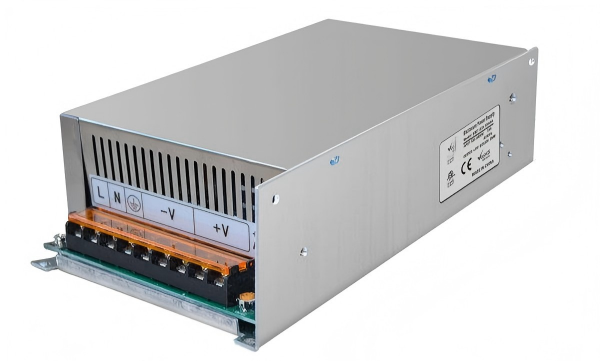
One of the biggest reasons for confusion is the difference between rated power and peak power. Rated power means the unit can continuously deliver that output under specified conditions such as input voltage range, ambient temperature, and cooling design. This is the number engineers rely on when designing systems.
Peak power, by contrast, usually means the unit can briefly tolerate a higher load for a short moment during startup or surge events. A product promoted as 500W peak may only be a true 350W continuous unit. If the label emphasizes “MAX POWER” or “PEAK OUTPUT” but does not clearly state continuous rated output, buyers should be cautious.
| Power Term | Real Meaning | Useful for System Design |
| Rated Power | Continuous stable output | Yes |
| Peak Power | Short temporary overload | Limited |
| Max Power | Often unclear marketing term | Needs verification |
| Combined Power | Total across rails | Depends on design |
For most industrial users, continuous rated power is the only number that should guide purchasing decisions.
What Can the Product Label Tell You Immediately?
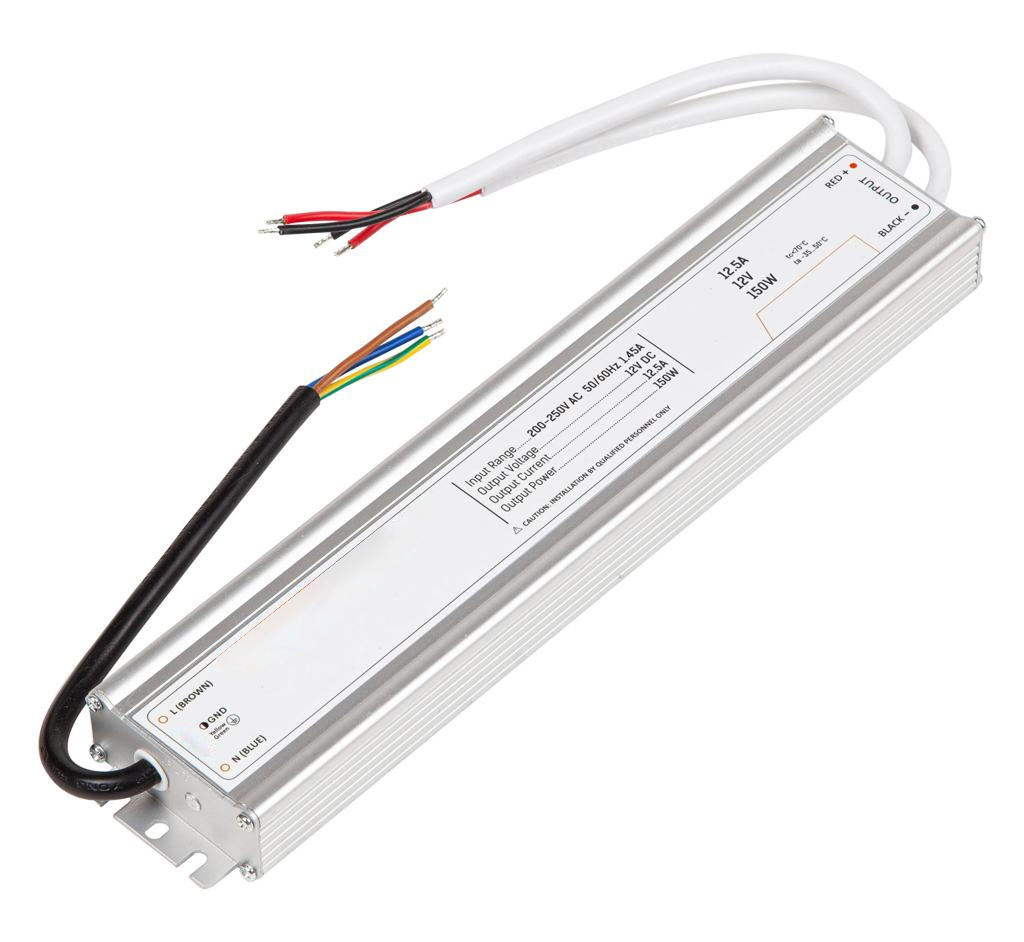
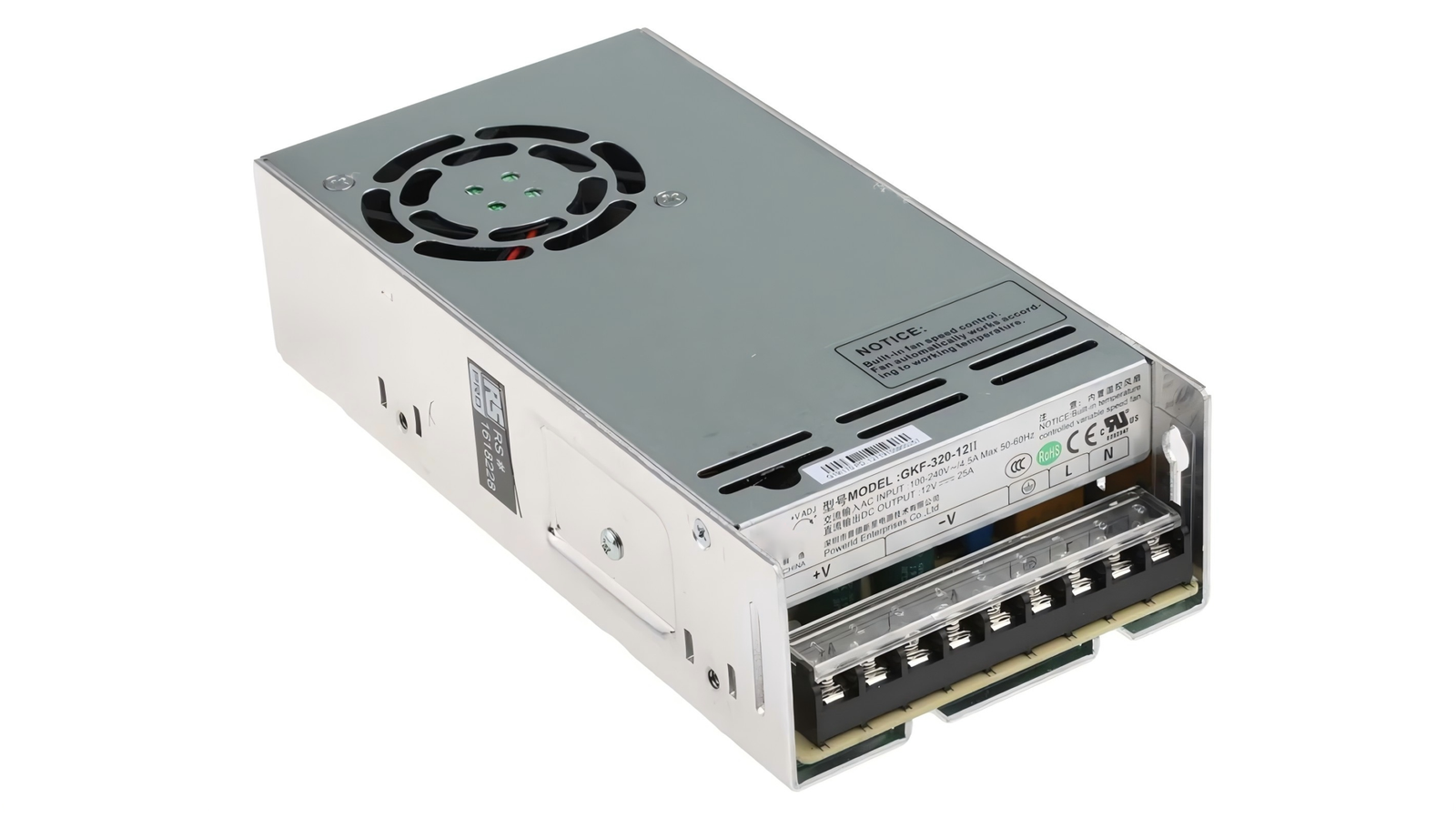
The label on a switching power supply often reveals whether the product is professionally engineered or simply marketed aggressively. A reliable manufacturer will normally list model number, input voltage range, output voltage, output current, total rated power, certifications, and company information. The values should also make mathematical sense.
For example, a 24V power supply labeled 20.8A gives:
24V×20.8A=499.2W24V \times 20.8A = 499.2W24V×20.8A=499.2W
That is consistent with a real 500W model.
If the label simply says “500W” with no current value, no temperature rating, no traceable manufacturer, or poor print quality, it raises concern. Serious suppliers such as SIPURUI provide complete technical labels because buyers need engineering data, not just marketing numbers.

Can Weight and Build Quality Really Reveal the Truth?
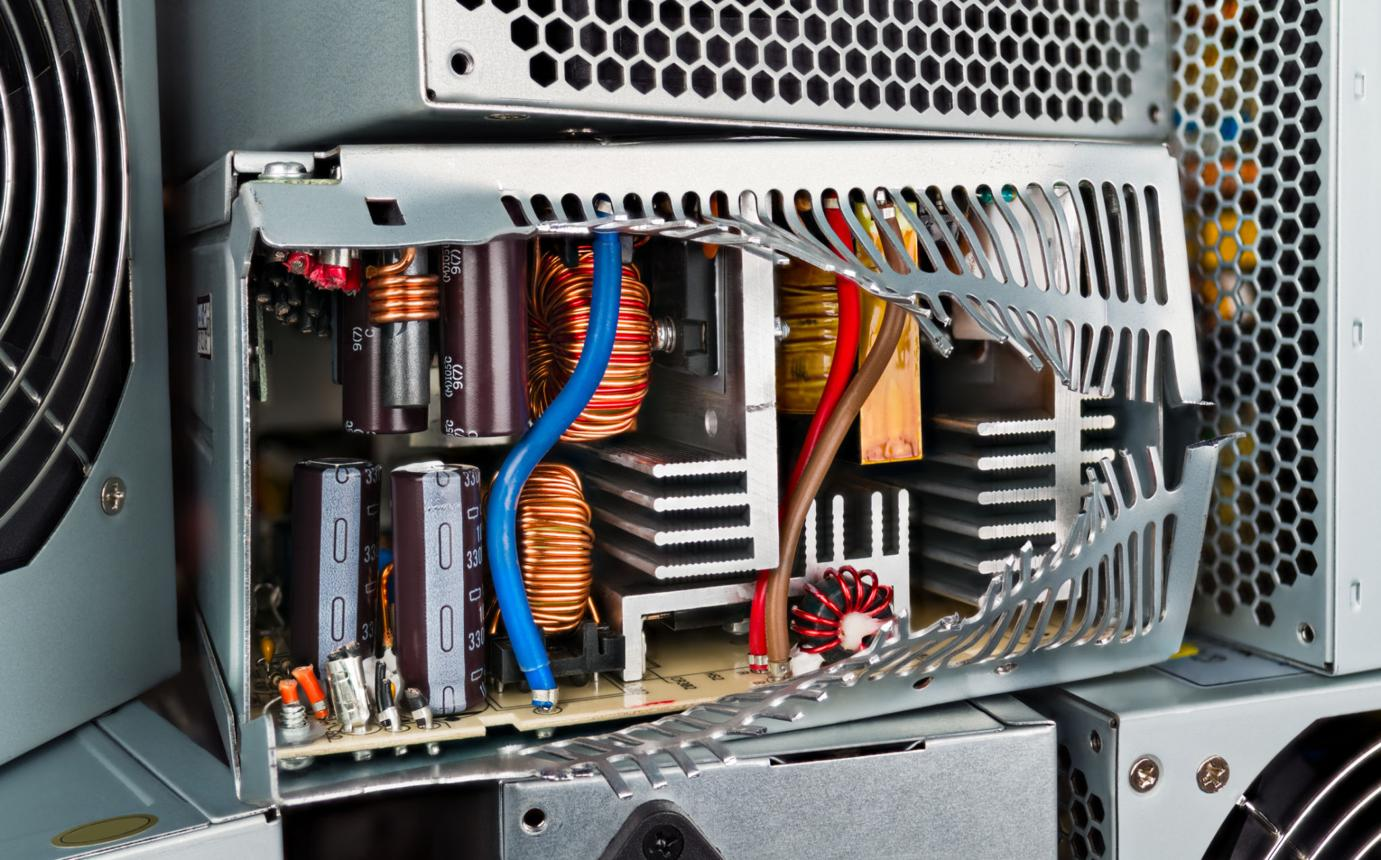
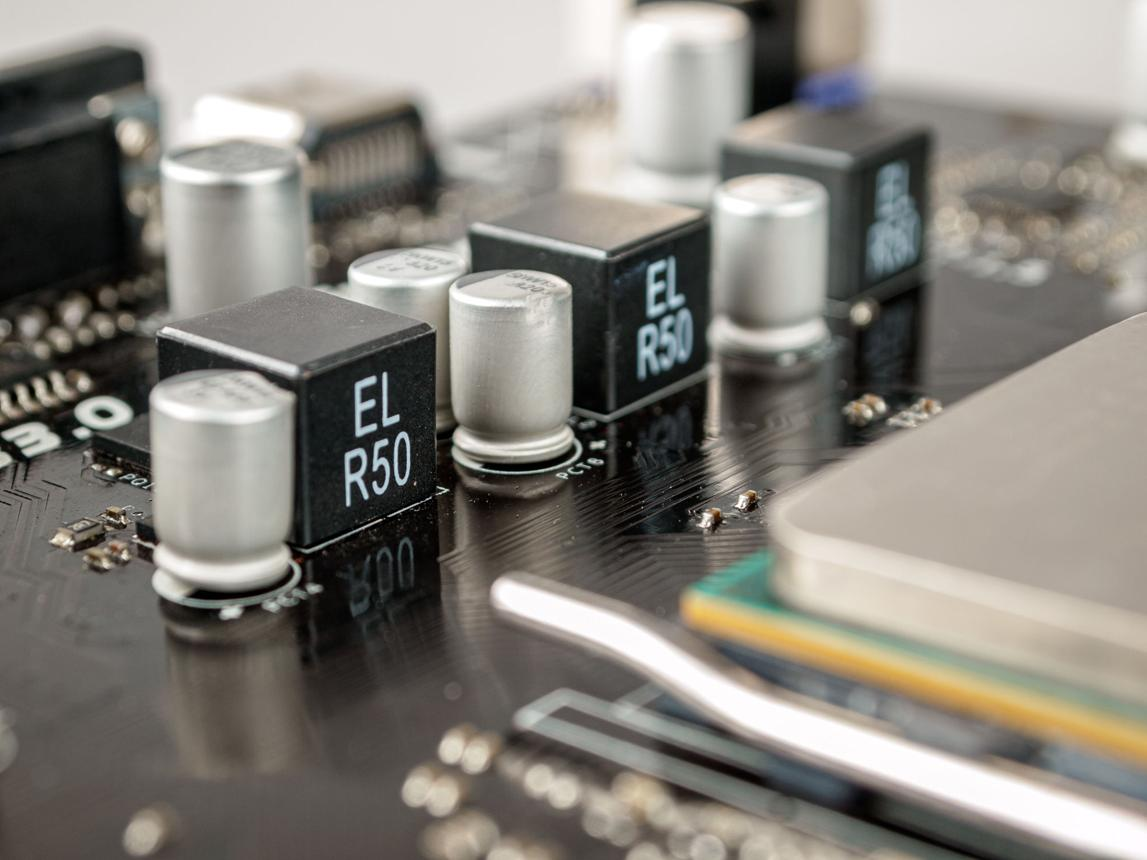
Although weight alone is not proof, it is often a useful clue. Higher-power switching power supplies require larger transformers or high-frequency magnetics, stronger heatsinks, higher-grade capacitors, thicker copper traces, and more thermal management. These components add cost and mass.
If two enclosed 500W metal power supplies look nearly identical but one feels dramatically lighter, there is a reason. The lighter model may use smaller internal components, lower thermal margin, or minimal filtering. Such shortcuts often appear when products are designed around price rather than performance.
| Claimed Power | Lightweight Budget Unit | Proper Industrial Unit |
| 150W | 0.35 kg | 0.45–0.60 kg |
| 350W | 0.55 kg | 0.80–1.10 kg |
| 500W | 0.70 kg | 1.10–1.80 kg |
Professional buyers usually compare dimensions, weight, casing thickness, fan quality, and terminal strength together rather than relying on wattage alone.
How Can You Test Real Output Power Without a Laboratory?
Many buyers assume proper testing requires expensive instruments, but basic evaluation can be done with practical tools such as a digital multimeter, DC clamp meter, load bank, or actual application load. The most important question is simple: does voltage remain stable as current demand increases?
A quality 24V supply should maintain regulation near nominal voltage as load rises from no-load to partial load and finally toward full load. For a typical industrial design, a range around ±5% is acceptable.
22.8V≤V≤25.2V22.8V \leq V \leq 25.2V22.8V≤V≤25.2V
If voltage falls sharply when the unit reaches 70% or 80% of claimed capacity, the rating is likely exaggerated. For example, if a “500W” 24V supply drops to 21V when driving only 15A, that is a clear warning sign.
Another useful test is thermal endurance. A genuine full-rated supply should continue operating under load without shutting down, tripping, or becoming dangerously hot after sustained use.
What Happens in Real Applications When Power Is Overrated?
The most revealing test is often real-world operation. Equipment quickly exposes weak power supplies.
In LED systems, users may notice flickering brightness, controller resets, or color instability. In security systems, cameras may reboot when infrared night mode activates. In industrial automation, PLC units may restart or sensors may lose signal. In CNC machines, control errors and communication interruptions may appear. Motor-driven devices such as pumps and fans may hesitate during startup because startup current exceeds what the supply can actually provide.
These symptoms are frequently misdiagnosed as equipment faults when the true cause is inadequate power capacity.

Why Buying Exact Wattage Is Usually a Mistake
Even with an honestly rated power supply, selecting a model with no reserve margin is not ideal. Real systems experience startup surges, ambient temperature rise, aging components, and occasional load variation. A system drawing 480W continuously should not depend on a 500W supply operating at its absolute limit every day.
Most engineers recommend headroom depending on application type.
| Application | Recommended Margin |
| Resistive Loads | 15–20% |
| LED Systems | 20–25% |
| Industrial Control | 25–35% |
| Motor Loads | 30–50% |
| 24/7 Operation | 30%+ |
If your real load is 400W, choosing a true-rated 500W or 600W model is usually a better decision than selecting the smallest possible unit.
What Makes a Professional Switching Power Supply Different?
Reliable industrial products are not defined only by wattage. They are defined by consistency, protection, and lifespan. A well-designed switching power supply should include over-voltage protection, over-current protection, short-circuit protection, and over-temperature protection. It should also use quality capacitors, efficient topology, proper EMI filtering, and solid thermal design.
Manufacturers such as SIPURUI focus on practical output performance across common industrial voltages such as 12V, 24V, and 48V. For OEM buyers, distributors, and project engineers, stable operation and transparent specifications are more valuable than inflated labels.
Another important detail is temperature derating. Some low-cost units only achieve claimed output at 25°C in ideal lab conditions. But real cabinets and factory environments may operate at 40°C, 50°C, or higher. Professional datasheets explain how output changes with temperature, allowing buyers to size correctly.
What Questions Should You Ask Before Purchasing?
A serious supplier should be able to answer technical questions clearly. Ask whether the stated wattage is continuous or peak. Ask at what ambient temperature the rating applies. Request a datasheet, dimensions, efficiency values, protections, and warranty terms. If buying volume, ask for sample testing before large orders.
If answers are vague, delayed, or inconsistent, that often says as much as the product itself.
Final Conclusion: Ignore the Sticker, Trust the Performance
A switching power supply should never be judged only by the number printed on its case. Real value comes from what it can continuously deliver under realistic conditions. A genuine 500W unit should provide stable voltage, reliable thermal behavior, protection functions, and dependable long-term operation.
If a product cannot sustain its claimed output, causes voltage drop, overheats quickly, or destabilizes connected equipment, then it is not truly a 500W power supply regardless of what the label says.
For buyers seeking dependable 12V, 24V, or 48V solutions for industrial systems, LED projects, OEM equipment, or distribution channels, choosing a transparent manufacturer is the safest path. SIPURUI switching power supply series are built around real output capability and application-focused reliability rather than exaggerated specifications.

Looking for True Rated Switching Power Supplies?
If you are sourcing professional switching power supplies for industrial or commercial use, contact SIPURUI for technical recommendations, datasheets, and suitable models for your project.