Skip to content

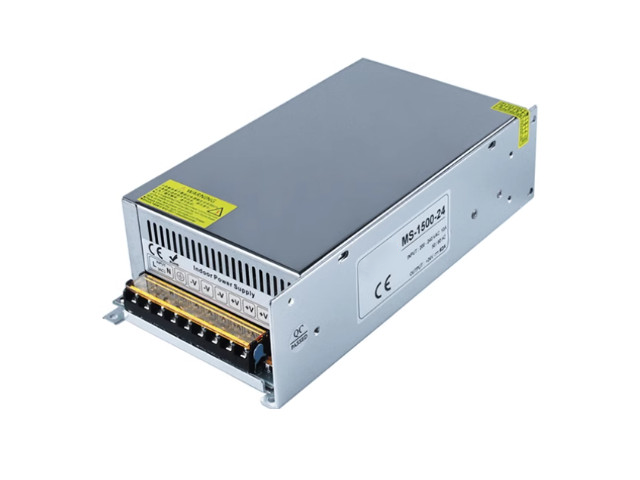
Modern switching power supplies are becoming smaller, faster, and more efficient. Whether in industrial automation equipment, telecom systems, LED drivers, EV charging stations, or USB-C fast chargers, engineers are under constant pressure to improve power density while reducing heat generation and energy loss.
But what actually determines the efficiency of a switching power supply?
For most SMPS designs, the answer lies in the switching transistor. MOSFETs, IGBTs, and GaN devices are the core components responsible for energy conversion inside the power stage. Their performance directly affects switching loss, conduction loss, thermal behavior, EMI performance, and long-term reliability.
In high-frequency switching power supplies, switching devices can contribute between 30% and 60% of the total system loss. This means choosing the wrong transistor may result in excessive heat, reduced efficiency, unstable operation, or even premature power supply failure.
For professional switching power supply manufacturers like SIPURUI, switching transistor selection is not simply about choosing the highest-rated device. It is about balancing efficiency, thermal performance, switching speed, reliability, and cost according to the real operating conditions of the application.
Why Is Switching Transistor Selection So Important in SMPS Design?
Every switching power supply works by rapidly turning electrical energy on and off. The switching transistor controls this process at high frequency, which means it constantly experiences voltage stress, current stress, and thermal stress during operation.
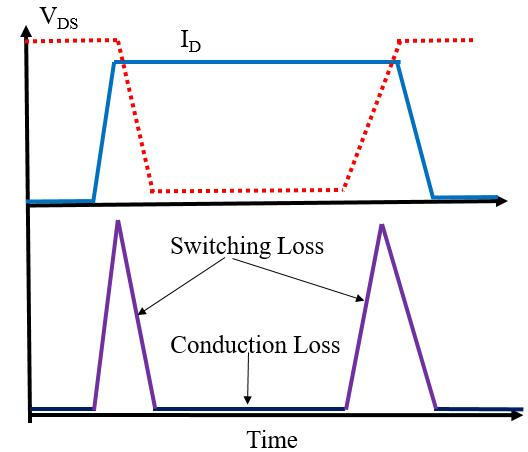
As switching frequencies continue increasing in modern power electronics, transistor losses become more significant. Higher frequencies help reduce transformer size and improve power density, but they also increase switching loss dramatically.
The image below shows how switching loss and conduction loss dominate overall SMPS efficiency.
If engineers focus only on output power or voltage rating without considering switching behavior, the result is often poor thermal performance and reduced efficiency. This is why professional power supply design always begins with careful switching device selection.
What Parameters Should Be Defined Before Choosing a Switching Device?
Before selecting any MOSFET, IGBT, or GaN transistor, engineers must first understand the real electrical conditions inside the power supply.
One of the most common design mistakes is choosing switching devices based only on datasheet headline specifications.
In reality, operating conditions are far more complex.
The first major consideration is voltage stress. In switching power supplies, the transistor must survive not only the input voltage itself, but also switching spikes, transformer reflected voltage, and transient overshoot caused by parasitic inductance.
For example, in flyback converters operating from universal AC input, the MOSFET drain voltage may become significantly higher than the rectified mains voltage due to leakage inductance spikes. This is why professional SMPS designs always include voltage derating margins.
The table below shows common voltage derating practices used in power electronics.
| Application Type | Recommended Voltage Margin |
| Consumer Electronics | 1.2× – 1.5× |
| Industrial Power Supplies | 1.5× – 1.8× |
| Automotive Systems | ≥2× |
Current stress is equally important. Many inexperienced designers select switching devices according to average output current only, while real switching waveforms often contain much higher peak current levels.
In Buck converters, for example, peak current may easily reach 1.5 to 2 times the average load current. Underestimating this current stress leads directly to excessive conduction loss and thermal problems.
Switching frequency also strongly affects device selection. At lower frequencies, conduction loss dominates total power dissipation. However, once switching frequencies rise above 200kHz, switching loss becomes one of the largest efficiency challenges in the system.
This is why different switching transistor technologies are optimized for different applications.
Why Are MOSFETs Still the Most Popular Switching Devices?
MOSFETs remain the dominant switching devices in modern switching power supplies because they offer an excellent balance between switching speed, conduction performance, and ease of drive.
They are widely used in:
- DC-DC converters
- Telecom power supplies
- USB-C fast chargers
- Server power systems
- Industrial control power supplies
- Synchronous rectification stages
One major reason MOSFETs are so widely used is their extremely fast switching speed compared with traditional bipolar devices.
Modern trench MOSFETs achieve very low conduction resistance, allowing designers to reduce heat generation under high-current conditions. In many SIPURUI switching power supplies, low-resistance trench MOSFETs are used to improve full-load efficiency while minimizing thermal stress.
The structure of modern MOSFET technology has evolved significantly over the past decade.

Trench MOSFETs are commonly used in low-voltage high-current applications because they achieve extremely low Rds(on). This helps reduce conduction loss in synchronous rectification and high-current DC-DC conversion stages.
Super junction MOSFETs, however, are optimized for high-voltage applications such as PFC circuits and LLC resonant converters. Compared with conventional silicon MOSFETs, super junction devices offer significantly lower resistance at 600V and above, improving efficiency in high-density AC-DC power supplies.
When Is IGBT the Better Choice?
Although MOSFETs dominate many SMPS applications, IGBTs still remain highly important in medium-frequency high-voltage systems.
Many industrial applications continue using IGBT technology because it provides strong current capability and excellent efficiency under high-voltage operating conditions.
Typical applications include:
- Industrial motor drives
- Solar inverters
- EV charging stations
- Welding machines
- High-power UPS systems
Unlike MOSFETs, whose conduction resistance rises sharply at high voltage ratings, IGBTs maintain relatively stable conduction characteristics under high-voltage operation.
Modern field-stop trench IGBTs also switch much faster than older generations, making them suitable for many medium-frequency industrial power systems.
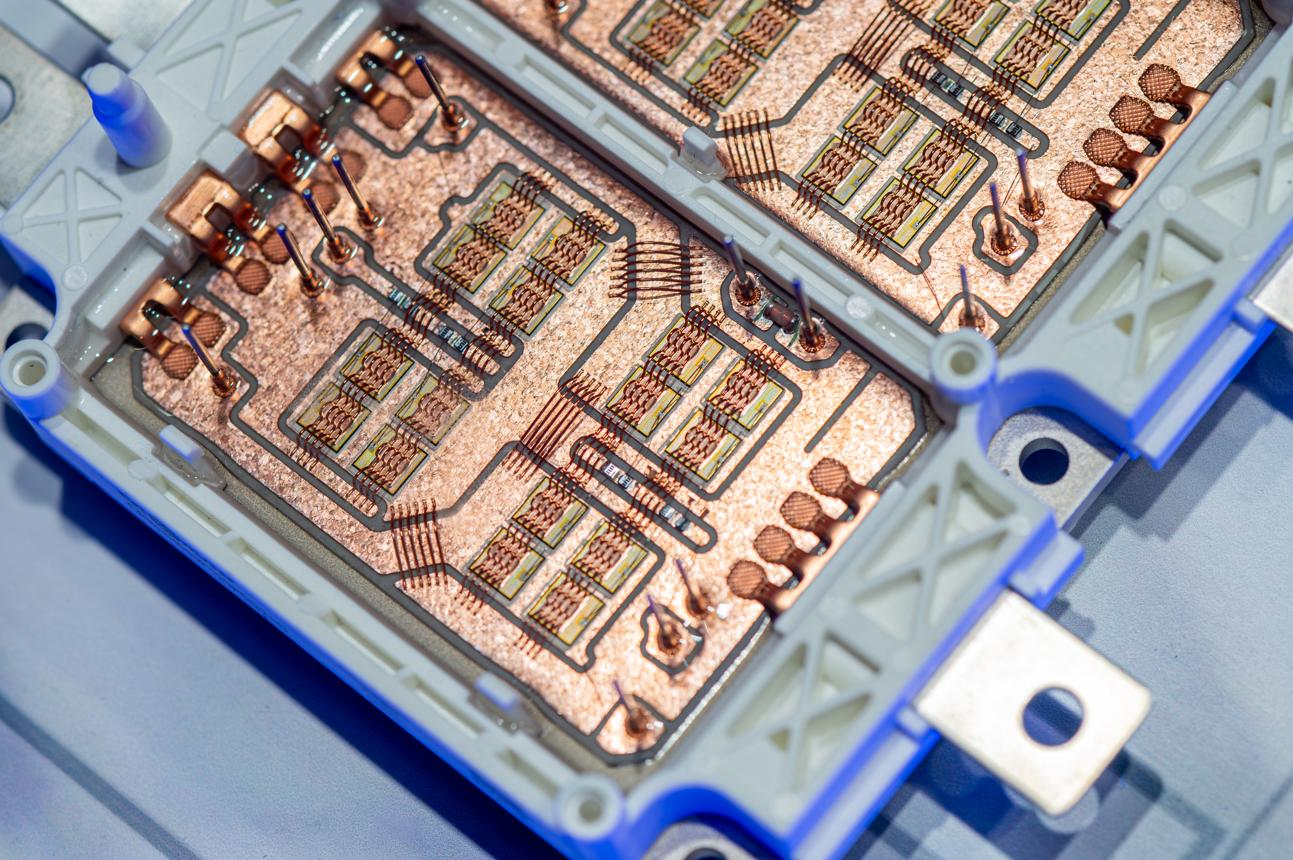
The following image shows common industrial IGBT modules used in high-power inverter systems.
However, IGBTs are not ideal for extremely high-frequency designs because switching loss becomes excessive at higher frequencies.
This is where GaN technology becomes increasingly important.
Why Is GaN Becoming So Popular in High-Frequency Power Supplies?
Gallium Nitride technology has rapidly become one of the most important developments in modern power electronics.
GaN transistors are increasingly used in:
- USB-C PD chargers
- AI server power supplies
- Telecom rectifiers
- High-frequency LLC converters
- Compact industrial power supplies
The reason is simple: GaN devices switch much faster while generating significantly lower switching loss compared with traditional silicon MOSFETs.
Their parasitic capacitance is dramatically lower, allowing higher switching frequencies and smaller magnetic components.
This is one reason modern GaN chargers are much smaller than older silicon-based chargers with similar output power.

In many compact SIPURUI high-frequency power supply solutions, GaN technology helps improve efficiency while significantly reducing overall size and thermal stress.
However, GaN is not automatically the best solution for every application.
Its ultra-fast switching edges create greater EMI challenges, PCB layout becomes far more critical, and dedicated gate driver solutions are often required. In lower-frequency industrial power supplies, the additional cost of GaN may not provide enough practical benefit.
Professional engineers therefore choose switching technology based on actual operating requirements rather than industry trends alone.
Which Switching Transistor Parameters Matter Most?
Understanding datasheet parameters is critical for improving SMPS efficiency.
For MOSFETs, conduction resistance remains one of the most important parameters because it directly affects heat generation during current flow.
However, many engineers make the mistake of focusing only on room-temperature specifications.
In real operation, transistor junction temperatures may easily exceed 100°C, causing conduction resistance to rise substantially. This increases heat generation further and reduces efficiency.
Switching-related parameters are equally important in high-frequency power supplies.
Gate charge, output capacitance, and switching rise/fall time all influence switching efficiency. Devices with excessive gate charge require more energy during every switching cycle, increasing driver losses and reducing overall efficiency.
This is one reason why modern high-frequency SIPURUI switching power supplies prioritize low-Qg and low-Coss devices in LLC and PFC stages.
The table below compares the characteristics of MOSFET, IGBT, and GaN technologies.
| Parameter | MOSFET | IGBT | GaN |
| Switching Speed | Fast | Medium | Ultra Fast |
| High-Voltage Efficiency | Medium | Excellent | Excellent |
| High-Frequency Capability | Excellent | Limited | Outstanding |
| Gate Drive Complexity | Low | Medium | High |
| EMI Difficulty | Medium | Medium | High |
| Typical Applications | DC-DC, Fast Charging | Industrial Power | High-Density SMPS |
Why Is Thermal Design Equally Important?
Even the best switching transistor performs poorly without proper thermal management.
As junction temperature increases:
- Conduction loss rises
- Leakage current increases
- Reliability decreases
- Device lifespan shortens
This is why thermal engineering must always be considered together with transistor selection.
Different power levels require different cooling methods.
| Power Level | Common Package | Cooling Method |
| Low Power | SOT-23, DFN | PCB Copper |
| Medium Power | TO-220, TO-263 | Heatsink |
| High Power | TO-247, Power Modules | Forced Air Cooling |
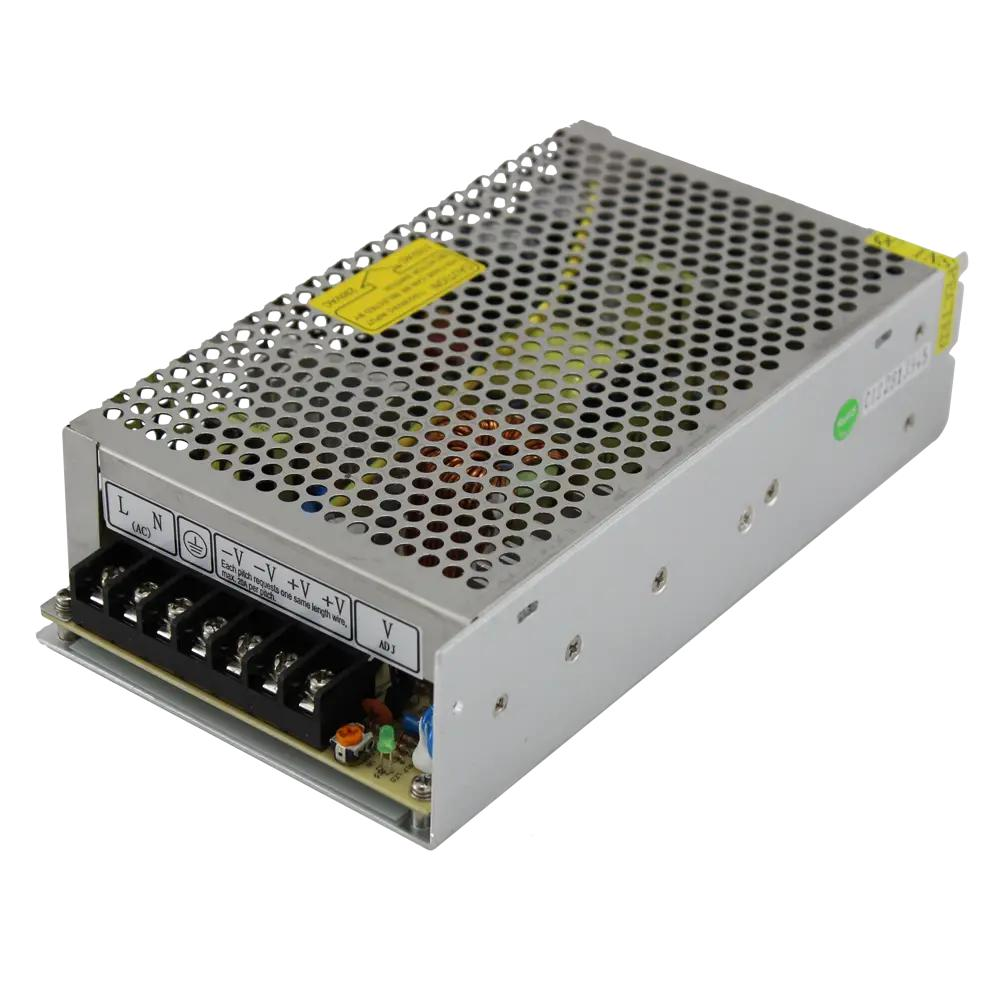
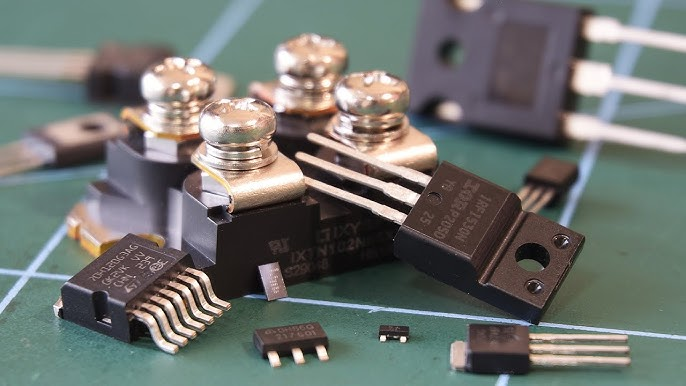
The following examples show common cooling structures used in modern switching power supplies.

In high-frequency switching power supplies, PCB layout is also extremely important. Poor layout introduces parasitic inductance, which can generate voltage overshoot, ringing, and severe EMI problems.
This becomes especially critical in GaN-based systems because switching edges are much faster than traditional silicon devices.
Professional SMPS layouts therefore focus heavily on minimizing switching loops, optimizing grounding structure, and reducing parasitic inductance.

Final Thoughts
Choosing the correct switching transistor is one of the most important decisions in switching power supply design.
There is no universally “best” switching device. The ideal solution always depends on the actual operating conditions, switching frequency, thermal requirements, efficiency targets, and cost limitations of the application.
MOSFETs continue dominating high-frequency low- and medium-power applications because of their excellent switching performance and simple drive requirements. IGBTs remain highly effective in industrial high-voltage systems, while GaN technology is rapidly pushing the limits of high-frequency compact power conversion.
As switching power supplies continue evolving toward higher efficiency and higher power density, advanced transistor technologies will remain one of the key foundations behind next-generation SMPS development.
For professional manufacturers like SIPURUI, optimizing switching transistor selection is essential for delivering reliable, efficient, and competitive power supply solutions across industrial, telecom, charging, and automation applications.