Skip to content

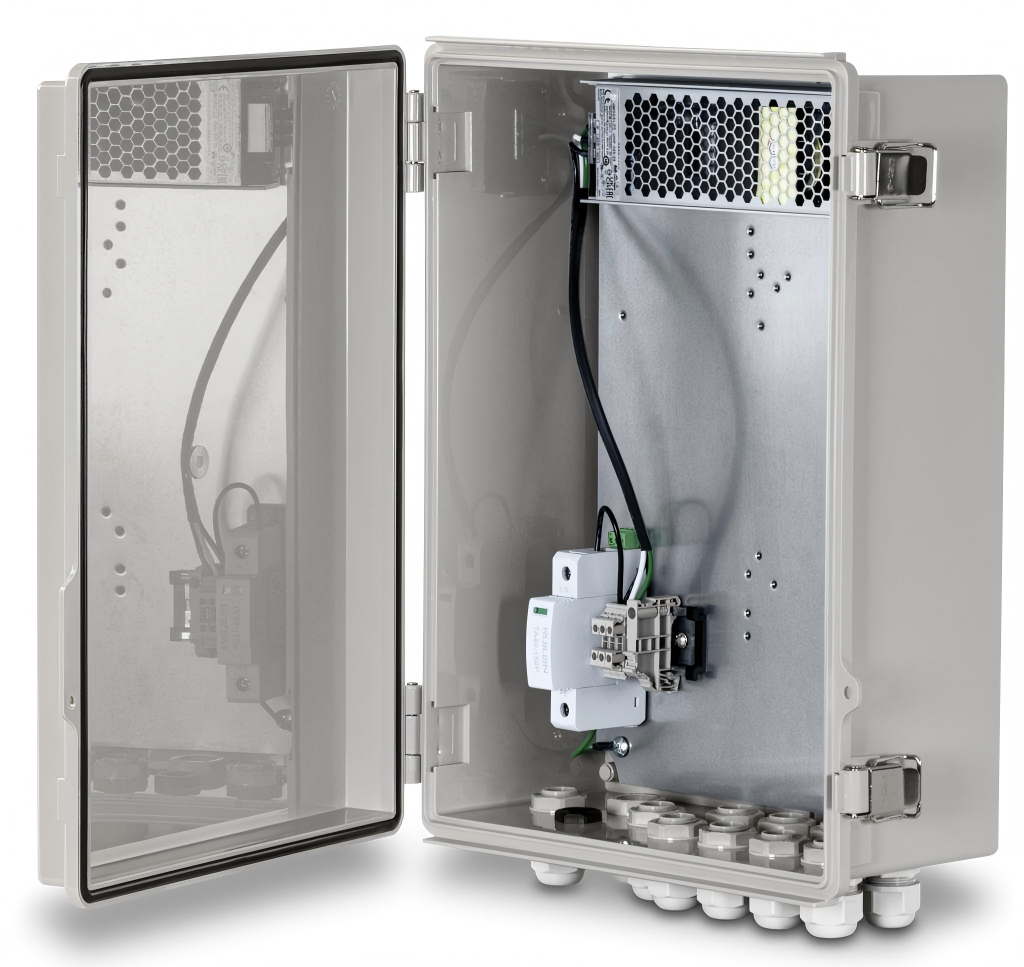
When selecting a switching power supply, most buyers naturally focus first on voltage, current, efficiency, or size. Those specifications are essential, of course. But in real-world applications, especially for outdoor installations or industrial environments, another detail often has just as much influence on performance and lifespan: the IP rating.
You’ve probably seen labels such as IP34, IP65, or IP67 on a power supply datasheet. They look simple—just two digits after the letters “IP.” Yet those numbers determine how well a product stands up to dust, rain, humidity, wash-down conditions, and even accidental immersion in water. In many cases, they are the difference between a power supply that operates reliably for years and one that fails prematurely after a single season outdoors.
For engineers, purchasing teams, lighting manufacturers, and OEM buyers, choosing the right IP rating is rarely about selecting the highest number available. It’s about understanding the installation environment clearly enough to choose the level of protection that matches the actual working conditions. Too little protection can expose the internal electronics to damage. Too much protection can increase cost unnecessarily without creating extra value.
This is why understanding IP ratings matters when selecting a switching power supply.
What Does an IP Rating Mean?
IP stands for Ingress Protection, an international classification defined under IEC 60529. It measures how effectively an enclosure prevents external materials—primarily dust and water—from entering the housing and reaching the internal components.
The system uses two digits. The first indicates protection against solid particles such as dust, debris, or accidental contact with tools or fingers. The second indicates resistance to water exposure, from light splashes all the way to temporary immersion. In both cases, a higher number means a higher level of protection.
For switching power supplies, this matters because internal electronics are sensitive to both contamination and moisture. Fine dust can accumulate around components and reduce heat dissipation over time. Water intrusion can lead to corrosion, insulation failure, short circuits, or total breakdown. Because power supplies often run continuously for long periods, environmental protection becomes a critical part of long-term reliability.

How Different Are IP34, IP65, and IP67?
Although these three ratings are commonly seen together, they are designed for very different working conditions.
| IP Rating | Dust Protection | Water Protection | Typical Installation |
| IP34 | Basic protection | Splash-resistant | Indoor equipment |
| IP65 | Full dust-tight protection | Rain and water jet resistant | Outdoor installation |
| IP67 | Full dust-tight protection | Temporary immersion resistant | Wet or flood-prone areas |
At first glance, the differences may seem small. But once applied to real installation environments, the performance gap becomes significant.
When Is IP34 Enough?
IP34 is most commonly used in indoor environments where exposure to moisture is limited and direct contact with water is unlikely.

A switching power supply with IP34 protection can resist splashing water from different directions and prevent larger solid particles from entering the enclosure. That makes it suitable for dry applications such as indoor LED systems, cabinet-mounted equipment, display lighting, automation controls, and protected commercial electrical installations.
In many indoor projects, IP34 performs perfectly well while keeping manufacturing cost lower. There is no need to over-engineer waterproofing if the unit is never exposed to rain, spray cleaning, or standing moisture.
However, once installation conditions become less controlled—especially where rain, condensation, or outdoor dust are involved—IP34 quickly reaches its limit.
Why Is IP65 the Most Common Choice for Outdoor Power Supplies?
For outdoor switching power supply applications, IP65 has become one of the most widely used and practical standards.
Its popularity comes from balance. It offers complete dust protection while also providing strong resistance against water spray, rain, and harsh outdoor weather. For most outdoor electrical installations, that combination covers the real risks without pushing the design into more expensive fully sealed immersion-grade construction.
This is why SIPURUI IP65 switching power supplies are commonly selected for LED flood lighting, landscape lighting, illuminated signage, security systems, architectural façade lighting, and building exterior projects. Whether mounted on a wall, under a canopy, or integrated into an outdoor fixture, IP65 performs reliably in everyday outdoor conditions.
For many customers, this is the ideal level of protection because it handles weather exposure extremely well without adding unnecessary sealing cost.
Is IP67 Better Than IP65?

IP67 includes the same complete dust protection as IP65, but with an important upgrade in water resistance: temporary immersion protection.
Under standard testing conditions, an IP67 enclosure can typically be submerged in clean water up to one meter deep for around thirty minutes without harmful water ingress. That level of protection is useful in environments where standing water or temporary flooding may occur.
This makes IP67 especially valuable for marine applications, dock lighting, exposed landscape power systems, tunnel installations, wash-down production areas, or regions with heavy rainfall and poor drainage.
But higher does not always mean better.
If the power supply will never be submerged or exposed to pooling water, IP67 may not create additional real-world benefit compared with IP65. Instead, it may simply add cost, more sealing material, and greater complexity in thermal design.
For this reason, IP67 is best treated as a solution for specific environmental risks—not the default choice for every outdoor project.

Which IP Rating Should You Choose for Your Project?
The right answer usually depends less on the product itself and more on where it will operate.
If the power supply will remain indoors in a dry protected environment, IP34 is often completely sufficient.
If the installation is outdoors and exposed to rain, humidity, or airborne dust, IP65 is usually the most balanced and cost-effective choice.
If there is a realistic chance the unit could experience temporary immersion, standing water, or flood conditions, IP67 becomes the safer option.
The key is matching the protection level to the environment rather than simply choosing the highest number.

One Common Misunderstanding: Waterproof Does Not Mean Corrosion-Proof
One detail worth noting is that IP testing is typically performed using clean fresh water. This means a power supply rated IP65 or IP67 is tested against water ingress—but not necessarily against salt corrosion or chemical exposure.
In coastal installations, marine environments, or chemical processing sites, additional corrosion resistance often matters just as much as waterproof sealing.
That’s why many outdoor SIPURUI switching power supply projects combine IP-rated enclosure protection with extra housing treatments such as powder coating, anodized aluminum construction, stainless hardware, or anti-corrosion sealing materials.
Waterproof performance protects the electronics from ingress. Corrosion resistance protects the housing itself over time. Both can be equally important.

Final Thoughts
IP ratings may appear to be a small detail on a specification sheet, but in practice they influence the long-term reliability of every switching power supply installation.
Choosing correctly means balancing protection, cost, and real operating conditions.
For indoor electrical systems, IP34 often delivers exactly what is needed without unnecessary expense. For most outdoor installations, IP65 remains the most versatile and widely trusted solution. For demanding environments involving water exposure beyond rain or spray, IP67 offers an extra layer of security where it matters most.
At SIPURUI, selecting the right protection level is not just about meeting a technical standard. It’s about making sure every switching power supply performs reliably in the environment it was designed for—whether that environment is a dry indoor cabinet, an exposed architectural façade, or a demanding outdoor installation facing rain year after year.
Before selecting your next power supply, it’s always worth asking one simple question:
What will the environment demand from it?
Because often, the answer begins with two numbers: the IP rating.