
A 12V switching power supply may look like a simple product, but in reality, the difference between a good power supply and a bad one can be huge. Two units with the same “12V 10A” label may behave completely differently once they are installed in real equipment. One may run continuously for years inside a control cabinet without issues, while another may overheat, generate excessive ripple, or fail after a few months of operation.
That is why engineers, purchasing managers, and even DIY users pay increasing attention not only to voltage and wattage, but also to topology, component quality, thermal design, EMC performance, and brand reputation.
Today’s 12V SMPS market is also much broader than before. Small flyback adapters are still widely used in LED lighting and security systems, while large PFC + LLC architectures now dominate AI servers, telecom equipment, and industrial automation systems. Meanwhile, brands such as MEAN WELL, Delta, Huntkey, and Segotep are competing in very different segments of the market.
In this article, we will look at typical 12V switching power supply solutions, explain the common topologies used from low power to high power designs, and compare several well-known SMPS brands and product series that are widely used in industrial and commercial applications.
Why Are Flyback Power Supplies Still Everywhere?
Even in 2026, flyback topology remains one of the most common solutions for low- and medium-power 12V switching power supplies.
The reason is simple: flyback circuits are cost-effective, compact, and relatively easy to design.
In a flyback converter, the transformer stores energy while the MOSFET is turned on, then releases that energy to the output side after the MOSFET switches off. Because of this operating method, flyback power supplies require fewer magnetic components and simpler circuitry compared with more complex topologies such as LLC resonant converters.
This makes flyback designs extremely common in:
- Security cameras
- LED strips
- Industrial sensors
- Communication modules
- Smart home devices
- Compact AC/DC adapters
Many modern flyback solutions now achieve surprisingly high efficiency levels thanks to improved PWM controllers and optimized transformer designs.
For example, some CR6842 and CR6848 based designs are widely used in medium-power 12V applications because they offer:
- Wide AC input range
- Low standby power consumption
- Built-in OCP/OVP/OTP protection
- Stable output regulation
- High average efficiency
A typical CR6848 solution can support low standby consumption below 610mW while maintaining efficiency levels close to 92% under suitable operating conditions.
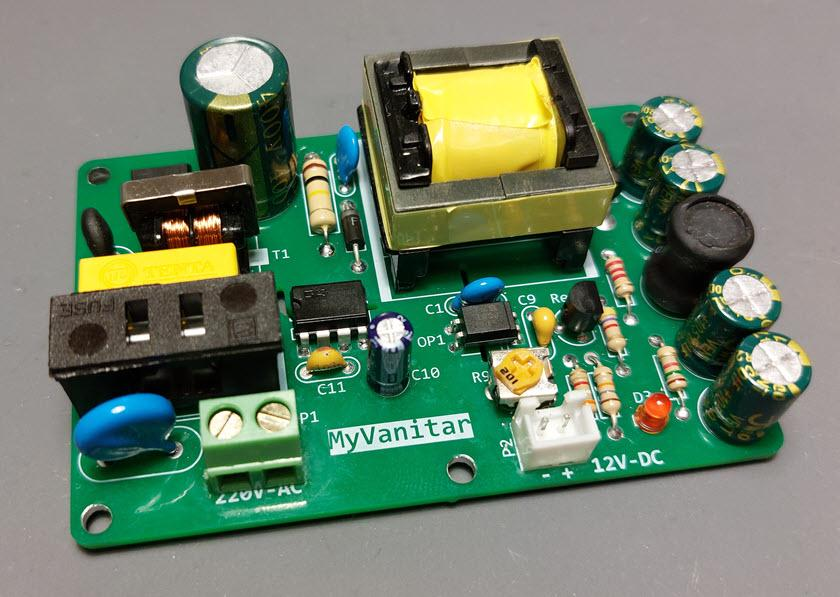
Typical 12V Flyback Power Supply Structure
Most standard flyback SMPS designs share a similar structure.
| Main Section | Function |
| PWM Controller IC | Controls switching frequency |
| MOSFET | High-speed power switching |
| Transformer | Energy storage and isolation |
| Schottky Diode | Secondary rectification |
| Output Capacitor | Ripple filtering |
| Optocoupler Feedback | Voltage regulation |
| EMI Filter | EMC suppression |
The transformer remains one of the most critical parts of the entire system. Poor transformer design can increase heat generation, reduce efficiency, and create serious EMI problems.
Common magnetic cores include:
- EE25
- EE35
- POT4020
- ETD39
The choice depends on power level, switching frequency, and thermal requirements.
Typical Flyback Transformer Examples

What About 12V 3A and 40W Switching Power Supplies?
The 12V 3A to 12V 5A range is one of the most competitive areas in the market because it covers so many common devices.
Typical applications include:
- LED lighting systems
- LCD displays
- Monitoring systems
- Embedded control systems
- Small industrial equipment
A standard 40W design usually supports:
| Parameter | Typical Value |
| Input Voltage | AC 100V–240V |
| Output Voltage | 12V DC |
| Output Current | 3A |
| Output Power | 36W–40W |
| Efficiency | 80–90% |
At this power level, manufacturers usually choose between:
- Flyback topology
- Forward topology
Flyback remains cheaper and simpler, while forward converters provide lower ripple and better efficiency under continuous load conditions.
In higher-quality products, you will often see:
- Low ESR capacitors
- Better MOSFETs
- Improved thermal pads
- Larger heatsinks
- Better PCB layout optimization
These details are not always visible from the outside, but they directly affect lifespan and stability.
Why Are Industrial Power Supplies So Different From Cheap Generic Units?
This is where brand reputation becomes extremely important.
Many low-cost power supplies advertise high wattage ratings, but internally they often reduce cost by simplifying transformer insulation, capacitor quality, EMI filtering, and thermal management.
In real industrial environments, those compromises quickly become problems.
Common failures in low-end SMPS products include:
- Excessive ripple voltage
- Overheating
- Fan failure
- Poor EMC performance
- Capacitor aging
- Output instability under load
Industrial-grade power supplies are designed very differently because they are expected to operate continuously under harsh conditions.
Why Is MEAN WELL So Popular in Industrial Automation?
MEAN WELL has become one of the most widely used industrial SMPS brands in the world because it balances reliability, availability, and cost very well.
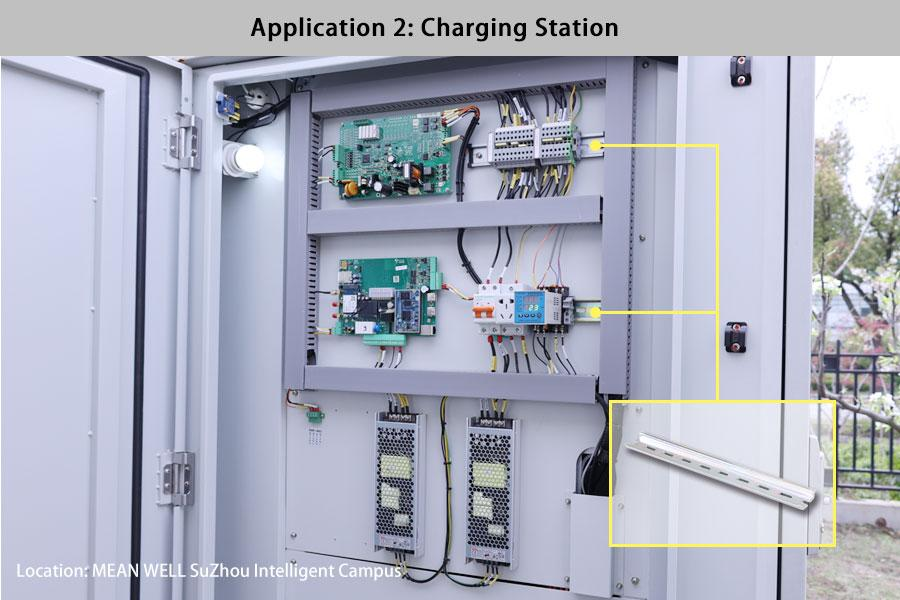
Its products are commonly found in:
- PLC systems
- CNC equipment
- LED systems
- Factory automation
- Security monitoring
- Control cabinets
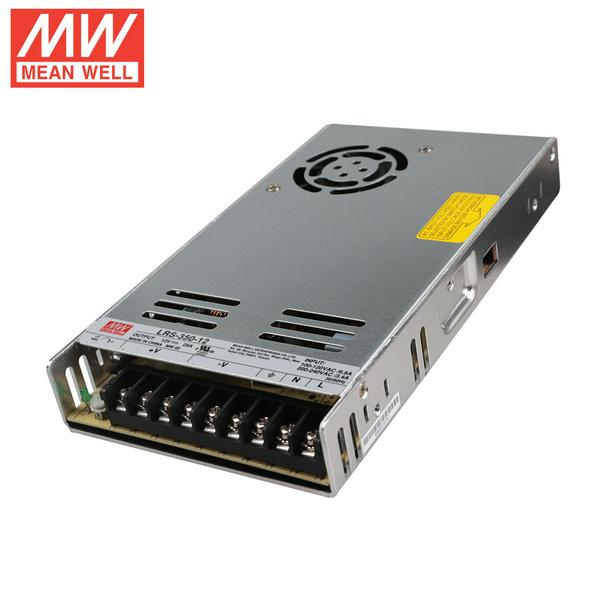
One of the company’s most successful product lines is the LRS series.
MEAN WELL LRS Series
| Model | Output | Power |
| LRS-35-12 | 12V / 3A | 36W |
| LRS-100-12 | 12V / 8.5A | 100W |
| LRS-350-12 | 12V / 29A | 350W |
| LRS-600-12 | 12V / 50A | 600W |
The reason these models are so common is because they offer:
- Universal AC input
- Good thermal behavior
- Stable long-term operation
- Compact dimensions
- Reliable overload protection
MEAN WELL Industrial Power Supplies
For industrial users, reliability usually matters more than saving a few dollars on purchase cost. Downtime inside a production line is far more expensive than the difference between a premium PSU and a cheap one.
Why Does Delta Focus More on High-End Systems?
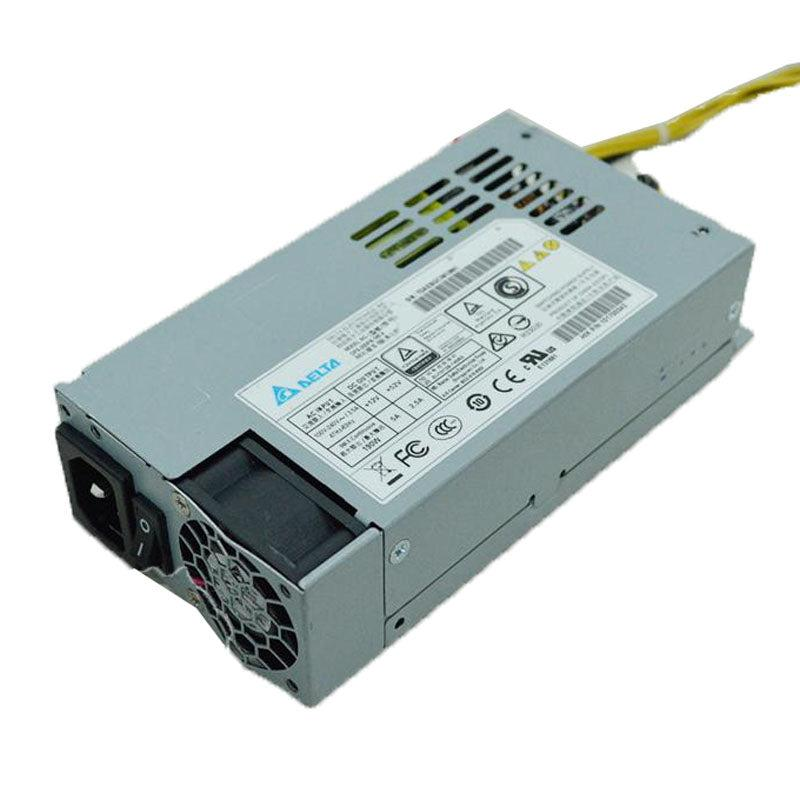
While MEAN WELL is extremely strong in industrial automation, Delta is particularly respected in telecom, medical, server, and data center applications.
Delta power supplies are known for:
- Very high efficiency
- Excellent thermal engineering
- Strong EMC performance
- Long operational lifespan
Modern Delta systems often use advanced architectures such as:
- Active PFC
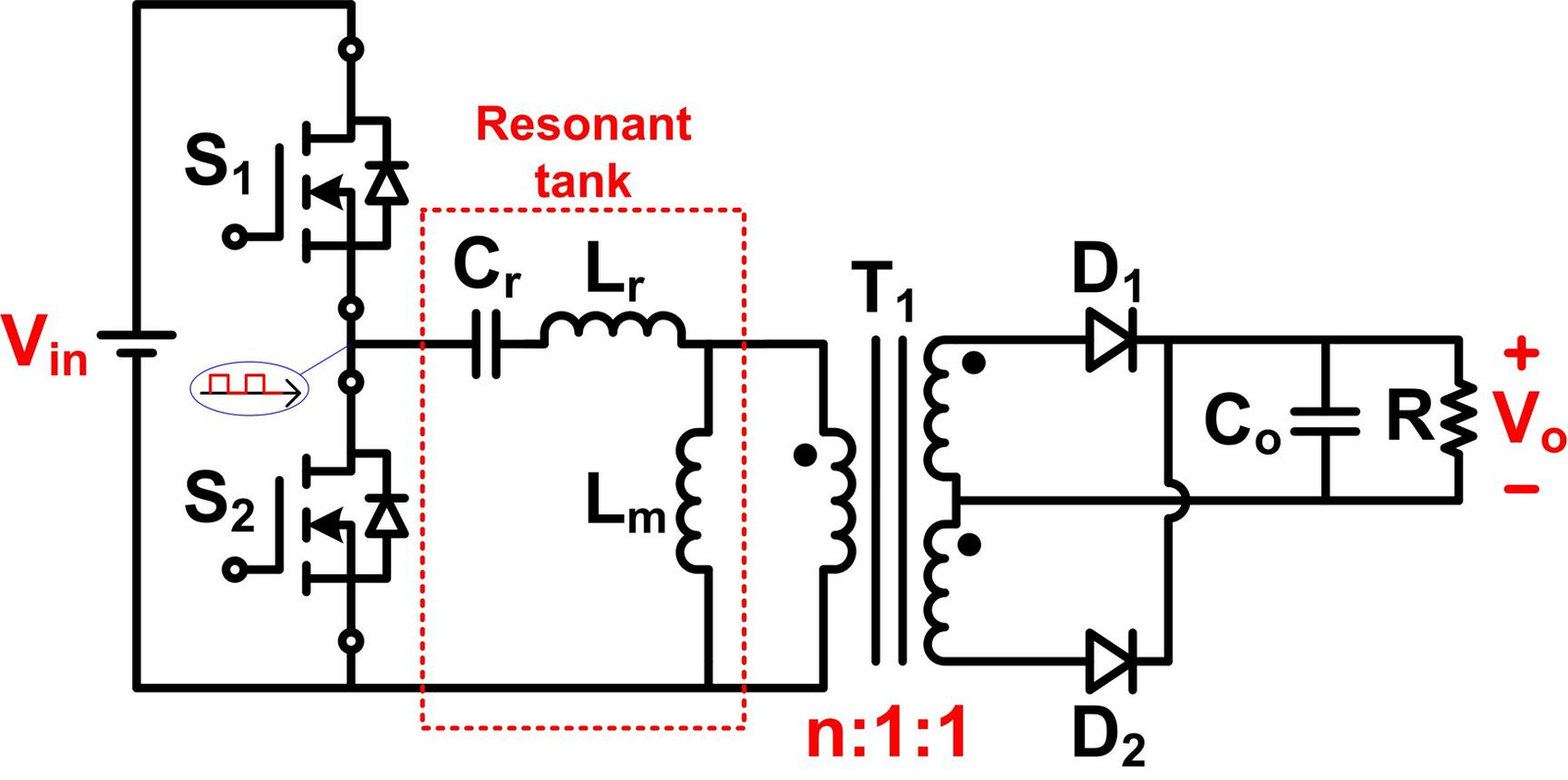
- LLC resonant topology
- Synchronous rectification
These technologies are especially important in high-power systems where efficiency directly affects heat generation and operating cost.
As AI computing and server infrastructure continue expanding, Delta has become increasingly important because modern AI clusters require extremely efficient 12V power delivery.
Delta High-Efficiency Power Systems
Why Are LLC and PFC Designs Becoming More Common?
Once power levels rise above several hundred watts, traditional flyback designs become less practical.
This is why many modern high-power systems now use:
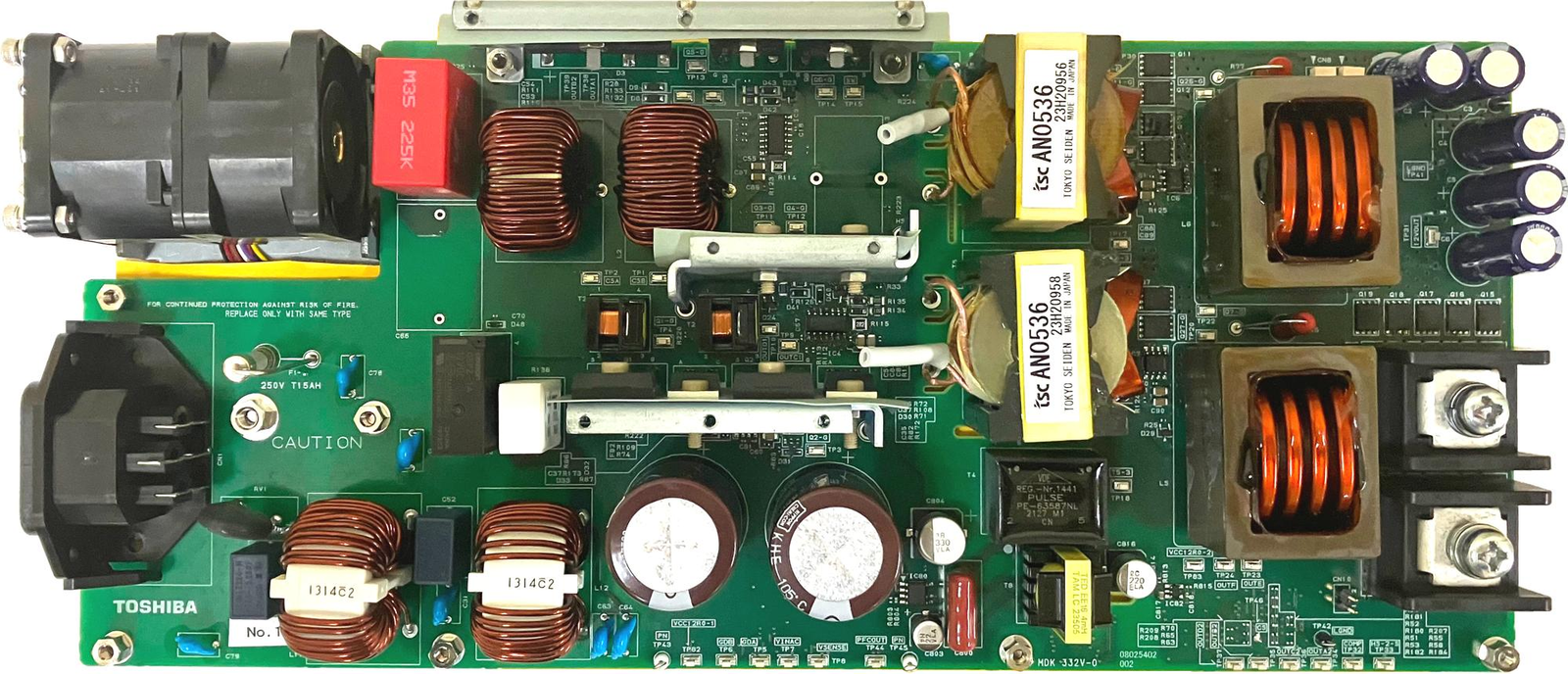
PFC + LLC + Synchronous Rectification
PFC (Power Factor Correction) improves input efficiency and reduces harmonic distortion.
LLC resonant converters reduce switching losses and improve thermal performance.
Synchronous rectification replaces traditional diodes with MOSFETs to reduce conduction losses under high current loads.
These technologies are now standard in:
- AI servers
- Telecom rectifiers
- High-end gaming PSUs
- Industrial automation systems
- Data centers
Typical LLC Resonant Power Supply Structures
Are Huntkey and Segotep Better for Gaming PCs?
The requirements for gaming systems are very different from industrial equipment.
Modern GPUs create huge transient current spikes, especially RTX 4080 and RTX 4090 platforms. Stable 12V rail performance becomes extremely important.
This is where Huntkey and Segotep have become increasingly competitive.
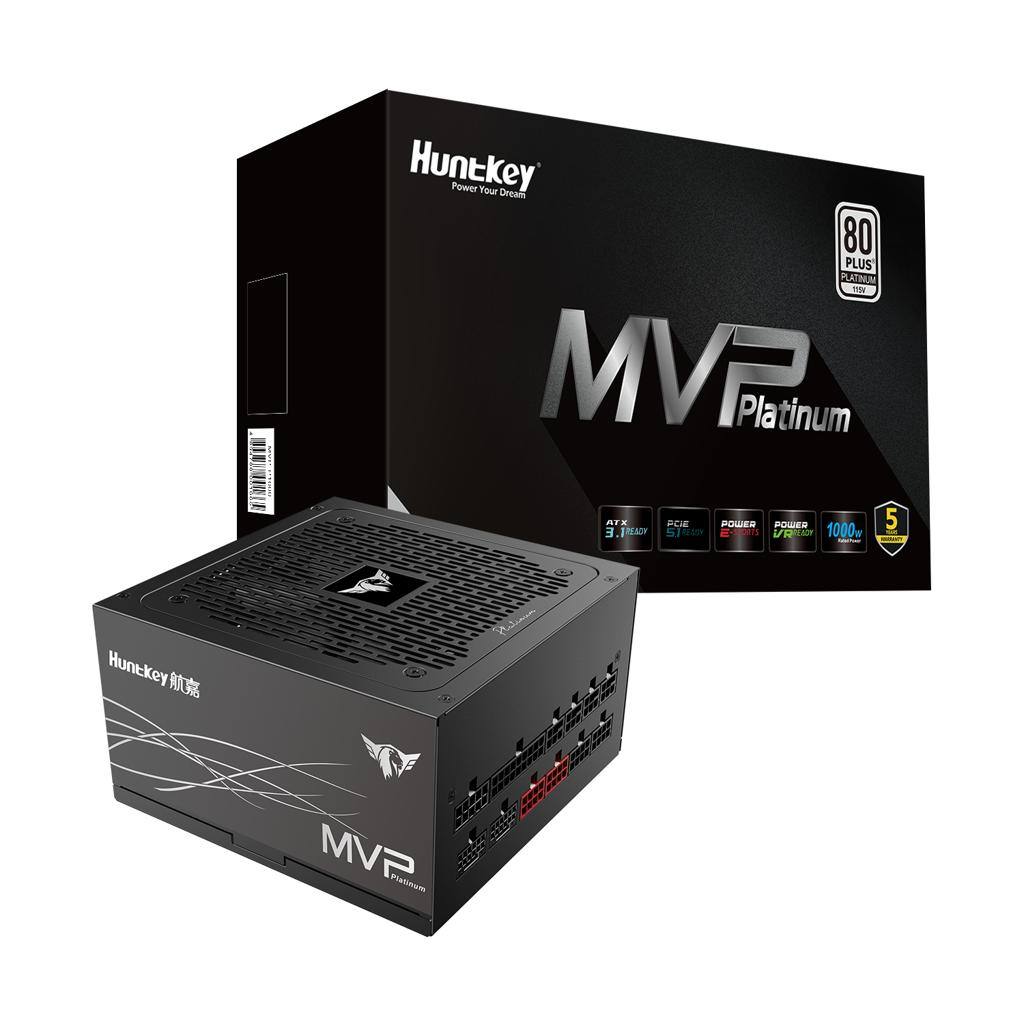
Huntkey’s MVP series is known for:
- Stable output rails
- Mature cooling systems
- Good overall reliability
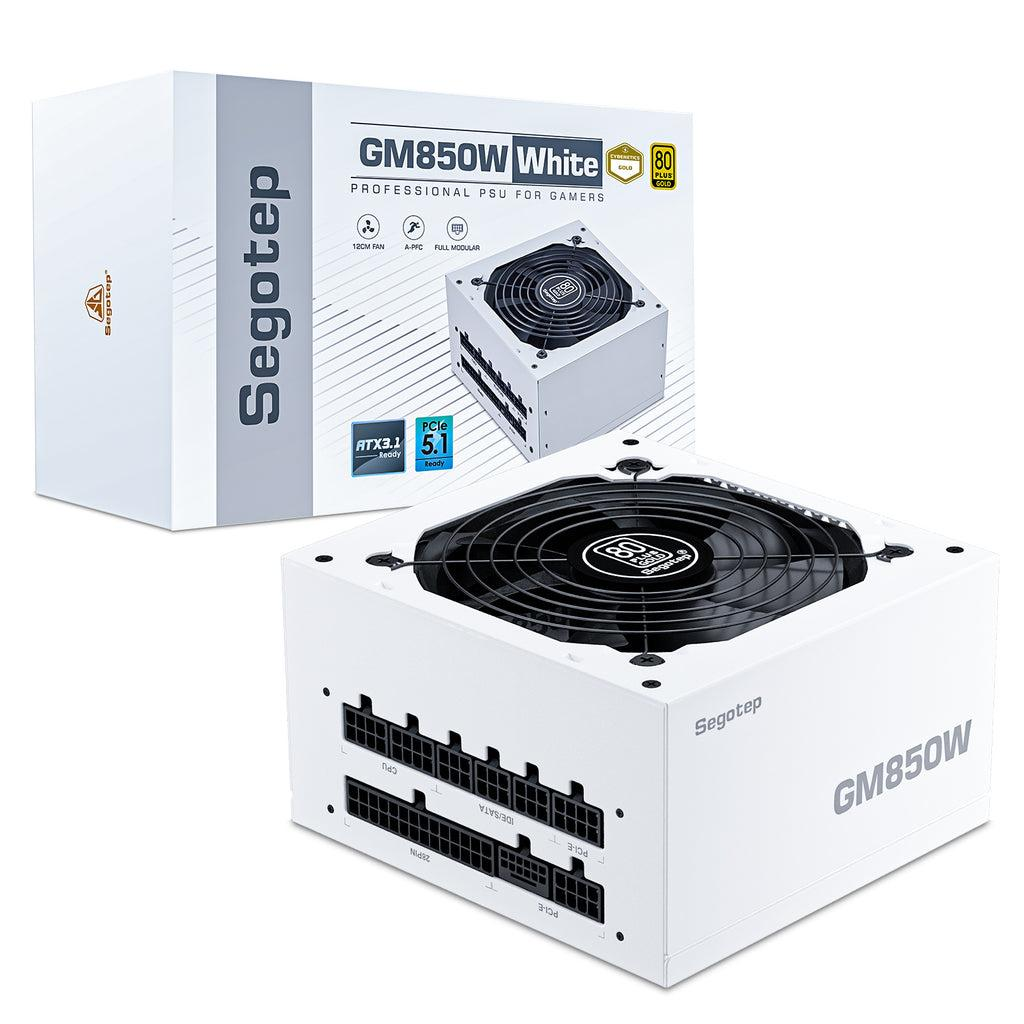
Segotep has become especially aggressive in the ATX 3.1 market with products such as:
- GM750W
- GM850W
- GM1000W
These models support:
- PCIe 5.1
- 12V-2×6 connectors
- High transient GPU loads
Gaming and ATX 3.1 Power Supplies
What Will the Future of 12V Switching Power Supplies Look Like?
The industry is rapidly moving toward:
- Higher power density
- Better efficiency
- Lower standby power
- Smaller transformer size
- Digital power management
- GaN switching devices
Gallium Nitride (GaN) MOSFETs are becoming increasingly important because they support much higher switching frequencies while reducing thermal loss.
At the same time, AI infrastructure is driving demand for extremely compact high-current 12V systems capable of operating efficiently under continuous heavy loads.

Final Thoughts
The 12V switching power supply market is much more complex than it first appears. Different topologies and brands serve completely different applications.
For low- and medium-power devices, flyback solutions such as CR6842 and CR6848 remain practical and cost-effective.
For industrial automation, MEAN WELL continues to dominate because of its reliability and broad product range.
For telecom and high-efficiency infrastructure, Delta remains one of the strongest names in the industry.
For gaming and GPU systems, Huntkey and Segotep have become serious competitors thanks to modern ATX 3.1 support and strong 12V rail performance.
In the end, choosing the right 12V SMPS is not just about output voltage. It is about efficiency, thermal stability, EMC performance, topology selection, and long-term reliability under real operating conditions.