

Modern industrial equipment—from PLC control cabinets to CNC machines—relies on stable DC power supplies. But when engineers design control systems or industrial devices, a common question appears:
Should you use a DIN rail power supply or an enclosed power supply?
Although both belong to the same category of AC-DC switching power supplies, their installation methods, power ranges, cooling structures, and applications are quite different. Choosing the wrong type may lead to installation problems, overheating, or maintenance difficulties.
This guide explains the real differences between DIN rail and enclosed power supplies, including real product examples, engineering considerations, and practical selection tips.
What Is a DIN Rail Power Supply?
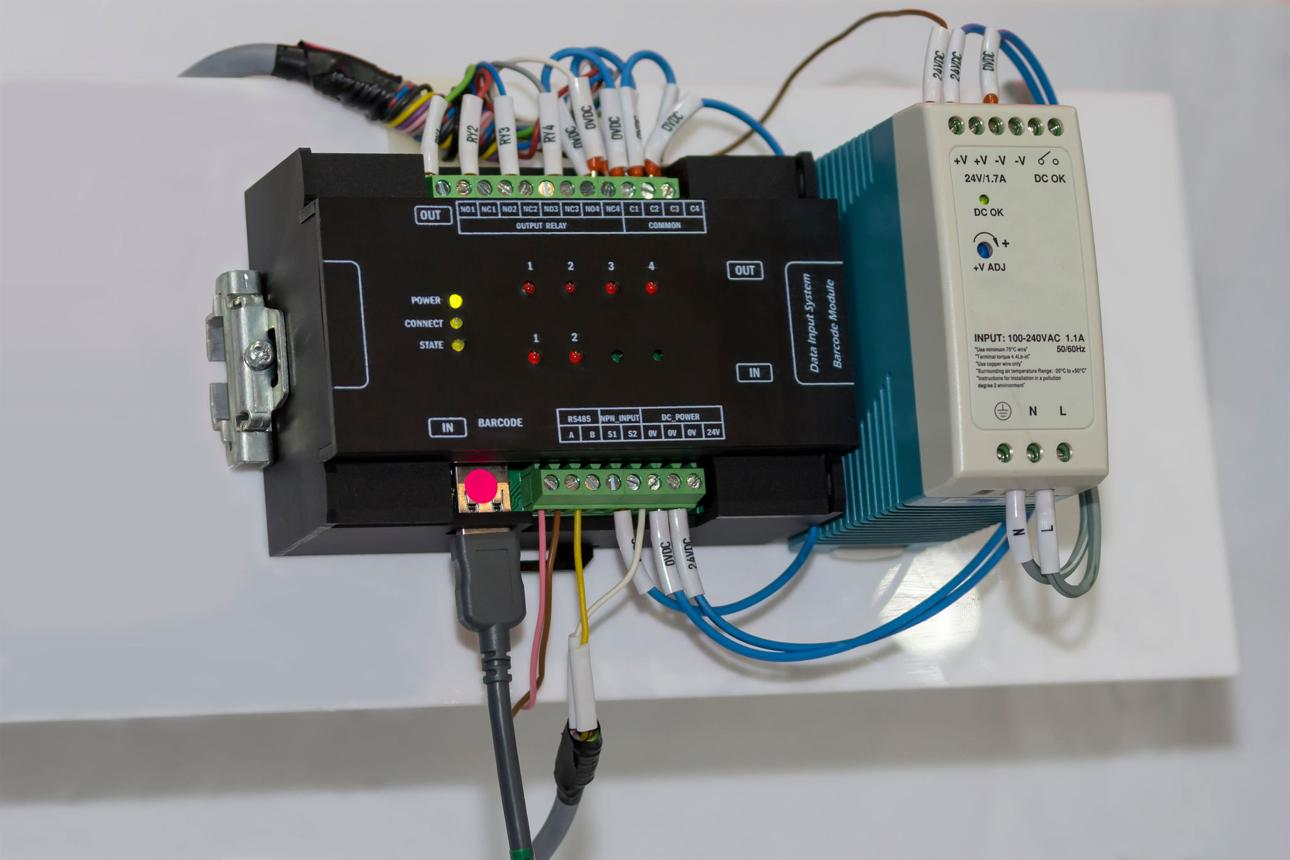
A DIN rail power supply is a switching power supply designed to clip directly onto a standardized metal mounting rail (DIN rail) inside electrical control cabinets.
These rails are widely used in industrial automation systems, allowing devices such as PLCs, relays, and power supplies to be mounted quickly and organized efficiently.
Why are DIN rail power supplies popular in automation?
Because they are designed specifically for control panels and industrial automation environments, where space is limited and modular installation is important.
Typical characteristics include:
·Compact modular housing
·Tool-free snap-on installation
·Narrow width for dense cabinet layouts
·High reliability for 24/7 operation
·Standard outputs like 24VDC
They are commonly used to power:
·PLC controllers
·Sensors and actuators
·Industrial communication modules
·Relays and I/O modules
In automation systems such as CNC machines or servo drives, DIN rail supplies provide stable DC voltage to control electronics and ensure reliable system operation.
Example: Typical DIN Rail Power Supply Specifications
| Model Example | Output Voltage | Output Power | Input Range | Typical Application |
| HDR-30-24 | 24V | 30W | 85–264VAC | PLC control systems |
| HDR-60-24 | 24V | 60W | 85–264VAC | Industrial sensors |
| EDR-120-24 | 24V | 120W | 90–264VAC | Automation cabinets |
| LI-960 Series | 24V / 48V | up to 960W | Wide AC input | Large automation systems |
For instance, the HDR-60-24 DIN rail power supply delivers 24V DC output with compact dimensions and universal AC input, making it suitable for industrial automation backbones.
Most industrial DIN rail power supplies cover 10W to about 960W, depending on the product series and manufacturer.
What Is an Enclosed Power Supply?
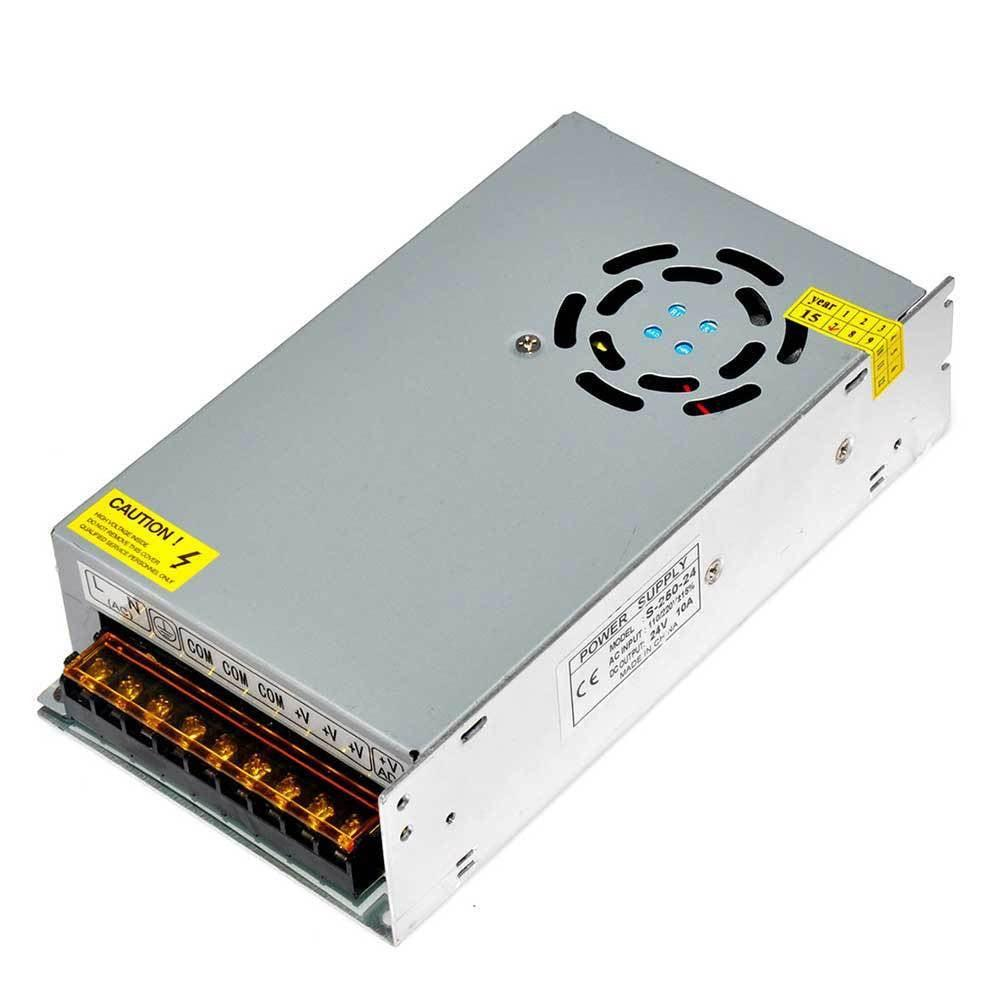
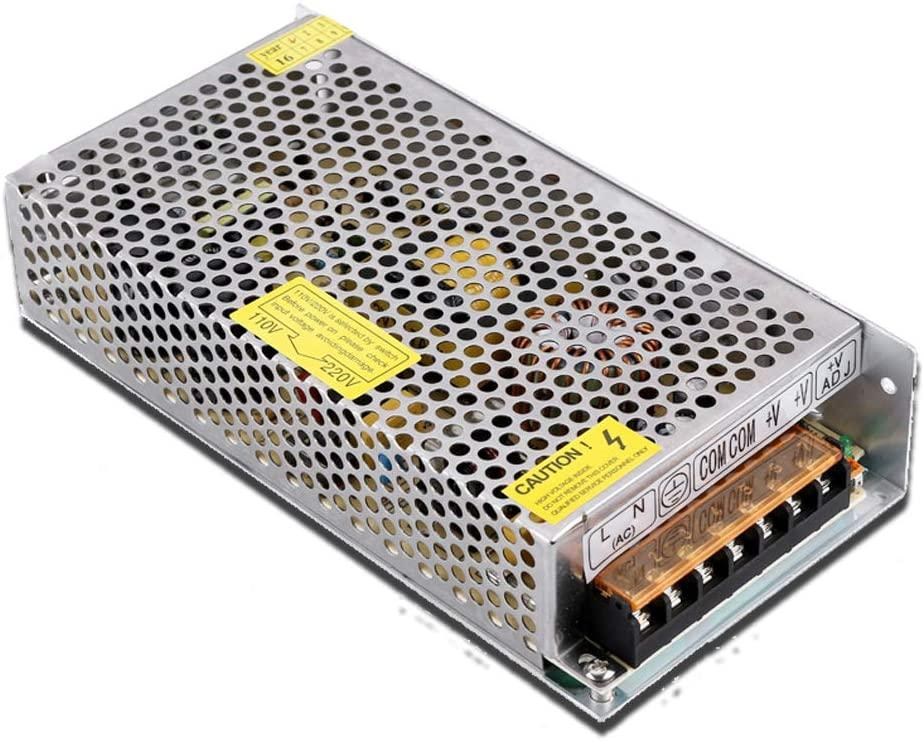
An enclosed power supply is a switching power supply that comes with a protective metal or plastic casing.
The internal electronic components are sealed inside the enclosure, which protects them from dust, vibration, and accidental contact.
These power supplies are typically installed using screws rather than DIN rails, making them suitable for equipment that does not have a control cabinet.
Typical features
·Metal protective housing
·Higher power capacity
·Ventilation holes or fan cooling
·Screw-mount installation
·Wide voltage options
Because of their durability and flexibility, enclosed power supplies are widely used in:
·LED lighting systems
·CCTV and security equipment
·CNC machines
·industrial automation devices
·communication equipment
For example, an enclosed switching power supply like a 450W 36V unit can deliver high output current for industrial equipment.
DIN Rail vs Enclosed Power Supply: What Are the Real Differences?
Understanding the design philosophy of each type helps engineers choose the right product.
Comparison Overview
| Feature | DIN Rail Power Supply | Enclosed Power Supply |
| Installation | DIN rail snap-mount | Screw mounting |
| Housing | Narrow modular plastic | Metal or plastic enclosure |
| Typical Power | 10W – 960W | 50W – 2000W+ |
| Cooling | Natural convection | Fan or ventilation |
| Maintenance | Easy replacement | Requires wiring removal |
| Typical Use | Control cabinets | Stand-alone equipment |
Installation: Which One Is Easier to Deploy?
DIN rail power supplies win in modular installations.
They are designed to snap directly onto standard TS-35 rails, which are commonly used inside industrial control cabinets.
Advantages:
·Faster installation
·Clean cable routing
·Easy replacement
·Better panel organization
In contrast, enclosed power supplies require screws and are typically mounted directly onto equipment frames or chassis.
For equipment manufacturers, this means:
·More installation flexibility
·But slower maintenance
Power Capacity: Which Type Supports Higher Loads?
In general:
·DIN rail power supplies: low to medium power
·Enclosed power supplies: medium to high power
Although modern DIN rail supplies can reach several hundred watts, high-power industrial equipment often requires 1 kW or more, which is more common in enclosed designs.
Typical Power Range Comparison
| Power Range | DIN Rail Power Supply | Enclosed Power Supply |
| 10–60W | Common | Less common |
| 60–240W | Very common | Common |
| 240–600W | Available | Very common |
| 600–2000W | Limited | Standard |
This difference mainly comes from thermal design and installation environments.
Cooling Design: Why Do the Structures Look Different?
Cooling is one of the biggest engineering differences.
DIN Rail Power Supplies
Most models rely on:
·Natural convection cooling
·Vertical airflow inside cabinets
Because they are installed inside controlled electrical panels, they usually do not need fans.
Enclosed Power Supplies
These supplies may use:
·Heat sinks
·Ventilation slots
·Cooling fans
The metal casing also helps dissipate heat and reduce EMI interference.
This design allows them to support higher output power.
Real Product Comparison: 24V Industrial Power Supplies
To understand the difference better, let’s compare two common 24V industrial power supplies.
| Specification | DIN Rail Example | Enclosed Example |
| Output Voltage | 24VDC | 24VDC |
| Output Power | 120W | 350W |
| Installation | DIN rail mount | Screw mount |
| Cooling | Passive | Fan or vent |
| Application | PLC cabinet | LED lighting / CNC |
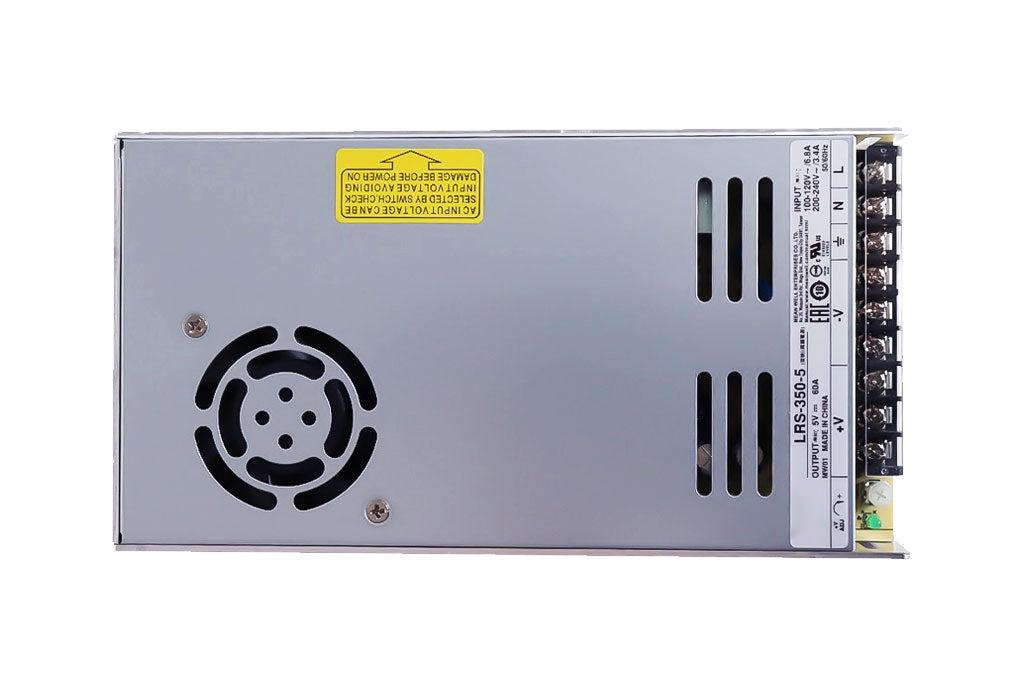
DIN rail models like 120W EDR-120-24 are optimized for compact control cabinets, while enclosed models such as 350W LRS-350 series are designed for equipment-level power distribution.
When Should You Choose a DIN Rail Power Supply?
DIN rail power supplies are ideal when your system includes a control cabinet or automation panel.
Typical scenarios
Choose DIN rail if your project involves:
·PLC control systems
·Industrial robots
·Smart factory equipment
·Process control systems
·Railway signaling equipment
Their compact structure allows them to maximize cabinet space and simplify system wiring.
When Should You Choose an Enclosed Power Supply?
An enclosed power supply is usually better when:
·The system requires high power output
·The power supply must be installed outside control cabinets
·Equipment needs extra mechanical protection
Typical applications include:
·LED displays and lighting
·CNC machines
·communication systems
·security equipment
The protective housing also improves durability and safety, especially in exposed installations.
How Do Engineers Select the Right Power Supply?
Professional engineers rarely choose power supplies based only on installation type.
Instead, they evaluate several key parameters.
Key Selection Factors
| Factor | Why It Matters |
| Output Voltage | Must match load requirements |
| Power Capacity | Choose at least 30% margin for reliability |
| Installation Space | Cabinet vs open mounting |
| Cooling Conditions | Ambient temperature and airflow |
| Certifications | UL, CE, EMC compliance |
Experts often recommend selecting a power supply with about 30% more power than the expected load to improve reliability and reduce stress on components.
Future Trends in Industrial Power Supplies
Modern switching power supplies are evolving quickly.
Some trends include:
·Higher efficiency (>94%)
·Smart monitoring functions
·Integrated UPS capability
·Compact ultra-slim designs
Manufacturers are also developing intelligent DIN rail power supplies that combine:
·DC power supply
·battery charger
·UPS backup functions
These integrated features help industrial systems maintain operation during power interruptions.

Conclusion: DIN Rail or Enclosed Power Supply?
Both DIN rail and enclosed power supplies are essential in modern industrial electronics, but they serve different design philosophies.
DIN rail power supplies
·Best for automation and control cabinets
·Compact and modular
·Easy to maintain
Enclosed power supplies
·Best for equipment-level power distribution
·Higher power capacity
·Stronger environmental protection
In short:
·Choose DIN rail power supplies for industrial control systems.
·Choose enclosed power supplies for high-power standalone equipment.
Selecting the right power supply architecture can significantly improve system reliability, installation efficiency, and long-term maintenance costs.