Skip to content

Why Have AC/DC Switching Power Supplies Become Essential in Modern Electronics?
In today’s rapidly evolving electronics industry, power supply technology plays a far more important role than many people realize. Whether in industrial automation systems, EV charging infrastructure, communication equipment, medical devices, or smart control systems, nearly every modern electronic product relies on stable and efficient power conversion. Among all available solutions, AC/DC switching power supplies have become the dominant technology because they offer high efficiency, compact size, lightweight construction, and excellent reliability.
Traditional linear power supplies once dominated the market due to their relatively simple structure and stable output characteristics. However, as electronic systems became smaller, faster, and more energy-efficient, the limitations of linear power supplies became increasingly obvious. Large transformers, excessive heat generation, low conversion efficiency, and bulky designs made them unsuitable for modern industrial applications.
This is exactly why AC/DC switching power supplies rapidly replaced conventional linear designs across almost every major industry. By using high-frequency switching technology, modern switching power supplies can dramatically reduce transformer size while simultaneously improving efficiency and reducing thermal losses. Today, they are considered one of the most important foundational technologies behind modern electronic equipment.
In this article, we will explore how AC/DC switching power supplies work, why they outperform traditional linear power supplies, where they are commonly used, and how engineers can select the right power solution for industrial applications.

What Is an AC/DC Switching Power Supply?
An AC/DC switching power supply is an electronic power conversion device that converts alternating current (AC) into regulated direct current (DC). Unlike traditional linear power supplies that rely on low-frequency transformers operating at 50Hz or 60Hz, switching power supplies utilize high-frequency switching technology and PWM (Pulse Width Modulation) control to transfer energy more efficiently.
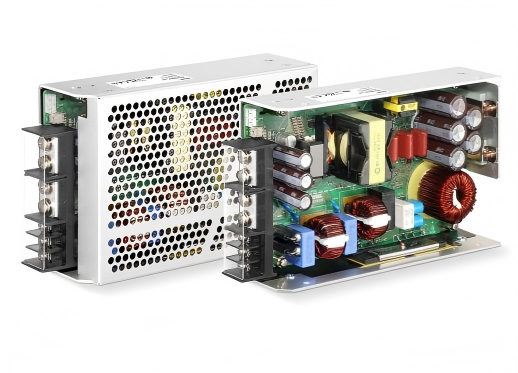
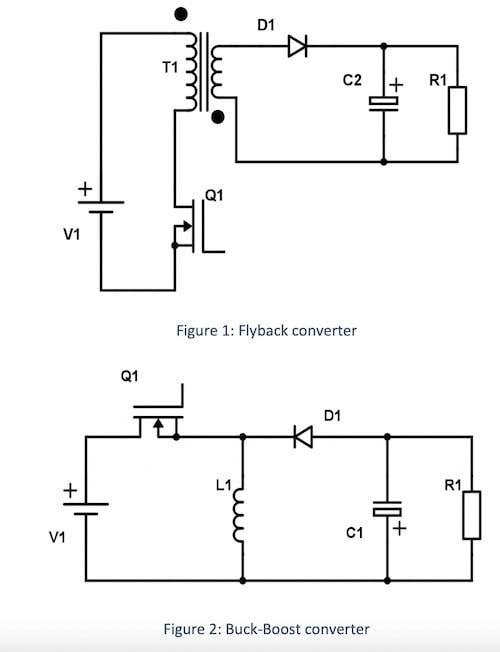
A typical AC/DC switching power supply contains several key functional blocks, including an EMI filter, rectifier circuit, switching MOSFET, PWM controller, high-frequency transformer, output rectifier, and filtering stage. Each section plays an important role in stabilizing output voltage and ensuring efficient operation under different load conditions.
The biggest difference between switching power supplies and linear power supplies lies in the operating frequency. Instead of transferring energy directly at low line frequency, switching power supplies convert electrical energy into high-frequency pulses. This allows the transformer and magnetic components to become dramatically smaller while significantly improving overall efficiency.
As modern industrial equipment continues to move toward miniaturization and higher integration density, the advantages of switching power supplies become increasingly valuable.
Why Did Switching Power Supplies Replace Linear Power Supplies?
To fully understand the importance of AC/DC switching power supplies, it is necessary to first examine the limitations of traditional linear power supplies.
A conventional linear power supply works by using a low-frequency transformer to reduce the AC input voltage to a lower AC voltage. Afterward, the output is rectified and filtered to produce DC voltage. For example, a 220Vac input may first be converted to 12Vac through a transformer, then rectified into approximately 12Vdc.
Although this design is relatively simple and generates low electrical noise, it also introduces several major disadvantages. Because the transformer operates at low frequency, it requires a large magnetic core and substantial copper windings. This makes the entire system bulky and heavy. In addition, linear power supplies typically waste excess energy in the form of heat, resulting in poor efficiency and large thermal management requirements.
As industrial systems became more compact and power demands continued increasing, engineers required a solution that could deliver higher power density and lower energy consumption. Switching power supplies solved this problem by moving energy conversion into the high-frequency domain.
Instead of continuously dissipating energy like linear regulators, switching power supplies rapidly switch electronic components on and off. This dramatically reduces power loss and allows the transformer size to shrink significantly.
The transition from linear to switching technology marked one of the most important developments in modern power electronics.
How Does an AC/DC Switching Power Supply Work?

Although switching power supplies may appear complex internally, their operating principle can be understood through several key stages.
The process begins when AC voltage enters the power supply through the input stage. The AC input first passes through an EMI filter, which suppresses electrical interference and protects both the power supply and connected equipment from noise disturbances. After filtering, the AC voltage is rectified and converted into high-voltage DC.
For example, a standard 220Vac input becomes approximately 311Vdc after rectification and filtering.
The next stage is the heart of the switching power supply: the high-frequency switching circuit. A MOSFET controlled by a PWM controller rapidly switches on and off at frequencies typically ranging from 65kHz to several hundred kilohertz. This high-speed switching action chops the electrical energy into small pulses.
These pulses are then transferred through a high-frequency transformer. Because the transformer operates at such high frequency, it can be dramatically smaller than traditional 50Hz transformers while still transferring the same amount of power.
After the energy reaches the secondary side, it is rectified and filtered again to produce stable DC outputs such as 5Vdc, 12Vdc, 24Vdc, or 48Vdc. Feedback circuits continuously monitor the output voltage and dynamically adjust switching behavior to maintain stable regulation under changing load conditions.
This high-frequency conversion architecture is the key reason switching power supplies achieve both compact size and high efficiency.
Why Are Switching Power Supplies More Efficient?
One of the biggest advantages of switching power supplies is their extremely high efficiency compared to traditional linear designs.
Linear Power Supply vs Switching Power Supply
| Parameter | Linear Power Supply | Switching Power Supply |
| Operating Frequency | 50/60Hz | 65kHz–1MHz |
| Transformer Size | Large | Compact |
| Efficiency | 40–60% | 80–95% |
| Heat Generation | High | Low |
| Weight | Heavy | Lightweight |
| Power Density | Low | High |
| Cooling Requirement | Large Heatsink | Smaller Cooling Solution |
In a linear power supply, excess voltage is continuously dissipated as heat. This means large amounts of energy are wasted during operation. In contrast, switching power supplies minimize energy loss because their switching devices operate primarily in either fully ON or fully OFF states, where power dissipation is much lower.
Additionally, high-frequency operation allows transformers and inductors to become smaller and more efficient. Reduced magnetic losses and lower copper losses further improve overall conversion efficiency.
For industrial systems operating continuously around the clock, even small efficiency improvements can translate into significant long-term energy savings.
Where Are AC/DC Switching Power Supplies Used?
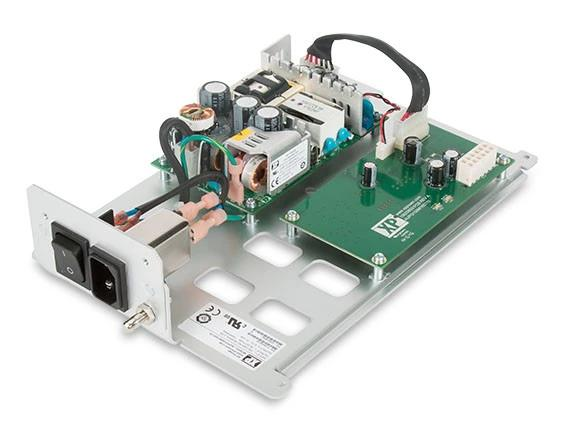
Today, AC/DC switching power supplies are used across nearly every modern industry.
In industrial automation systems, they provide stable DC power for PLC controllers, servo systems, sensors, industrial gateways, and HMI interfaces. Industrial environments often contain severe electrical noise, vibration, and temperature fluctuations, so reliable power conversion is essential for maintaining stable operation.
In EV charging infrastructure, switching power supplies support multiple voltage rails for BMS units, communication modules, display systems, and control circuits. High-efficiency power conversion helps reduce heat generation and improves charging reliability.
Medical equipment also depends heavily on advanced AC/DC power supplies. Applications such as patient monitoring systems, imaging equipment, and diagnostic instruments require low leakage current, reinforced isolation, and strict compliance with medical safety standards.
Communication systems, including 5G base stations, routers, optical networks, and data centers, demand high power density and exceptional long-term reliability. Modern switching power supplies enable compact communication equipment while minimizing energy consumption.
As electronic systems continue evolving toward greater intelligence and connectivity, the role of switching power supplies becomes even more critical.
How Should Engineers Select the Right AC/DC Power Supply?
Selecting the correct AC/DC switching power supply is essential for ensuring long-term system reliability and performance.
The first consideration is input voltage range. Industrial applications often require wide-input designs capable of operating globally under unstable grid conditions. Many modern industrial power supplies support universal input ranges such as 85–264Vac.
Output voltage and power capacity must also be carefully evaluated. Engineers should account not only for continuous operating current but also startup surges and peak load requirements. In most cases, leaving a 20–30% power margin is recommended to improve reliability and thermal performance.
Isolation voltage is another critical factor, particularly for industrial and medical applications. High isolation protects sensitive control circuits from dangerous voltage spikes and improves system safety.
Typical Isolation Requirements
| Industry | Typical Isolation Voltage |
| Consumer Electronics | 1500Vac |
| Industrial Automation | 3000Vac |
| Medical Equipment | 4000Vac+ |
EMC and EMI performance should also be carefully considered. Industrial systems often operate in electrically noisy environments, so compliance with standards such as EN55032 and IEC/EN61000 is essential for maintaining stable operation.
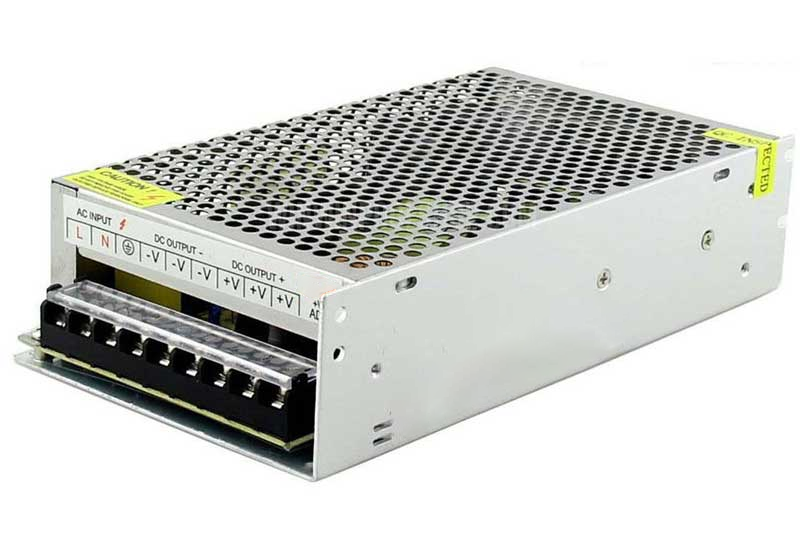
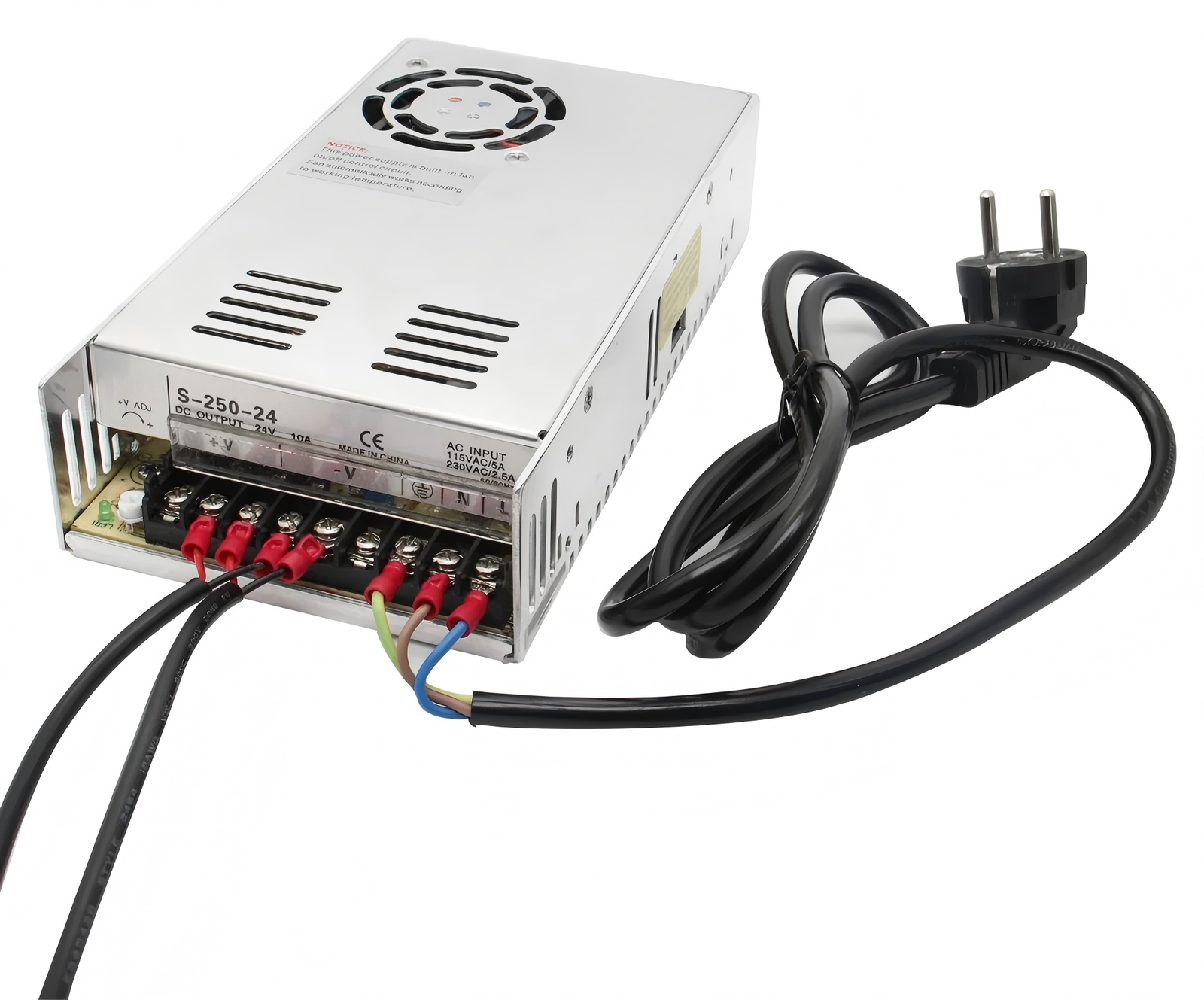
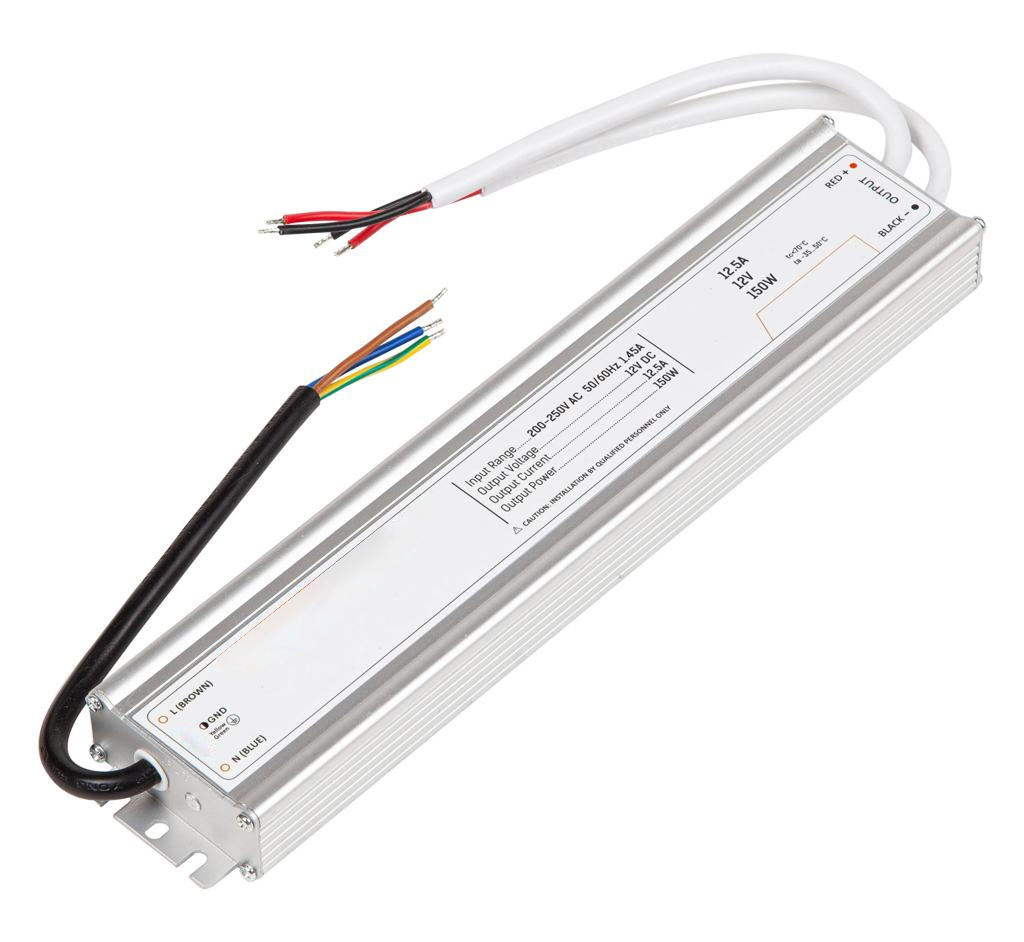
Finally, engineers should evaluate packaging style and installation requirements. Depending on the application, suitable formats may include PCB-mounted modules, DIN rail power supplies, enclosed industrial power supplies, or open-frame designs.
Why Are SIPURUI AC/DC Power Supplies Suitable for Industrial Applications?

As industrial systems continue demanding greater reliability, efficiency, and compact integration, SIPURUI provides a comprehensive range of AC/DC switching power supply solutions designed specifically for modern industrial environments.
SIPURUI products are engineered with wide input voltage capability, allowing stable operation across global power systems. High power density designs simplify installation in compact industrial equipment while maintaining excellent thermal performance.
In addition, SIPURUI power supplies are designed for continuous long-term operation under demanding environmental conditions. Strong EMC performance, stable output regulation, and enhanced isolation protection help ensure reliable operation in automation systems, communication equipment, embedded control systems, and smart industrial devices.

Typical SIPURUI Product Categories
| Product Type | Typical Applications |
| PCB AC/DC Modules | IoT Devices, Smart Controls |
| DIN Rail Power Supplies | Industrial Automation |
| Enclosed Power Supplies | Communication Equipment |
| Compact AC/DC Modules | Embedded Systems |
| Industrial Power Converters | Factory Control Systems |
With growing demand for intelligent manufacturing and energy-efficient infrastructure, SIPURUI continues focusing on compact, efficient, and reliable switching power technologies for industrial customers worldwide.
What Is the Future of AC/DC Switching Power Supplies?
The future of AC/DC switching power supplies is closely tied to advances in semiconductor technology and digital power management.
New wide-bandgap semiconductor materials such as Gallium Nitride (GaN) and Silicon Carbide (SiC) are enabling higher switching frequencies, lower losses, and significantly smaller system designs. These technologies will continue driving power supplies toward even greater efficiency and power density.
At the same time, digital power management is becoming increasingly important. Future power supplies will support intelligent monitoring, predictive maintenance, remote diagnostics, and real-time communication functions.
Global energy regulations are also pushing manufacturers toward lower standby power consumption and improved energy efficiency standards. As renewable energy systems, EV infrastructure, and industrial automation continue expanding worldwide, demand for high-performance AC/DC switching power supplies will grow rapidly.

Conclusion
AC/DC switching power supplies have become the foundation of modern electronic systems because they offer significant advantages over traditional linear power supplies in terms of efficiency, size, thermal performance, and reliability.
By utilizing high-frequency switching technology, modern power supplies can deliver stable and efficient DC power while dramatically reducing transformer size and energy loss. This makes them ideal for industrial automation, EV charging infrastructure, medical systems, communication equipment, and countless other applications.
For engineers and OEM manufacturers, selecting the right power supply is critical to ensuring long-term system stability and reducing operational costs. As power electronics technology continues advancing, AC/DC switching power supplies will remain one of the most important enabling technologies behind future industrial innovation.
SIPURUI continues to develop compact, high-efficiency, and industrial-grade AC/DC power solutions designed to meet the evolving demands of modern electronic systems worldwide.