
A Professional Guide to MOSFETs, Rectifiers, Thermal Design, and High-Efficiency SMPS Solutions
In today’s electronics industry, power supplies are no longer considered simple supporting components. Whether in industrial automation systems, communication infrastructure, security equipment, renewable energy systems, medical devices, or consumer electronics, the performance of the power supply directly affects the stability, efficiency, and lifespan of the entire product.
Among all modern power technologies, switching power supplies have become the dominant solution due to their high efficiency, compact size, lightweight structure, and excellent power conversion capability. From AC/DC adapters and LED drivers to industrial control systems and high-power inverters, switching power supplies are now deeply integrated into nearly every sector of the electronics industry.
However, behind a high-performance switching power supply lies a critical factor that is often underestimated: the quality and selection of discrete semiconductor components.
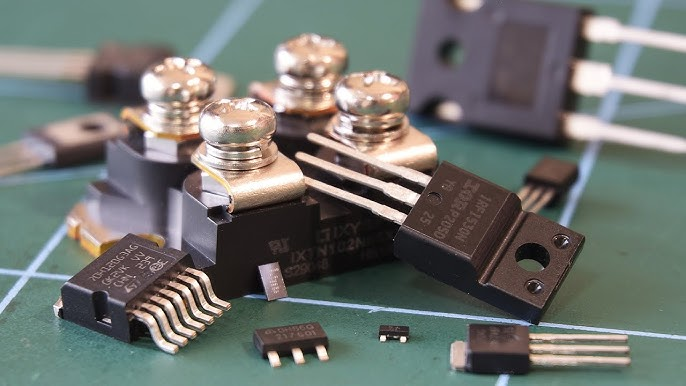
Many engineers focus heavily on topology selection, PWM controllers, or transformer design, but in reality, devices such as MOSFETs, Schottky diodes, bridge rectifiers, fast recovery diodes, and IGBTs are what ultimately determine switching efficiency, thermal behavior, EMI performance, reliability, and long-term durability.
This article explores how discrete components influence switching power supply performance, why component selection matters so much in modern SMPS design, and how professional power supply manufacturers such as SIPURUI optimize semiconductor integration to achieve high-efficiency and stable power conversion.
Why Have Switching Power Supplies Become the Industry Standard?
Traditional linear power supplies once dominated the electronics market because of their simple design and low noise characteristics. However, as electronic systems became more compact and power-hungry, linear regulators revealed major disadvantages, especially in terms of efficiency and thermal management.
Switching power supplies solve these problems by converting electrical energy through high-frequency switching rather than dissipating excess voltage as heat. This dramatically improves efficiency and allows the use of smaller magnetic components and lighter structures.
Today, switching power supplies are widely used in:
- Industrial automation equipment
- Telecom and networking systems
- LED lighting
- Smart home electronics
- Security monitoring devices
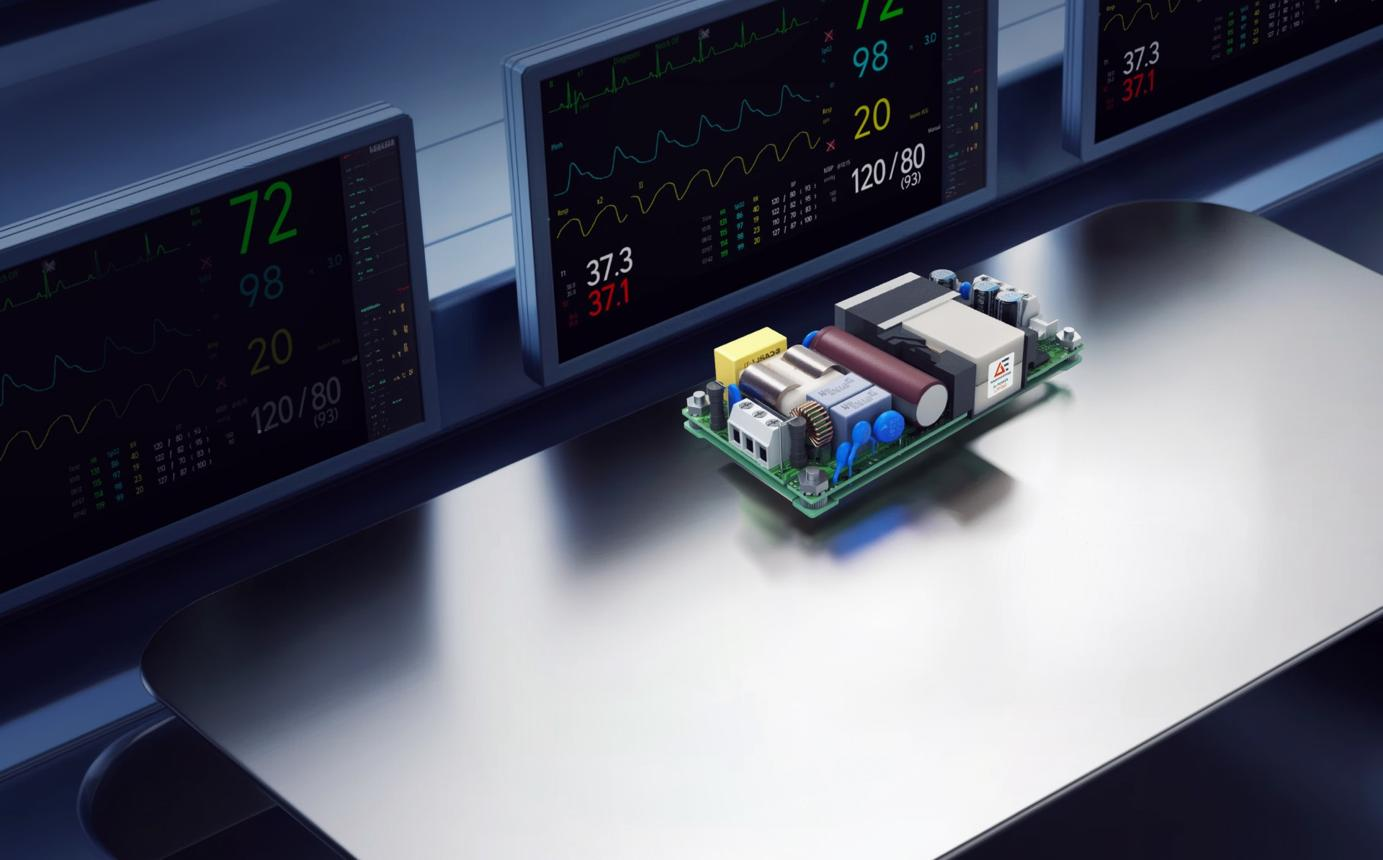
- Medical electronics
- Electric vehicle charging systems
- Solar and energy storage systems
- Robotics and AI hardware
The growing demand for energy-efficient electronics has also pushed manufacturers toward increasingly strict standards regarding standby power consumption, thermal performance, EMI suppression, and conversion efficiency.
As a result, the internal semiconductor devices used in an SMPS have become more important than ever.
How Does a Switching Power Supply Actually Work?
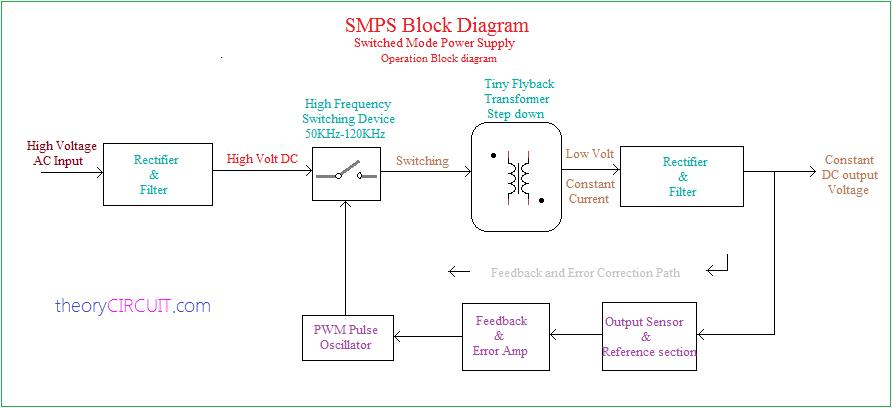
At its core, a switching power supply converts electrical energy using high-frequency switching technology. Instead of operating continuously like a linear regulator, the system rapidly turns semiconductor switches on and off to transfer energy efficiently.
The process may appear simple from the outside, but internally it involves multiple stages working together with precise timing and control.
The first stage begins with AC input rectification and filtering. Incoming AC voltage passes through EMI filters, bridge rectifiers, and capacitors before being converted into high-voltage DC. During this stage, the quality of the rectifier and filtering components directly affects input stability and surge resistance.
After rectification, the DC voltage enters the high-frequency switching stage. Here, PWM controllers drive MOSFETs or IGBTs at very high switching frequencies, often ranging from tens of kilohertz to several hundred kilohertz. The switching signal energizes a high-frequency transformer or inductor, which enables voltage conversion and electrical isolation.
Once energy reaches the secondary side, Schottky diodes or ultra-fast recovery diodes perform rectification again, converting high-frequency AC back into stable DC output. Finally, feedback circuits continuously monitor the output voltage and dynamically adjust the PWM duty cycle to maintain regulation accuracy.
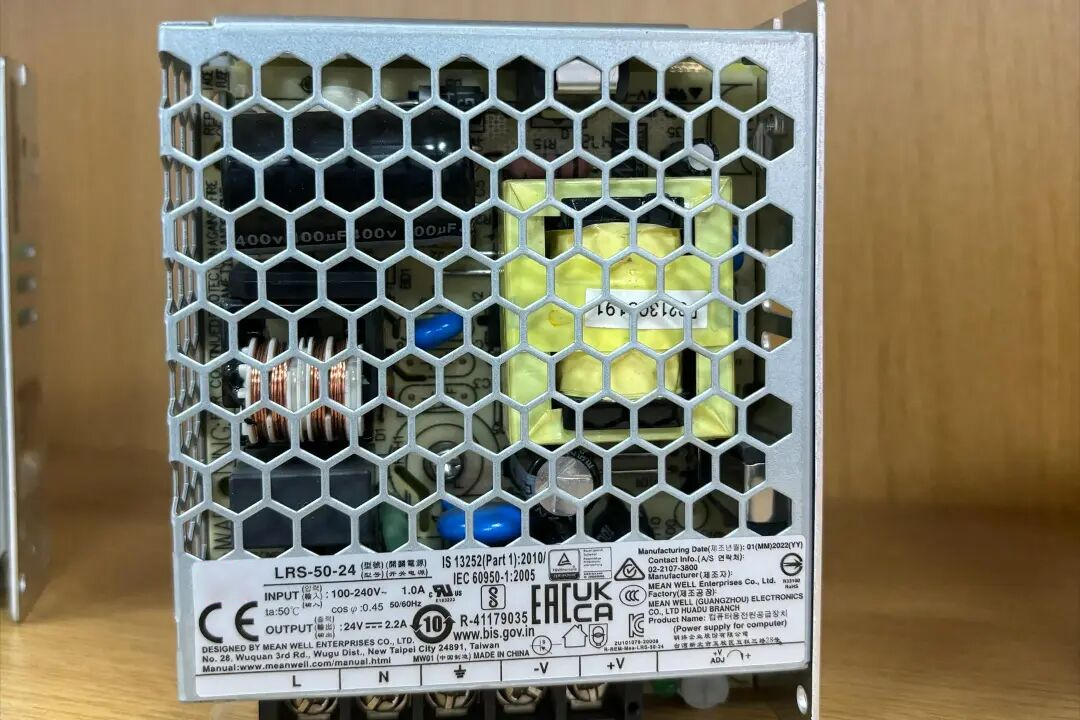
Typical Internal Structure of an SMPS
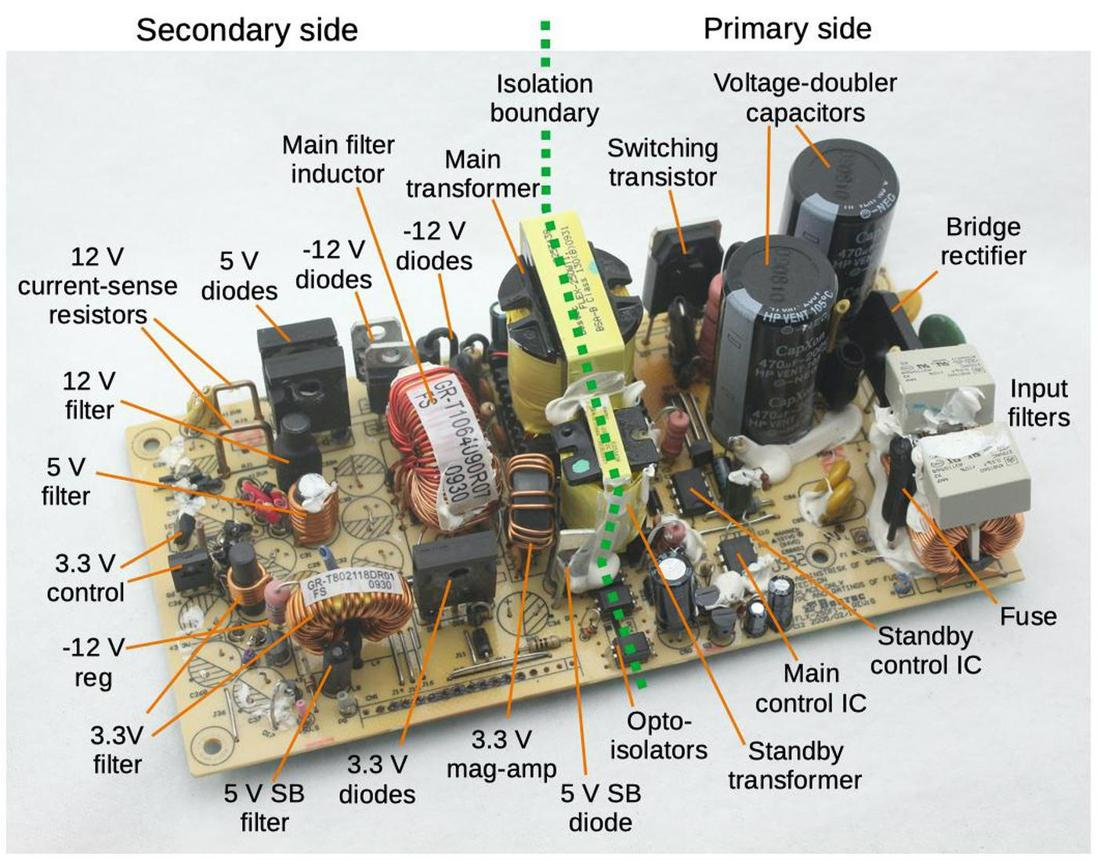
Because the entire conversion process relies on rapid switching behavior, the characteristics of semiconductor devices become critically important. Even small differences in switching speed, conduction resistance, or recovery time can significantly influence efficiency and heat generation.
Why Are MOSFETs So Important in Modern Switching Power Supplies?
Among all power semiconductor devices, MOSFETs are arguably the most critical components in modern switching power supply design.
MOSFETs function as high-speed electronic switches that rapidly control energy transfer inside the converter. Their switching performance directly determines efficiency, thermal behavior, switching losses, and power density.
A high-quality MOSFET can dramatically improve overall system performance, while a poor-quality device can increase heat generation, reduce efficiency, and shorten product lifespan.
The most important MOSFET parameters in switching power supply design include:
| Parameter | Impact on SMPS Performance |
| RDS(on) | Influences conduction loss |
| Gate Charge (Qg) | Affects switching speed |
| Switching Delay | Impacts efficiency and EMI |
| Thermal Resistance | Determines heat dissipation |
| Breakdown Voltage | Affects reliability margin |
In modern high-efficiency power supplies, Super Junction MOSFETs are commonly used because they offer lower conduction resistance and reduced switching losses compared with conventional MOSFET structures.
For high-voltage industrial power systems, engineers may also adopt SiC MOSFET technology to further reduce switching loss and improve high-temperature operation.
Poor MOSFET selection often leads to several major problems:
- Excessive heat generation
- Reduced conversion efficiency
- Increased EMI noise
- Larger heatsink requirements
- Lower long-term reliability
This is why professional switching power supply manufacturers place enormous emphasis on semiconductor sourcing and validation.
Why Do Schottky and Fast Recovery Diodes Matter So Much?
Although MOSFETs receive most of the attention in SMPS design, rectification devices are equally important.
In the secondary stage of a switching power supply, the output signal must be rectified quickly and efficiently. Conventional PN junction diodes are often too slow for modern high-frequency applications because their reverse recovery time creates additional switching loss and noise.
Schottky diodes solve this problem by offering much faster switching characteristics and lower forward voltage drop.
Compared with standard rectifiers, Schottky devices provide:
| Characteristic | Standard Diode | Schottky Diode |
| Forward Voltage | Higher | Lower |
| Recovery Speed | Slower | Extremely Fast |
| Heat Generation | Higher | Lower |
| Efficiency | Moderate | Improved |
Because of these advantages, Schottky diodes are widely used in:
- DC/DC converters
- LED drivers
- Server power supplies
- Low-voltage high-current outputs
- Fast charging systems
Meanwhile, fast recovery and ultra-fast recovery diodes are often used in higher-voltage switching environments where fast switching and low recovery loss are critical.
In high-frequency switching applications, recovery characteristics strongly influence:
- EMI performance
- Switching loss
- Thermal stability
- Efficiency under load
As switching frequencies continue increasing, diode performance becomes even more critical.
Where Are IGBTs Still Used in Power Electronics?
Although MOSFETs dominate low-to-medium power systems, IGBTs remain extremely important in high-voltage and high-current applications.
IGBTs combine the gate-driving advantages of MOSFETs with the low conduction characteristics of bipolar transistors. This makes them highly suitable for industrial and energy-related systems requiring large power handling capability.
Today, IGBTs are widely used in:
- Solar inverters
- UPS systems
- Industrial motor drives
- EV charging infrastructure
- Welding equipment
- High-power industrial converters
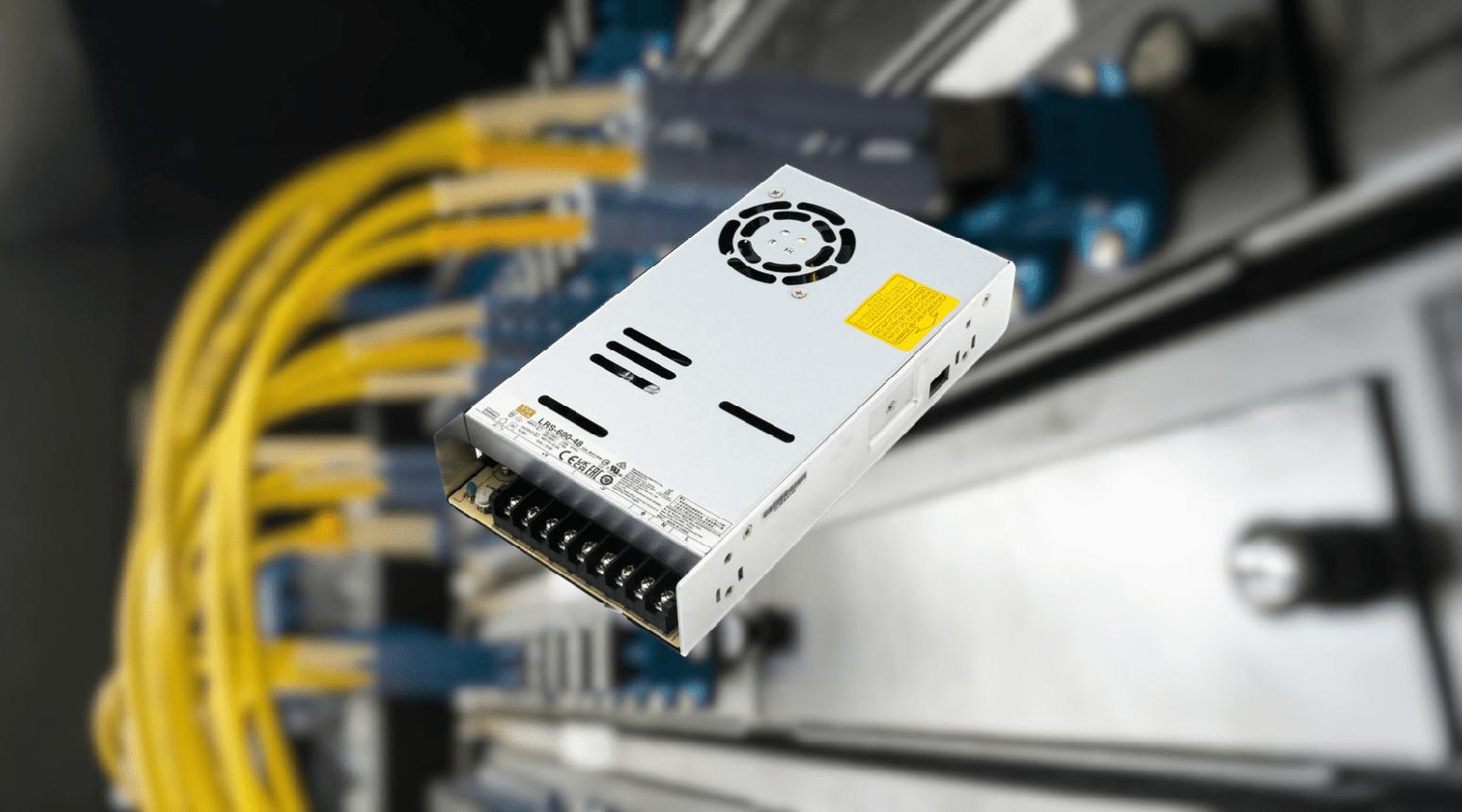
High-Power Switching Applications

In these applications, thermal management and reliability become especially important because devices may operate continuously under heavy load conditions.
What Separates a High-Quality Switching Power Supply From a Low-End Product?
Many switching power supplies may appear similar externally, but their internal quality can vary dramatically.
A professional-grade switching power supply is typically designed around four critical principles: efficiency, thermal performance, protection capability, and reliability.
Efficiency is one of the most important indicators because it directly affects energy consumption and heat generation. High-efficiency designs reduce power loss, improve reliability, and lower cooling requirements. Modern industrial power supplies commonly target efficiency levels above 90%, while premium designs may exceed 94% or even 96%.
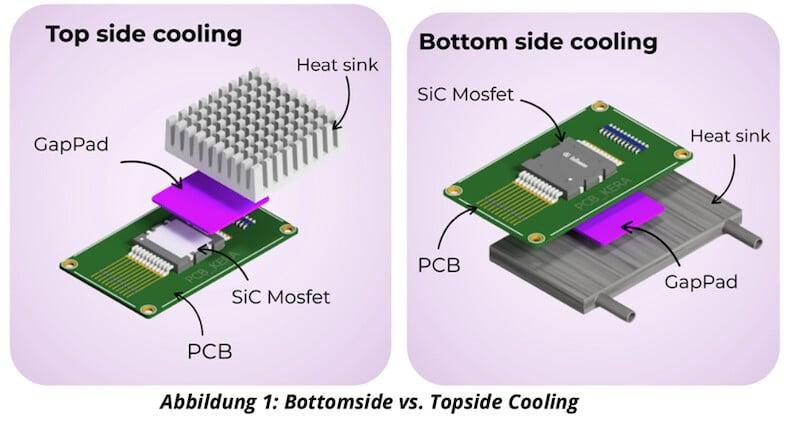
Thermal management is equally important. Excessive heat is one of the primary causes of power supply failure. High temperatures accelerate capacitor aging, damage semiconductor junctions, and reduce overall lifespan. This is why advanced SMPS systems rely on low-loss MOSFETs, optimized PCB layouts, improved airflow structures, and efficient heatsink design.
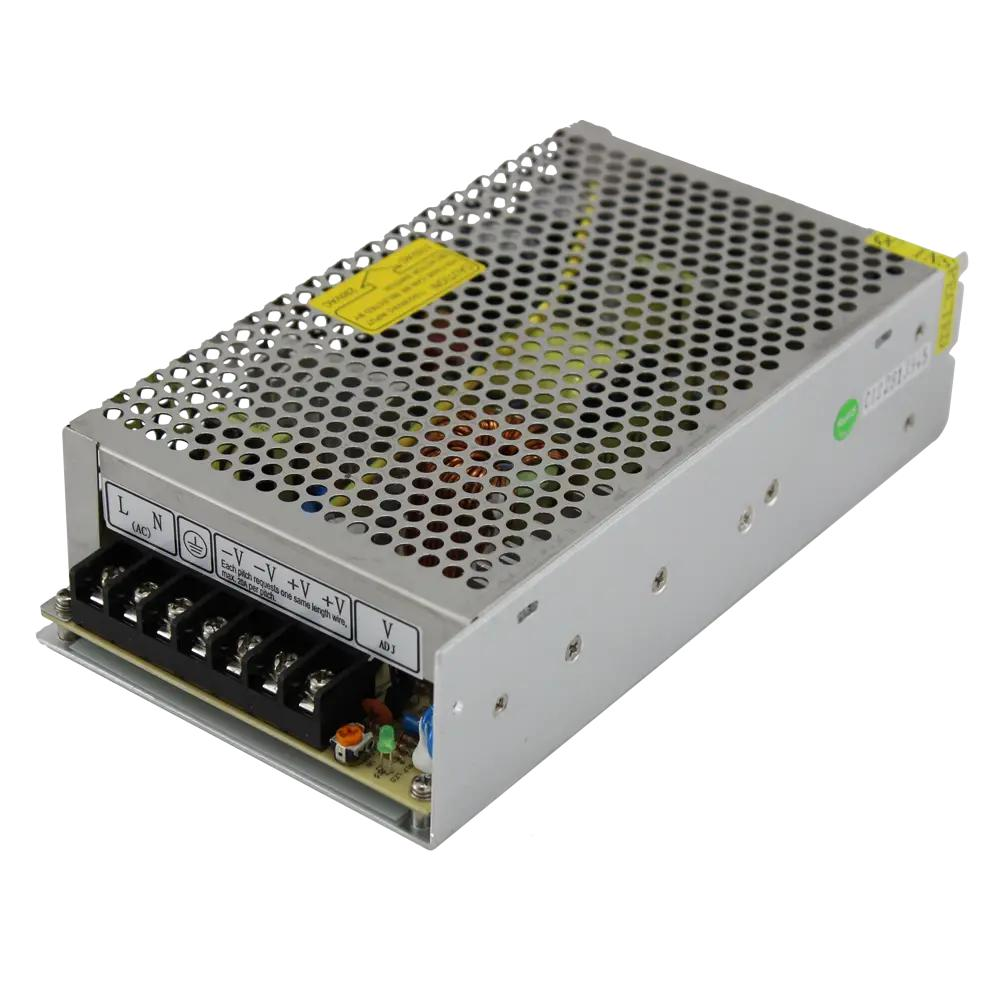
Thermal Design Inside Modern Switching Power Supplies
Protection systems are another major differentiator. A high-quality power supply should include multiple protection mechanisms such as:
| Protection Type | Function |
| OVP | Prevents excessive output voltage |
| OCP | Protects against overload |
| OTP | Prevents overheating |
| SCP | Handles short-circuit conditions |
| Surge Protection | Resists voltage spikes |
Finally, reliability testing is essential for industrial-grade power supplies. Long-term durability depends not only on design quality but also on rigorous testing procedures including thermal cycling, surge testing, high-temperature aging, load variation testing, and EMC validation.
How Does SIPURUI Improve Switching Power Supply Reliability?
As a professional switching power supply brand, SIPURUI focuses on combining optimized power topology with reliable semiconductor integration to achieve stable and efficient performance across industrial applications.
SIPURUI switching power solutions are widely used in:
- Industrial automation
- Communication equipment
- Security systems
- LED lighting
- Smart electronics
- Renewable energy systems
To improve overall performance, SIPURUI emphasizes several critical design areas:
- High-efficiency MOSFET selection
- Low-loss rectification architecture
- Stable thermal structure
- EMI optimization
- Long-life component integration
By carefully controlling component quality and power architecture, SIPURUI power supplies achieve stable output voltage, lower operating temperatures, reduced switching losses, and improved operational lifespan.
This is especially important in industrial applications where equipment may operate continuously for years under demanding environmental conditions.
What Is the Future of Switching Power Supply Technology?
The switching power supply industry continues evolving rapidly as global electronics move toward higher efficiency and greater power density.
One of the most important trends is the adoption of wide-bandgap semiconductor technologies such as SiC and GaN. These materials allow significantly higher switching frequencies, reduced switching loss, and much smaller magnetic components.
As a result, future power supplies will become:
- Smaller
- More efficient
- Cooler
- More compact
- More intelligent
At the same time, digital power management systems are becoming increasingly popular. Smart power control enables real-time monitoring, adaptive switching, predictive maintenance, and advanced fault protection.
These technologies are particularly important in:
- Data centers
- AI infrastructure
- Renewable energy systems
- Electric vehicle charging
- Industrial automation
The demand for higher-performance switching power supplies will continue driving innovation in semiconductor technology and power conversion design.

Final Thoughts
Switching power supplies are far more complex than simple voltage conversion devices. Their real performance depends heavily on the quality and optimization of internal semiconductor components.
MOSFETs determine switching efficiency and thermal behavior. Schottky and fast recovery diodes influence rectification loss and EMI performance. IGBTs continue powering high-voltage industrial systems. Together, these discrete devices form the foundation of modern power electronics.
As industries continue demanding higher efficiency, lower heat generation, and greater reliability, component selection becomes increasingly critical.
For manufacturers seeking stable, high-performance switching power solutions, semiconductor optimization is no longer optional — it is essential.
That is why SIPURUI continues focusing on efficient power conversion, reliable component integration, and advanced switching power supply design for modern industrial and electronic applications.