
Choosing the correct power supply wattage is not just a technical step—it is a decision that directly affects system stability, efficiency, and long-term reliability. Yet, many engineers, buyers, and even experienced technicians still ask the same question: How much wattage do I actually need, and how do I calculate it correctly?
If you are working with switching power supplies in industrial automation, CNC systems, LED applications, or control systems, the answer is even more critical. An undersized PSU can lead to system failure, while an oversized one may reduce efficiency and increase costs unnecessarily.
In this guide, we will walk through how to check PSU wattage, how to calculate real power demand, and how to select the right switching power supply using practical, verifiable methods. We will also explore how SIPURUI switching power supplies are designed to handle real-world load conditions, including peak power demands.
What Does Power Supply Wattage Really Mean—and Why Should You Care?
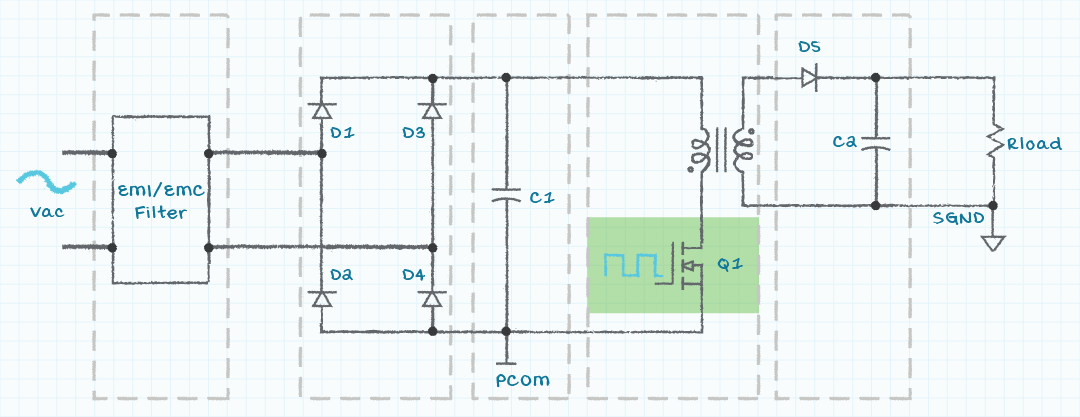
At a fundamental level, power supply wattage represents the maximum amount of power a PSU can deliver to connected devices. It is calculated using the well-known electrical relationship between voltage and current. However, in real-world applications, wattage is not just a number—it defines the operational boundary of your system.
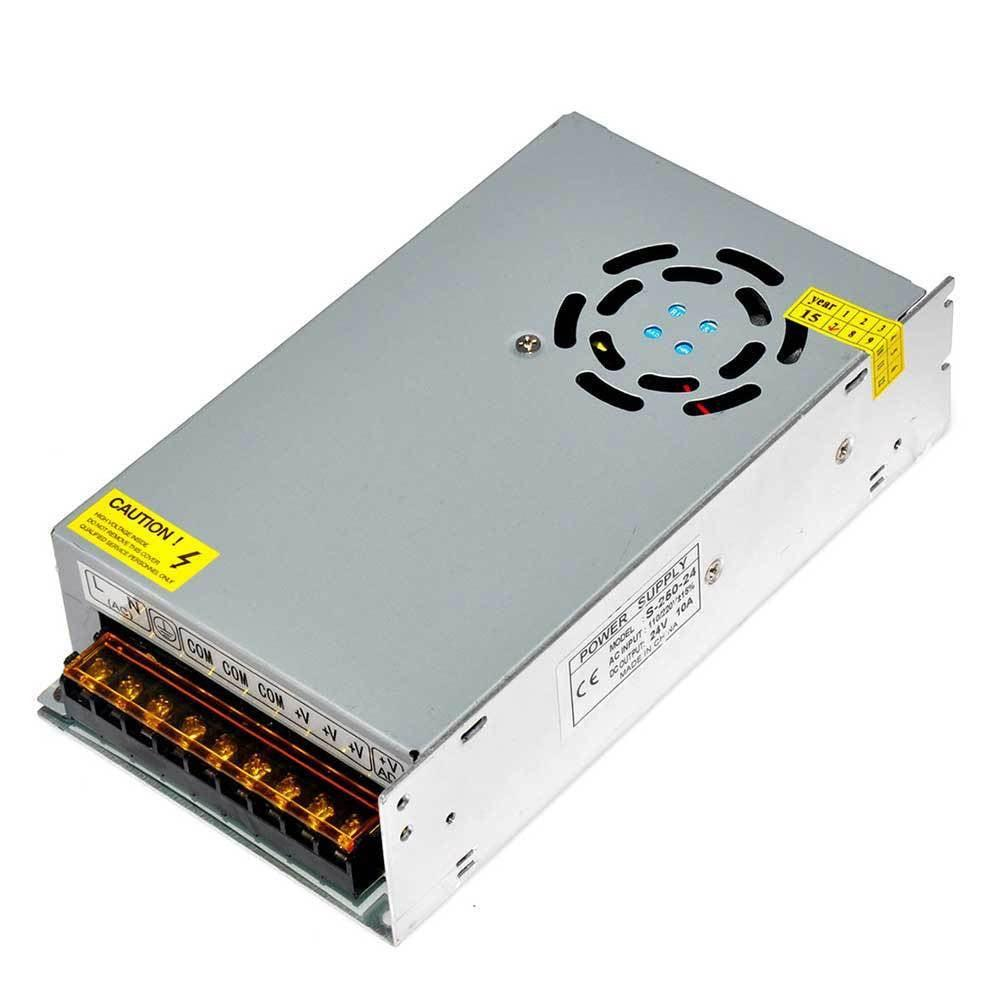
A switching power supply rated at 24V and 10A, for example, delivers up to 240W of output power. But does your system always consume 240W? Not necessarily. The PSU must be capable of delivering that power when required, especially during peak load conditions.
This is why wattage selection is not about average consumption—it is about ensuring your system remains stable under the most demanding conditions.
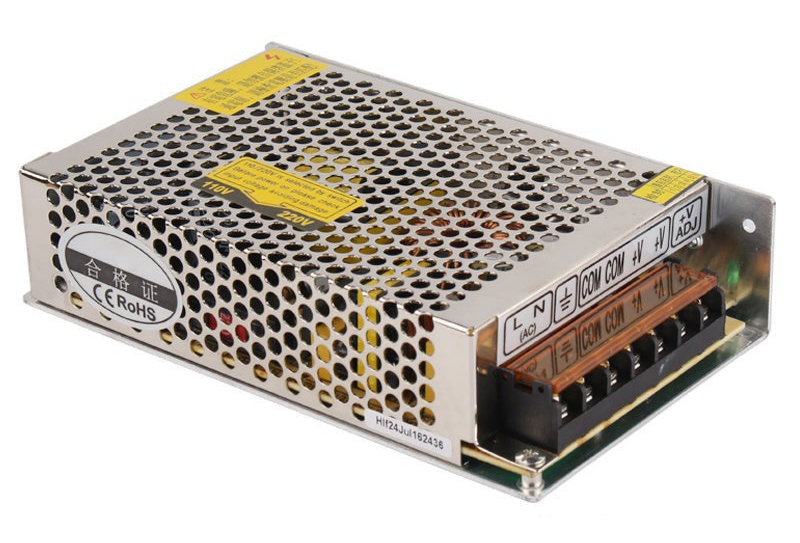
In industrial environments, unstable power delivery can lead to machine downtime, control errors, or even safety risks. Therefore, understanding wattage is not optional—it is essential.
Is Higher Wattage Always Better—or Is That a Common Misconception?
A common assumption is that choosing a higher wattage PSU is always safer. But is that really true?
The answer is more nuanced. While it is true that a PSU with higher wattage provides headroom for future expansion and reduces stress under load, excessive oversizing can push the power supply into a lower efficiency range. Switching power supplies typically achieve peak efficiency at around 50%–80% load.
If your system only uses 20% of a high-wattage PSU, you may actually be wasting energy.
Typical PSU Efficiency vs Load Level
| Load Percentage | Efficiency Range |
| 10% Load | 70% – 80% |
| 50% Load | 88% – 94% |
| 80% Load | 90% – 96% |
| 100% Load | Slight Drop |
This is why most engineers recommend selecting a PSU that operates within its optimal load range during normal operation. SIPURUI switching power supplies, for instance, are engineered to maintain high efficiency across a wide load spectrum, making them suitable for both steady and dynamic applications.
How Do You Accurately Calculate Your Required PSU Wattage?
The most reliable way to determine PSU wattage is to calculate your total load demand step by step. But are you considering all variables, or just the obvious ones?
Start by identifying every component in your system. This includes not only primary equipment like motors or controllers, but also sensors, communication modules, and auxiliary devices. Each component has a rated voltage and current, which can be converted into wattage.
Example Load Calculation
| Device Type | Voltage | Current | Power (W) |
| PLC Controller | 24V | 2A | 48W |
| Sensor Array | 24V | 1A | 24W |
| Motor Driver | 24V | 5A | 120W |
| Cooling Fan | 24V | 0.5A | 12W |
| Total | — | — | 204W |
At this stage, many users assume that 204W is sufficient. But is it really enough?
Are You Accounting for Peak Power and Inrush Current?
This is where most miscalculations occur. Many devices, especially motors and inductive loads, require significantly higher power during startup. This is known as inrush current.
For example, a motor rated at 120W during normal operation may briefly require 300W or more at startup. If your PSU cannot handle this surge, the system may fail to start or repeatedly reset.


SIPURUI switching power supplies are designed with high peak power tolerance, allowing them to handle short-duration overload conditions without compromising stability. This is particularly important in automation systems where frequent start-stop cycles occur.
What Is the Ideal Safety Margin for PSU Selection?
Once total and peak loads are calculated, the next question is: how much extra capacity should you include?
A commonly accepted rule is to add a 10%–15% safety margin. However, in industrial applications with dynamic loads, a slightly higher margin may be advisable.
Recommended PSU Selection
| Calculated Load | Recommended PSU Wattage |
| 200W | 240W – 260W |
| 350W | 400W – 450W |
| 500W | 550W – 600W |
This buffer ensures that the PSU operates within a safe and efficient range, reduces thermal stress, and extends its lifespan.
How Can You Check the Wattage of Your Existing Power Supply?
If you are replacing or upgrading an existing PSU, you may wonder how to determine its current wattage.
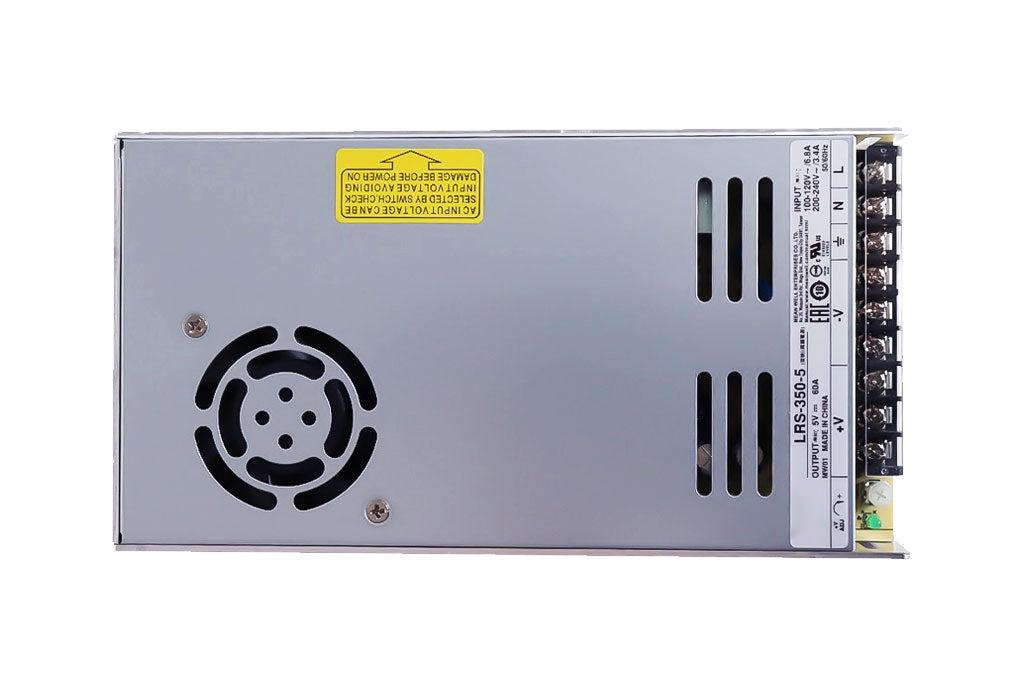
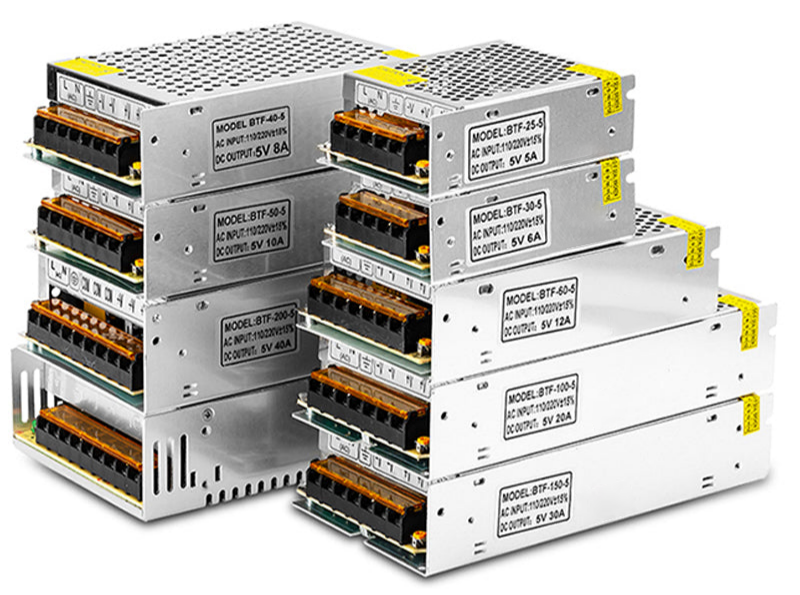
The most direct method is to check the specification label on the unit. This label typically includes output voltage, current, and total wattage. If the label is unclear, the model number can be used to retrieve specifications from the manufacturer.
In cases where documentation is unavailable, a wattmeter can provide real-time consumption data. However, it is important to understand that this reflects actual usage, not maximum capacity.
What Other Factors Should You Consider Beyond Wattage?
While wattage is critical, it is not the only factor that determines PSU performance. Have you considered efficiency, form factor, and reliability?
Switching power supplies vary in design depending on application requirements. For example, DIN rail power supplies are commonly used in industrial control panels, while enclosed power supplies are preferred for standalone systems.

Efficiency is another key factor. High-efficiency PSUs reduce energy loss and heat generation, which improves overall system performance. SIPURUI power supplies are designed to achieve high efficiency levels while maintaining stable output under varying loads.
Reliability is equally important. A high-quality PSU should include protection features such as over-voltage protection, over-current protection, and short-circuit protection. These features are essential for preventing damage in harsh industrial environments.
Why Are SIPURUI Switching Power Supplies a Reliable Choice?
When selecting a switching power supply, consistency and reliability are just as important as specifications. SIPURUI power supplies are engineered to meet the demands of industrial applications, offering stable output, high efficiency, and strong peak load handling capabilities.
Whether you need a 12V, 24V, or 48V switching power supply, SIPURUI provides solutions designed for automation systems, CNC machines, LED drivers, and more. With robust design and strict quality control, these power supplies are built to operate reliably even in challenging environments.

Final Thoughts: Are You Confident in Your PSU Selection?
Choosing the right PSU wattage is not just about avoiding failure—it is about optimizing performance, improving efficiency, and ensuring long-term reliability.
By carefully calculating your load, accounting for peak demand, and selecting a PSU with an appropriate safety margin, you can build a system that performs consistently under real-world conditions.
If you are still unsure, it may be worth consulting with a professional supplier who understands both the technical and practical aspects of power supply selection. The right decision today can prevent costly problems in the future.