Skip to content

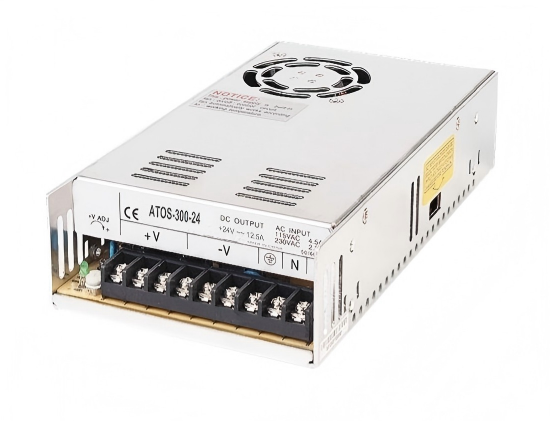
In modern industrial automation, stable DC power is no longer just a supporting component — it is one of the core foundations of system reliability. Whether in PLC control cabinets, CNC machines, industrial robots, communication systems, or LED production lines, the 24V switching power supply has become the standard power solution for industrial equipment worldwide. As factories continue moving toward intelligent manufacturing and Industry 4.0 infrastructure, the demand for reliable, efficient, and long-life switching power supplies continues to increase rapidly.
However, despite the widespread use of 24V switching power supplies, many engineers and buyers still do not fully understand how these systems actually work internally. Why are some industrial power supplies able to operate continuously for years under harsh conditions, while low-cost models fail after only a short period of use? Why do industrial-grade power supplies achieve better efficiency, lower ripple, and stronger protection performance? Most importantly, what design technologies separate professional industrial power supplies from ordinary consumer adapters?
This article provides a detailed analysis of the working principles, internal structure, circuit topology, and protection systems used in modern industrial 24V switching power supplies. Using practical engineering concepts and real industrial applications, we will explain how professional manufacturers such as SIPURUI design stable and efficient power systems for demanding automation environments.
Why Has 24V DC Become the Standard Voltage in Industrial Automation?
The widespread adoption of 24V DC in industrial automation did not happen by accident. Industrial systems require a voltage level that is safe enough for operators, stable enough for control systems, and efficient enough for long-distance power transmission inside large facilities. Compared with lower-voltage systems such as 5V or 12V, 24V DC offers a much better balance between transmission efficiency and operational safety.
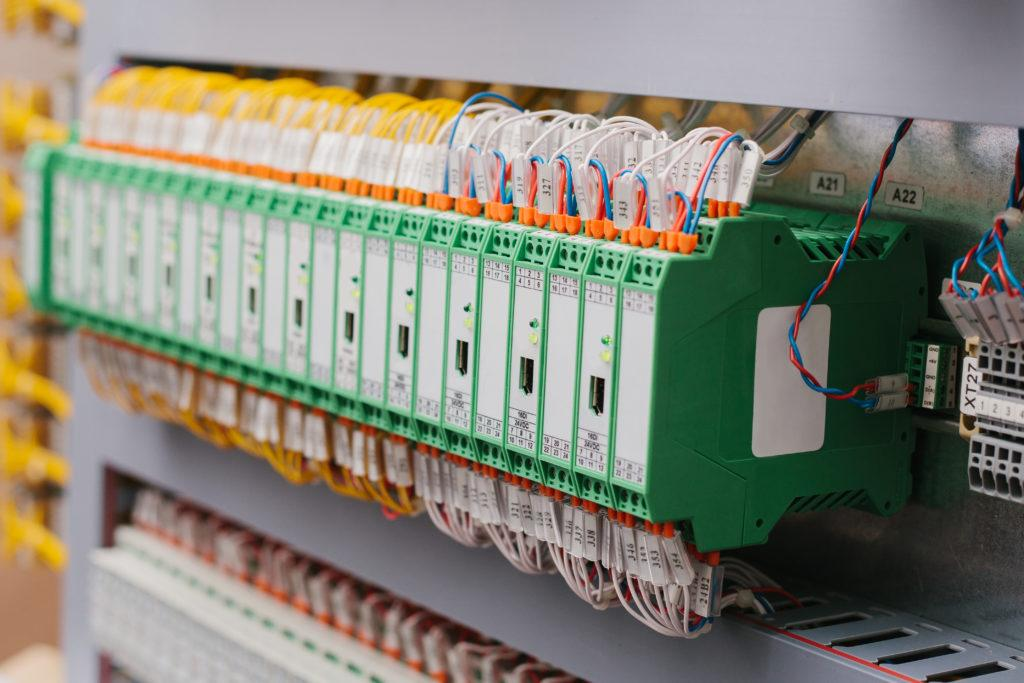
In industrial environments, equipment is often distributed across long production lines or inside large electrical cabinets. If lower voltages are used, higher current is required to deliver the same amount of power. This results in larger cable losses, higher heat generation, and reduced system efficiency. A 24V DC system reduces current demand significantly while remaining within a relatively safe low-voltage range. This is one of the primary reasons why PLC systems, industrial sensors, relays, communication devices, and automation controllers are commonly designed around 24V power architecture.
| Industrial Voltage Comparison | 5V System | 12V System | 24V System |
| Cable Transmission Capability | Short Distance | Medium Distance | Long Distance |
| Current Requirement | High | Medium | Lower |
| Heat Generation | High | Moderate | Lower |
| Industrial Compatibility | Limited | Moderate | Excellent |
| Automation System Usage | Rare | Partial | Standard |
Because of these advantages, modern industrial switching power supplies such as SIPURUI 24V series are now widely used across automation industries including smart manufacturing, robotics, communication systems, LED engineering, and industrial control systems.
What Is a 24V Switching Power Supply and How Is It Different from a Linear Power Supply?
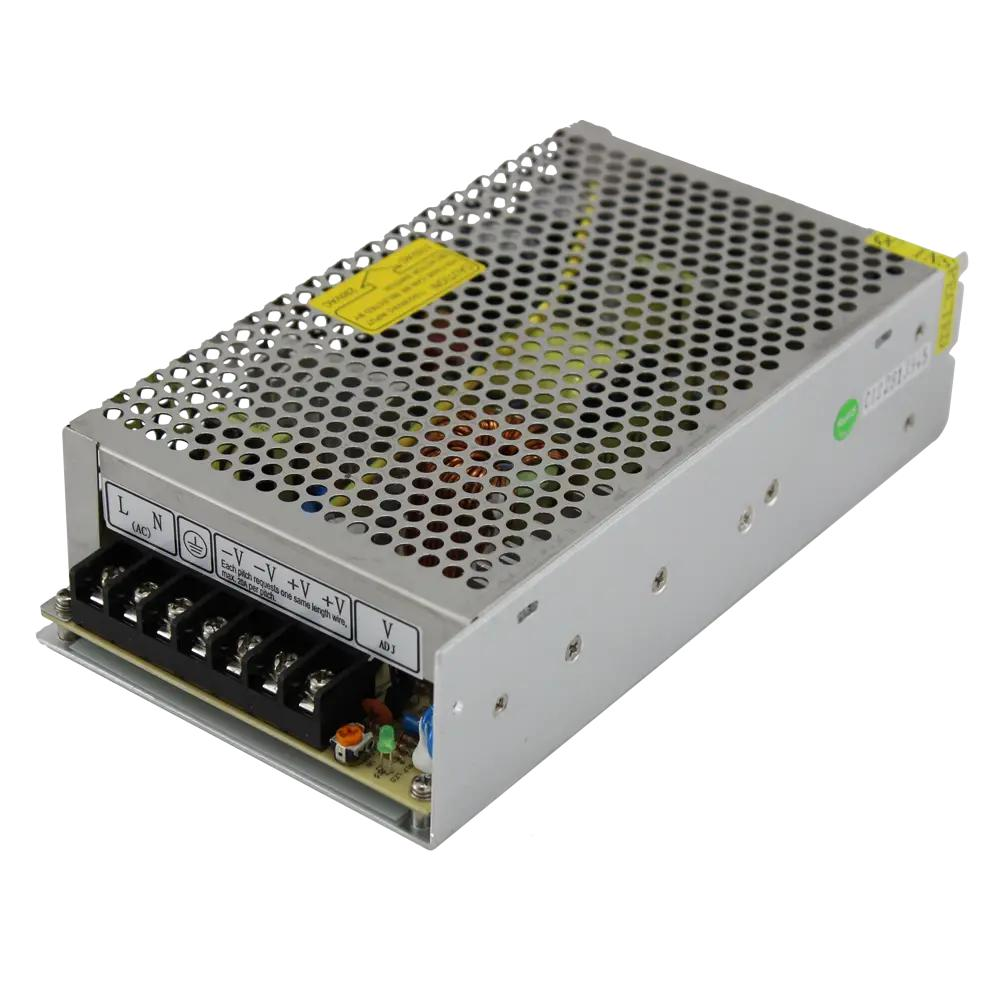
A 24V switching power supply, also known as a 24V SMPS (Switch Mode Power Supply), is an electronic device that converts AC mains voltage into stable 24V DC output through high-frequency switching technology. Unlike traditional linear power supplies, switching power supplies do not regulate voltage by dissipating excess energy as heat. Instead, they rapidly switch semiconductor devices on and off at high frequency to transfer energy efficiently.
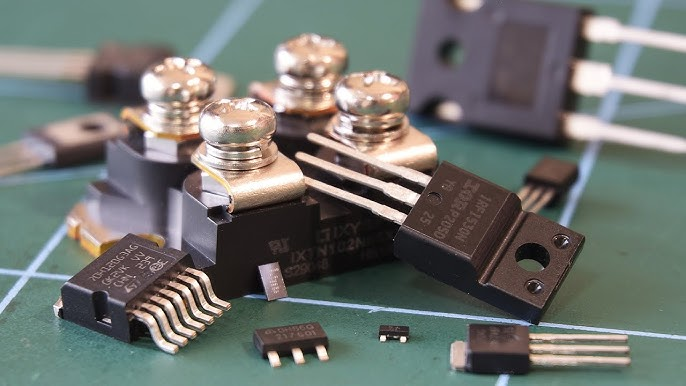
This difference in operating principle completely changes the efficiency and performance characteristics of the power supply. Traditional linear power supplies often suffer from large transformer size, excessive heat generation, and low efficiency because they continuously consume unused electrical energy. In contrast, switching power supplies operate their MOSFET transistors primarily in fully ON or fully OFF states, minimizing power dissipation and dramatically improving conversion efficiency.
Modern industrial switching power supplies commonly achieve efficiencies between 85% and 94%, while many linear power supplies remain below 60%. This higher efficiency allows industrial SMPS systems to remain compact, lightweight, and thermally stable even under continuous heavy-load operation.
| Power Supply Type | Typical Efficiency | Heat Generation | Physical Size |
| Linear Power Supply | 40–60% | High | Large |
| Standard SMPS | 80–88% | Moderate | Compact |
| Industrial SMPS | 90–94% | Low | Compact |
For industrial applications where equipment may operate continuously for years, this improvement in efficiency and thermal performance is critically important.
Why Is EMI Filtering So Important in Industrial Power Supplies?
Industrial electrical environments are extremely noisy. Large motors, servo systems, inverters, welding machines, and switching devices constantly generate electromagnetic interference. Without proper EMI suppression, this noise can interfere with PLC communication, destabilize sensors, corrupt industrial signals, or even cause complete system failure.
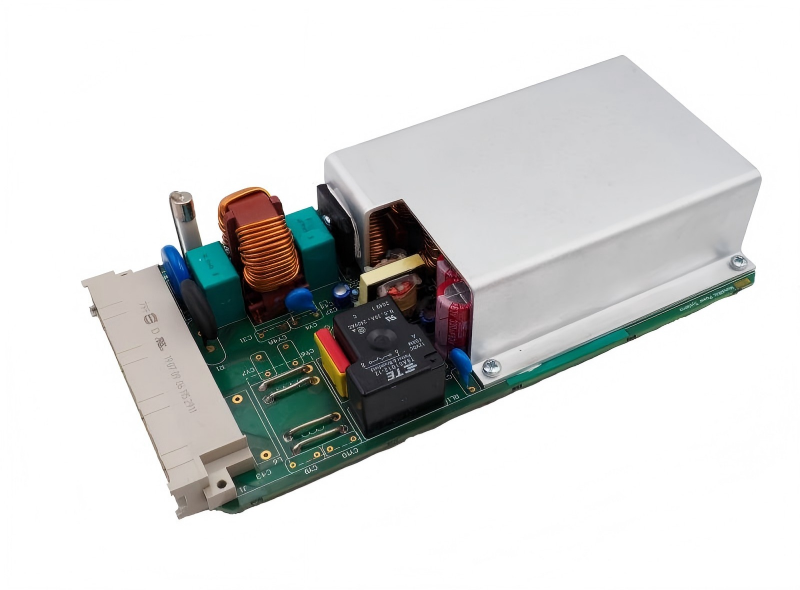
For this reason, industrial-grade switching power supplies such as SIPURUI series include dedicated EMI filtering circuits at the AC input stage. These filters are typically composed of common-mode inductors, X capacitors, Y capacitors, and differential filters designed to suppress both incoming and outgoing electromagnetic noise.
Industrial EMI Filter Stage

Professional industrial power supplies are also designed to comply with international EMC standards such as EN55032, IEC61000, and CISPR32. This ensures stable operation even in electrically noisy factory environments.
Without proper EMI filtering, power supplies may experience unstable output voltage, increased ripple, communication errors, or certification failure during EMC testing. This is one of the major differences between industrial-grade switching power supplies and low-cost consumer adapters.
Bridge Rectification and High-Voltage DC Conversion
After passing through the EMI filter stage, the AC voltage enters the bridge rectifier section. The bridge rectifier converts alternating current into pulsating direct current, which is then smoothed by large electrolytic capacitors to form a stable high-voltage DC bus.
Typical industrial voltage conversion values are shown below:
| AC Input Voltage | Typical DC Bus Voltage |
| 110V AC | Approximately 155V DC |
| 220V AC | Approximately 310V DC |
| 380V AC | Approximately 540V DC |
This high-voltage DC bus becomes the primary energy source for the PWM switching stage. The quality of the capacitors used in this section has a major impact on reliability and ripple suppression. Industrial-grade SIPURUI power supplies typically use low-ESR, high-temperature capacitors rated for long operational lifespan under continuous industrial loading conditions.
PWM Technology: The Core of a Switching Power Supply
The most important control system inside a switching power supply is the PWM controller. PWM stands for Pulse Width Modulation, which refers to the method used to regulate energy transfer by adjusting the width of high-frequency switching pulses.
One of the most commonly used industrial PWM controllers is:
UC3842 PWM Controller
The PWM controller manages several critical functions simultaneously, including switching frequency generation, MOSFET drive timing, output regulation, current limiting, and fault protection.
Unlike linear regulators that continuously dissipate energy, the PWM controller rapidly drives the MOSFET transistor between fully ON and fully OFF states. Because the transistor spends minimal time in partial conduction, switching losses remain relatively low. This is the primary reason why industrial switching power supplies can achieve such high efficiency levels.
PWM Controller and MOSFET Switching Circuit

The PWM switching stage also allows transformers to operate at frequencies ranging from 20kHz to 200kHz. Compared with traditional 50Hz transformers, high-frequency transformers are significantly smaller, lighter, and more efficient.
High-Frequency Transformer and Energy Transfer
The transformer inside a switching power supply performs several functions simultaneously, including voltage conversion, electrical isolation, and energy transfer.
Industrial switching power supplies typically use ferrite-core transformers specifically designed for high-frequency operation. Ferrite materials exhibit extremely low core losses at switching frequencies above 20kHz, making them ideal for compact industrial power designs.
Electrical isolation is especially important in industrial systems because it protects low-voltage control circuits from dangerous AC mains voltage. Isolation also improves overall system safety and reduces electrical interference between input and output sections.
Because industrial automation systems often operate continuously for long periods, transformer design quality directly affects thermal stability, efficiency, and long-term reliability.

Secondary Rectification and Output Filtering
After high-frequency energy passes through the transformer, the secondary side converts the AC waveform back into DC output voltage. This process uses Schottky diodes or fast-recovery rectifiers designed for high-speed switching operation.
Once rectification is complete, the output voltage still contains high-frequency ripple and switching noise. To remove this noise, the power supply uses LC filtering circuits composed of inductors and capacitors.
Secondary Rectification and Output Filter Stage

Low ripple voltage is critical in industrial systems because excessive ripple may interfere with PLC communication, destabilize industrial sensors, or reduce the accuracy of servo systems and automation controllers.
| Industrial Output Specification | Typical Value |
| Output Voltage | 24V DC |
| Voltage Accuracy | ±1% |
| Ripple Voltage | <100mV |
| Load Regulation | <0.5% |
| Efficiency | 85–94% |
| Operating Temperature | -20°C to +70°C |
SIPURUI industrial switching power supplies are optimized to maintain stable low-ripple output under continuously changing industrial loads.
How Does Feedback Regulation Stabilize Output Voltage?
Industrial electrical loads are constantly changing. Motors start and stop, relays switch rapidly, and communication devices create transient current demands. Without active voltage regulation, output voltage would fluctuate continuously.
To solve this problem, industrial switching power supplies use closed-loop feedback systems composed of:
- TL431 precision reference
- Optocoupler isolation
- PWM compensation circuits
A commonly used reference device is:
TL431 Adjustable Precision Reference
When output voltage rises above the target level, the TL431 increases conduction, causing the optocoupler to send corrective feedback to the PWM controller. The PWM controller then reduces duty cycle, lowering output voltage back to the desired value.
Similarly, when output voltage decreases under heavy load conditions, the PWM controller increases duty cycle to restore stable output voltage.
This continuous feedback regulation process is one of the most important reasons industrial switching power supplies can maintain stable operation under dynamic industrial conditions.
Why Are Protection Circuits Essential in Industrial Power Supplies?
Industrial power supplies operate in harsh environments where overloads, short circuits, voltage surges, and high ambient temperatures are common. Without proper protection systems, internal components may fail catastrophically.
For this reason, professional SIPURUI switching power supplies include multiple industrial protection functions.
| Protection Function | Purpose |
| OCP | Over-current protection |
| SCP | Short-circuit protection |
| OVP | Over-voltage protection |
| OTP | Over-temperature protection |
| UVLO | Under-voltage lockout |
For example, during a short circuit condition, current sensing resistors immediately detect abnormal current levels. The PWM controller responds by reducing switching duty cycle or shutting down the switching stage entirely.
Some industrial power supplies use “hiccup mode,” where the system repeatedly attempts restart while limiting stress on internal components during fault conditions.
Why Do Low-Quality Switching Power Supplies Fail So Easily?
The reliability difference between industrial-grade and low-cost switching power supplies is enormous. Cheap power supplies often reduce manufacturing costs by using inferior capacitors, undersized transformers, weak EMI filters, poor PCB layouts, and inadequate thermal management systems.
These compromises commonly lead to:
- Excessive ripple voltage
- Capacitor aging
- MOSFET failure
- Overheating
- PLC communication instability
- Reduced operational lifespan
By contrast, industrial-grade SIPURUI switching power supplies prioritize component quality, thermal optimization, long-life capacitors, and stable PWM control systems to ensure reliable long-term operation in demanding industrial environments.

Conclusion
A 24V switching power supply is far more than a simple voltage converter. It is a sophisticated high-frequency energy conversion system involving PWM control, MOSFET switching, ferrite transformer isolation, precision voltage feedback, and multiple industrial protection mechanisms.
Understanding how these systems work helps engineers troubleshoot failures, improve automation reliability, optimize industrial equipment, and select the correct power architecture for demanding applications.
As industrial automation technology continues advancing worldwide, high-performance industrial switching power supplies such as SIPURUI series will remain essential components in stable, efficient, and intelligent manufacturing systems.