
When engineers begin selecting an AC/DC switching power supply for a project, the conversation usually starts with numbers. Output voltage, rated current, wattage, efficiency, operating temperature. These specifications matter, and they are often the first filters in product selection.
But experienced buyers know that the final decision rarely depends on numbers alone.
A power supply may meet every requirement on paper and still become the weakest point of a system after installation. It may run hotter than expected inside the enclosure. It may generate electrical noise that affects nearby electronics. It may be difficult to source consistently across markets. Or it may simply fail to deliver the long-term reliability that the project demands.
That is why the question buyers continue asking in 2026 is not simply Which AC/DC power supply should I buy? It is something broader and more important:
Which manufacturers continue to earn trust in real-world applications—and why?
The global switching power supply market has never been more competitive. Industrial automation continues expanding, renewable energy infrastructure is accelerating, data centers are growing larger, and equipment manufacturers across every industry are under pressure to build systems that are more efficient, more compact, and more reliable. As demand rises, so does the number of suppliers offering solutions.
Yet only a relatively small group of manufacturers consistently appear across industrial specifications, OEM sourcing lists, and engineering recommendations worldwide.
This article takes a closer look at those manufacturers, the product lines that define them, and what makes each one relevant in today’s market.
Why Does Manufacturer Choice Matter So Much in AC/DC Power Supplies?
In most systems, the switching power supply is rarely visible. Once installed, it disappears behind a cabinet door, inside a machine frame, or beneath an enclosure panel. It does not move like a motor, display data like a controller, or interact directly with the operator.
And yet few components influence system reliability more directly.
The quality of the power supply affects temperature rise, efficiency, ripple performance, startup behavior, service life, and the long-term stability of connected electronics. A poor design may continue working for months before problems appear. But once thermal stress begins to affect internal components—or unstable output begins impacting downstream devices—the cost of failure quickly becomes much larger than the cost of the power supply itself.
That is why experienced design teams rarely view the power supply as a commodity purchase.
Instead, they evaluate the manufacturer behind it: their engineering history, product consistency, certification support, supply stability, and how well their designs perform outside the datasheet.
Delta Electronics – Why Does Delta Continue to Set the Standard for Industrial Power?
Delta Electronics remains one of the most recognized names in industrial power conversion, and for good reason. Its products are widely used in factory automation, industrial control systems, communications infrastructure, and increasingly in energy-related applications such as EV charging and power management systems.
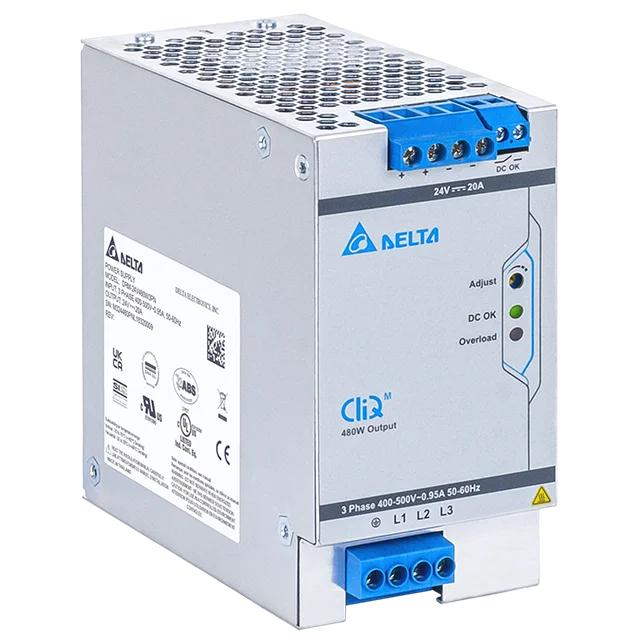
What makes Delta especially respected is the way it balances efficiency with durability. Many of its AC/DC power supplies are designed for continuous operation in environments where ambient temperature is high, airflow is restricted, and downtime is unacceptable. In those conditions, thermal performance becomes just as important as output power.
Delta’s PMT and CliQ series are commonly found inside industrial control cabinets because they maintain stable performance under load while offering compact installation dimensions. For system integrators working with PLCs, sensors, drives, and machine control equipment, that combination has made Delta a long-term standard choice.
Another reason Delta continues to lead globally is consistency. Engineers in Europe, North America, and Asia are familiar with the brand, which simplifies sourcing for multinational OEM programs.
Mean Well – Why Is It Still One of the Most Widely Used AC/DC Power Supply Brands in the World?
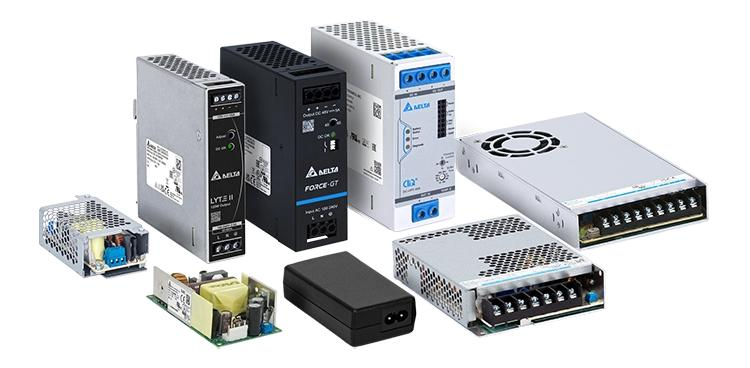
Mean Well occupies a unique position in the market. Few brands are specified as often across such a wide variety of applications.
Its products appear in industrial equipment, LED systems, CNC machinery, communication devices, automation projects, and embedded electronics. In many cases, it becomes the default reference point when a designer begins looking for a standard enclosed switching power supply.
One reason is product breadth. Mean Well offers an unusually wide range of AC/DC solutions across enclosed, open-frame, DIN rail, modular, and high-power configurations. But range alone does not explain its popularity.
The stronger reason is balance.
Mean Well has spent years building a reputation for offering dependable quality at a practical price level, while keeping product availability strong across international markets. That balance has made it especially attractive for OEM manufacturing and repeat production projects.
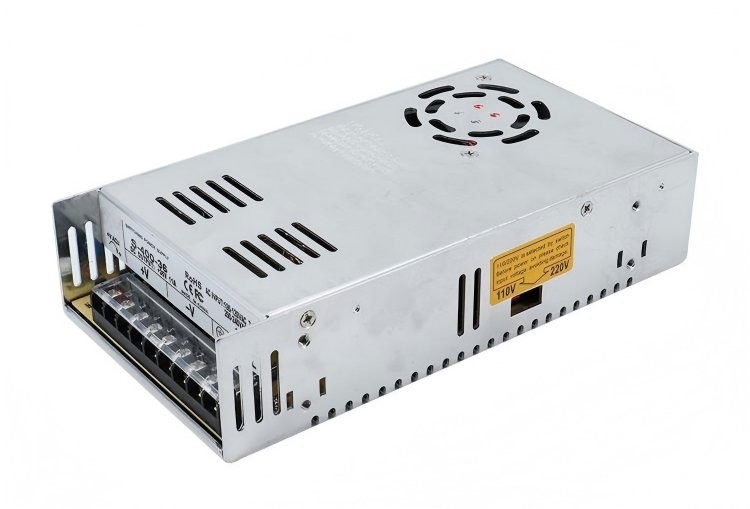
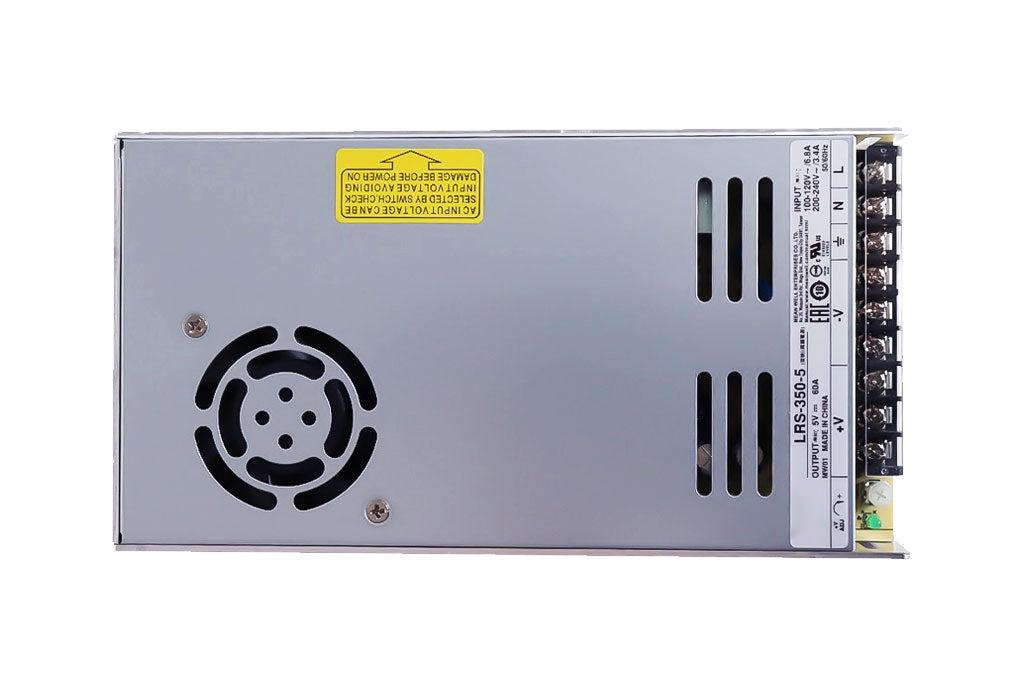
Among its best-known product families, the LRS Series remains particularly common. The LRS-350-24 continues to be widely used because it delivers reliable 24V output in a compact housing that integrates easily into many industrial designs.
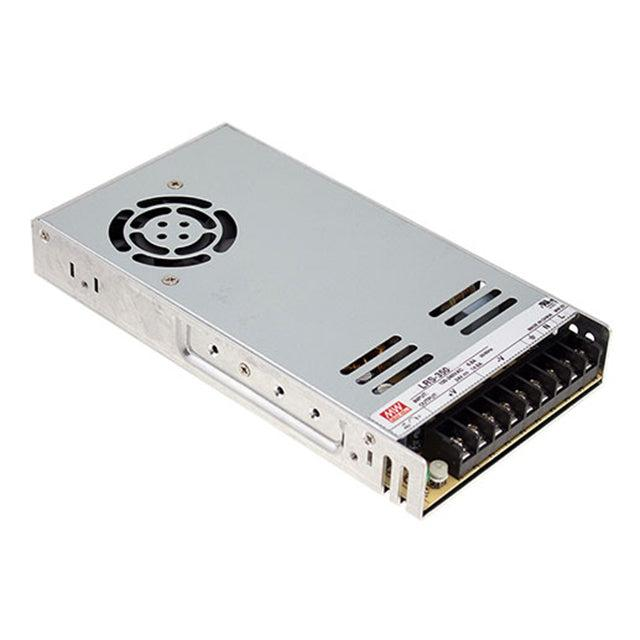
Mean Well LRS-350-24 Typical Specifications
| Parameter | Value |
| Rated Power | 350W |
| Output Voltage | 24V |
| Output Current | 14.6A |
| Efficiency | Up to 89% |
| Cooling Method | Fan Cooling |
| Typical Use | Industrial Equipment & Automation |
This combination of compact size, stable output, and easy sourcing continues to make the LRS family one of the most widely installed enclosed switching power supply platforms globally.
TDK-Lambda – Why Is It Still Trusted in High-Performance Applications?
TDK-Lambda has built its reputation around precision, consistency, and reliability. While some brands focus on volume or price competitiveness, TDK-Lambda is often chosen for applications where electrical performance itself is part of the product requirement.
Its AC/DC switching power supplies are widely used in equipment expected to run continuously over long operating cycles while maintaining stable output with minimal electrical interference. That is why the brand is so often found in advanced medical devices, semiconductor manufacturing equipment, laboratory systems, and precision industrial instrumentation.
In these environments, performance requirements extend beyond voltage conversion. Engineers care deeply about ripple, regulation, thermal stability, efficiency under load, and predictable long-term behavior. TDK-Lambda products are often selected because they continue performing reliably in precisely those areas.
Its HWS and CUS product families have remained especially popular because they combine compact size with excellent power density and strong long-term reliability.
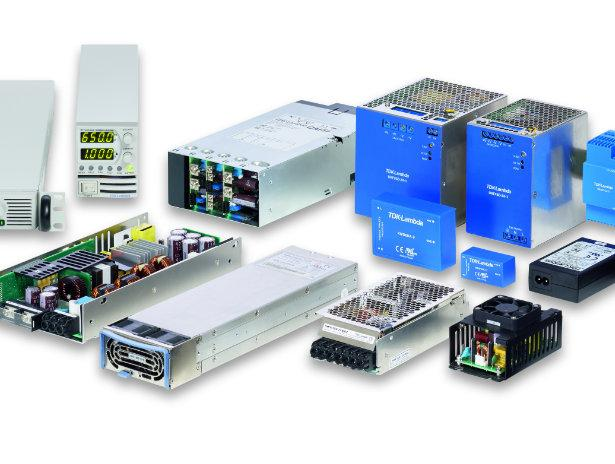
For many buyers, choosing TDK-Lambda is less about price and more about confidence—confidence that the system will continue operating as expected years after deployment.
How Do the Leading AC/DC Power Supply Brands Compare?
Although every application is different, buyers often compare manufacturers across several recurring criteria before making a final decision. These usually include efficiency, reliability, supply stability, size, certification support, and suitability for the intended operating environment.
The following comparison offers a practical overview.
AC/DC Switching Power Supply Brand Comparison
| Manufacturer | Country | Representative Product Line | Typical Market Strength |
| Delta Electronics | Taiwan | PMT / CliQ | Industrial automation |
| Mean Well | Taiwan | LRS / HDR / UHP | General-purpose industrial |
| TDK-Lambda | Japan | HWS / CUS | High-reliability precision applications |
| Cosel | Japan | PBA Series | Low-noise industrial systems |
| XP Power | United Kingdom | VEC / CCH Series | Medical and embedded electronics |
| RECOM Power | Austria | RAC Series | Compact industrial integration |

Which AC/DC Switching Power Supply Manufacturer Is Best in 2026?
There is no single answer—and that is exactly what makes the decision important.
For an industrial automation cabinet expected to run around the clock in a demanding factory environment, Delta may be the strongest choice.
For an OEM product requiring a practical, reliable, globally available enclosed power supply, Mean Well may offer the best balance.
For high-end applications where electrical performance margins are tight and reliability carries significant value, TDK-Lambda often becomes the preferred solution.
Other brands such as Cosel, XP Power, RECOM, Murata, and Artesyn continue to play equally important roles in specialized segments of the market.
Ultimately, the best power supply is not defined by popularity alone. It is defined by fit—how well the product supports the electrical, mechanical, thermal, and commercial requirements of the system around it.
That is why experienced engineers rarely ask only Which brand is the biggest?
Instead, they ask a better question:
Which power supply will still be operating exactly as expected years after installation?
And in professional power design, that question remains the one that matters most.