
A Deep Technical Guide to PSU Lifespan, Failure Mechanisms, and Proven Ways to Extend Service Life
Have you ever installed a switching power supply expecting years of reliable performance—only to see it fail far earlier than anticipated?
Why do some power supplies operate continuously for over a decade, while others degrade in just a few years under seemingly similar conditions?
Is the difference purely about brand quality, or are there deeper engineering factors at play?
For engineers, system integrators, and industrial buyers, understanding the real determinants of switching power supply lifespan is critical—not only for reliability but also for cost control, maintenance planning, and system safety.
This article provides a comprehensive, engineering-level breakdown of power supply lifespan, including:
·The real-world lifespan of switching power supplies
·The physics behind component aging and failure
·Environmental and electrical stress factors
·Practical, proven methods to extend PSU life
·How to select a power supply designed for longevity
All insights are aligned with real industrial applications and the design philosophy behind SIPURUI switching power supplies.
What Does “Power Supply Lifespan” Really Mean?
Before discussing numbers, we need to clarify a fundamental question:
What exactly defines the lifespan of a switching power supply?
Is it:
·The time until total failure?
·The time until performance degradation begins?
·Or the period during which it operates within specified parameters?
Engineering Definition
In professional terms, PSU lifespan is typically defined as:
The duration during which the power supply maintains stable output within specified voltage, ripple, and efficiency limits under rated conditions.
This means a PSU may still “work” after its lifespan—but no longer meet performance standards.
So, How Long Do Switching Power Supplies Actually Last?
The commonly cited range is:
5 to 10 years under normal operating conditions
However, this range is highly conditional.
Lifespan Depends on Stress, Not Time
A power supply operating:
·At high temperature
·Near full load
·In a dusty or unstable power environment
…may fail in 2–3 years.
Meanwhile, a properly designed and maintained unit can exceed 10–15 years.
What Are the Core Failure Mechanisms Inside a PSU?
To understand lifespan, we must understand failure.
Which Components Limit PSU Life?
Switching power supplies are complex systems, but only a few components dominate failure probability.
Key Components and Their Failure Behavior
| Component | Failure Mode | Result |
| Electrolytic capacitors | Electrolyte evaporation | Ripple increase, instability |
| Cooling fans | Bearing wear, dust blockage | Overheating |
| MOSFETs / switches | Thermal fatigue, overvoltage | Sudden failure |
| Rectifiers | Overcurrent stress | Efficiency loss |
| Solder joints | Thermal cycling cracks | Intermittent faults |
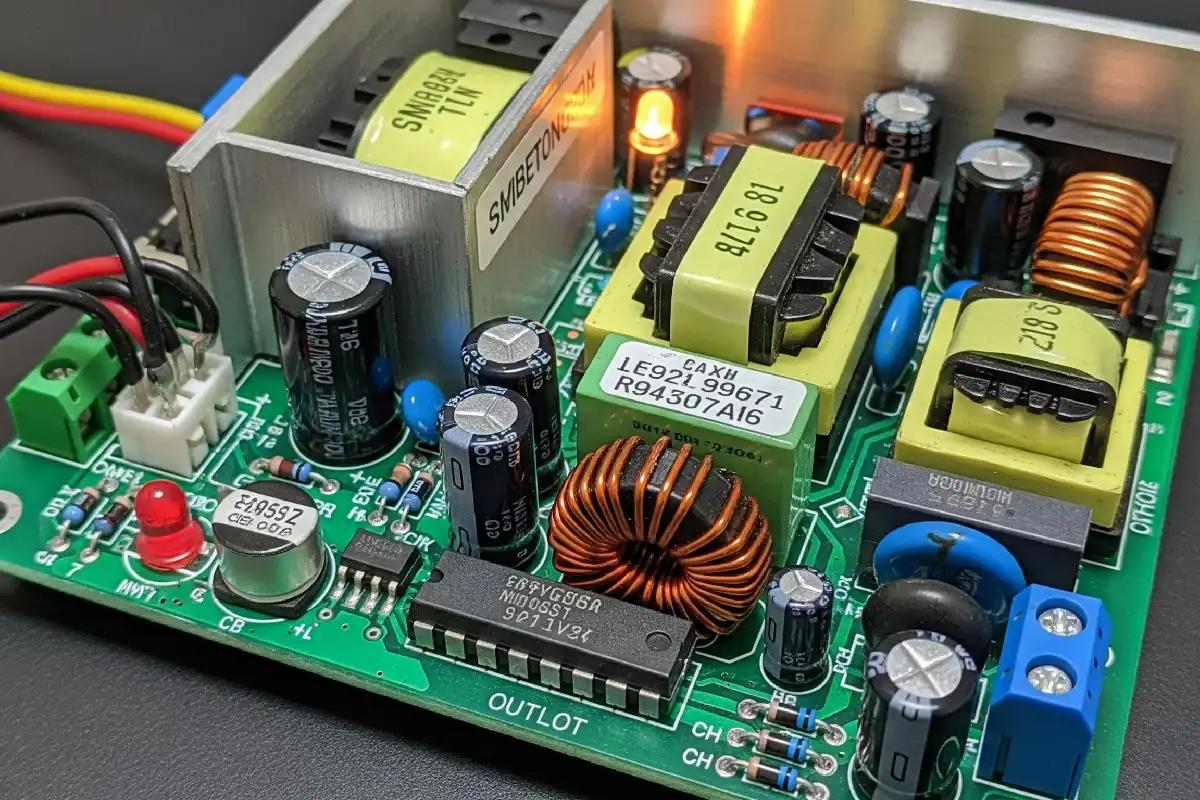
Why Capacitors Are the Weakest Link
Electrolytic capacitors are the primary lifespan-limiting component.
Why?
Because their degradation is inevitable and temperature-driven.
The Arrhenius Rule (Simplified)
For electrolytic capacitors:
Every 10°C decrease in temperature → lifespan doubles
This is not theoretical—it is widely validated in reliability engineering.
Capacitor Lifetime vs Temperature
| Temperature | Expected Lifetime |
| 105°C | 2,000 hours |
| 95°C | 4,000 hours |
| 85°C | 8,000 hours |
| 75°C | 16,000 hours |
This single relationship explains why thermal design is more important than any other factor.
What Factors Actually Determine PSU Lifespan?
Now let’s examine the real-world factors that influence how long a switching power supply will last.
1. Load Level: Are You Running Too Close to the Limit?
Is your power supply operating at 90–100% load continuously?
If yes, you are accelerating aging significantly.
Why High Load Is Dangerous
Higher load leads to:
·Increased switching losses
·Higher internal temperature
·Faster capacitor degradation
·Greater stress on MOSFETs and transformers
Load vs Lifespan Relationship
| Load Level | Thermal Stress | Lifespan Impact |
| 30–50% | Low | Maximum lifespan |
| 50–70% | Moderate | Optimal balance |
| 70–90% | High | Reduced lifespan |
| 90–100% | Very high | Rapid aging |
2. Temperature: The Silent Killer
Temperature is the most critical variable in PSU longevity.
Where Does Heat Come From?
·Switching losses
·Conduction losses
·Poor airflow
·External environment
Key Question: Is Your Cooling System Truly Effective?
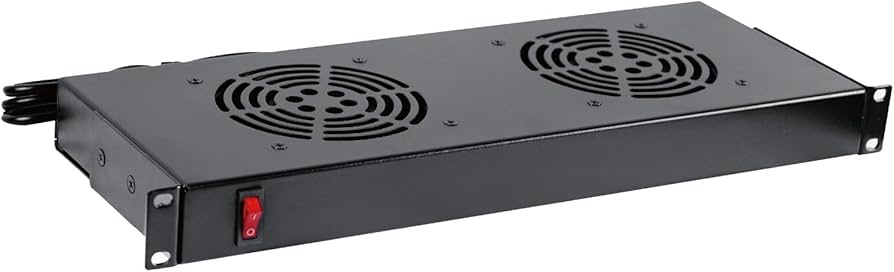
Even a high-quality PSU will fail early if:
·Airflow is restricted
·Dust accumulates
·Ambient temperature is high
3. Power Quality: Are You Feeding Clean Electricity?
Many failures are not caused internally—but externally.
Common Power Issues
·Voltage spikes
·Sudden surges
·Harmonics
·Voltage dips
These create:
·Stress on input capacitors
·Overvoltage conditions
·Increased ripple
4. Environmental Conditions: Hidden Long-Term Damage
Environmental Stress Factors
| Factor | Effect |
| Dust | Blocks cooling, increases temperature |
| Humidity | Corrosion risk |
| Vibration | Mechanical fatigue |
| Chemical exposure | PCB degradation |
5. Maintenance: Are You Ignoring Early Warning Signs?
A PSU rarely fails instantly without warning.
Lack of maintenance leads to:
·Heat buildup
·Reduced efficiency
·Component overstress
Can You Extend PSU Lifespan Significantly?
Yes—and not by a small margin.
With proper practices, lifespan can increase by 2–3 times.
Proven Strategies to Extend Switching Power Supply Life
1. Choose a High-Quality Power Supply First
Everything starts here.
A poorly designed PSU cannot be “maintained” into reliability.
What Defines a Reliable PSU?
·High-temperature rated capacitors
·Efficient topology
·Stable regulation
·Robust thermal design
SIPURUI Design Approach
SIPURUI switching power supplies are engineered with:
·High-grade capacitor selection
·Optimized heat dissipation paths
·Controlled ripple performance
·Industrial-grade reliability standards
This ensures stable operation even under demanding conditions.
2. Operate Within Safe Load Margins
Always design with margin.
Recommended Practice
Select a PSU such that:
·Normal load = 50–70% of rated power
·Peak load < 80%
3. Control Temperature Proactively
Do not rely on passive conditions alone.
Practical Steps
·Ensure ventilation clearance
·Use forced cooling if needed
·Avoid heat accumulation zones
·Monitor ambient temperature
4. Clean Regularly—More Than You Think
Dust is not cosmetic—it is destructive.
Cleaning Frequency
| Environment | Recommended Interval |
| Clean office | 6 months |
| Industrial | 3 months |
| Heavy dust | Monthly |
5. Use Electrical Protection Systems
Protect your PSU from external instability.
Protection Setup
| Device | Function |
| Surge protector | Blocks spikes |
| UPS | Stabilizes voltage |
| EMI filter | Reduces noise |
6. Minimize Power Cycling
Frequent ON/OFF cycles cause:
·Thermal expansion
·Inrush current stress
·Mechanical fatigue
7. Optimize Installation and Cable Management
Better airflow = lower temperature = longer life.
Avoid:
·Cable blockage
·Tight enclosures
·Poor layout design
How to Detect PSU Failure Before It Happens?
Early detection prevents system-wide damage.
Warning Signs
·Output voltage fluctuation
·Unusual noise
·Overheating
·Random shutdowns
·Burnt smell
Why Early Replacement Matters
A failing PSU can:
·Damage connected equipment
·Cause data loss
·Lead to system downtime
How to Choose the Right PSU for Long-Term Reliability?
Ask These Critical Questions
·What is the continuous vs peak load?
·What environment will it operate in?
·Is redundancy required?
·What certifications are needed?
Selection Guidelines
| Requirement | Recommendation |
| Industrial reliability | SIPURUI industrial SMPS |
| Compact design | High-density PSU |
| Harsh environment | Enclosed rugged PSU |
| Long lifespan | Derated operation |
Final Thoughts: Are You Designing for Lifespan or Just Function?
Many systems are designed to work—but not to last.
So ask yourself:
·Are you controlling temperature effectively?
·Are you avoiding overload conditions?
·Are you selecting quality components?
Because in real engineering terms:
Power supply lifespan is not a fixed number—it is the result of design decisions.

Conclusion
Switching power supplies are foundational to system stability, yet their lifespan is often misunderstood.
By understanding:
·Thermal dynamics
·Load management
·Component aging
·Environmental impact
You can dramatically extend PSU life—often beyond 10 years.
Choosing a reliable solution such as SIPURUI switching power supplies, combined with proper engineering practices, ensures:
·Long-term stability
·Reduced maintenance costs
·Higher system reliability