
A Technical Look at System Failures, Hidden Costs, and How to Get It Right

In many industrial and commercial systems, the power supply is often treated as a secondary component—something selected quickly once the main equipment is defined. However, in reality, the power supply is the foundation of system stability. When it is undersized or improperly specified, the consequences are rarely immediate and obvious. Instead, they emerge gradually, often disguised as unrelated failures, performance issues, or unexplained downtime.
So what actually happens if your power supply is too weak? And more importantly, why do these issues occur from a technical standpoint?
Understanding this is essential not only for troubleshooting but also for designing reliable systems from the start.
Why an Undersized Power Supply Creates System Instability
At its core, every electrical system relies on a stable relationship between voltage, current, and load demand. A properly sized switching power supply ensures that this balance is maintained even under dynamic conditions such as startup surges, load fluctuations, or environmental changes.
When a power supply is too small, this balance breaks down. The unit is forced to operate at or beyond its rated capacity for extended periods. In such conditions, voltage regulation becomes unstable, and output ripple increases. These variations may seem minor on paper, but for sensitive electronics—such as PLC controllers, CNC systems, or embedded control boards—even small deviations can lead to erratic behavior.
In practice, this often manifests as random system resets, communication errors between components, or intermittent shutdowns that are difficult to trace. Because the issue originates from power quality rather than a single failed component, it is frequently misdiagnosed, leading to unnecessary replacement of otherwise functional parts.
The Hidden Mechanism Behind Hardware Damage
One of the most underestimated consequences of a weak power supply is the long-term damage it causes to downstream components. Unlike catastrophic failures, this type of damage develops gradually and is rooted in electrical instability.
When a power supply cannot deliver consistent current, it introduces ripple and noise into the system. These fluctuations stress capacitors, voltage regulators, and integrated circuits. Over time, electrolytic capacitors degrade, semiconductor junctions weaken, and thermal cycling accelerates material fatigue.
The result is not always immediate failure. Instead, components begin to behave unpredictably. Control boards may experience logic errors, sensors may output inconsistent signals, and drives may lose precision. Eventually, these issues accumulate into complete system failure, often requiring expensive replacements that far exceed the cost of a properly specified power supply.
Thermal Stress: The Silent System Killer
Another critical consequence of an undersized PSU is excessive heat generation. Efficiency in switching power supplies is closely tied to load conditions. When operating within the optimal range—typically between 40% and 80% of rated capacity—a high-quality unit can achieve efficiencies above 90%. However, when pushed toward full load continuously, efficiency drops and energy losses increase significantly.
This lost energy is converted into heat. Inside a confined control cabinet, this heat does not dissipate easily. As temperatures rise, internal resistance in electronic components increases, which further reduces efficiency and generates even more heat. This creates a feedback loop that accelerates thermal stress across the entire system.
Over time, elevated temperatures can lead to insulation breakdown, solder joint fatigue, and even safety hazards. In industrial environments where systems operate continuously, this thermal burden is one of the primary causes of premature equipment failure.
Efficiency Loss and Its Impact on Operational Costs
The financial impact of an undersized power supply is often overlooked because it is not immediately visible. However, inefficiency translates directly into higher energy consumption and increased operational costs.
To better understand this, consider the difference in efficiency between an overloaded PSU and a properly sized industrial unit such as those offered by SIPURUI:
| Load Condition | Undersized PSU Efficiency | SIPURUI Industrial PSU Efficiency |
| 50% Load | ~70% | 90–92% |
| 80% Load | ~60% | 91–94% |
| Near Full Load | Unstable | Stable |
In a large-scale operation, even a 10–20% efficiency gap can result in substantial energy waste over time. Additionally, the excess heat generated increases the burden on cooling systems, further compounding energy costs.
Why Real-World Load Conditions Are Often Miscalculated
A common mistake in power supply selection is basing calculations solely on nominal power consumption. In reality, many systems experience transient conditions that significantly exceed their average load.
Motors, for example, can draw several times their rated current during startup. CNC machines and automation systems often experience sudden load spikes during operation. If the power supply is not designed to handle these peaks, it may enter protection mode or fail to maintain stable output.
The relationship between continuous load, peak load, and safety margin is critical:
| Parameter | Description | Practical Importance |
| Continuous Load | Normal operating demand | Defines baseline PSU requirement |
| Peak Load | Short-term surge demand | Determines PSU robustness |
| Safety Margin | 20–30% additional capacity | Prevents overload and instability |
Ignoring these factors leads to undersizing, even when calculations appear correct on paper.
Selecting the Right Switching Power Supply for Industrial Applications
Choosing the correct power supply is not simply about increasing wattage. It requires a comprehensive understanding of the application environment, load characteristics, and long-term operational needs.
In industrial systems, reliability is closely tied to power quality. A well-designed switching power supply must maintain stable output across varying loads, minimize ripple, and operate efficiently under continuous use. It should also incorporate protection mechanisms such as over-voltage, over-current, and over-temperature safeguards to prevent cascading failures.
SIPURUI switching power supplies are engineered with these requirements in mind. With efficiency levels reaching up to 94%, wide input voltage ranges, and robust thermal design, they are suitable for demanding applications such as CNC machinery, automation lines, and control cabinets. Their ability to maintain stable output under dynamic conditions significantly reduces the risk of system instability and component damage.
Matching Power Supply Types to Applications

Different industrial environments require different power supply configurations, and selecting the appropriate type is just as important as choosing the correct capacity.
| Application Scenario | Recommended PSU Type |
| Industrial control cabinets | DIN rail power supply |
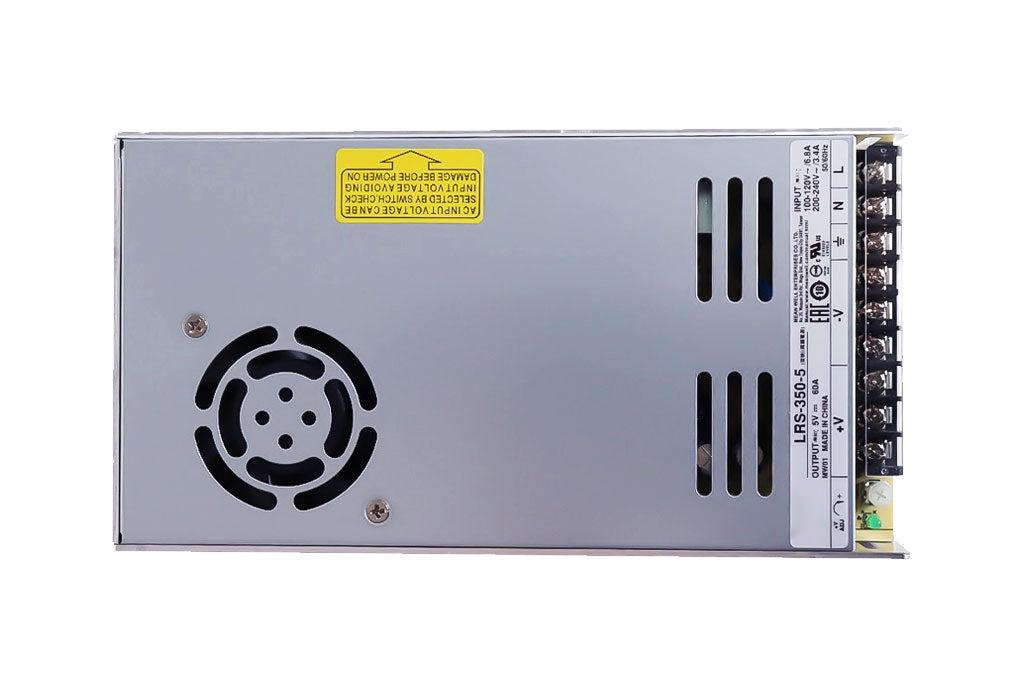
| CNC and heavy machinery | Enclosed switching power supply |
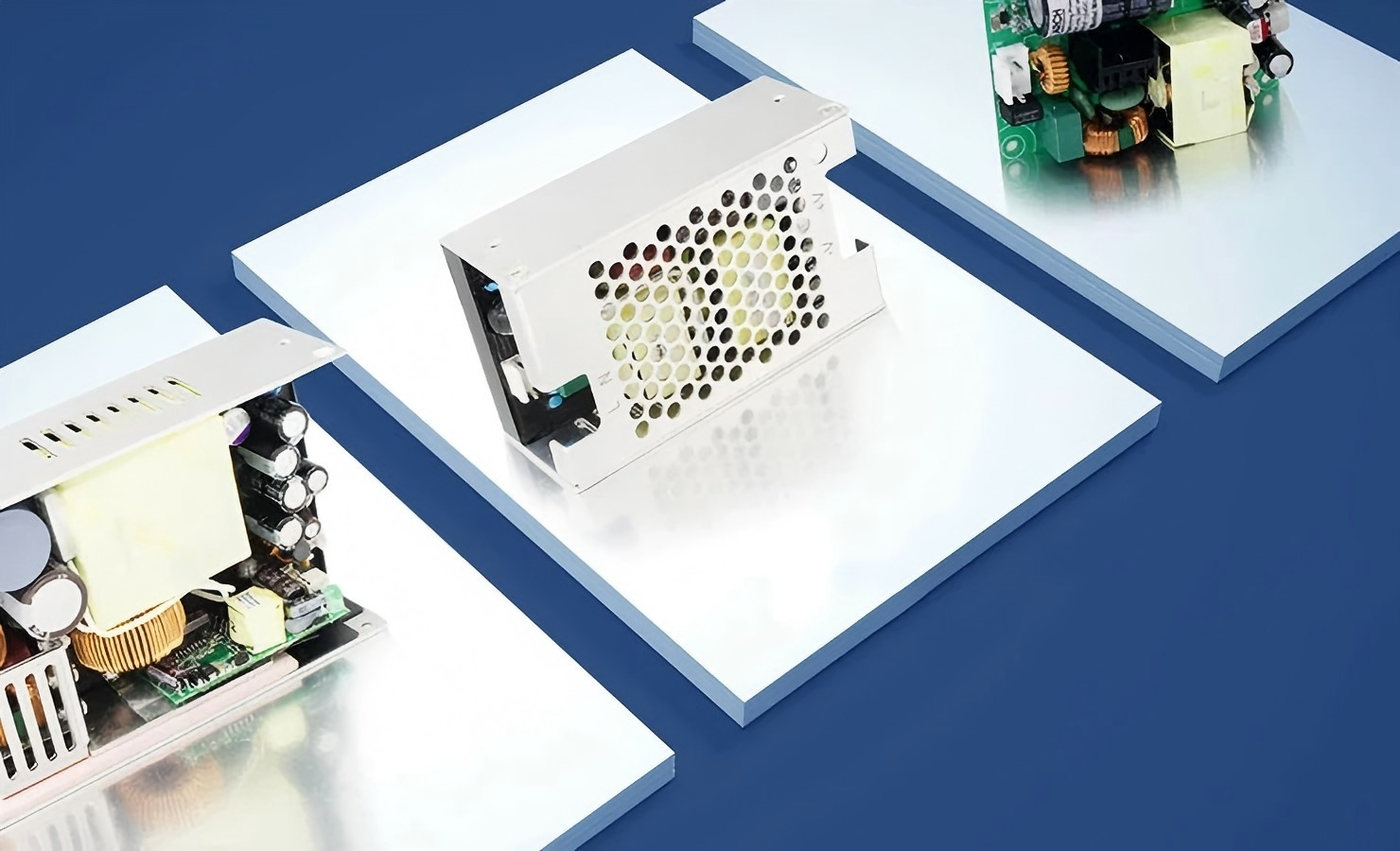
| Compact embedded systems | Open-frame power supply |
| High-reliability systems | Redundant power supply |
Each configuration offers specific advantages in terms of installation, cooling, and maintenance. SIPURUI provides a full range of these solutions, allowing system designers to match the power supply precisely to their application.
Why Slightly Oversizing a Power Supply Is Often the Better Choice
In practical engineering, it is generally safer to select a power supply with some headroom rather than operating at the limit of its capacity. A unit running at 60–70% load typically achieves higher efficiency, lower thermal stress, and longer service life compared to one constantly operating near full load.
This approach also provides flexibility for future system expansion. As additional components are added, the existing power supply can accommodate increased demand without requiring immediate replacement.
However, oversizing should be done with balance. Excessively large power supplies may operate outside their optimal efficiency range at low loads, which can also reduce performance.

Conclusion: The True Cost of an Undersized Power Supply
An undersized power supply rarely fails in isolation. Instead, it creates a chain reaction of instability, inefficiency, and gradual hardware degradation. What begins as minor performance issues can evolve into significant operational disruptions, increased maintenance costs, and even safety risks.
From a technical and economic perspective, the cost of selecting the wrong power supply is far greater than the initial savings. Ensuring proper sizing, high efficiency, and reliable design is essential for maintaining system stability and long-term performance.
SIPURUI switching power supplies are designed to address these challenges by delivering stable output, high efficiency, and industrial-grade reliability. For systems where downtime is not an option, investing in a properly specified power solution is not just recommended—it is necessary.