
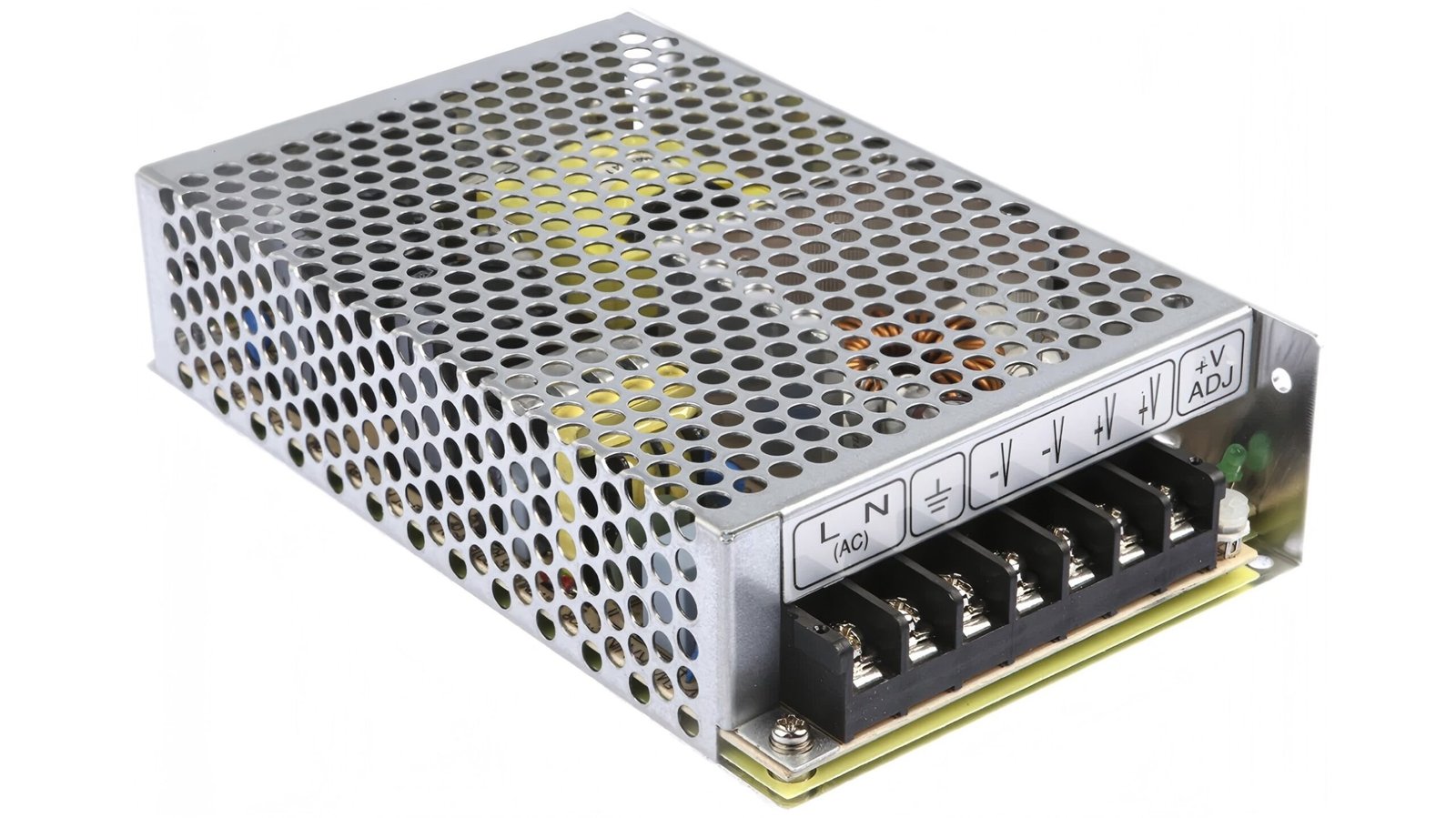
A Deep Engineering Perspective on Stability, Noise, and Real-World Performance (SIPURUI Series)
Introduction: Are You Evaluating a Power Supply—or Just Checking a Voltage Number?
In many industrial and electronic systems, the power supply is often treated as a background component—something that simply needs to “work.” As long as the output voltage appears correct on a multimeter, the assumption is that everything is fine. But in reality, this mindset hides a much deeper and more critical truth: a power supply is not just delivering voltage, it is shaping the entire electrical environment in which your system operates.
A switching power supply defines how stable your signals are, how long your components last, how your system reacts to dynamic loads, and even whether your product passes certification or fails in the field. Subtle variations—millivolts of ripple, milliseconds of delay, or slight thermal drift—can accumulate into major reliability issues over time.
This is exactly why engineers do not simply “choose a power supply.” They evaluate it across a wide range of parameters that reflect real-world conditions. In this article, we will explore those parameters in depth, not just as definitions, but as practical engineering concerns. We will also connect them to the design philosophy behind the SIPURUI switching power supply series, which is built specifically for demanding industrial applications.
What Really Happens Inside a Switching Power Supply?
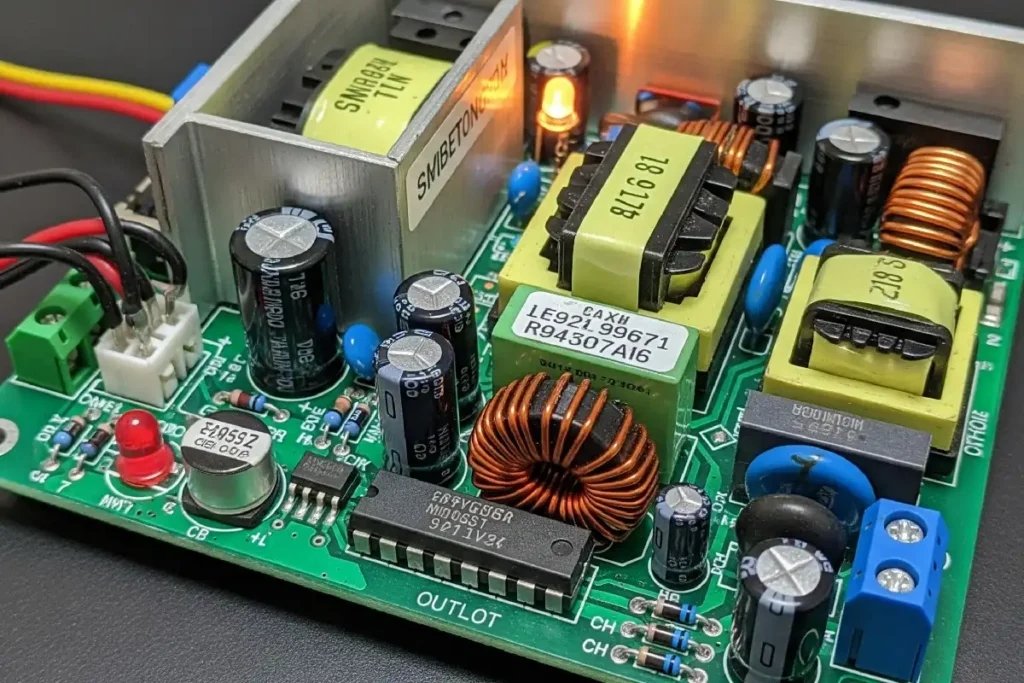
At a glance, a switching power supply may appear simple: input comes in, output comes out. However, internally, the process is far from straightforward. Instead of continuously regulating voltage like a linear power supply, a switching power supply rapidly turns electronic switches on and off, transferring energy in discrete packets through inductors and capacitors.
This high-frequency switching process allows for significantly higher efficiency, smaller size, and reduced heat generation. However, it also introduces complexity. Every switching event generates transient behavior, electromagnetic noise, and potential instability. The design challenge is not just to convert power efficiently, but to control these side effects so that the output remains clean, stable, and predictable.
This is where engineering design makes the difference. In SIPURUI switching power supplies, careful control of switching frequency, feedback loops, and filtering networks ensures that efficiency does not come at the cost of performance stability.
Can Your Power Supply Stay Stable When the Input Is Not?
One of the first realities engineers must face is that input voltage is rarely ideal. In industrial environments, voltage fluctuations are common due to grid instability, heavy machinery startup, or shared power infrastructure. A power supply that performs well under laboratory conditions may behave very differently in a real factory environment.
The key question is not whether the input changes—but how well the power supply isolates those changes from the output. This is where line regulation and voltage stability become critical. A well-designed power supply ensures that even if the input varies by ±10%, the output remains almost unchanged.
| Parameter | Engineering Meaning | Practical Impact |
| Line Regulation | Output sensitivity to input change | Determines reliability under unstable grids |
| Voltage Stability | Output variation across input range | Affects precision systems |
| Regulation Coefficient | Ratio of input/output variation | Reflects design quality |
In SIPURUI designs, tight control loops and high-quality components ensure minimal deviation, allowing systems to operate reliably even in environments where input conditions are far from ideal.
What Happens When Your Load Is Not Constant?
In real-world systems, load conditions are constantly changing. Motors start and stop, processors shift between idle and peak states, and communication modules transmit bursts of data. These rapid changes place immediate demands on the power supply, requiring it to respond without introducing instability.
Load regulation is the parameter that defines how well a power supply maintains its output voltage as current demand changes. But beyond static load regulation, the more critical factor is dynamic response—how quickly the system reacts when the load suddenly changes.
| Load Scenario | SIPURUI Performance | Typical Low-End PSU |
| Gradual Load Change | < ±0.5% variation | ±2–5% |
| Sudden Load Step | Fast recovery (<2ms) | Slow recovery (>10ms) |
| Peak Load Stability | Stable output | Voltage dip or overshoot |
In practical terms, poor load handling can cause voltage dips that reset microcontrollers or spikes that damage sensitive components. This is why SIPURUI power supplies are engineered with fast feedback systems that continuously adjust output in real time.
Is Ripple Just a Minor Detail—or a Hidden System Killer?
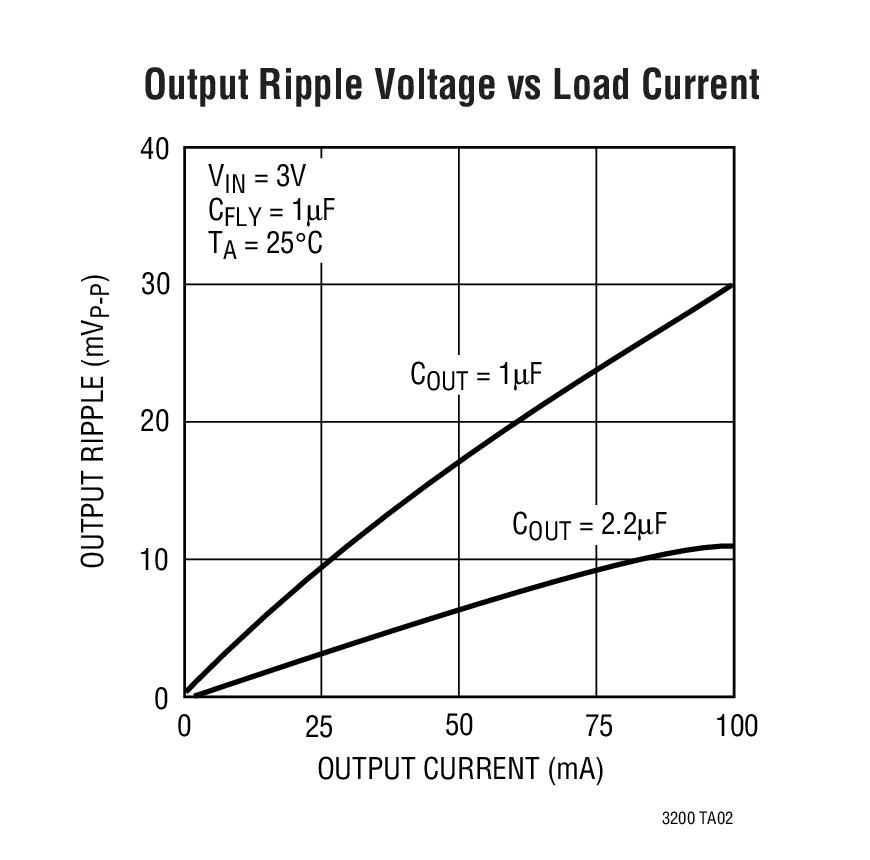
Ripple is often underestimated because it is not visible in standard voltage measurements. A multimeter may show a perfectly stable 24V output, while an oscilloscope reveals underlying fluctuations that can affect system performance.
These fluctuations originate from the switching nature of the power supply. Even with filtering, a small AC component remains superimposed on the DC output. While this ripple may seem insignificant, its effects accumulate over time and across systems.
| Application Area | Recommended Ripple Level | Consequence of Excess Ripple |
| Industrial Control | <1% | Sensor instability |
| Communication Systems | <0.3% | Signal distortion |
| Precision Instruments | <0.1% | Measurement errors |
In high-quality SIPURUI products, ripple is minimized through multi-stage filtering and optimized switching control. This is especially important in applications where signal integrity and long-term reliability are critical.
Why Does Switching Frequency Matter More Than You Think?
Switching frequency is one of the most important—and most misunderstood—design parameters. It directly affects ripple, efficiency, electromagnetic interference, and even the physical size of components.
Higher switching frequencies allow for smaller inductors and capacitors and reduce ripple amplitude. However, they also increase switching losses and electromagnetic noise. Lower frequencies improve efficiency but require larger components and may result in higher ripple.
| Factor | Low Frequency Design | High Frequency Design |
| Efficiency | Higher | Slightly lower |
| Ripple | Higher | Lower |
| EMI | Lower | Higher |
| Size | Larger | Smaller |
SIPURUI engineers optimize this balance rather than pushing for extremes, ensuring that performance remains stable across all operating conditions.
What Happens When Something Goes Wrong?
No system operates under perfect conditions forever. Overload, short circuits, overheating, and unexpected voltage spikes are inevitable. The difference between a reliable system and a failed one often comes down to how well the power supply handles these abnormal conditions.
Protection mechanisms are not optional—they are fundamental to system safety.
| Protection Type | Typical Threshold | Role |
| Overcurrent | 110–130% | Prevents overload damage |
| Overvoltage | 130–150% | Protects downstream devices |
| Undervoltage | 70–90% | Prevents unstable operation |
| Overtemperature | 85–120°C | Avoids thermal failure |
SIPURUI integrates these protections into every product line, ensuring that both the power supply and the connected system remain safe under stress conditions.
Can Your Power Supply Maintain Performance Over Time?
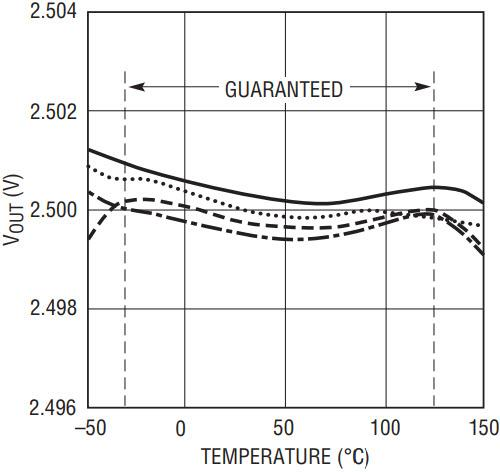
Even when input voltage and load remain constant, output performance can still change over time. This is due to temperature effects, component aging, and environmental conditions. These factors cause what engineers refer to as drift.
Temperature drift, in particular, can be critical in precision systems. A small change in output voltage per degree Celsius may seem negligible, but over a wide temperature range, the accumulated effect can be significant.
SIPURUI addresses this challenge through careful component selection and thermal design, ensuring stable performance even in demanding environments such as industrial control cabinets or outdoor installations.
Is Electromagnetic Interference Affecting Your System Without You Knowing?
Switching power supplies inherently generate electromagnetic interference due to their high-frequency operation. This interference can travel through cables or radiate through space, potentially affecting nearby equipment.
The challenge is not just to meet regulatory standards, but to ensure that the power supply operates harmoniously within a complex system environment. SIPURUI designs incorporate shielding, filtering, and layout optimization to minimize both conducted and radiated noise.
SIPURUI Switching Power Supply Series: Engineering for Real Conditions
Unlike generic designs that focus only on basic functionality, SIPURUI power supplies are developed with real industrial scenarios in mind. This includes unstable input conditions, rapidly changing loads, and harsh environmental factors.
Typical applications include CNC machinery, automation systems, and communication infrastructure—environments where power stability directly impacts performance and reliability.
By focusing on ripple control, dynamic response, and robust protection, SIPURUI ensures that its products serve not just as power sources, but as stable foundations for complex systems.

Final Reflection: Are You Choosing Based on Price—or Performance?
When selecting a switching power supply, it is tempting to focus on cost or basic specifications such as voltage and current rating. However, the deeper parameters—ripple, regulation, response time, and thermal stability—are what truly determine long-term performance.
A power supply is not just a component you install. It is a system-level decision that affects every part of your design.
Choosing a high-quality solution like SIPURUI means investing in stability, reliability, and long-term efficiency. And in engineering, those factors always outweigh initial cost savings.