Skip to content


Introduction: Why Do Power Supply Failures Still Cause So Much Trouble?
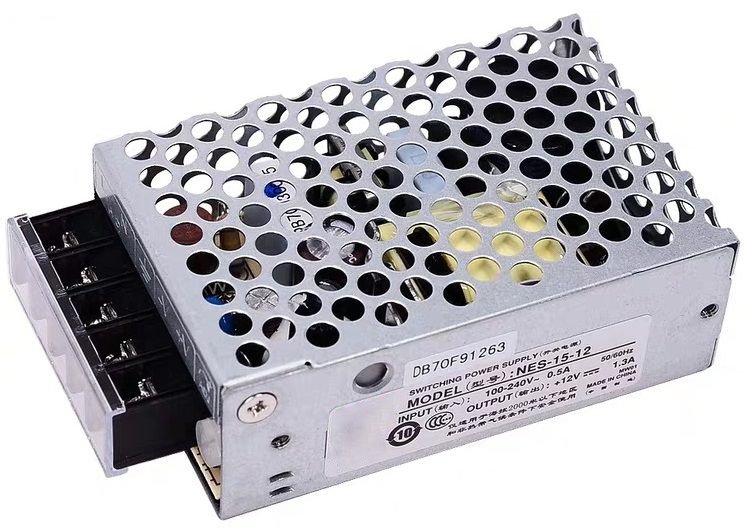
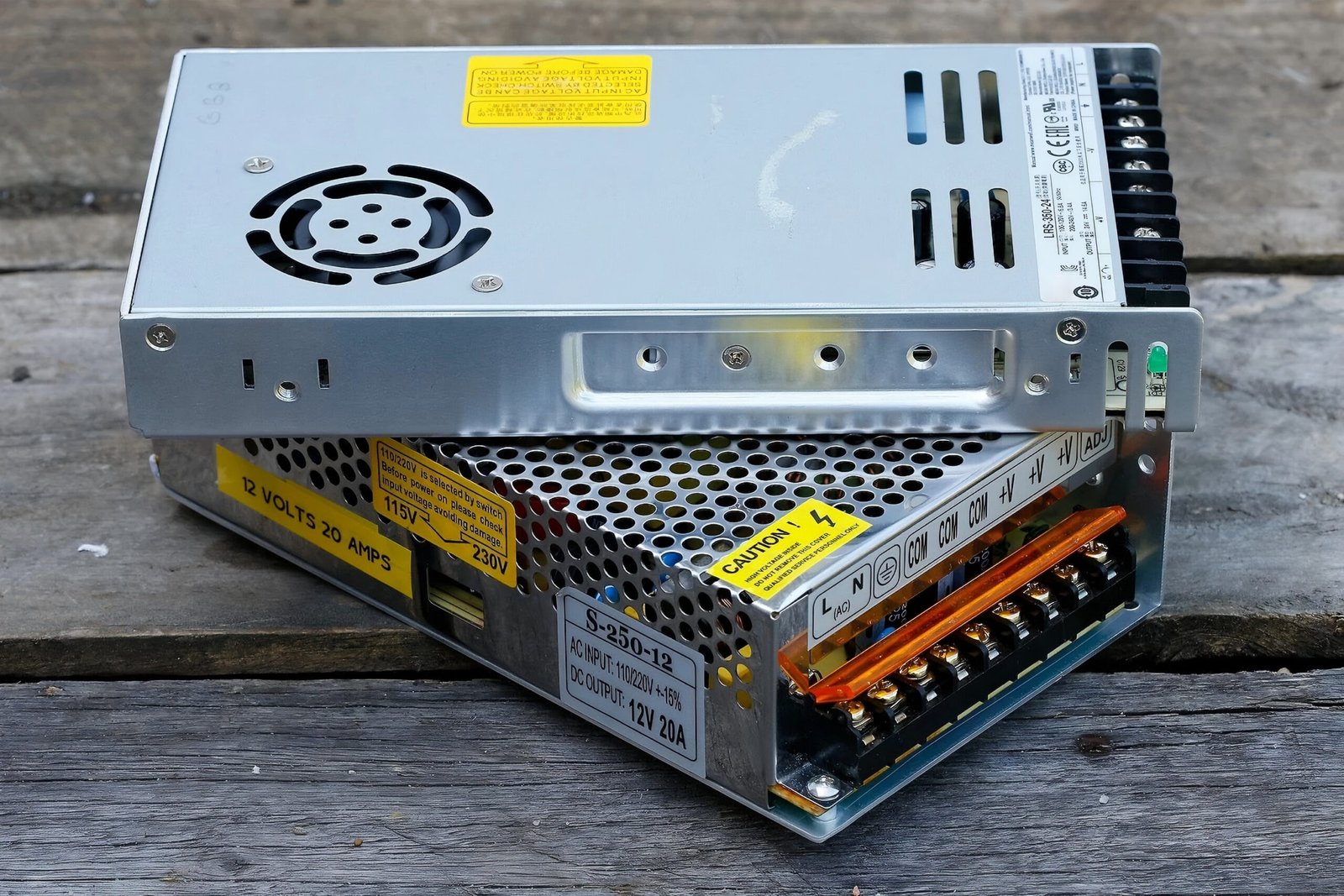
In an era where electronics are becoming more compact, efficient, and intelligent, the Switch Mode Power Supply (SMPS) remains the backbone of nearly every system—from industrial automation and CNC machines to LED lighting and communication equipment. Yet, despite decades of technological maturity, power supply failures are still one of the most common causes of system downtime.
Why is that? Is it poor component quality, harsh working environments, or simply incorrect usage? More importantly, when a failure occurs, how can engineers, technicians, or buyers quickly identify the root cause without wasting time replacing perfectly functional components?
This article provides a structured, field-proven diagnostic method based on four key principles:
Observe – Smell – Ask – Measure
Combined with practical insights from real-world applications and product-level considerations from SIPURUI switch mode power supplies, this guide will help you troubleshoot SMPS failures with precision and confidence.
What Exactly Fails Inside a Switch Mode Power Supply?
Before jumping into troubleshooting, it’s worth asking: what typically goes wrong inside an SMPS?
A modern switch mode power supply is not a simple device. It includes multiple subsystems: input rectification, high-frequency switching, transformer isolation, output rectification, and feedback control. Each of these stages can fail under different conditions.
Common SMPS Failure Points and Causes
| Component / Section | Typical Failure Mode | Root Cause | Impact on System |
| Input Fuse | Blown | Surge current, short circuit | No power output |
| Bridge Rectifier | Short / Open | Voltage spikes | Immediate shutdown |
| MOSFET / Switching IC | Burnout | Overload, overheating | No switching, no output |
| Transformer | Insulation failure | Thermal stress | Unstable or no output |
| Electrolytic Capacitors | Bulging / leakage | Aging, high temperature | Ripple, unstable voltage |
| Optocoupler / Feedback | Drift or failure | Long-term wear | Output voltage deviation |
Understanding these failure points allows you to interpret symptoms more accurately during troubleshooting.
Step 1: What Can You Learn Just by Looking at the Power Supply?
Visual inspection is often underestimated, yet it can immediately reveal up to 50% of common SMPS issues.

When you open a power supply enclosure (only after ensuring it is disconnected and safe), what should you really be looking for?
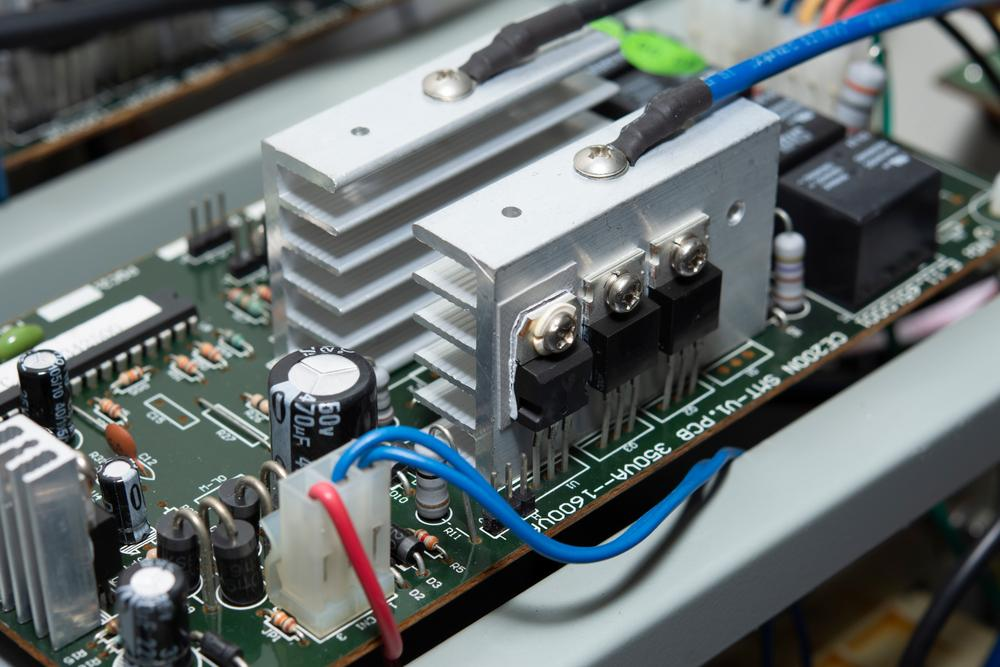
Burn marks on the PCB are one of the clearest indicators of localized overheating or short circuits. These often appear near switching components such as MOSFETs or around high-current traces. If the damage is concentrated in one area, it usually points directly to the failed component and its surrounding circuit.
Capacitors deserve particular attention. In many low-quality or heavily stressed power supplies, electrolytic capacitors are the first to degrade. A bulging top, leakage, or discoloration indicates internal pressure buildup caused by thermal stress. In SIPURUI power supply designs, high-temperature, long-life capacitors (typically rated at 105°C) are used specifically to mitigate this risk, especially in industrial environments.
Indicator LEDs, if present, can also provide immediate clues. A completely dark unit suggests input failure or internal protection triggering. A blinking LED may indicate overcurrent or short-circuit protection mode, depending on the design.
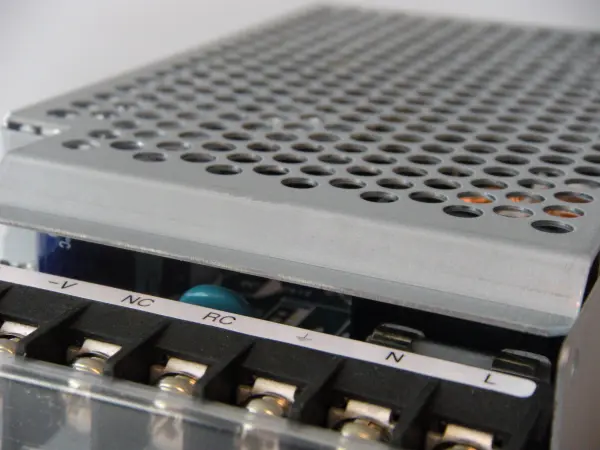
Finally, never overlook simple mechanical issues. Loose terminals, oxidized connectors, or damaged cables can mimic internal faults. In many field cases, replacing or reseating connectors resolves what initially appears to be a serious failure.
Step 2: Can You Trust Your Sense of Smell in Electrical Diagnostics?
It may sound unconventional, but experienced technicians often rely on smell as a fast diagnostic tool. Why? Because different failure modes produce distinct odors.
A sharp burning smell usually indicates carbonized PCB material or overheated semiconductors. This often occurs when a MOSFET fails catastrophically due to overload or insufficient heat dissipation. In contrast, a more subtle “chemical” odor may come from electrolyte leakage in capacitors.
Excessive heat is another critical warning sign. Even without visible damage, if a power supply casing becomes abnormally hot during operation, it suggests inefficiency, overload, or internal component degradation. SIPURUI industrial SMPS units are typically designed with optimized thermal paths and aluminum housings to improve heat dissipation, but improper installation—such as poor ventilation—can still lead to overheating.
Unusual sounds should not be ignored either. High-frequency buzzing may indicate transformer vibration or switching instability, while clicking sounds often point to repeated startup attempts caused by protection circuits engaging and disengaging.
Whenever any of these sensory indicators appear, the correct action is immediate shutdown followed by inspection. Continuing operation under these conditions can escalate minor faults into irreversible damage.
Step 3: What Does the Failure History Tell You?

Technical analysis alone is not always enough. Asking the right questions can often reveal the root cause faster than measurements.
Was the power supply operating within its rated load? Many failures occur because units are consistently run at or beyond their maximum capacity. For example, using a 24V 5A power supply in a system that frequently peaks above 5A will gradually degrade switching components.
Was there a recent voltage surge or unstable input? In regions with poor grid stability, transient spikes can damage input stages. SIPURUI models designed for industrial use often include wide input voltage ranges (e.g., 85–264VAC) and built-in surge protection, but extreme conditions can still cause failure if external protection is inadequate.
Was the installation environment appropriate? Dust, humidity, and high ambient temperatures significantly shorten the lifespan of SMPS units. A power supply installed inside a sealed cabinet without airflow will experience much higher internal temperatures than one in a ventilated enclosure.
Another overlooked factor is incorrect wiring or polarity errors during installation. Reverse connections or grounding issues can instantly damage sensitive components, especially in DC output stages.
By reconstructing the sequence of events leading to failure, you can often narrow down the fault to a specific stress factor rather than guessing blindly.
Step 4: What Do Measurements Reveal That Your Eyes Cannot?
After observation and contextual analysis, precise measurement becomes essential. This is where tools such as multimeters and infrared thermometers come into play.

The first and most fundamental test is output voltage measurement. Compare the measured value with the rated specification. A significantly lower voltage may indicate insufficient switching or a failing feedback loop, while an excessively high voltage suggests regulation failure—potentially dangerous for connected loads.
Temperature measurement provides another layer of insight. Using an infrared thermometer, you can identify hotspots that are not visible to the naked eye. Components operating far above their normal temperature range are likely under stress or nearing failure.
One of the most effective diagnostic techniques is substitution. Replacing the suspected faulty unit with a known good SIPURUI power supply of the same specification can quickly confirm whether the issue lies in the power supply or elsewhere in the system.
Standard Output Voltage Tolerance for SMPS
| Output Voltage | Acceptable Range (Typical) | Risk if Out of Range |
| 5V | 4.75V – 5.25V | Logic errors, system instability |
| 12V | 11.4V – 12.6V | Motor malfunction, overheating |
| 24V | 22.8V – 25.2V | Industrial control failure |
| 48V | 45.6V – 50.4V | Communication system faults |
These tolerances vary slightly depending on design, but deviations beyond these ranges usually indicate a problem.
How Do SIPURUI Switch Mode Power Supplies Improve Reliability?
When discussing troubleshooting, it is equally important to consider prevention. Why do some power supplies last significantly longer than others under the same conditions?
The answer lies in design and component selection.
SIPURUI SMPS Design Advantages
| Feature | SIPURUI Implementation | Practical Benefit |
| Wide Input Voltage Range | 85–264VAC | Handles unstable power grids |
| High-Temperature Capacitors | 105°C rated electrolytic capacitors | Longer lifespan in harsh environments |
| Protection Functions | OVP, OCP, SCP, OTP | Prevents catastrophic failure |
| Thermal Design | Optimized aluminum casing | Efficient heat dissipation |
| Industrial Certification | CE, RoHS | Compliance and safety assurance |
By integrating robust protection mechanisms such as over-voltage protection (OVP), over-current protection (OCP), and short-circuit protection (SCP), SIPURUI power supplies are designed not only to perform but to survive in demanding conditions.

Conclusion: Is SMPS Troubleshooting Really That Complicated?
At first glance, diagnosing a switch mode power supply may seem complex. But when approached systematically—by observing, sensing, questioning, and measuring—the process becomes logical and efficient.
Instead of randomly replacing components or entire units, this structured method allows you to identify root causes, reduce downtime, and make informed decisions about repair or replacement.
In industrial applications where reliability is critical, combining proper diagnostic techniques with high-quality products such as SIPURUI switch mode power supplies is the most effective way to ensure long-term system stability.
The next time a power issue occurs, the question is no longer “What went wrong?” but rather:
“Which step in the process will reveal the answer fastest?”