When an industrial power supply suddenly stops working after years of reliable operation, many users assume that the entire unit has simply reached the end of its life.
Overview
When an industrial power supply suddenly stops working after years of reliable operation, many users assume that the entire unit has simply reached the end of its life. In reality, switching power supplies rarely fail all at once. More often, a single component gradually degrades until it begins affecting the performance of the entire system.
This raises an important question for engineers, equipment manufacturers, and maintenance teams: what actually determines the lifespan of a switching power supply?
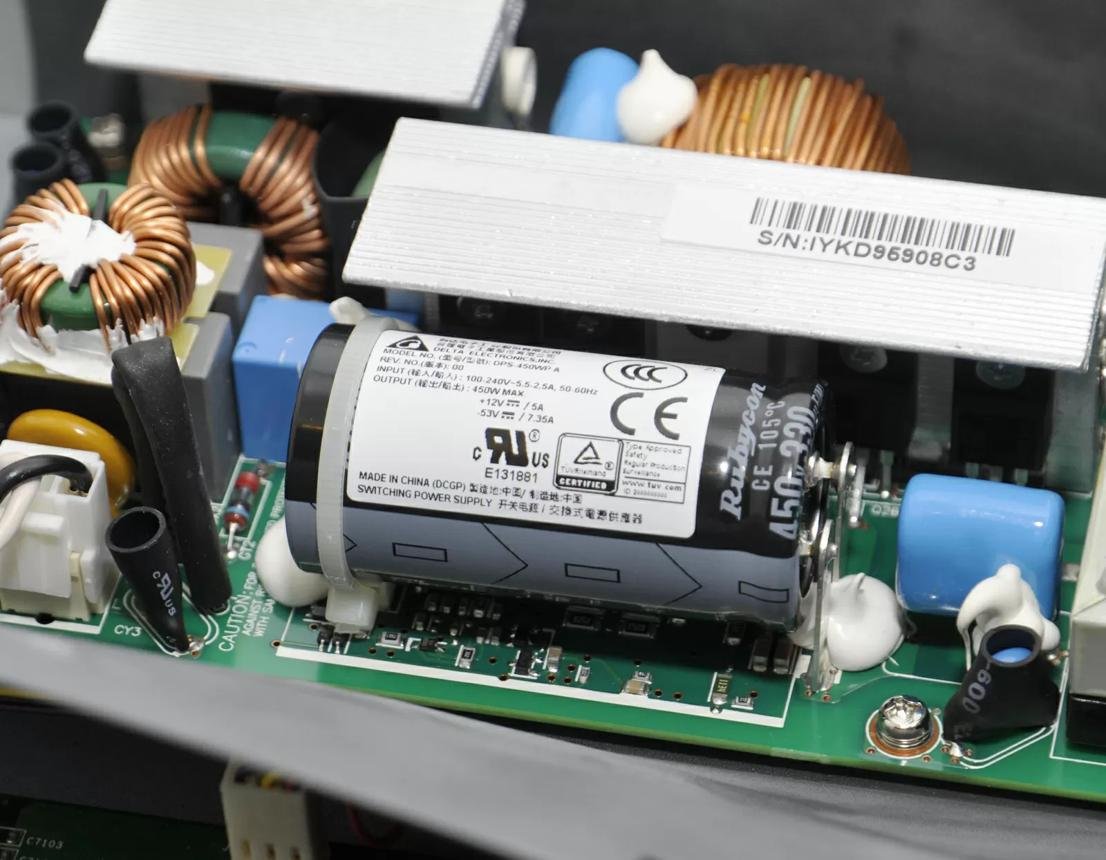
Is it the transformer? The MOSFET? The output capacitor? Or is it something else entirely?
As switching power supplies continue to power industrial automation systems, telecommunications equipment, LED lighting installations, security devices, medical electronics, and countless other applications, understanding component lifespan has become increasingly important. A reliable power supply is not only about efficiency and output stability; it is also about how many years it can continue operating under real-world conditions without unexpected failure.
In this article, we will explore the lifespan of every major component inside a switch-mode power supply (SMPS), examine the factors that accelerate aging, and explain how proper design choices can significantly extend service life.
Why Does the Lifespan of a Switching Power Supply Matter?
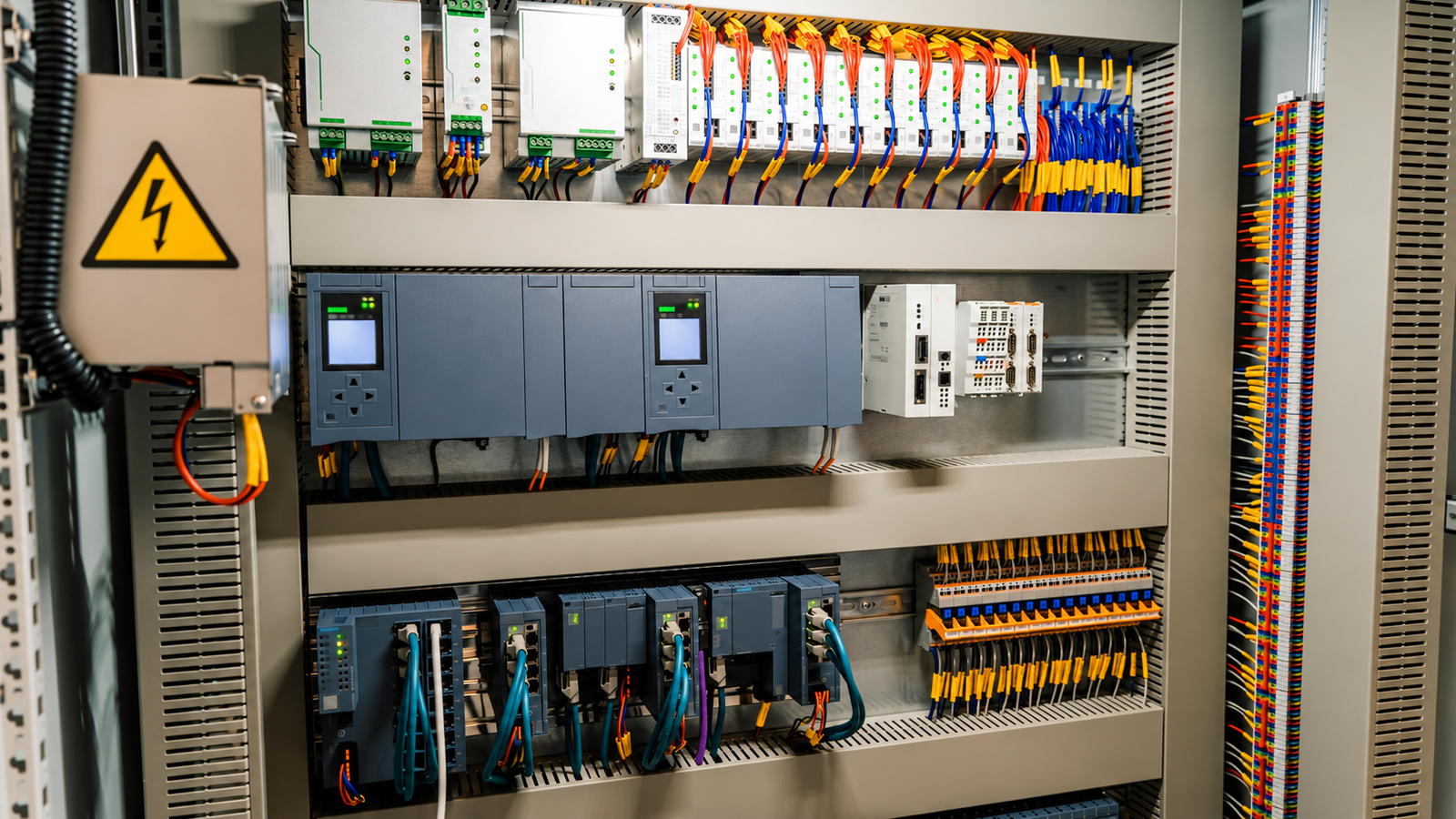
Many industrial systems are expected to operate continuously for years with minimal maintenance. A PLC cabinet may run around the clock inside a manufacturing facility. A telecommunications base station may remain active twenty-four hours a day for more than a decade. A security monitoring system may be expected to function continuously without interruption.
In these environments, the power supply becomes one of the most critical elements in the entire system.
The challenge is that electronic components age differently. Some components can remain functional for decades, while others begin to degrade much sooner. The overall lifespan of a switching power supply is therefore determined not by its strongest component, but by its weakest one.
Temperature plays a particularly important role. Studies of power electronics consistently show that excessive heat accelerates capacitor degradation, increases semiconductor stress, and shortens insulation life. As a result, thermal management often has a greater impact on reliability than any single electrical specification. Electrolytic capacitors are especially sensitive because their liquid electrolyte gradually evaporates as operating temperatures increase.
For this reason, two power supplies with identical output ratings can have dramatically different service lives depending on their internal design and component selection.
The Component That Usually Fails First: Electrolytic Capacitors
If there is one component that has earned a reputation as the lifespan bottleneck of a switching power supply, it is the electrolytic capacitor.
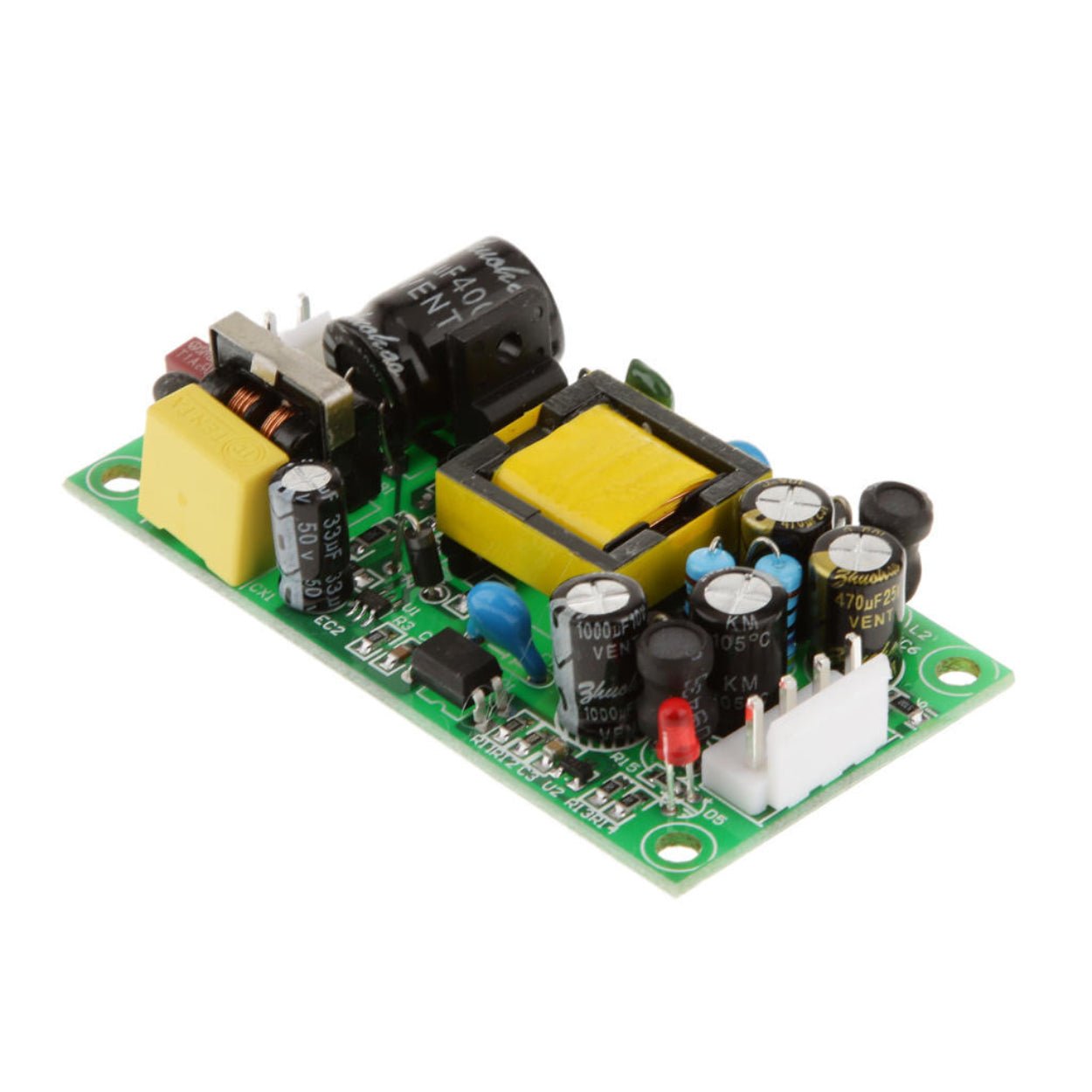
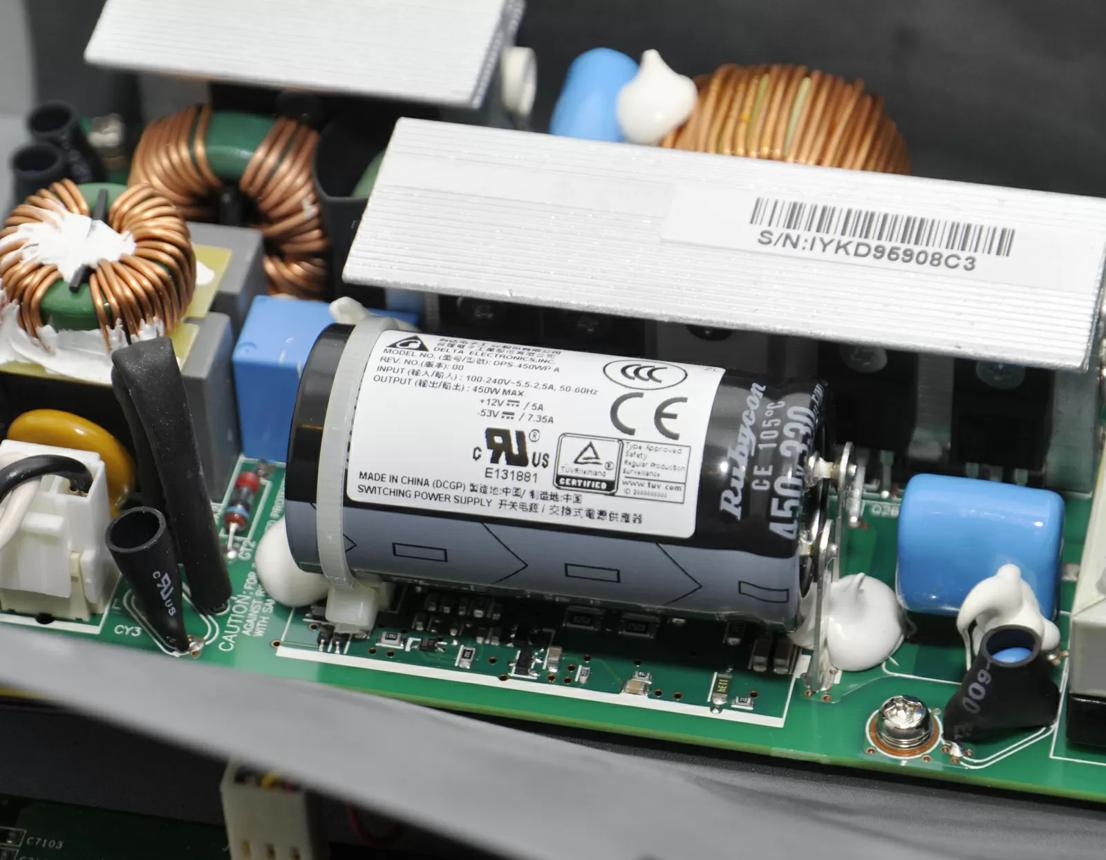
Electrolytic capacitors perform several essential tasks inside a power supply. They store energy, smooth output voltage, reduce ripple, and help maintain stability during load changes. Without them, the output voltage would become noisy and unstable.
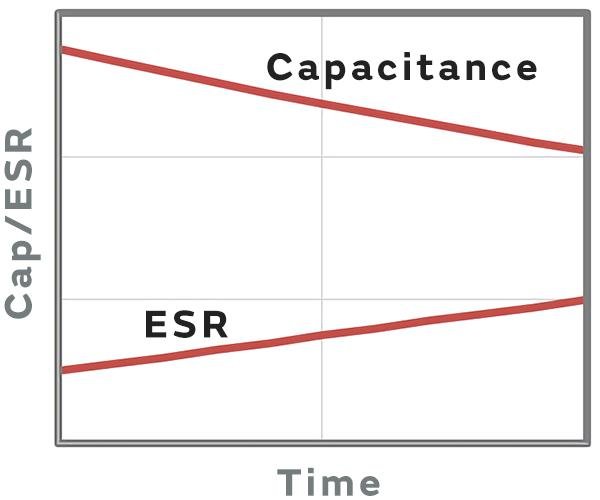
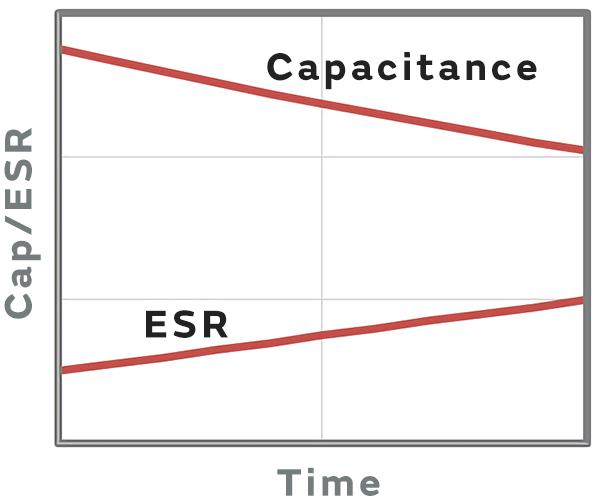
Unlike ceramic capacitors or resistors, electrolytic capacitors contain liquid electrolyte. Over time, this electrolyte slowly dries out, causing capacitance to decrease and ESR (Equivalent Series Resistance) to increase. As the capacitor ages, output ripple rises and regulation performance gradually deteriorates. Eventually, startup issues, instability, or complete failure may occur.
The relationship between temperature and capacitor life is particularly significant.
| Capacitor Core Temperature | Relative Service Life |
|---|---|
| 45°C | 16× Rated Life |
| 55°C | 8× Rated Life |
| 65°C | 4× Rated Life |
| 75°C | 2× Rated Life |
| 85°C | Rated Life |
| 95°C | Approximately 50% |
This explains why high-quality industrial power supplies often use long-life 105°C capacitors and carefully designed airflow paths. Even a modest reduction in operating temperature can dramatically extend capacitor lifespan.
Why Ceramic Capacitors Rarely Become a Reliability Concern
Unlike electrolytic capacitors, ceramic capacitors contain no liquid electrolyte and therefore avoid the primary aging mechanism that affects aluminum capacitors.
This makes ceramic capacitors remarkably durable. In most industrial applications, they can continue operating for decades with minimal degradation. While ceramic materials do experience slight capacitance changes over time, the effect is generally small enough that it rarely threatens system reliability.
Modern high-frequency switching power supplies rely heavily on ceramic capacitors because of their excellent high-frequency characteristics and low ESR. As switching frequencies continue to increase, ceramic capacitors are becoming even more important in reducing noise and improving efficiency.
In many cases, a ceramic capacitor may remain fully functional long after other components inside the same power supply have been replaced.
How Long Can MOSFETs Survive?
While capacitors are often considered the weakest link, MOSFETs are the components doing most of the hard work.
Every second, a MOSFET inside a switching power supply may switch tens or hundreds of thousands of times. This rapid switching process allows the power supply to achieve high efficiency and compact size, but it also generates heat.
The biggest threat to MOSFET lifespan is junction temperature.
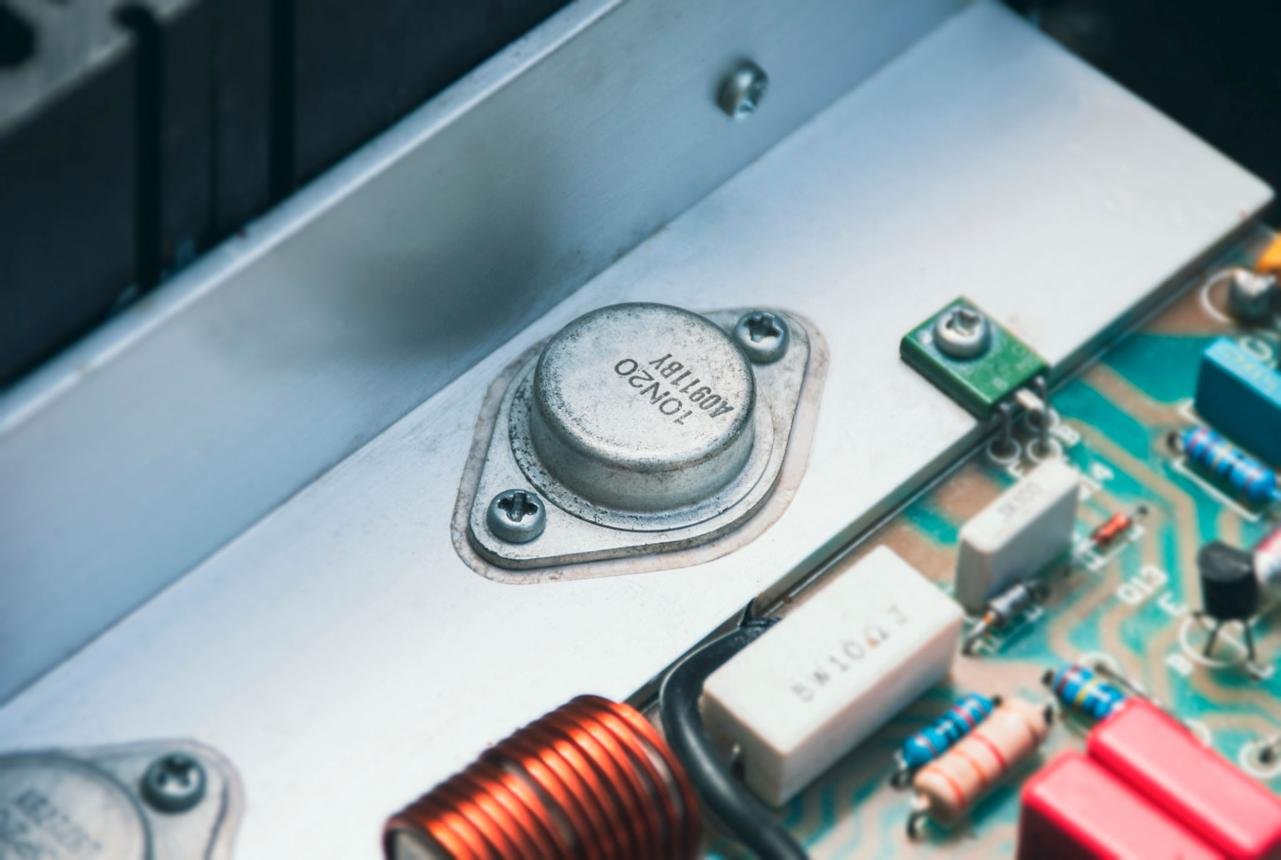
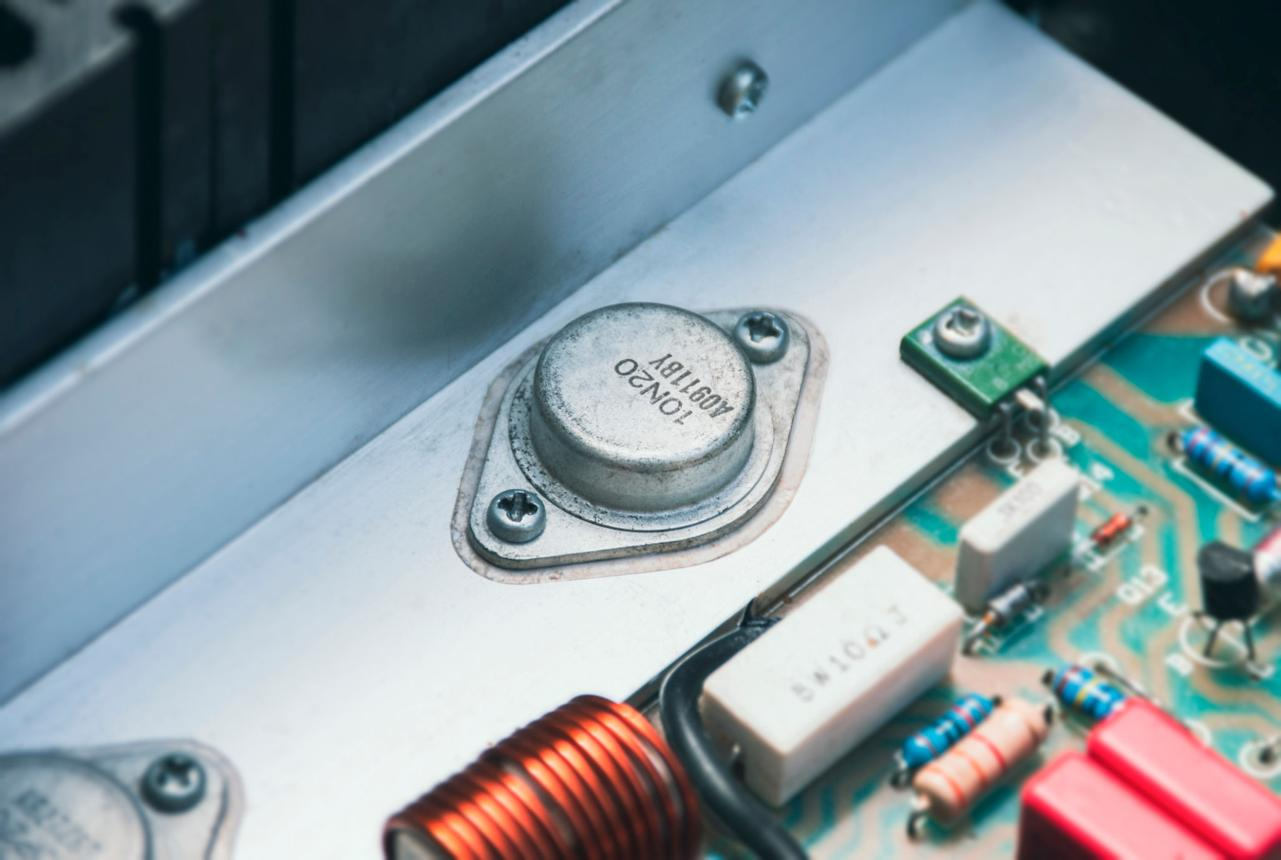
When a MOSFET operates at elevated temperatures for extended periods, thermal stress gradually affects the semiconductor structure. Repeated heating and cooling cycles can also contribute to long-term degradation. Effective heat sinking and thermal management are therefore essential for maintaining reliability. MOSFETs, IGBTs, and power ICs are among the primary components that require dedicated heat dissipation within switching power supplies.
In a well-designed industrial power supply, MOSFETs can often provide reliable service for more than ten years. However, excessive load conditions, inadequate cooling, or frequent voltage spikes can shorten their lifespan considerably.
Transformers: Often the Longest-Lasting Component
Among all components found inside a switching power supply, transformers are usually the most durable.
A high-frequency transformer does not contain liquid materials that evaporate, nor does it experience the same thermal cycling stress as semiconductors. Its lifespan is primarily determined by insulation quality, winding temperature, and core material performance.
When operated within its design limits, a transformer can easily remain functional for fifteen to twenty years or longer. In many industrial systems, transformers continue operating perfectly even after multiple capacitor replacements have been performed.
This is one reason why transformer quality remains a major differentiator between industrial-grade power supplies and low-cost alternatives.
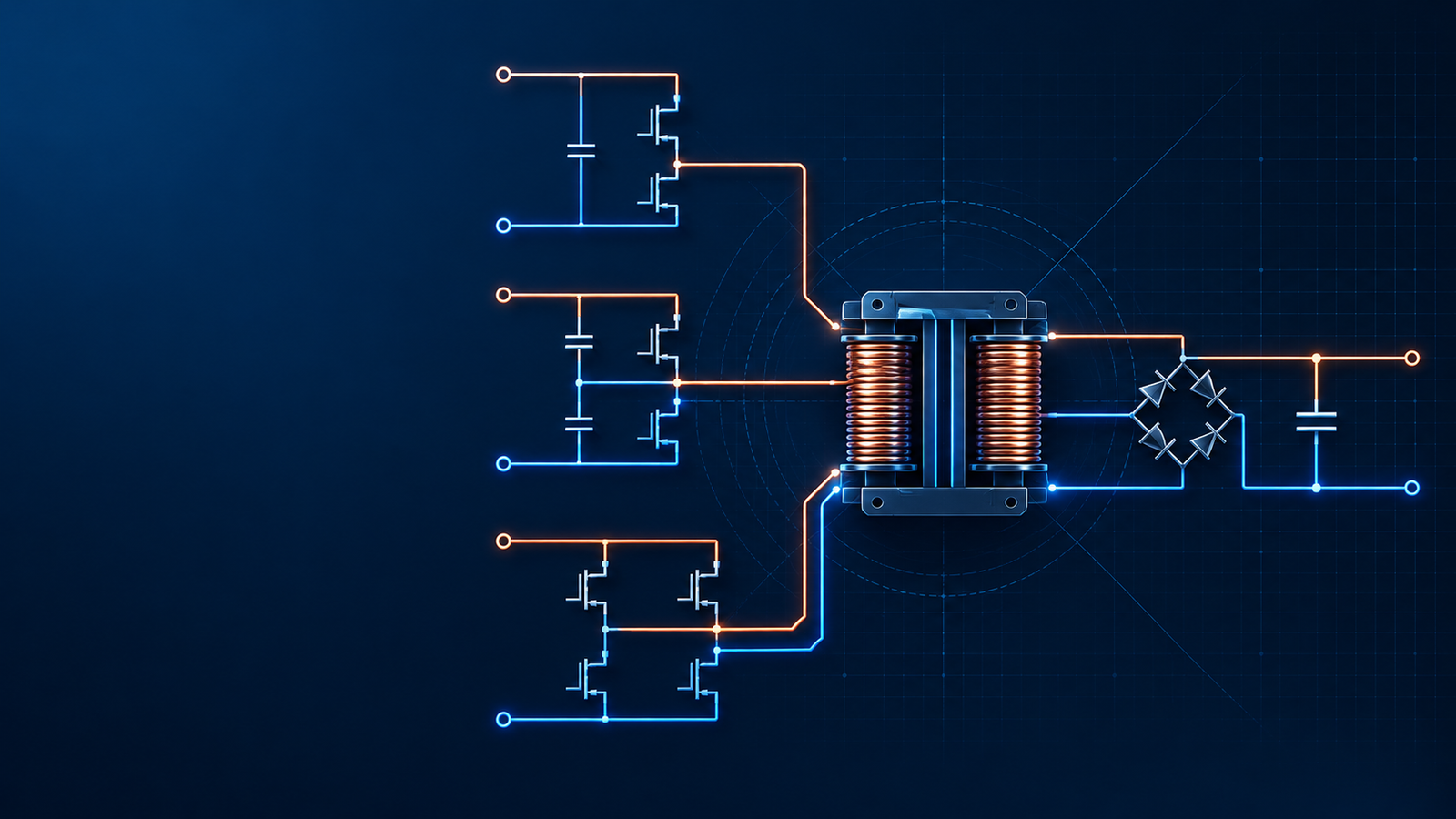
Modern SMPS designs rely on ferrite-core transformers operating at high frequencies, allowing significantly smaller transformer sizes while maintaining excellent efficiency.
Diodes, Inductors, and Resistors: The Quiet Contributors
Although they receive less attention, diodes, inductors, and resistors all contribute to overall reliability.
Rectifier diodes and Schottky diodes continuously process current and dissipate heat. Under normal operating conditions, they can last many years, but excessive temperature and current stress may eventually cause degradation.
Inductors generally exhibit excellent longevity because their construction is relatively simple. However, excessive current can cause insulation damage or magnetic core saturation.
Resistors are often the most reliable components in the entire power supply. Unless subjected to overload conditions or severe environmental stress, they can continue functioning for decades.
The following table summarizes the typical lifespan of major components found in industrial switching power supplies.
| Component | Typical Service Life |
|---|---|
| Electrolytic Capacitor | 5-15 Years |
| Ceramic Capacitor | 15-25+ Years |
| MOSFET | 10-15 Years |
| Schottky Diode | 8-12 Years |
| Inductor | 10-15 Years |
| Transformer | 15-20+ Years |
| Resistor | 20+ Years |
These figures should be viewed as general estimates rather than fixed rules, since actual service life depends heavily on temperature, load conditions, and component quality.
How SIPURUI Extends Power Supply Lifespan
At SIPURUI, reliability is approached as a complete system-level challenge rather than simply a matter of selecting individual components.
The first step is controlling temperature. Because capacitor life is strongly influenced by operating temperature, thermal management becomes a central design objective. Component placement, airflow paths, heat sinks, and PCB layouts are optimized to reduce hot spots and maintain lower internal temperatures.
The second step is component selection. High-temperature capacitors, high-efficiency MOSFETs, and carefully designed magnetic components are chosen to improve long-term stability. Conservative electrical derating further reduces stress on critical components.
Finally, comprehensive protection functions help prevent abnormal conditions such as overloads, short circuits, over-voltage events, and overheating from causing permanent damage. Modern industrial power supplies increasingly incorporate multiple protection mechanisms to safeguard both the power supply and the connected equipment.
The result is a power supply capable of delivering stable performance not only when new, but throughout many years of continuous operation.
So, how long does a switching power supply really last?
The answer depends largely on the components inside it and the environment in which it operates. While transformers, resistors, and ceramic capacitors can often remain functional for decades, electrolytic capacitors and power semiconductors typically determine the practical service life of the entire unit.
Temperature remains the single most important factor influencing longevity. A well-designed industrial power supply operating under reasonable thermal conditions can often deliver reliable performance for ten years or more. Conversely, excessive heat, poor ventilation, and continuous overload conditions can dramatically accelerate aging.
For engineers and equipment manufacturers seeking long-term reliability, understanding the lifespan of individual components provides valuable insight into both product selection and maintenance planning. Ultimately, a power supply is only as reliable as the components inside it-and the care taken to keep those components operating within their intended limits.
Buyer Checklist
- Confirm input and output voltage before model selection.
- Check wattage, load margin and operating temperature.
- Review installation space, airflow and protection requirements.
- Share project quantity and application details for quotation support.