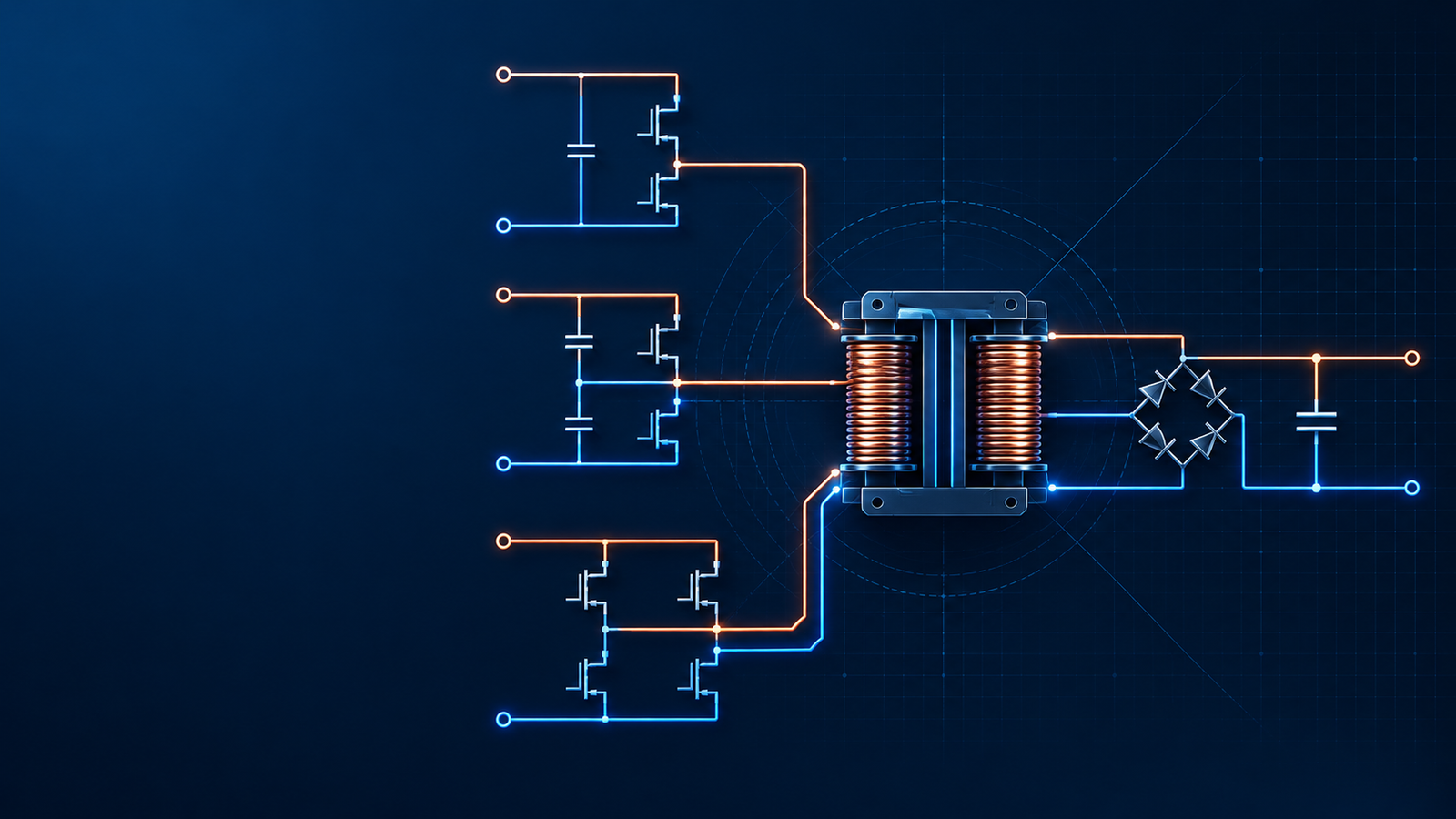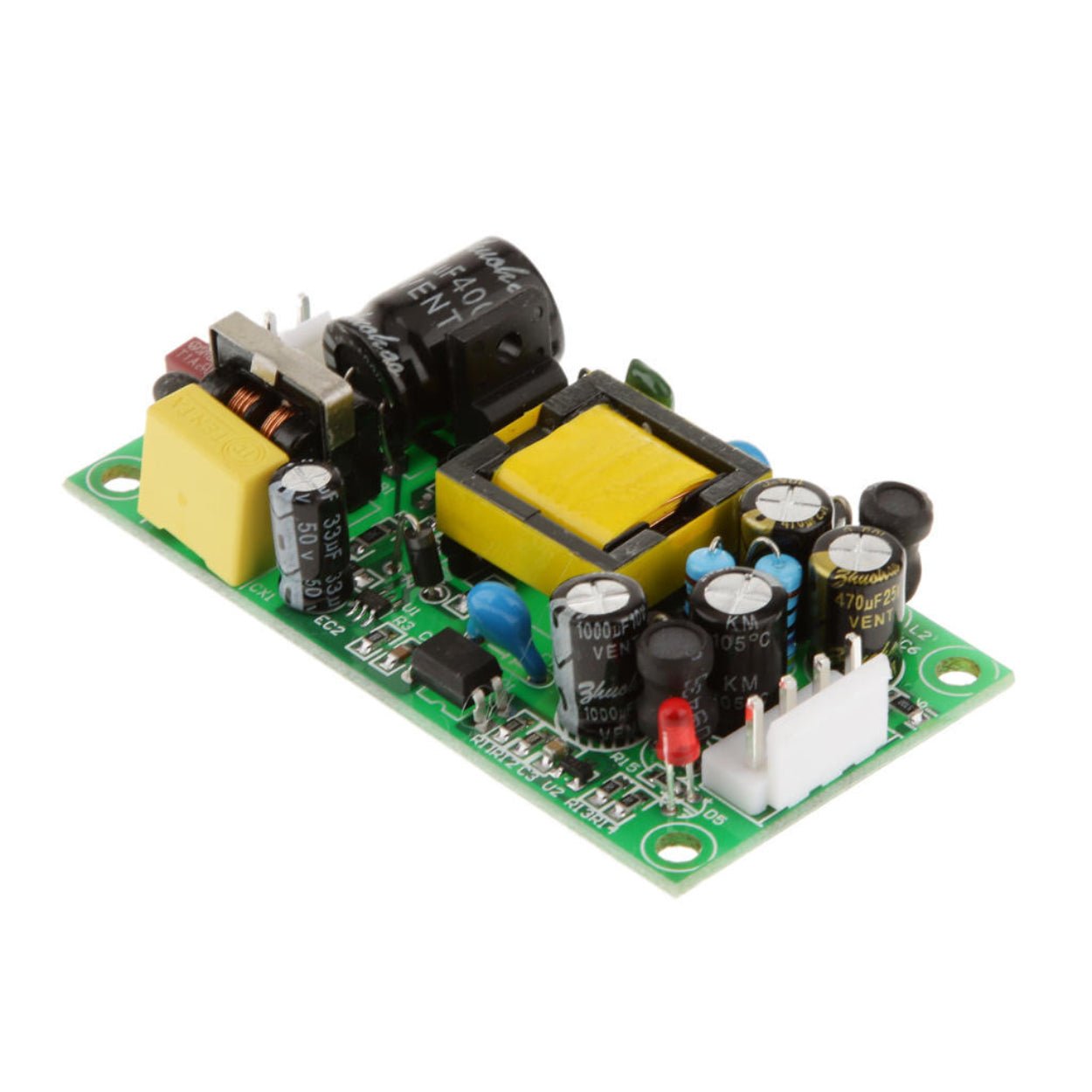
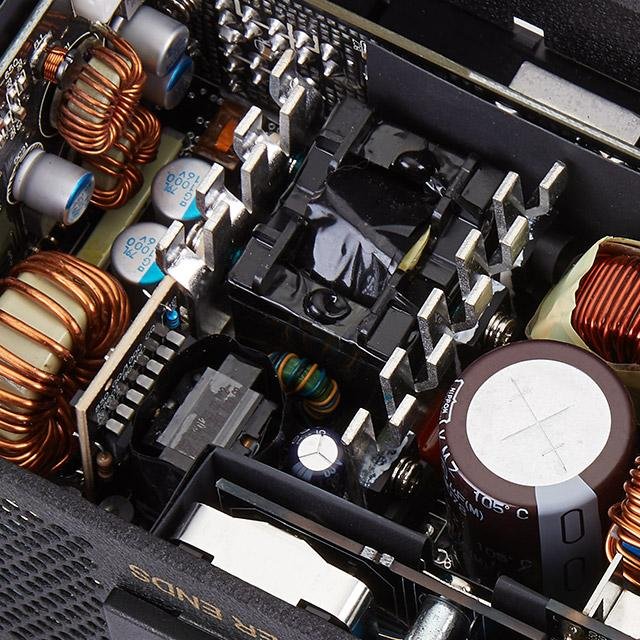
If you have ever searched for an industrial power supply, chances are you have encountered two terms that seem confusingly similar: PFC power supply and switching power supply.
Overview
If you have ever searched for an industrial power supply, chances are you have encountered two terms that seem confusingly similar: PFC power supply and switching power supply. Many buyers assume they are competing technologies, while others believe that one is simply a more advanced version of the other. In reality, the relationship between the two is much more interesting-and understanding it can help engineers, system integrators, and equipment manufacturers make better purchasing decisions.
The confusion usually begins when comparing product specifications. One power supply advertises "Active PFC," while another is simply described as a "switching power supply." Does that mean the first product is more efficient? Is it more reliable? Does it consume less electricity? And perhaps most importantly, does it justify the higher price often associated with Active PFC designs?
The answer lies in understanding what each term actually represents. A switching power supply describes the overall method used to convert electrical energy, while Power Factor Correction (PFC) is a technology that improves how that power supply interacts with the electrical grid. They are not alternatives. In fact, most modern high-performance power supplies combine both technologies into a single system.
As industrial automation, smart manufacturing, telecommunications infrastructure, and LED lighting systems continue to expand worldwide, power quality has become just as important as power conversion itself. This is why Active PFC has evolved from a premium feature into a standard requirement for many industrial applications.
What Exactly Is a Switching Power Supply?
A switching power supply, often referred to as an SMPS (Switched Mode Power Supply), is designed to convert electrical energy efficiently by rapidly switching semiconductor devices on and off at high frequencies. Unlike traditional linear power supplies, which regulate voltage by dissipating excess energy as heat, switching power supplies transfer energy through controlled switching cycles. This approach dramatically improves efficiency while reducing size and weight.
The advantages of this technology have made it the dominant power conversion method used today. Whether inside a factory automation cabinet, a telecommunications base station, a CNC machine, or a medical imaging system, the chances are high that a switching power supply is performing the critical task of converting incoming electrical power into stable DC voltage.
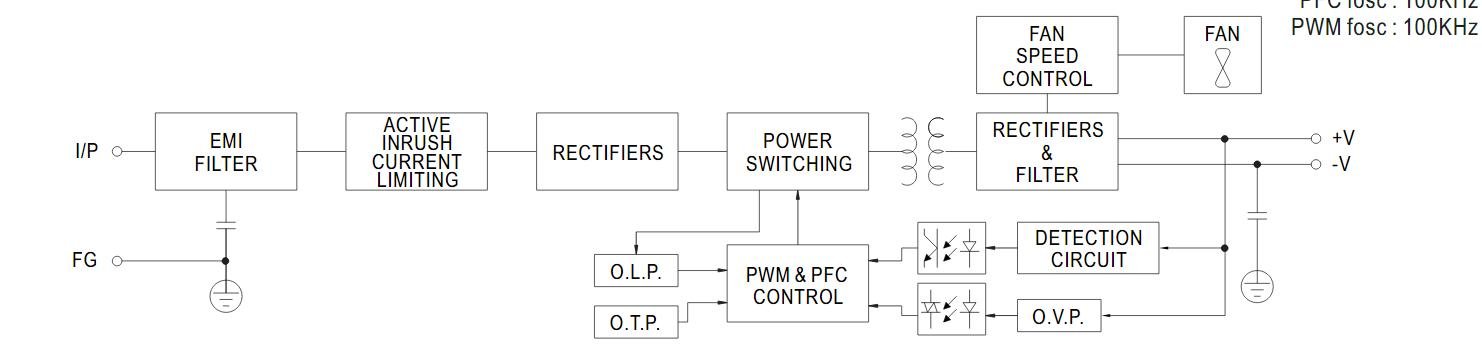
A typical industrial switching power supply begins by converting incoming AC voltage into DC through a rectifier stage. The DC voltage is then processed by high-frequency switching circuits that transfer energy through transformers or inductors before being filtered and regulated into a stable output. Because switching frequencies can exceed 100 kHz, transformers and magnetic components can be significantly smaller than those used in conventional line-frequency designs.
This efficiency advantage has become increasingly important as industries pursue energy savings and sustainability goals. Modern industrial switching power supplies commonly achieve efficiencies exceeding 90%, while advanced designs can reach even higher levels under optimized operating conditions.
For manufacturers such as SIPURUI, switching power supply technology forms the foundation of product families including DIN rail power supplies, enclosed industrial power supplies, LED drivers, and communication-grade power systems.
Why Does Power Factor Matter?
To understand PFC, it is necessary to understand power factor itself.
In an ideal AC electrical system, voltage and current rise and fall together in perfect synchronization. Under these conditions, all of the power supplied by the electrical grid performs useful work. However, many electronic devices-including power supplies-cause the current waveform to become distorted or shifted relative to the voltage waveform.
When this happens, a portion of the energy supplied by the grid no longer contributes directly to useful work. Instead, it circulates within the electrical system as reactive power. The result is a lower power factor.
Power factor is simply the ratio between real power and apparent power. A value closer to 1.0 indicates more efficient utilization of electrical energy, while lower values indicate that additional current is being drawn to deliver the same amount of useful power.
The practical implications can be significant. A facility operating hundreds of power supplies with poor power factors may experience increased cable losses, higher transformer loading, greater heat generation, and elevated electricity costs. In many countries, utility providers even impose penalties on industrial customers whose power factors fall below specified thresholds.
The issue becomes increasingly important as equipment power levels increase. While a small consumer device may have minimal impact on the electrical network, a factory operating hundreds of industrial power supplies can collectively generate substantial harmonic distortion and reactive power.
Typical Power Factor Values
| Equipment Type | Typical Power Factor |
|---|---|
| Non-PFC Switching Power Supply | 0.50 - 0.70 |
| Passive PFC Power Supply | 0.70 - 0.85 |
| Active PFC Power Supply | 0.95 - 0.99 |
| Ideal Electrical Load | 1.00 |
This simple comparison explains why power factor correction has become such an important topic in industrial power design.

Why Do Traditional Switching Power Supplies Have Low Power Factors?
At first glance, a switching power supply may appear highly efficient, so it is natural to wonder why power factor problems occur in the first place.
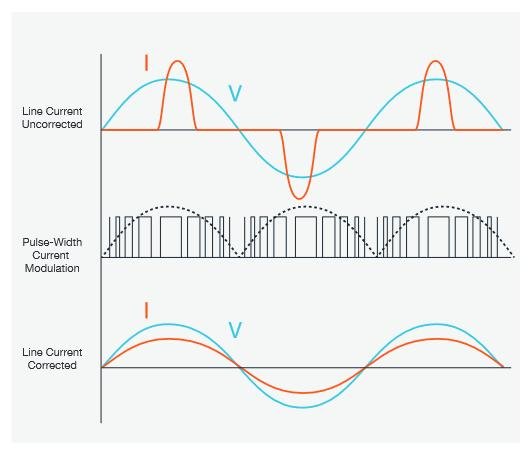
The answer lies in the input stage. Traditional AC/DC power supplies typically use a bridge rectifier followed by a large bulk capacitor. While this configuration effectively converts AC into DC, it introduces a side effect: the capacitor charges only near the peaks of the AC voltage waveform.
Instead of drawing current smoothly throughout the entire AC cycle, the power supply draws short, high-amplitude current pulses. Although the average power delivered may be correct, the distorted current waveform creates harmonic content and reduces the overall power factor.
Imagine traffic flowing smoothly along a highway. Now imagine all vehicles attempting to enter the highway at exactly the same moment every few seconds. The total number of vehicles may remain unchanged, but congestion becomes much worse. Poor power factor behaves in a similar way, creating unnecessary stress on electrical infrastructure.
As industries increasingly focus on energy efficiency and grid stability, these current distortions have become less acceptable. This is precisely where Power Factor Correction technology enters the picture.
How Does Active PFC Work?
Active Power Factor Correction is designed to solve the current distortion problem by reshaping the input current waveform.
In most industrial power supplies, the Active PFC stage is implemented using a boost converter positioned between the rectifier and the main DC/DC converter. A dedicated control IC continuously monitors the incoming AC waveform and adjusts the switching behavior of the PFC circuit accordingly.
Rather than allowing the input capacitor to charge only at voltage peaks, the PFC controller forces the power supply to draw current more evenly throughout the entire AC cycle. As a result, the input current waveform closely resembles a sinusoidal wave that remains in phase with the input voltage.
The benefits extend beyond simply improving power factor. Because current is distributed more evenly, harmonic distortion decreases significantly. Electrical infrastructure experiences lower stress, electromagnetic compatibility performance improves, and overall system efficiency increases.
Another major advantage is universal input capability. Many Active PFC designs can operate seamlessly across input voltages ranging from 85 VAC to 264 VAC. This flexibility is especially valuable for equipment manufacturers selling products into multiple international markets.
For industrial users, the practical result is a power supply that places less burden on facility electrical systems while delivering more stable and predictable performance.
Active PFC vs Passive PFC: Which Is Better?
Not all PFC technologies are created equal.
Historically, passive PFC represented the first widely adopted approach to improving power factor. Passive PFC circuits use inductors and capacitors to smooth current flow and reduce phase differences between voltage and current. While effective to a degree, passive solutions are limited in their ability to achieve very high power factor values.
As power requirements increased, Active PFC emerged as the preferred solution.
Passive PFC vs Active PFC Comparison
| Parameter | Passive PFC | Active PFC |
|---|---|---|
| Power Factor | 0.70 - 0.85 | 0.95 - 0.99 |
| Harmonic Distortion | Moderate | Very Low |
| Input Voltage Range | Limited | Wide Universal Input |
| Size and Weight | Larger | More Compact |
| Efficiency | Good | Excellent |
| Compliance Capability | Limited | Superior |
| Cost | Lower | Higher |
Although passive PFC remains suitable for some lower-power applications, Active PFC has become the standard choice for industrial power supplies above approximately 75W to 100W. The improvement in power quality and regulatory compliance generally outweighs the additional design complexity.
Is a PFC Power Supply Actually Different from a Switching Power Supply?
This question appears frequently because marketing materials often present the two terms separately.
The reality is that a PFC power supply is usually a switching power supply that incorporates an additional PFC stage.
Without PFC, the architecture typically follows this sequence:
AC Input → Rectifier → Bulk Capacitor → DC/DC Converter → Output
With Active PFC, the architecture becomes:
AC Input → Rectifier → Active PFC Stage → DC/DC Converter → Output
The core switching power conversion process remains unchanged. What changes is the way energy is drawn from the electrical grid before conversion takes place.
Therefore, asking whether a PFC power supply is better than a switching power supply is somewhat like asking whether a vehicle with anti-lock brakes is better than a vehicle. The anti-lock braking system is not a different vehicle-it is an enhancement that improves overall performance.
The same principle applies to power supplies.
Why Has Active PFC Become Standard in Modern Industrial Power Supplies?
Several industry trends have accelerated the adoption of Active PFC technology.
First, international regulations have become increasingly strict regarding harmonic current emissions. Manufacturers seeking access to global markets must comply with standards governing electromagnetic compatibility and power quality.
Second, industrial facilities are under constant pressure to improve energy efficiency. Even modest improvements in power quality can generate significant cost savings when multiplied across hundreds or thousands of operating devices.
Third, modern equipment has become more sophisticated and sensitive. Telecommunications systems, automation controllers, industrial computers, and network infrastructure all benefit from cleaner and more stable electrical environments.
For these reasons, Active PFC has become a standard feature in many SIPURUI product families, particularly higher-power DIN rail power supplies, enclosed-frame industrial power supplies, and LED driver solutions intended for professional applications.
Which SIPURUI Power Supply Series Benefits Most from Active PFC?
Although Active PFC can improve nearly any AC/DC power supply, certain applications benefit more than others.
Industrial automation systems often operate continuously for years while supporting PLCs, sensors, HMIs, and communication devices. In these environments, efficiency and power quality directly impact operating costs and system reliability.
Similarly, LED lighting installations frequently deploy large numbers of power supplies within a single facility. Active PFC helps reduce harmonic distortion while supporting compliance with commercial lighting regulations.
Telecommunications equipment presents another excellent example. Network infrastructure must operate continuously while maintaining stable performance under varying input conditions. Active PFC contributes to both efficiency and electrical stability.
Recommended SIPURUI Solutions
| Application | Recommended SIPURUI Product Type |
|---|---|
| Industrial Automation | DIN Rail Power Supply |
| PLC Control Panels | 24V Industrial Power Supply |
| LED Lighting Systems | Active PFC LED Driver |
| Telecommunications | High-Efficiency Enclosed Power Supply |
| Factory Equipment | Industrial Switching Power Supply |
| Smart Manufacturing | Active PFC Industrial PSU |
Conclusion
The debate between PFC power supplies and switching power supplies often begins with a misunderstanding. These technologies are not competitors. Instead, they work together to deliver efficient, reliable, and compliant power conversion.
A switching power supply provides the foundation for modern power conversion, while Active PFC enhances its interaction with the electrical grid by improving power factor and reducing harmonic distortion. As industrial systems continue to demand higher efficiency, better power quality, and greater compliance with international standards, Active PFC has become an increasingly important component of professional power supply design.
For engineers evaluating power solutions for automation systems, telecommunications equipment, LED lighting installations, or industrial control cabinets, the better question is no longer whether to use a switching power supply. The real question is whether that switching power supply includes the Active PFC technology necessary to meet the performance expectations of modern industry.
Buyer Checklist
- Confirm input and output voltage before model selection.
- Check wattage, load margin and operating temperature.
- Review installation space, airflow and protection requirements.
- Share project quantity and application details for quotation support.