Power supplies are often viewed as supporting components within an electronic system, yet their design has a direct impact on reliability, safety, electromagnetic compatibility, and overall system performance.
Overview
Power supplies are often viewed as supporting components within an electronic system, yet their design has a direct impact on reliability, safety, electromagnetic compatibility, and overall system performance. Whether developing industrial automation equipment, communication devices, medical instruments, security systems, or embedded control platforms, engineers inevitably face a critical question during the design stage: should the system use an isolated power supply or a non-isolated power supply?
The answer is rarely determined by output voltage or power rating alone. Instead, it depends on how the system will operate, the environment in which it will be installed, the required level of electrical safety, and the long-term reliability expectations. While both isolated and non-isolated power supplies are widely used throughout the electronics industry, they are designed to solve different engineering challenges.
Understanding the differences between these two architectures can help designers avoid costly redesigns, improve product safety, and ensure compliance with industry standards. In this article, SIPURUI explores the operating principles, advantages, limitations, and practical applications of isolated and non-isolated power supplies, providing guidance on selecting the most suitable solution for industrial and commercial systems.
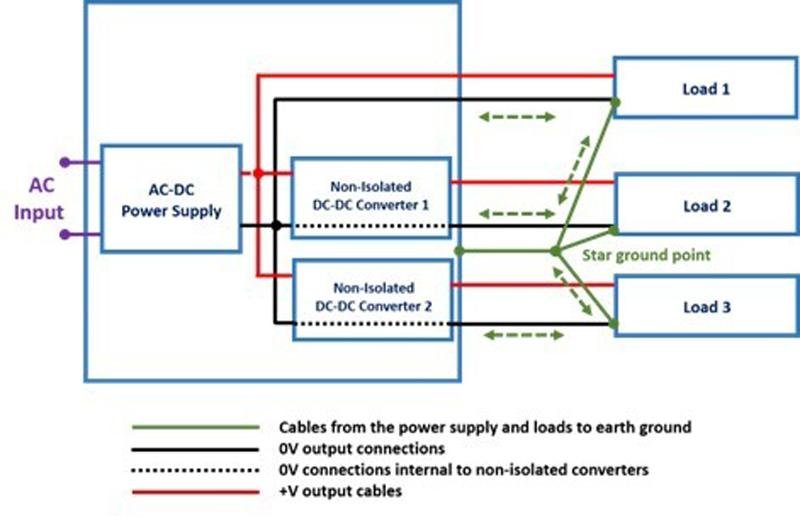
Understanding Electrical Isolation in Power Supplies
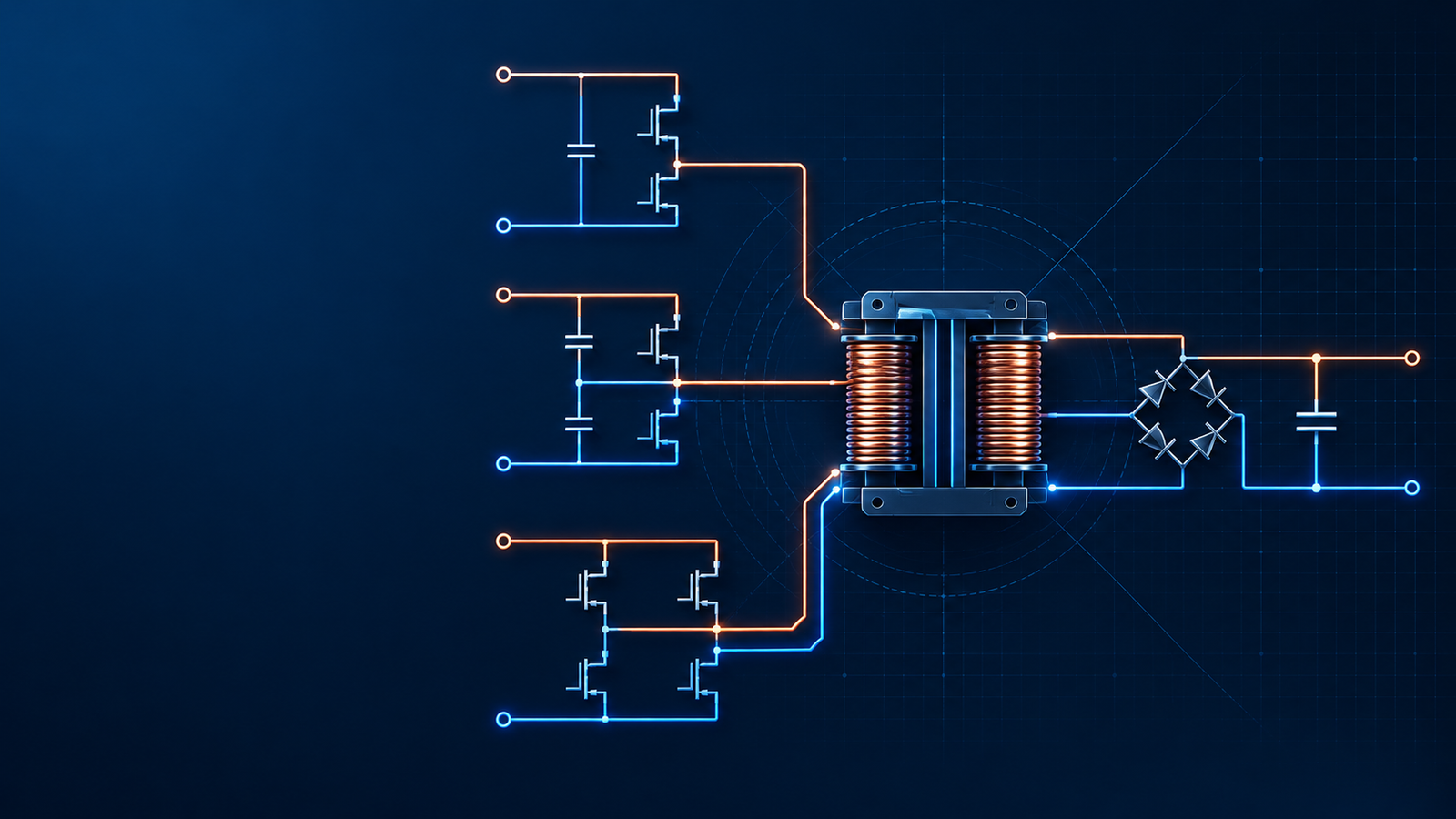
Electrical isolation refers to the absence of a direct conductive path between the input and output circuits of a power supply. In an isolated power supply, energy is transferred from the primary side to the secondary side through magnetic coupling, typically using a high-frequency transformer. Although power is transmitted efficiently, there is no direct electrical connection between the two circuits.
In contrast, a non-isolated power supply maintains a direct electrical relationship between its input and output. The input and output generally share a common ground reference, creating a continuous current path throughout the circuit.
From an engineering perspective, isolation serves as a protective barrier. It prevents dangerous voltages from reaching accessible circuits, reduces the impact of ground loops, and helps block common-mode noise that may interfere with sensitive electronics. This is why isolation has become a fundamental requirement in many safety-critical applications.
How Isolated and Non-Isolated Power Supplies Work
The difference between isolated and non-isolated designs becomes more apparent when examining their internal topologies.
Most isolated power supplies rely on transformer-based switching architectures. Common examples include Flyback, Forward, Half-Bridge, Full-Bridge, and LLC Resonant converters. The transformer not only transfers energy but also creates the electrical separation necessary for safety compliance.
Non-isolated power supplies eliminate the transformer and instead use inductors and semiconductor switching devices to regulate voltage. Popular topologies include Buck, Boost, Buck-Boost, and SEPIC converters. Because they require fewer components, these designs are often smaller, lighter, and more efficient.
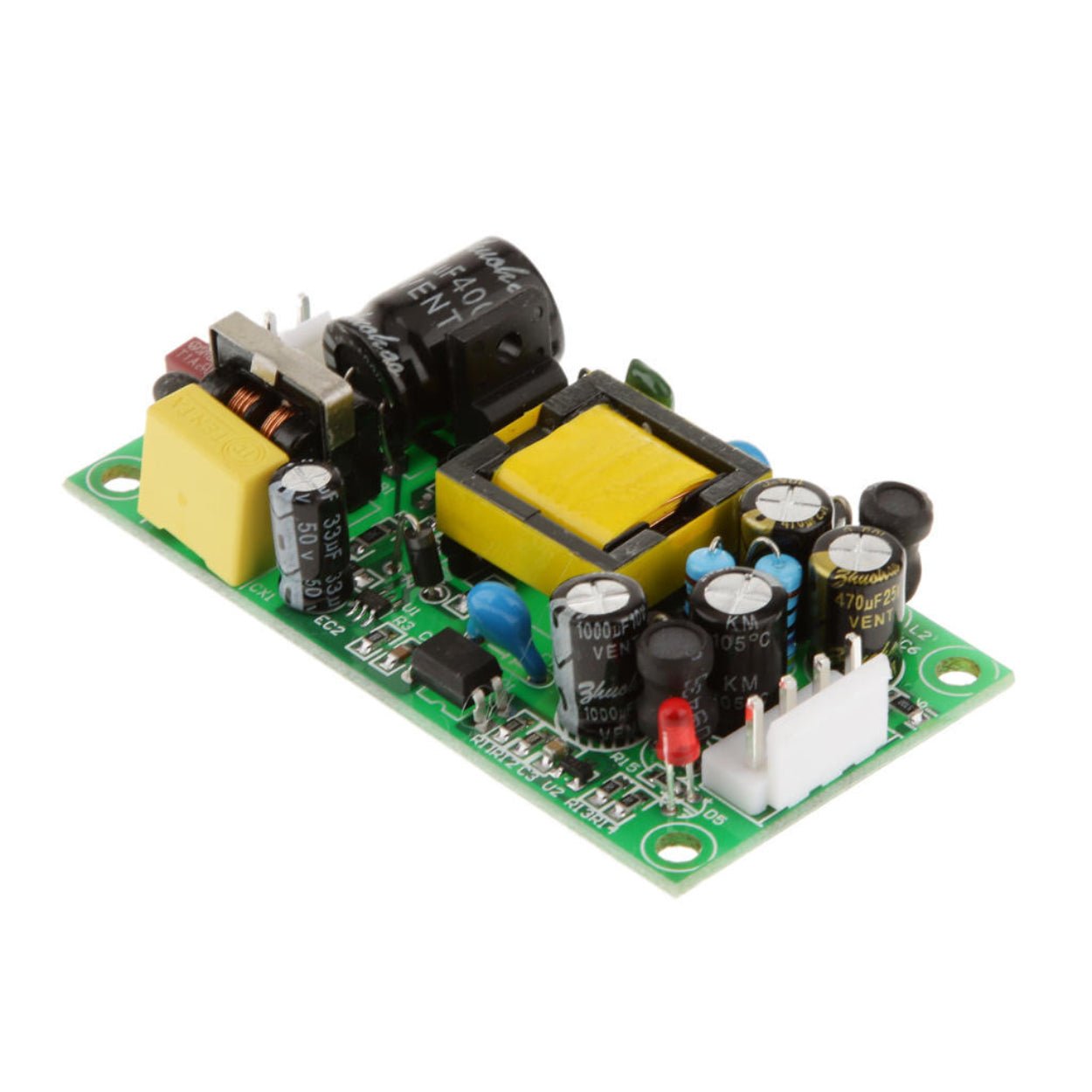
For example, converting 24V DC to 12V DC inside an industrial controller typically does not require electrical isolation. A high-efficiency Buck converter can perform the task with minimal cost and power loss. However, converting 230V AC mains voltage into a safe 24V DC output for industrial equipment almost always requires an isolated AC-DC power supply to protect both users and connected devices.
The Practical Differences That Matter
Although engineers often summarize the comparison as "isolated equals safe" and "non-isolated equals efficient," the real-world considerations are more nuanced.
| Characteristic | Isolated Power Supply | Non-Isolated Power Supply |
|---|---|---|
| Input-to-Output Isolation | Yes | No |
| User Safety Protection | Excellent | Limited |
| Ground Loop Elimination | Yes | No |
| EMI Immunity | Better | Moderate |
| Circuit Complexity | Higher | Lower |
| Cost | Higher | Lower |
| Power Density | Moderate | High |
| Efficiency | High | Typically Higher |
| Regulatory Compliance | Easier for Safety Standards | Application Dependent |
Rather than viewing one technology as superior, engineers should recognize that each architecture is optimized for different requirements.
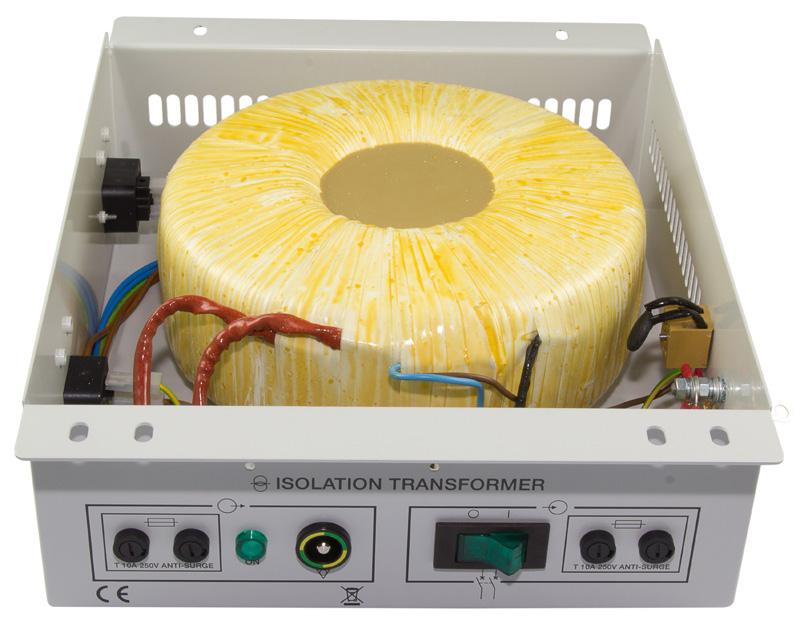
Why Isolation Is Critical in Industrial Systems
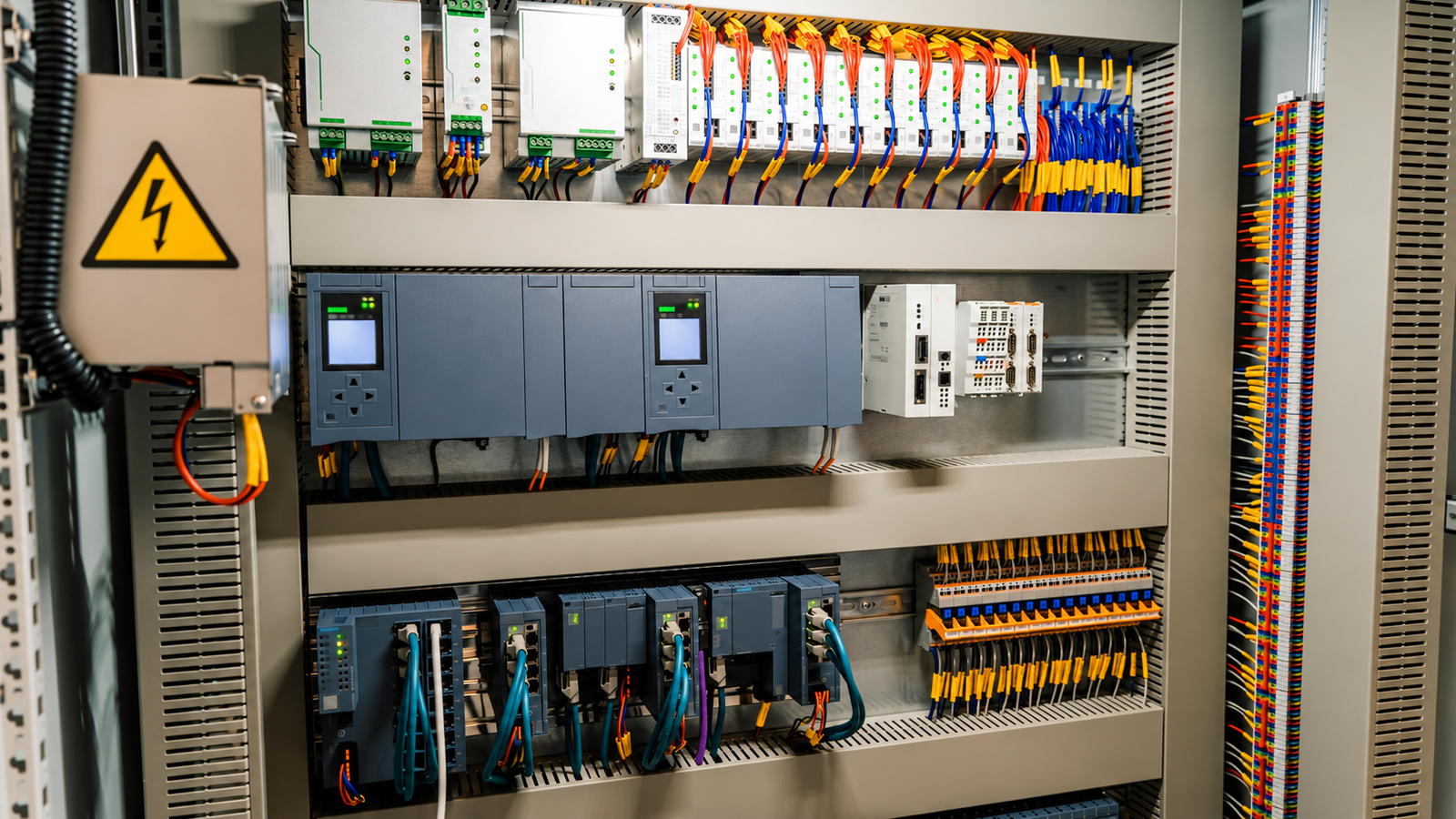
Industrial environments present challenges that rarely exist in consumer electronics. Large motors, variable-frequency drives, relay switching, and long cable runs generate significant electrical noise and transient voltages. In these situations, isolation provides benefits that extend far beyond user safety.
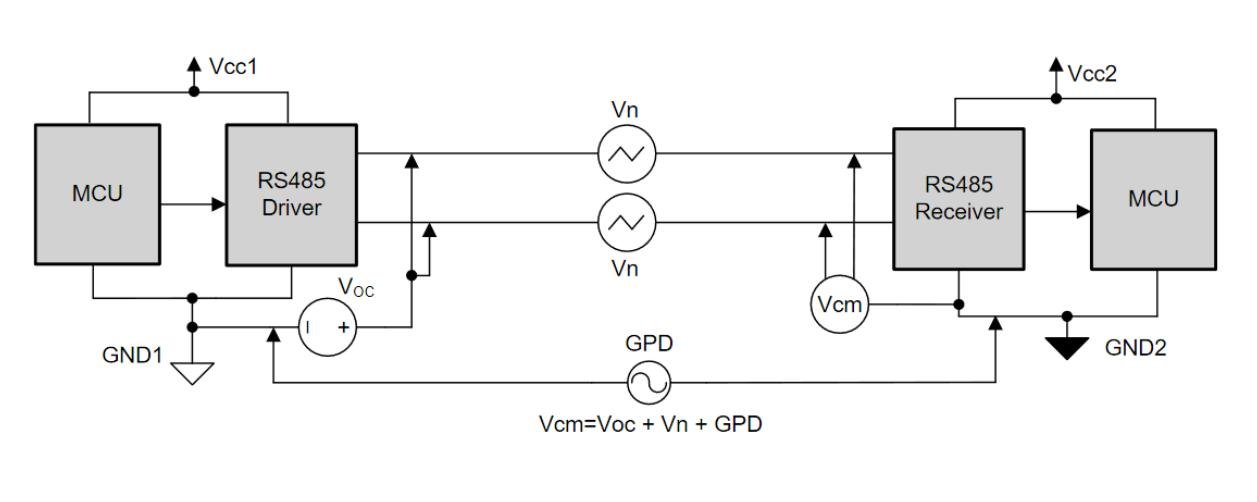
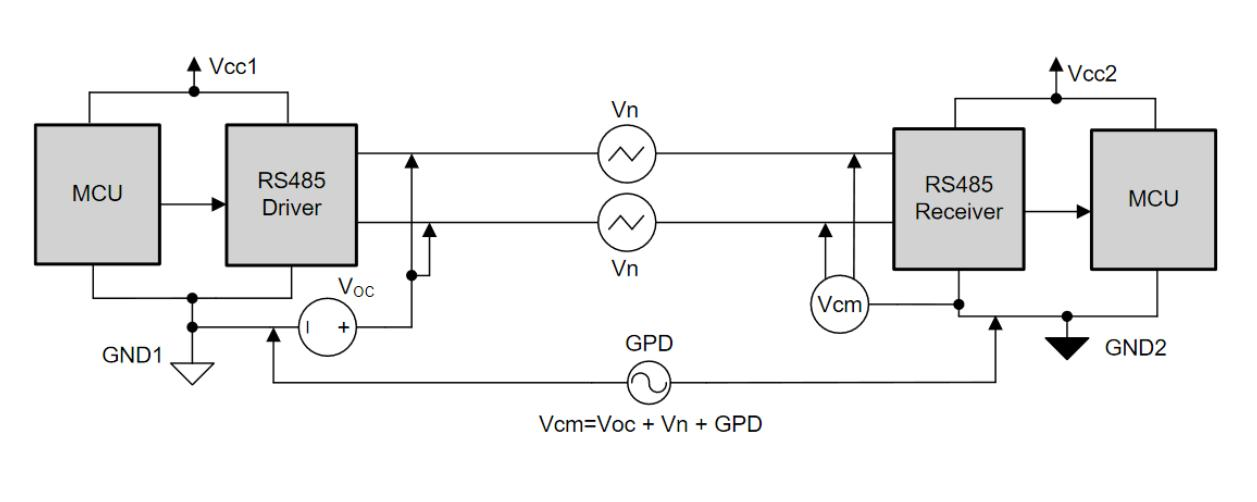
One major advantage is protection against ground potential differences. In large facilities, equipment may be installed hundreds of meters apart. Even when connected to the same electrical network, different sections of a plant can experience different ground potentials. If these systems are connected directly without isolation, unwanted currents can flow through communication cables, creating noise, data errors, and equipment damage.
Isolation breaks this path and allows communication systems to operate reliably despite differences in grounding conditions.
For this reason, isolated power supplies are commonly paired with industrial communication protocols such as RS-232, RS-485, CAN Bus, Modbus, and industrial Ethernet networks. By electrically separating communication nodes, designers improve signal integrity and reduce susceptibility to electrical disturbances.
Safety Considerations in AC-DC Power Conversion
When a power supply is connected directly to utility mains, electrical isolation becomes a fundamental safety requirement.
Without isolation, hazardous voltages may appear on output circuits during fault conditions. Such scenarios can expose users to electric shock and increase the risk of equipment failure.
International safety standards therefore require isolation in many categories of electrical equipment, including industrial controls, medical devices, laboratory instruments, information technology equipment, and telecommunications systems.
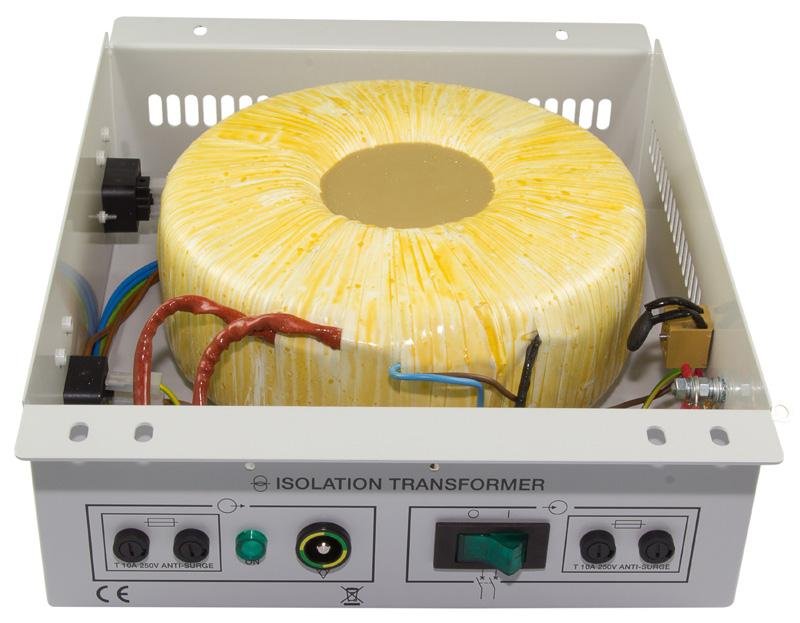
An isolated AC-DC power supply creates a protective barrier between the high-voltage input and low-voltage output, ensuring that dangerous energy cannot easily reach accessible circuits.
This protection becomes especially important in applications where operators interact directly with equipment or where electronic systems interface with external devices through connectors, sensors, or communication ports.
At SIPURUI, isolation remains one of the most important design considerations for industrial AC-DC power supplies because safety compliance is often a prerequisite for market acceptance in Europe, North America, and other regulated regions.
The Efficiency Advantage of Non-Isolated Power Supplies
Although isolated power supplies offer significant benefits, they are not always the optimal choice.
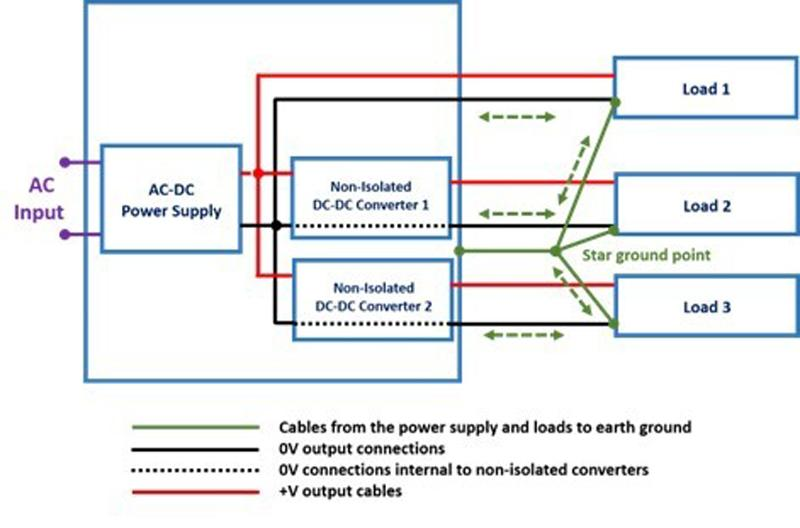
In many applications, electrical isolation already exists elsewhere in the system. Once the primary AC-DC conversion stage has safely isolated the equipment from the mains supply, additional voltage regulation inside the system often does not require another isolation barrier.
This is where non-isolated converters excel.
Because they eliminate transformers and associated magnetic losses, non-isolated designs typically achieve higher conversion efficiencies. They also occupy less space, generate less heat, and reduce manufacturing costs.
Battery-powered equipment particularly benefits from these advantages. Every percentage point of efficiency can contribute to longer operating time, lower thermal stress, and improved product lifespan.
Examples include:
Portable instruments
Battery management systems
Embedded controllers
IoT devices
Industrial sensors
LED lighting systems
On-board voltage regulation circuits
In these environments, efficiency and compact design often outweigh the benefits of additional isolation.
Understanding Isolation Voltage and Dielectric Strength
When discussing isolated power supplies, engineers frequently encounter specifications such as 1500VDC, 3000VDC, or 4000VAC isolation voltage.
These ratings describe the ability of the isolation barrier to withstand high voltage without electrical breakdown.
In international safety standards, this characteristic is often referred to as dielectric strength or withstand voltage. During testing, a specified voltage is applied between the input and output circuits for a defined period. The power supply must exhibit no insulation breakdown, flashover, or excessive leakage current.
Higher isolation ratings generally indicate stronger protection against electrical stress. They also contribute to improved reliability in harsh environments where surge voltages and transient events are common.
While many industrial applications operate successfully with 1500VDC isolation, critical systems often require significantly higher ratings to satisfy safety regulations and customer expectations.
Typical Application Scenarios
Selecting between isolated and non-isolated power supplies becomes easier when viewed through practical application requirements.
For equipment connected directly to AC mains, isolated power supplies are almost always mandatory. The same applies to medical devices, industrial communication networks, and systems that expose I/O interfaces to external users.
Conversely, non-isolated converters are frequently chosen for internal power distribution. Once a system already contains an isolated front-end power supply, local voltage regulation can often be implemented more efficiently using Buck or Boost converters.
The following examples illustrate common design decisions:
| Application | Preferred Solution |
|---|---|
| AC-DC Power Supply | Isolated |
| Medical Equipment | Isolated |
| Industrial Communication Nodes | Isolated |
| Remote Monitoring Systems | Isolated |
| Battery-Powered Electronics | Non-Isolated |
| Point-of-Load Conversion | Non-Isolated |
| Embedded Processor Power Rails | Non-Isolated |
| LED Drivers | Application Dependent |
The key is understanding whether the application requires safety separation, noise isolation, or protection against ground loops.
How to Choose the Right Power Supply
The decision should always begin with a clear assessment of application requirements.
If user safety, regulatory compliance, electrical noise immunity, or communication reliability are priorities, an isolated power supply is typically the correct choice. The additional cost is often justified by improved system robustness and reduced risk of field failures.
If the primary goals are efficiency, compact size, and cost optimization within an already isolated system, a non-isolated solution may deliver better overall performance.
Rather than asking which technology is better, engineers should ask which technology best aligns with the operational requirements of the system.
In many modern products, the most effective architecture actually combines both approaches. An isolated AC-DC front-end provides safety protection, while multiple non-isolated DC-DC converters distribute power efficiently throughout the system.
Conclusion
Isolated and non-isolated power supplies are not competing technologies; they are complementary tools that address different engineering challenges. Isolation provides essential protection against electrical hazards, ground loops, and noise interference, making it indispensable in industrial, medical, and communication applications. Non-isolated designs offer exceptional efficiency, compactness, and cost-effectiveness, making them ideal for internal power regulation and battery-powered systems.
By understanding the advantages and limitations of each approach, engineers can design safer, more reliable, and more efficient electronic systems. Whether developing industrial automation equipment, communication infrastructure, or embedded electronics, selecting the appropriate power architecture remains one of the most important decisions in achieving long-term system performance.
As a professional switching power supply manufacturer, SIPURUI continues to develop reliable power solutions that help engineers balance safety, efficiency, and performance across a wide range of industrial applications.
Buyer Checklist
- Confirm input and output voltage before model selection.
- Check wattage, load margin and operating temperature.
- Review installation space, airflow and protection requirements.
- Share project quantity and application details for quotation support.