In today's electronic world, power conversion plays a far more important role than many people realize.
Overview
In today's electronic world, power conversion plays a far more important role than many people realize. Whether powering industrial automation equipment, communication systems, LED lighting, medical devices, security systems, or consumer electronics, every application depends on a stable and efficient power source. While end users often focus on the visible features of a product, engineers understand that the reliability of the entire system frequently begins with the power supply.
Over the past several decades, switching power supplies have become the dominant power conversion technology across virtually every industry. Their ability to achieve high efficiency, compact size, wide input voltage compatibility, and precise output regulation has allowed electronic devices to become smaller, more powerful, and more reliable than ever before.
At SIPURUI, we believe that understanding the fundamentals of switching power supplies is essential not only for engineers and system designers but also for buyers and equipment manufacturers seeking long-term reliability. This article explores the operating principles, common topologies, key components, and design considerations that define modern switching power supply technology.
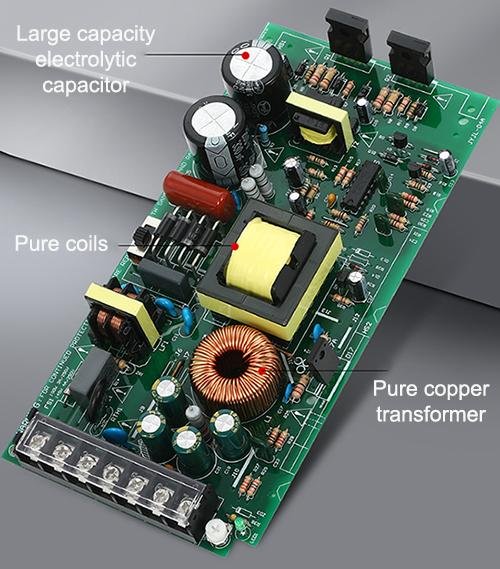
Why Switching Power Supplies Replaced Linear Power Supplies
Before switching technology became widely available, linear power supplies were the standard solution for voltage regulation. Their operating principle was straightforward: excess voltage was dissipated as heat through a regulating device to maintain a stable output voltage.
Although linear power supplies offered relatively simple circuit designs and low electrical noise, they suffered from poor efficiency. As output power increased, energy losses became significant, requiring larger heat sinks and increasing operating temperatures.
Switching power supplies solved this problem by introducing high-frequency power conversion. Instead of continuously dissipating energy, power semiconductors rapidly switch between fully conducting and fully non-conducting states. Since power loss is minimized in both conditions, overall efficiency improves dramatically.
The difference becomes particularly evident in higher-power applications.
| Feature | Linear Power Supply | Switching Power Supply |
|---|---|---|
| Efficiency | 40-60% | 80-95% |
| Heat Generation | High | Low |
| Physical Size | Large | Compact |
| Weight | Heavy | Lightweight |
| Power Density | Limited | High |
| Input Voltage Range | Narrow | Wide |
As electronic equipment became more compact and energy regulations became stricter, switching power supplies quickly emerged as the preferred solution across industrial and commercial markets.
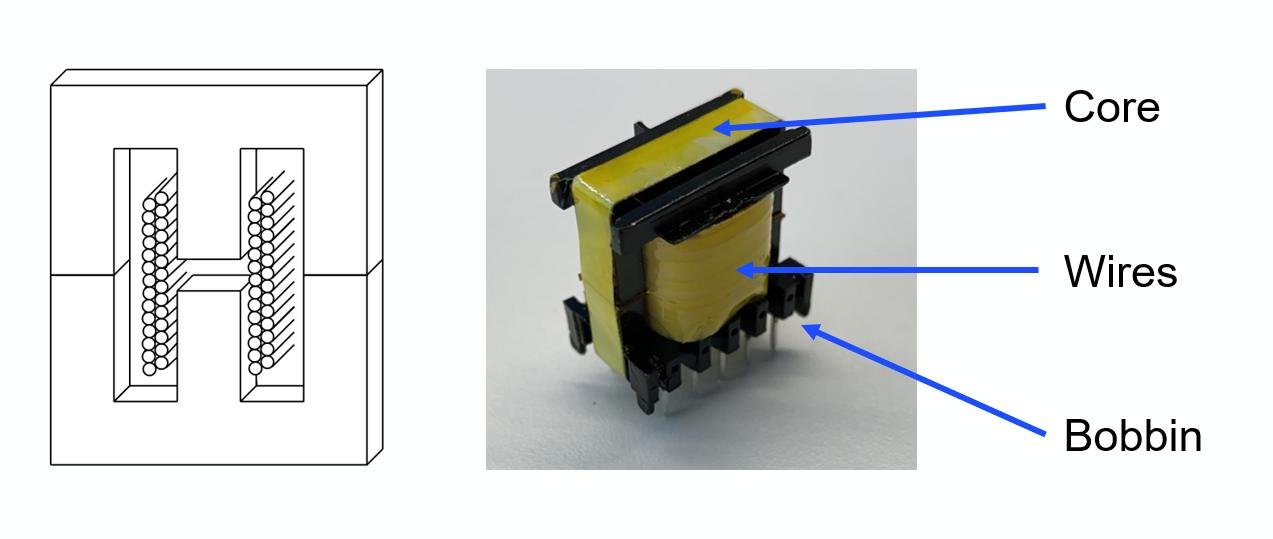
Understanding the Basic Operating Principle
Despite the sophisticated control circuits used in modern power supplies, the fundamental operating principle remains relatively simple. A switching power supply converts electrical energy by repeatedly storing and releasing energy at high frequency.
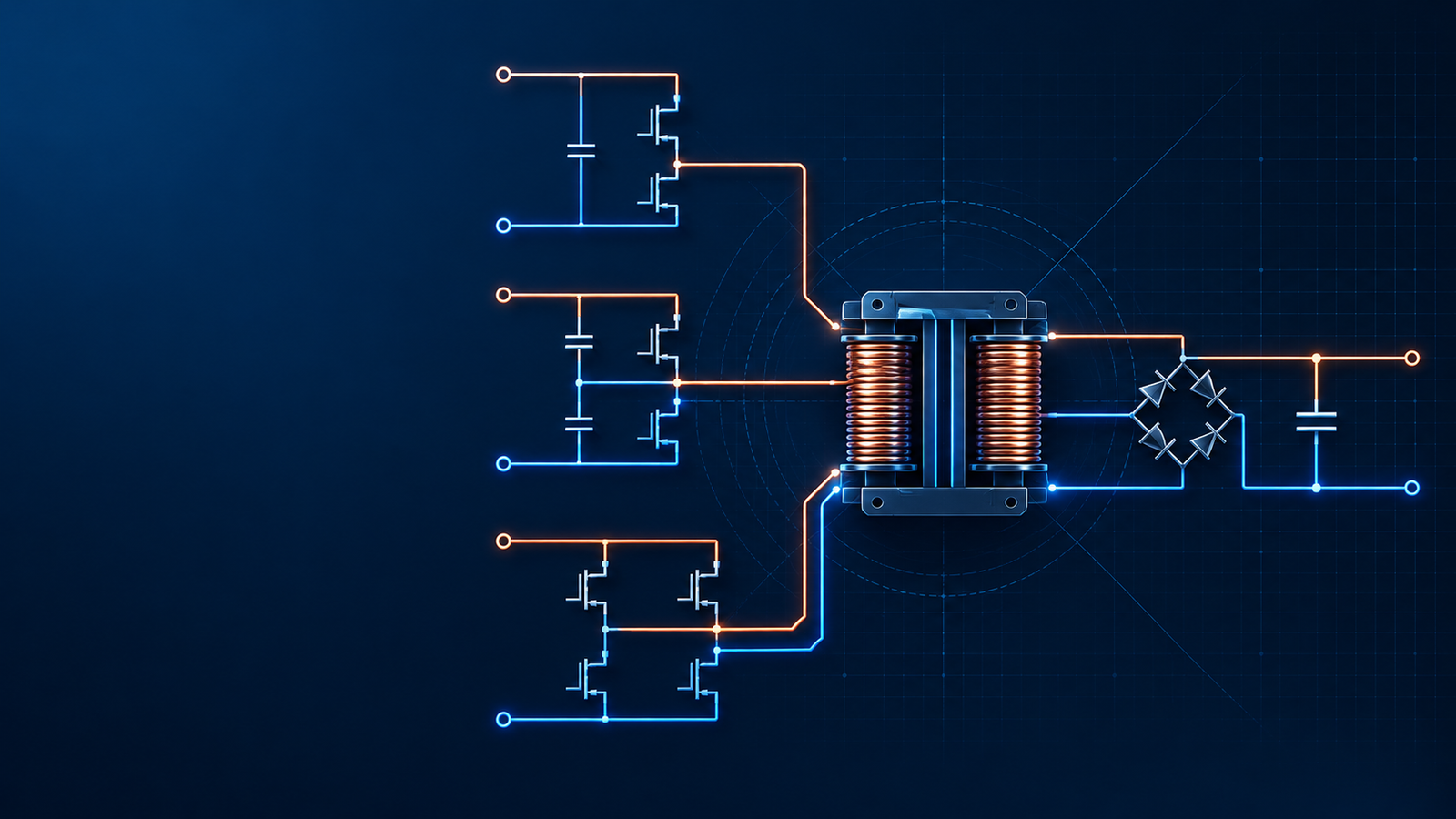
The process begins with input rectification. When AC power enters the system, it is converted into DC voltage through a rectifier and filtering stage. This DC voltage is then delivered to a switching device, typically a MOSFET or IGBT transistor.
The switching device rapidly turns on and off under the control of a PWM (Pulse Width Modulation) controller. During the ON period, energy is stored in magnetic components such as inductors or transformers. During the OFF period, the stored energy is transferred to the output load.
By continuously adjusting the switching cycle, the controller maintains a stable output voltage even when input voltage or load conditions change.
This method of operation allows modern switching power supplies to achieve excellent efficiency while maintaining precise voltage regulation.
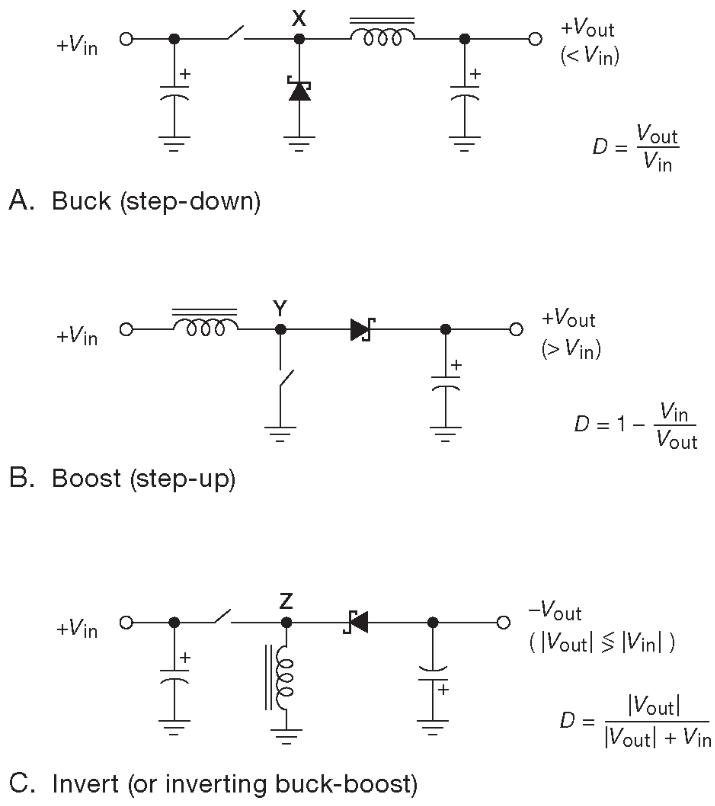

The Role of PWM Control
Pulse Width Modulation is the core control technique used in most switching power supplies. Rather than varying voltage directly, PWM regulates output power by adjusting the ratio between ON time and OFF time, commonly known as the duty cycle.
When the load requires more power, the controller increases the duty cycle, allowing more energy to be transferred during each switching cycle. When less power is needed, the duty cycle decreases accordingly.
This approach provides several important advantages. It enables fast response to load changes, maintains stable output voltage, improves efficiency, and supports a wide range of operating conditions.
Modern PWM controllers integrate numerous functions beyond basic regulation, including soft start, overcurrent protection, overvoltage protection, thermal protection, and fault monitoring. These features significantly improve system reliability and safety.
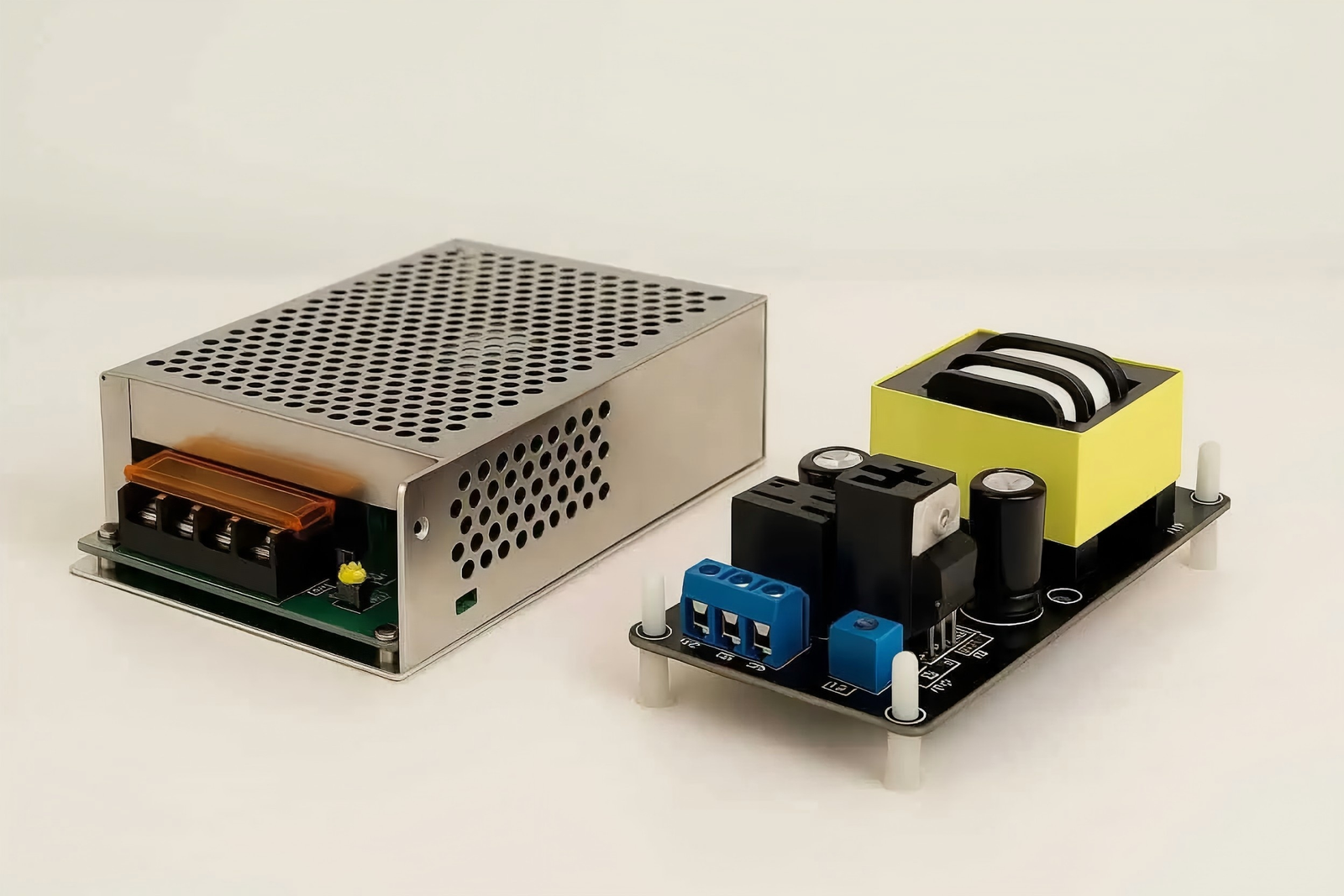
Common Switching Power Supply Topologies
Not all switching power supplies are designed for the same purpose. Different applications require different conversion methods, leading to several common topologies used throughout the industry.
Buck Converter
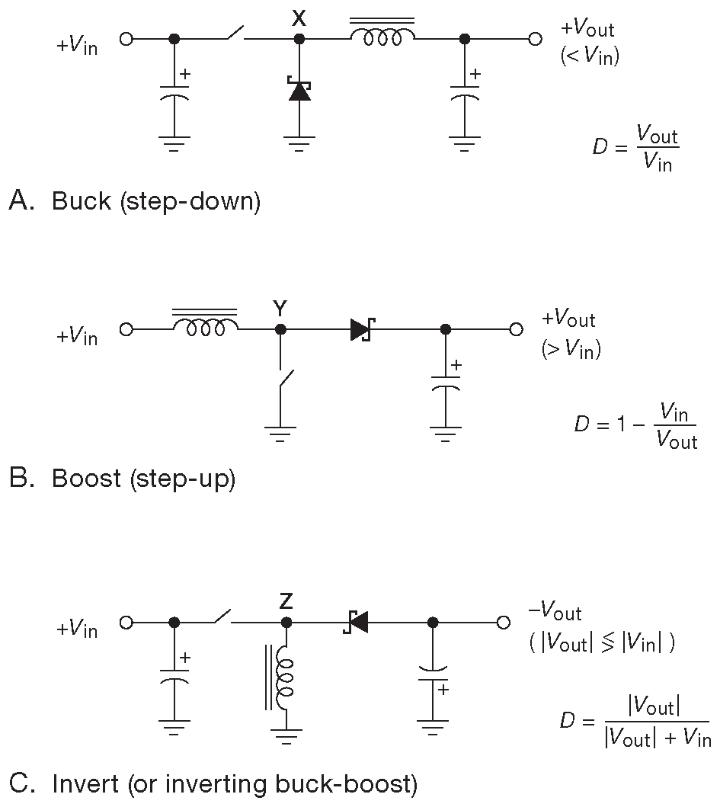
The Buck converter is one of the most widely used switching regulator topologies. Its purpose is to reduce voltage from a higher level to a lower level while maintaining high efficiency.
For example, a 24V industrial power source may need to provide 12V or 5V power for control electronics. A Buck converter performs this task efficiently while minimizing energy loss.
Because of its simplicity and effectiveness, Buck topology is commonly found in industrial controls, communication equipment, embedded systems, and consumer electronics.
Boost Converter
The Boost converter performs the opposite function by increasing voltage from a lower level to a higher level.
Battery-powered systems frequently use Boost converters because battery voltage often falls below the voltage required by electronic circuits. By storing energy in an inductor and releasing it during the switching cycle, the converter produces an output voltage higher than the input voltage.
Applications include portable electronics, LED drivers, renewable energy systems, and battery management systems.
Buck-Boost Converter
Some applications require output voltage that may be either higher or lower than the input voltage. In these situations, a Buck-Boost topology provides the necessary flexibility.
This design is particularly useful in battery-powered equipment where input voltage can vary significantly during discharge cycles.
Flyback Converter
Among isolated power supply topologies, the Flyback converter is one of the most common.
Unlike simple DC-DC converters that rely only on inductors, Flyback designs use transformers to provide electrical isolation between input and output. The transformer simultaneously serves as an energy storage component and an isolation barrier.
Because of its relatively simple structure and low component count, the Flyback topology is widely used in adapters, chargers, consumer electronics, security equipment, and industrial auxiliary power supplies.
Forward Converter
The Forward converter also uses transformer isolation but transfers energy directly to the load during the ON cycle. Compared with Flyback designs, Forward converters typically offer improved efficiency and better performance at medium power levels.
They are commonly used in industrial control systems, communication equipment, and medical electronics.
Half-Bridge and Full-Bridge Converters
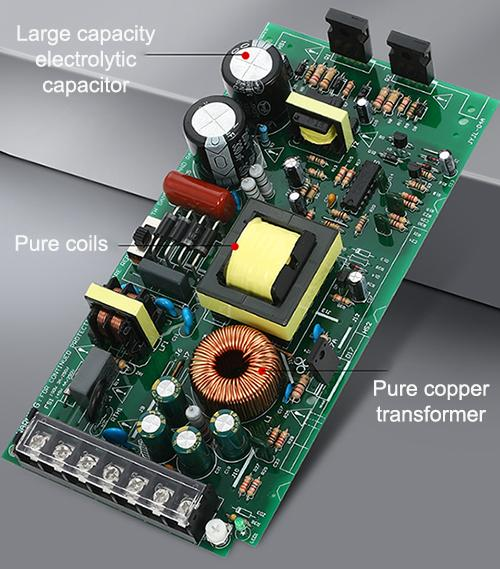
When power requirements increase significantly, more advanced topologies become necessary.
Half-Bridge and Full-Bridge converters distribute switching stress across multiple power devices, enabling efficient operation at higher power levels. These architectures are frequently found in industrial automation systems, server power supplies, telecommunications infrastructure, and renewable energy equipment.
Their higher complexity is justified by improved efficiency, greater power capability, and superior thermal performance.
Key Components That Determine Performance
The overall performance of a switching power supply depends heavily on component selection. Even the best circuit design can fail to achieve its objectives if critical components are not chosen carefully.
Power Switching Devices
MOSFETs dominate low- and medium-power applications because of their fast switching speed and low conduction losses. Their ability to operate efficiently at high frequencies makes them ideal for compact power supply designs.
IGBTs are often preferred in higher-power systems where voltage and current requirements exceed the practical limits of MOSFET technology.
The choice between these devices directly affects efficiency, thermal behavior, switching speed, and overall system cost.
Rectifier Diodes
The output rectification stage plays a critical role in power conversion efficiency.
Fast recovery diodes and Schottky diodes are commonly used because they minimize switching losses and reduce output ripple. Schottky devices are particularly attractive due to their low forward voltage drop and excellent high-frequency performance.
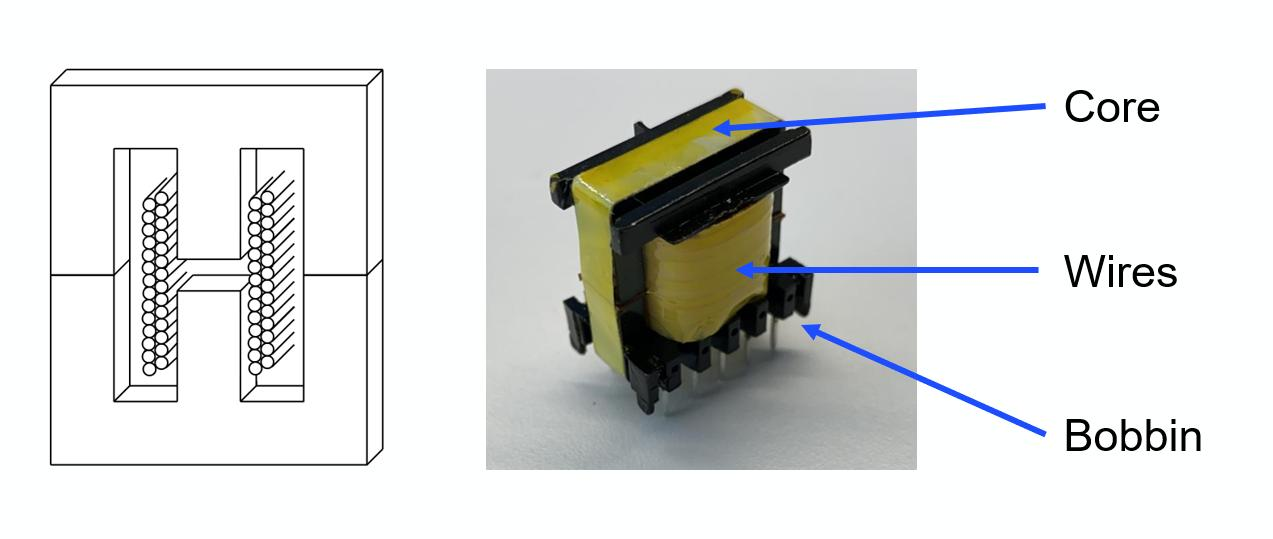
Inductors and Transformers
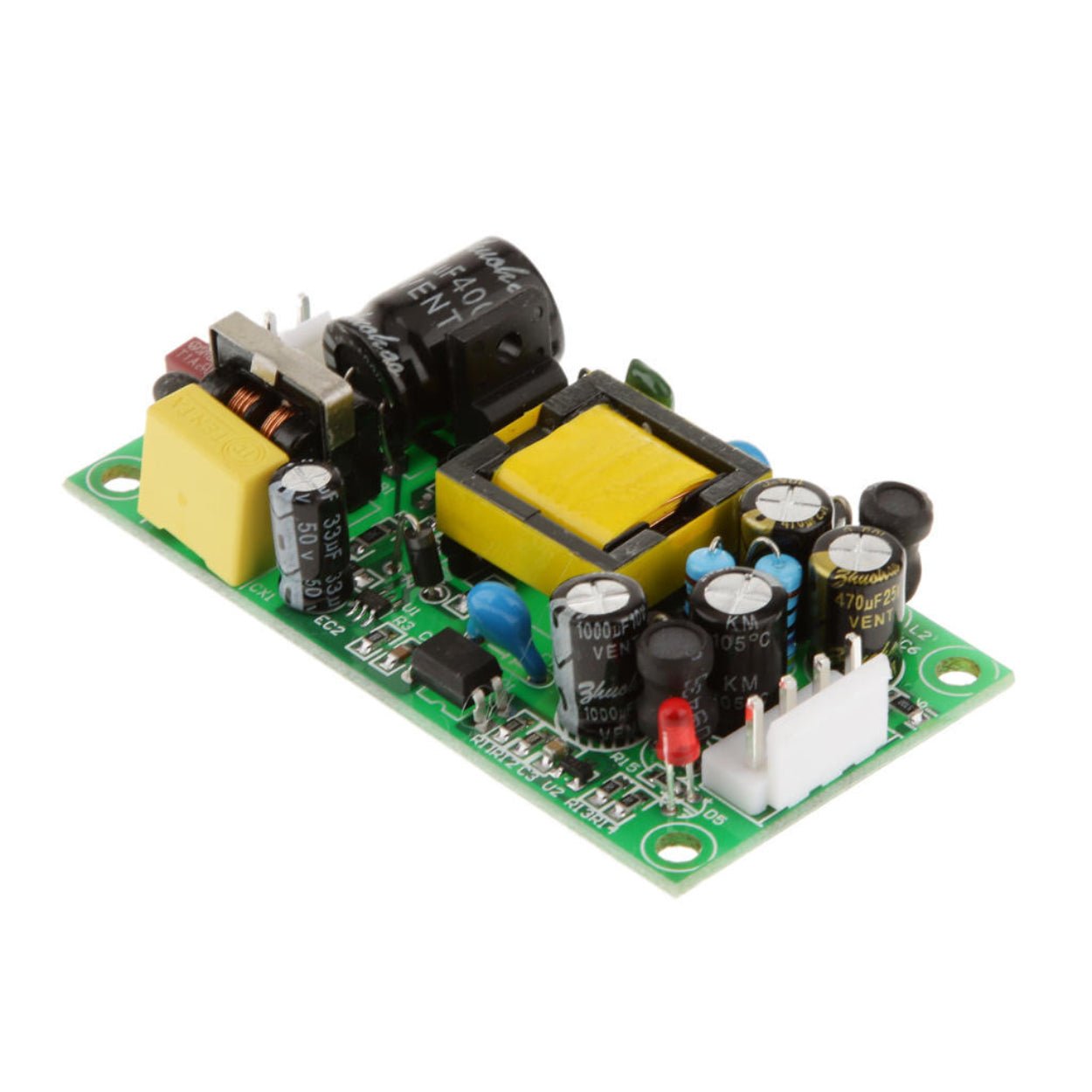
Magnetic components form the foundation of switching power supply operation. Inductors store and release energy while transformers provide voltage conversion and isolation.
The design of these components influences efficiency, thermal characteristics, electromagnetic interference, and long-term reliability.
Poor magnetic design can result in excessive losses, increased operating temperatures, and unstable performance.
Capacitors
Output capacitors smooth voltage fluctuations and improve transient response.
Because switching power supplies operate at high frequencies, low-ESR capacitors are typically preferred. Their ability to handle ripple current effectively contributes to stable operation and extended service life.
Protection Functions and System Reliability
Industrial power supplies are expected to operate continuously under demanding conditions. As a result, protection functions have become standard features in modern designs.
Overcurrent protection prevents excessive current from damaging internal components during fault conditions. Overvoltage protection safeguards connected equipment against abnormal voltage levels. Thermal protection prevents overheating when environmental temperatures rise or cooling conditions deteriorate.
Soft-start circuits are equally important. During startup, they gradually increase output voltage, reducing inrush current and minimizing stress on internal components.
Together, these protection mechanisms significantly improve operational reliability and reduce maintenance requirements.
Electromagnetic Interference and Shielding
One challenge associated with switching technology is electromagnetic interference. High-frequency switching naturally generates electrical noise that can affect nearby equipment if not properly controlled.
To address this issue, engineers employ various filtering and shielding techniques.
Common-mode filters, differential-mode filters, ferrite components, optimized PCB layouts, and proper grounding strategies all contribute to reducing electromagnetic emissions.
Effective EMI control is particularly important in industrial environments where multiple electronic systems operate in close proximity.
Compliance with international EMC standards has become an essential requirement for power supply manufacturers serving global markets.
Future Trends in Switching Power Supply Design
As electronic devices continue to evolve, power supply technology is advancing rapidly.
Wide-bandgap semiconductor materials such as Gallium Nitride (GaN) and Silicon Carbide (SiC) are enabling higher switching frequencies and greater efficiency than traditional silicon devices. These technologies allow engineers to reduce the size of magnetic components while improving thermal performance.
Digital power management is another growing trend. Intelligent controllers provide real-time monitoring, predictive maintenance capabilities, remote diagnostics, and improved energy management.
At the same time, increasing demand for renewable energy systems, electric vehicles, industrial automation, and smart infrastructure is driving further innovation throughout the power conversion industry.
Conclusion
Switching power supplies have transformed the way electrical energy is converted and distributed in modern electronics. Their combination of high efficiency, compact design, wide operating range, and reliable performance has made them indispensable across countless applications.
From industrial automation and telecommunications to medical equipment and renewable energy systems, switching power supplies provide the stable electrical foundation upon which modern technology depends.
As power conversion technologies continue to evolve, innovations in semiconductor materials, digital control systems, and energy management will further improve efficiency and reliability. For engineers, manufacturers, and system integrators alike, understanding the principles behind switching power supplies remains essential for building the next generation of electronic products.
At SIPURUI, we remain committed to delivering reliable power solutions that support the evolving demands of modern industry while maintaining the performance, efficiency, and quality that customers expect from a professional power supply manufacturer.
Buyer Checklist
- Confirm input and output voltage before model selection.
- Check wattage, load margin and operating temperature.
- Review installation space, airflow and protection requirements.
- Share project quantity and application details for quotation support.