A practical guide to switching power supply structure, operating principle, applications, and selection points for industrial automation, equipment, communications, and B2B buyers.
Overview
Switching power supplies sit in the background of most modern equipment. They rarely get attention when a machine is running well, yet a poor choice can show up as PLC resets, noisy sensors, hot control cabinets, short LED driver life, or unstable communication devices.
For engineers and buyers, the useful question is not simply "what is a switching power supply?" It is how the internal structure affects efficiency, ripple, safety, EMC behavior, thermal performance, and service life in a real installation. A 24 VDC supply for a small control panel, a compact adapter for electronics, and a high-current supply for industrial equipment all use the same basic conversion idea, but the design priorities are different.
This guide explains the structure, operating principle, and common applications of switching power supplies from a practical B2B point of view. It is written for people who specify, install, purchase, or maintain power supplies rather than for a classroom circuit theory discussion.
What a switching power supply does
A switching power supply, often called an SMPS or switch mode power supply, converts electrical energy from one form to another by switching semiconductor devices on and off at high frequency. In most industrial and commercial products, it takes AC mains input and delivers regulated DC output, such as 5 V, 12 V, 24 V, or 48 V.
The word "switching" matters. Instead of dropping extra voltage as heat, the power stage chops energy into pulses, transfers it through inductors or transformers, then filters the output into a stable DC rail. This is why switching supplies can be much smaller and more efficient than traditional linear supplies at the same output power.
That efficiency is one reason they appear almost everywhere: automation cabinets, communications equipment, medical instruments, LED lighting systems, security devices, vending machines, packaging equipment, test benches, and consumer electronics. In industrial buying, the attraction is simple. Less wasted heat means smaller enclosures, lower cooling burden, and better power density.
Main structure of a switching power supply
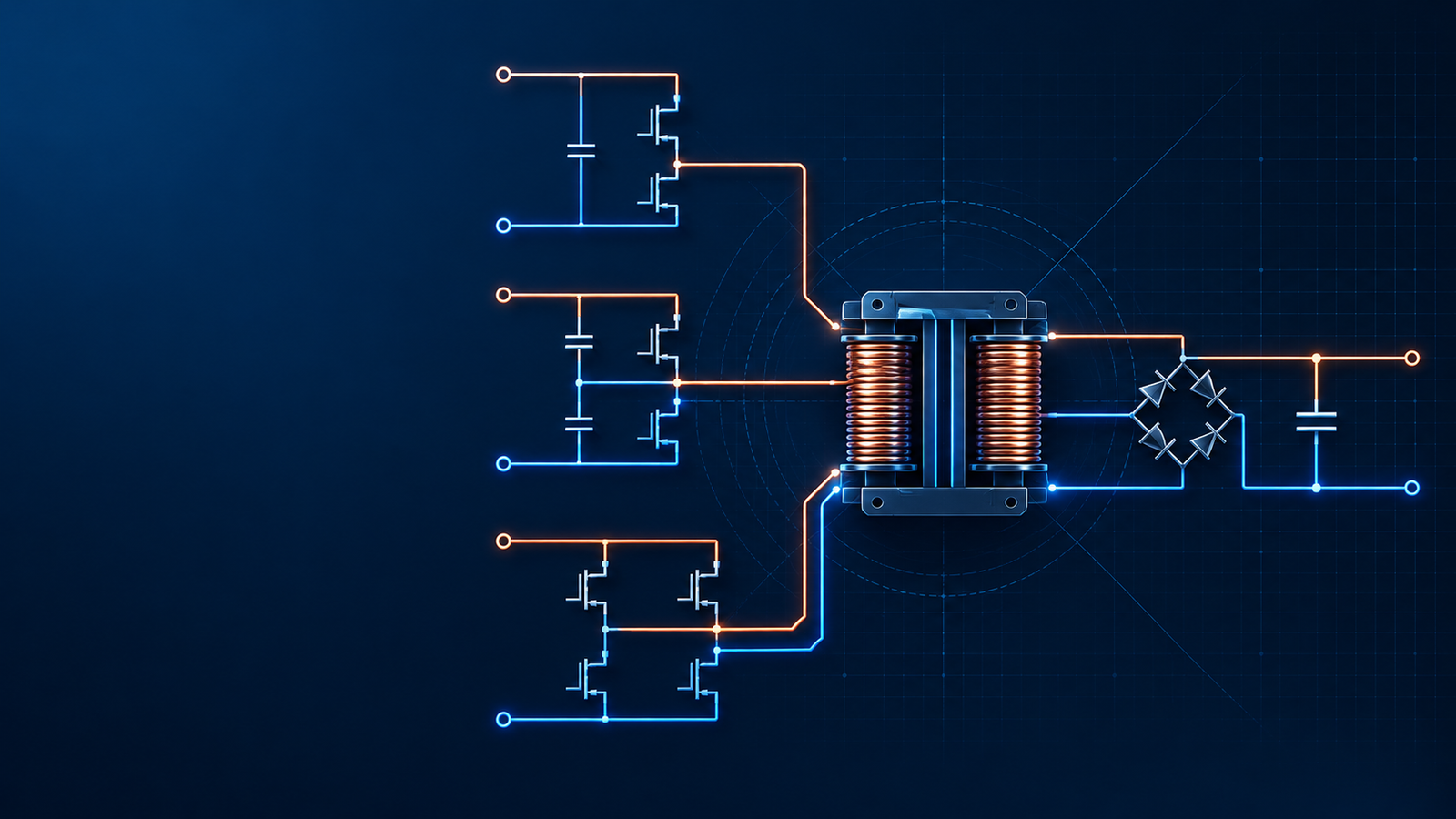
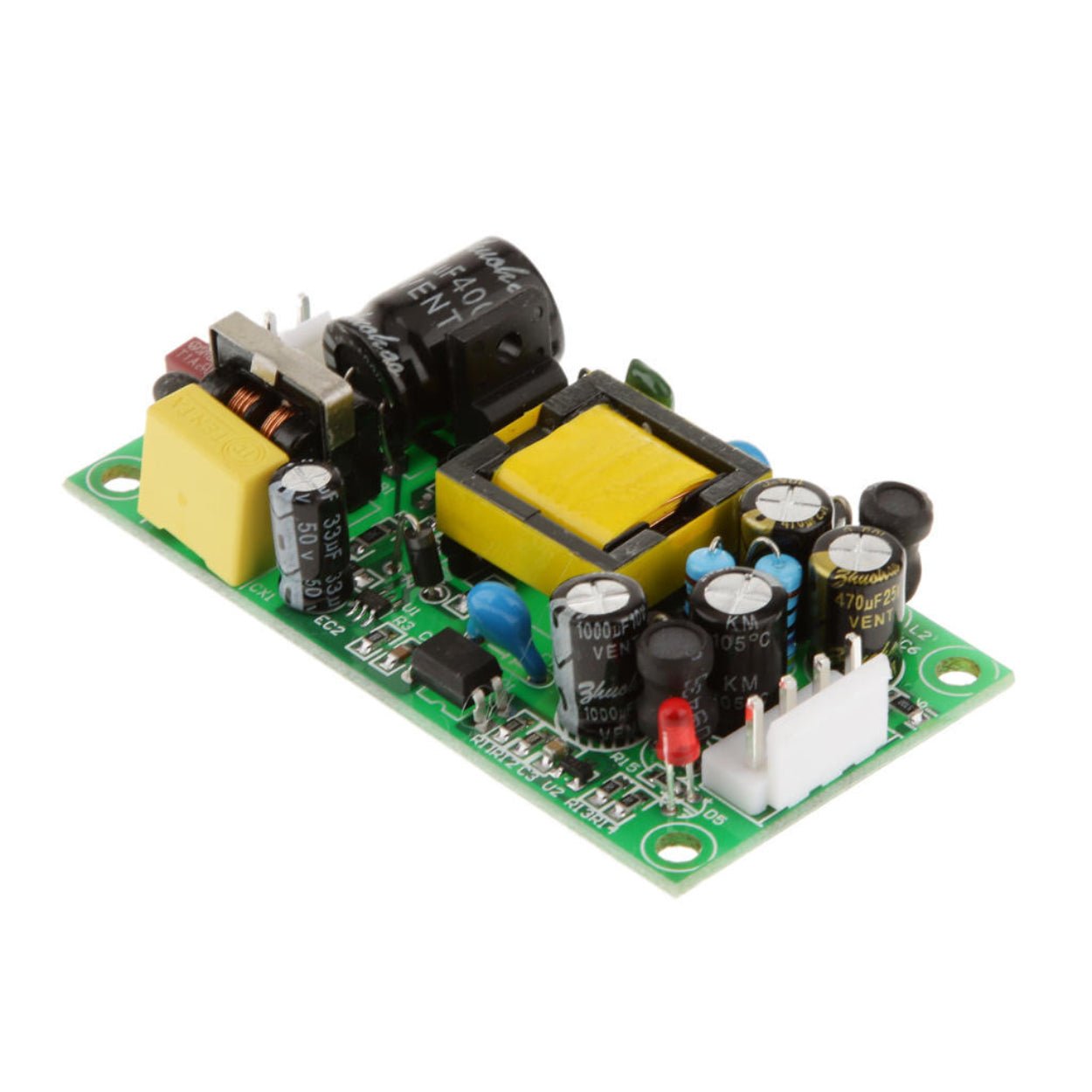
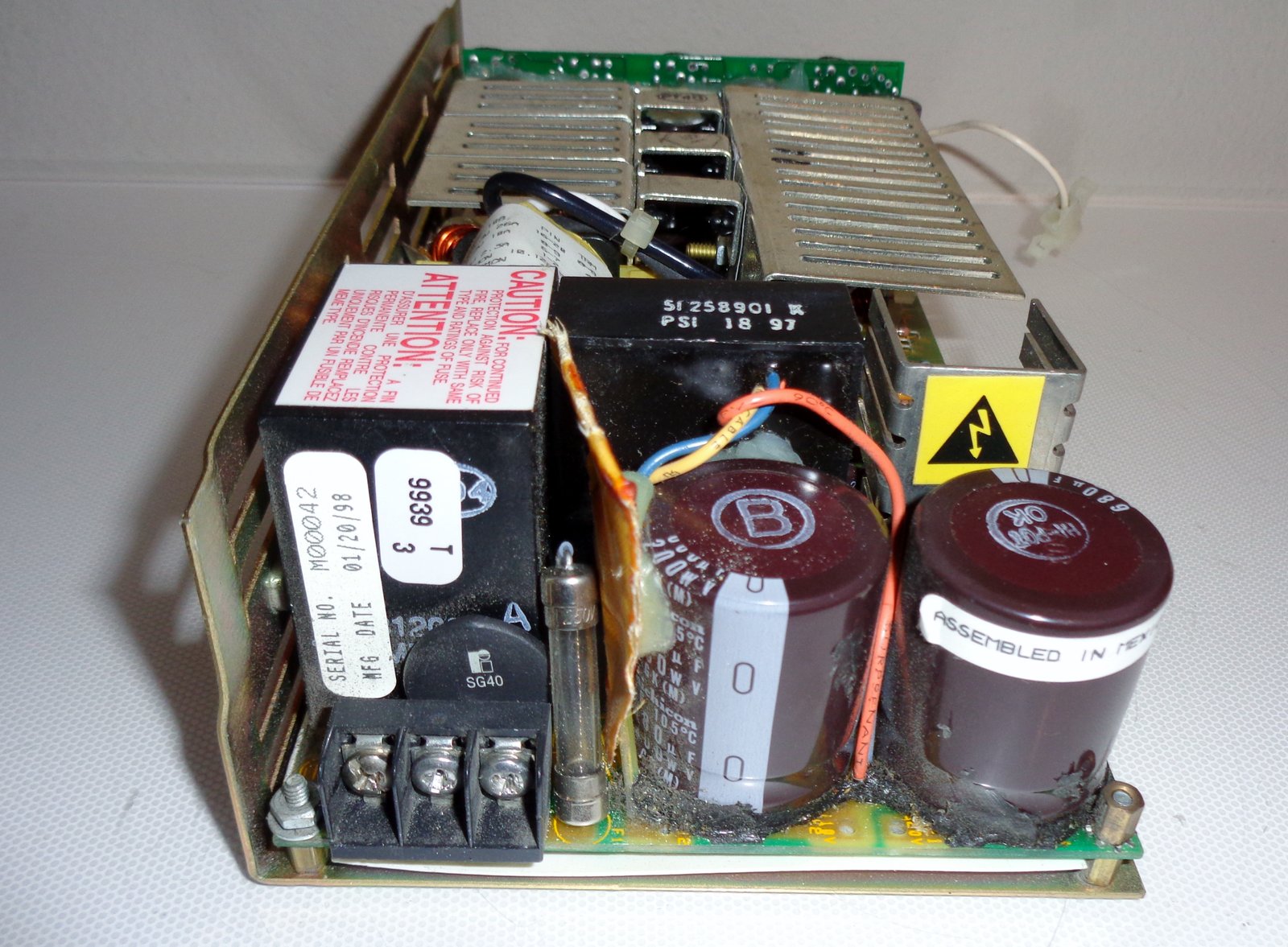
Although designs vary by topology and power rating, an AC-DC switching power supply usually has four functional blocks: input filtering, rectification and bulk filtering, power conversion, and output filtering. Protection, feedback, thermal design, and mechanical layout sit around these blocks.
| Functional block | What it does | What buyers and engineers should check |
|---|---|---|
| Input EMI filter | Reduces conducted noise entering or leaving the supply | EMC compliance, grounding method, input surge environment |
| Rectifier and bulk capacitor | Converts AC input into high-voltage DC and stores energy | Input range, hold-up time, inrush current, capacitor temperature rating |
| Power conversion stage | Switches high-voltage DC through a transformer or inductor | Topology, efficiency, isolation, power rating, thermal margin |
| Feedback and control circuit | Regulates output voltage and supervises protection behavior | Load regulation, response to step load, overvoltage and overload modes |
| Output rectifier and filter | Smooths high-frequency pulses into usable DC | Ripple/noise, output current, transient performance, wiring distance |
| Mechanical and thermal design | Keeps components protected and cooled | DIN rail, enclosed, open frame, fanless operation, derating curve |
The input filter is often the first line of defense against real-world electrical noise. A motor drive, contactor coil, or poor grounding layout can push disturbances back onto the AC line. A properly designed supply uses common-mode chokes, capacitors, surge protection, and sometimes fuses or thermistors to manage that environment.
The rectifier and bulk capacitor create a DC bus. On universal-input power supplies, this stage may accept roughly 85-264 VAC, which lets one model work across many countries. For procurement teams, universal input simplifies SKU management, but the details still matter. High line, low line, brownout, and short mains interruptions can all affect equipment behavior.
The power conversion stage is the heart of the supply. A MOSFET or similar switch turns on and off rapidly under the control of a PWM controller. Energy is transferred through a transformer in isolated AC-DC designs or through an inductor in many DC-DC designs. The transformer provides voltage conversion and safety isolation between mains and the low-voltage output.
The output side uses rectifiers, inductors, and capacitors to remove high-frequency ripple. For a PLC, sensor, industrial Ethernet switch, or medical circuit, this part of the design affects more than a number on a datasheet. Excessive ripple can disturb analog signals, create communication errors, or shorten downstream component life.

How the switching principle works
At a simplified level, the controller compares the output voltage with a reference value. When the load increases and the output begins to drop, the controller increases the energy delivered per cycle. When the load decreases, it reduces that energy. This closed-loop behavior keeps the output close to its rated value.
The exact current path depends on topology. A low-power isolated flyback supply stores energy in the transformer while the switch is on, then releases it to the secondary side when the switch turns off. A forward converter transfers energy during the on-time and uses additional reset circuitry. Higher-power supplies may use half-bridge, full-bridge, LLC resonant, or active PFC front-end stages.
For most equipment buyers, the topology name is less important than what it causes in the finished product:
| Design concern | Why it matters in use | Useful question before purchase |
|---|---|---|
| Efficiency | Lower losses reduce heat inside the equipment | What is the efficiency at typical load, not only full load? |
| Ripple and noise | Sensitive electronics may misread signals or reset | Is ripple specified at rated load and bandwidth? |
| Isolation | Protects users and low-voltage circuits from mains | What safety standard and isolation voltage apply? |
| Transient response | Loads such as relays, motors, and radios can step suddenly | How does output voltage behave during fast load changes? |
| Thermal derating | A supply that works at 25 C may lose capacity in a hot cabinet | What output power is allowed at the expected ambient temperature? |
| Protection behavior | A short circuit should not become a burned board | Does overload protection latch off, hiccup, or recover automatically? |
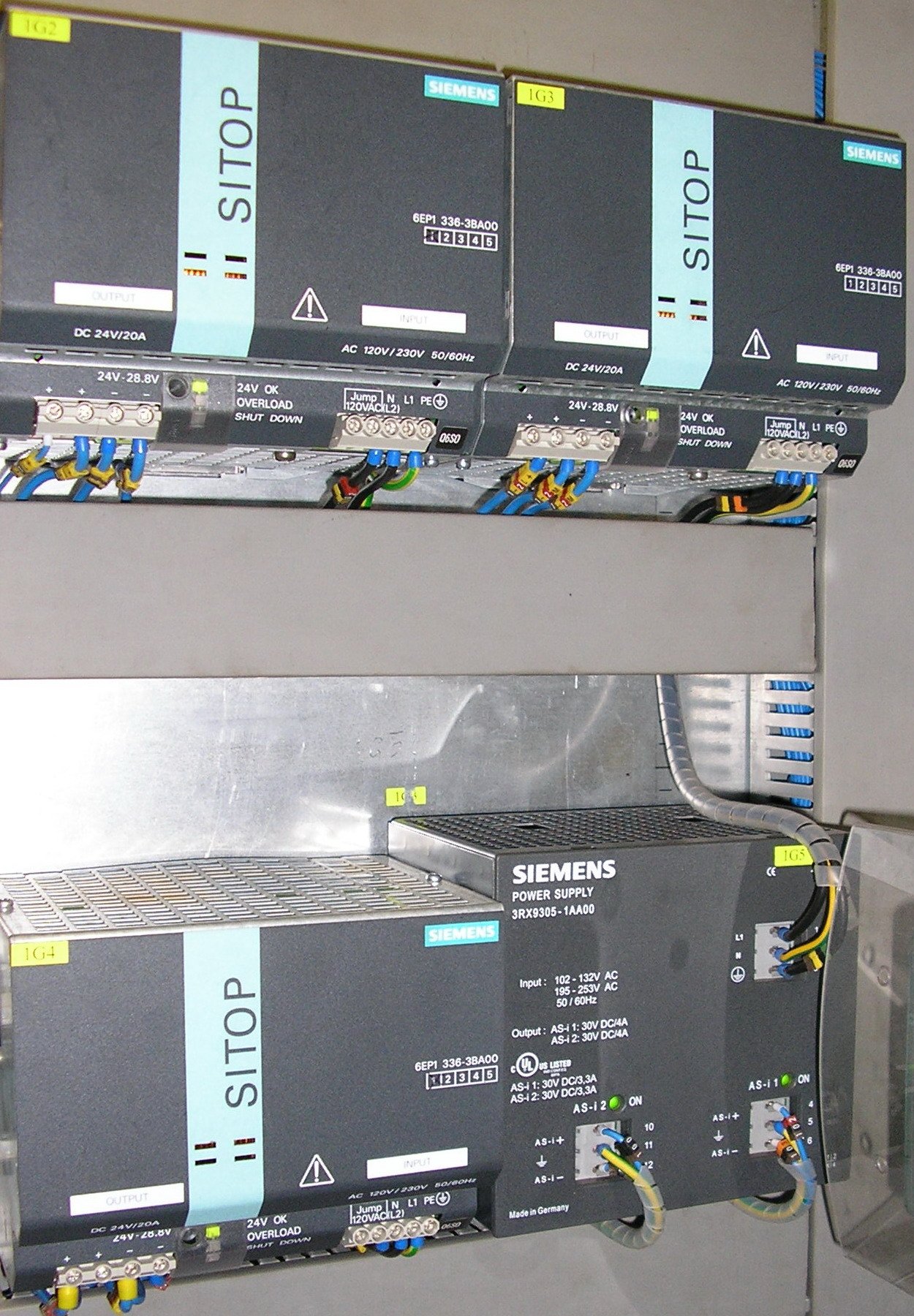
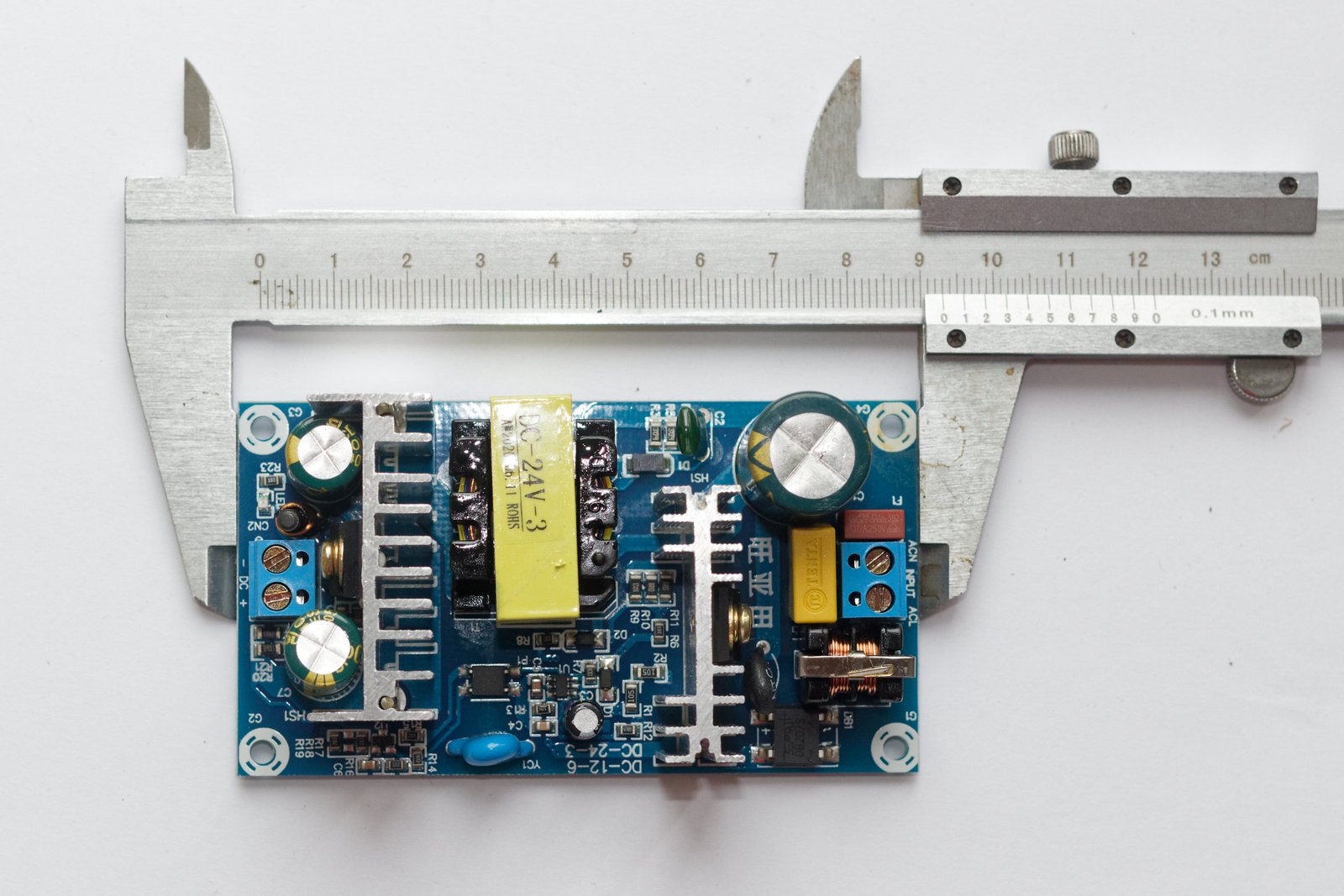
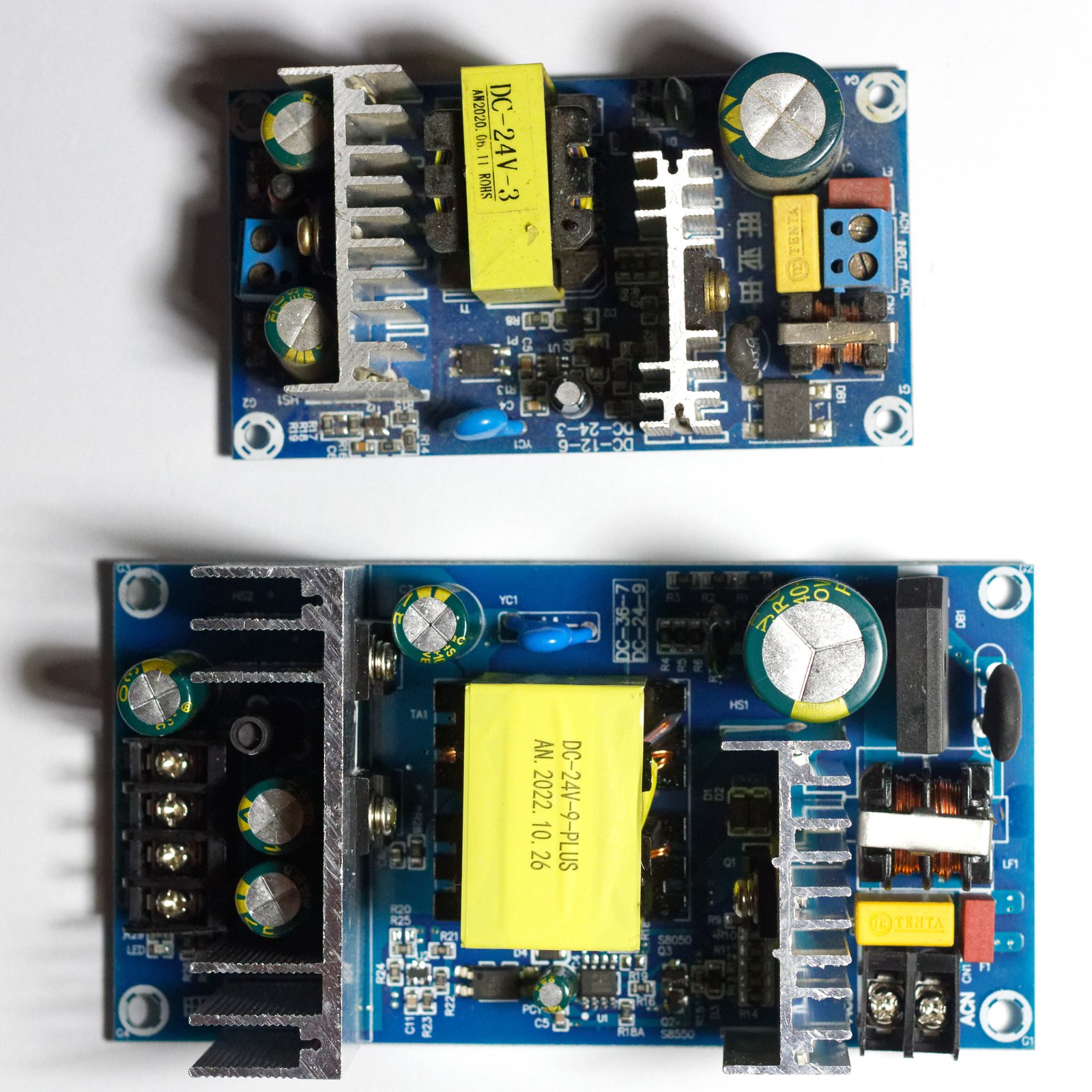
One common misunderstanding is that all 24 VDC supplies are interchangeable if the current rating matches. They are not. A 24 V 3 A open-frame board for an internal product, a 24 V 3 A DIN rail supply for a panel, and a low-cost enclosed supply for LED equipment may differ in EMC filtering, cooling assumptions, terminal safety, overload behavior, documentation, and approval scope.
Why switching supplies replaced many linear supplies
Linear power supplies still have a place where very low noise, simple behavior, or specialized analog performance matters. In most commercial and industrial equipment, switching supplies win because they solve different problems: size, weight, efficiency, input range, and power density.
The difference becomes clear in a control cabinet. A linear supply rated for several amps may be heavy and warm, especially when the AC input is high or the load varies. A switching supply can provide the same output with less heat and a smaller footprint. That saves panel space and reduces the thermal stress on nearby relays, PLC modules, and terminal blocks.
The tradeoff is complexity. Switching supplies need better PCB layout, EMI filtering, feedback compensation, thermal planning, and safety spacing. Cheap or poorly matched supplies can pass light-load bench tests and still create field problems. A serious buyer should not evaluate only price, output voltage, and current.
Common applications
Switching power supplies are used across many industries because they can be adapted to different output voltages, enclosures, and regulatory needs.
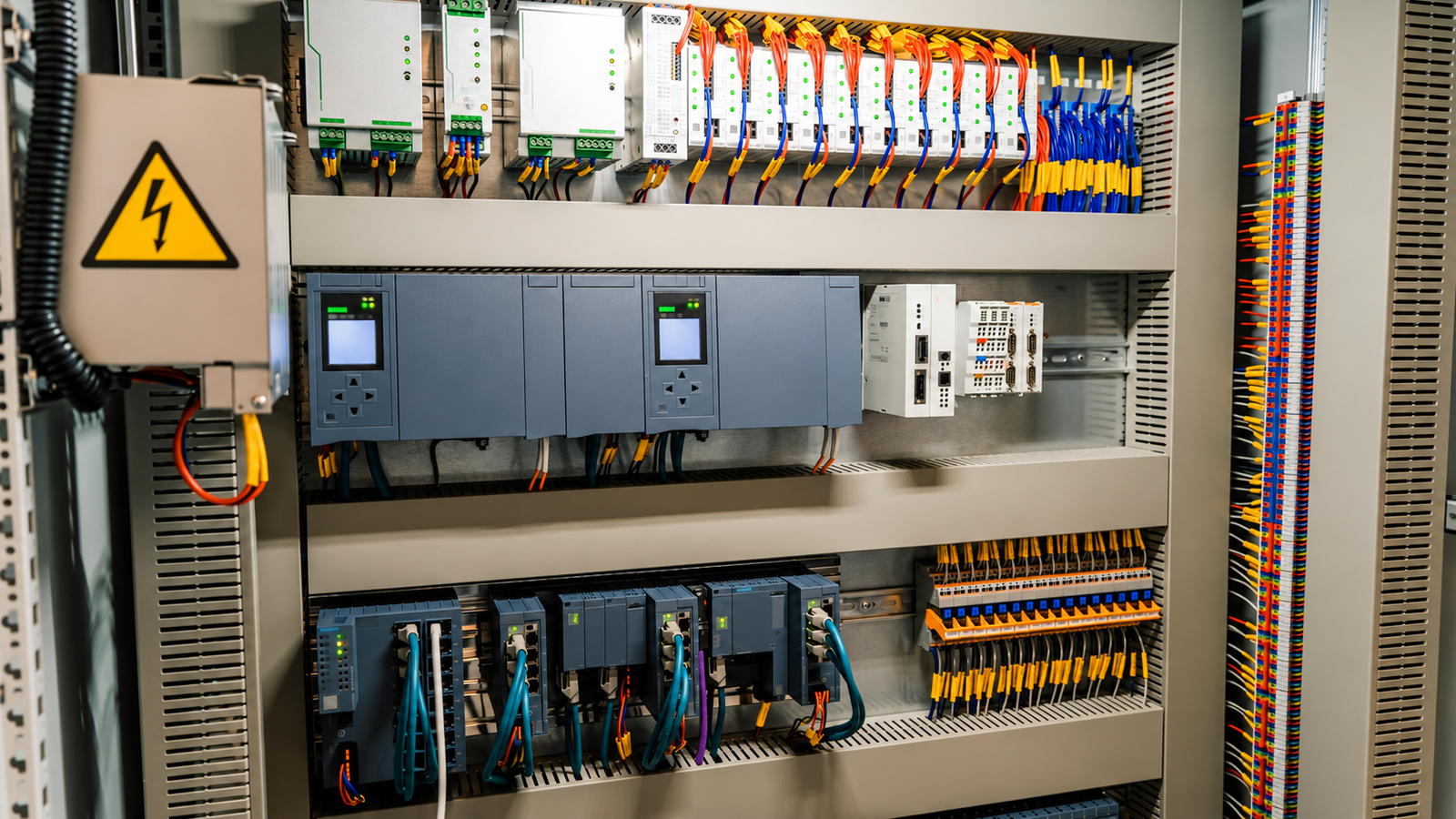
In automation and machinery, 24 VDC supplies power PLCs, sensors, solenoid valves, relays, HMIs, safety modules, and industrial network devices. The supply must tolerate cabinet temperature, AC line variation, switching noise, and load changes during machine cycles. DIN rail mounting, DC OK signals, redundancy modules, and branch protection often matter more than the lowest unit price.
In communications equipment, power supplies feed routers, base station equipment, optical network devices, industrial Ethernet switches, PoE systems, and monitoring hardware. Efficiency and thermal design are important because this equipment often runs continuously. Ripple and conducted noise can also affect signal integrity, especially when power and data cabling share space.
Medical and laboratory equipment usually requires tighter attention to safety standards, leakage current, isolation, and documentation. A medical imaging device, diagnostic instrument, or analyzer may need stable output rails and predictable behavior during start-up, load changes, and standby operation. In this market, using the right approved supply can shorten compliance work later.
In LED lighting and display systems, switching supplies drive long operating hours and sometimes harsh thermal conditions. Buyers should check whether the application needs constant voltage or constant current output, whether the supply will be enclosed, and whether the load has high inrush or dimming requirements.
| Application environment | Typical output | Selection focus |
|---|---|---|
| PLC control cabinet | 24 VDC | DIN rail mounting, EMC, overload recovery, derating, DC OK signal |
| Industrial sensors and relays | 12 VDC or 24 VDC | Low ripple, enough surge current, stable wiring voltage at load |
| Communications equipment | 48 VDC or 12 VDC | High efficiency, continuous operation, thermal margin, reliability |
| Medical instruments | Multiple DC rails | Safety approvals, leakage current, isolation, traceable documentation |
| LED lighting and signs | 12 VDC, 24 VDC, or constant current | Cooling, waterproof rating if needed, dimming compatibility |
| Embedded electronics | 5 VDC, 12 VDC, or DC-DC rails | Low noise, compact size, standby power, board-level integration |
What to check before choosing a switching power supply
Start with the load, not the catalog page. List the rated current, peak current, start-up behavior, duty cycle, cable length, operating temperature, and required approvals. Then add margin. Many field failures begin when a supply was sized exactly to the steady-state current and no one accounted for solenoid inrush, motor brake coils, long wiring runs, or summer cabinet temperatures.
Check the input conditions. A supply for a factory panel may see unstable AC mains, generators, long distribution wiring, surge events, and conducted noise from nearby drives. If the installation spans multiple regions, universal input and proper certification can reduce purchasing complexity.
Review cooling honestly. A datasheet rating at 25 C in open air does not mean the same output is available in a sealed cabinet at 55 C. Look for derating curves, mounting orientation requirements, airflow notes, and clearance requirements. Electrolytic capacitors are sensitive to heat, so a small temperature reduction can have a large effect on life.
For quality comparison, inspect more than efficiency. Ask about burn-in testing, protection modes, MTBF assumptions, warranty terms, output ripple measurement method, safety approvals, EMC standard, and production consistency. For OEM projects, stable supply over time can matter as much as the first batch price.
Typical problems and likely causes
When equipment behaves unpredictably, the power supply should be checked early. It is not always the cause, but it is easy to underestimate.
| Symptom in the field | Likely power-related cause | Practical check |
|---|---|---|
| PLC or controller resets during operation | Voltage dip during relay, valve, or motor-brake switching | Measure voltage at the controller terminals during the event |
| Sensors give unstable readings | Ripple, grounding issue, or shared noisy load | Separate sensitive loads and inspect 0 V wiring path |
| Power supply runs very hot | Overload, poor ventilation, high ambient temperature, blocked airflow | Compare actual load and ambient temperature with derating curve |
| Output voltage is correct with no load but drops in use | Undersized supply or long cable voltage drop | Measure at the load under normal and peak operating conditions |
| Intermittent shutdown and restart | Short circuit, overload protection, or thermal cycling | Isolate branches and test loads one by one |
| EMC test failure | Inadequate filtering, grounding, wiring layout, or enclosure bonding | Review input filter, cable routing, PE connection, and shield handling |
For maintenance teams, the safest habit is to measure under real operating conditions. A no-load bench reading can look perfect while the installed system fails only during a fast load change or after the cabinet warms up.
What B2B buyers should ask suppliers
A switching power supply is a technical component, but purchasing decisions often come down to repeatability. Can the supplier provide the same model, with the same approvals and stable quality, across batches? Can they support customization when the equipment needs a specific output voltage, terminal layout, label, enclosure, or test requirement?
For industrial and OEM projects, ask for complete specifications, not just a short product table. Useful documents include a datasheet, derating curve, safety certificate, EMC report or standard statement, mechanical drawing, packing information, and installation notes. If the supply will be exported, confirm the target market approvals before tooling, enclosure design, or final equipment certification.
It is also worth asking how the supplier tests finished units. Full-load aging, output ripple inspection, high-pot testing, and protection checks are more meaningful than a general promise of reliability.
Conclusion
Switching power supplies are compact because they convert energy at high frequency. They are efficient because the main switching devices spend most of their time fully on or fully off. They are widely used because the same basic architecture can serve automation panels, communications equipment, medical instruments, LED systems, and embedded electronics.
The best choice still depends on details: input range, output power, ripple, isolation, thermal derating, approvals, protection behavior, mounting style, and the environment around the supply. Treat the power supply as part of the whole machine or device, not as an interchangeable accessory.
SIPURUI supplies switching power supply solutions for industrial equipment, automation, LED, and OEM applications. If you are comparing models for a new project, share the output voltage, load current, installation environment, and target market requirements so the selection starts from the real operating conditions.
Buyer Checklist
- Confirm the real input range, output voltage, load current, and peak current before model selection.
- Check ripple, isolation, EMC requirements, approvals, and protection behavior for the target equipment.
- Review thermal derating, mounting style, cabinet temperature, airflow, and wiring distance.
- Share application details, quantity, and target market requirements when requesting supplier support.