Switching and linear power supplies can deliver the same output voltage, but they behave very differently in heat, size, efficiency, noise, and EMC performance. For most industrial systems, a switching power supply is the practical default, while linear regulation still makes sense for low-noise analog rails and precision sensing branches.
The core difference is the regulation method
When engineers, buyers, or maintenance teams say "ordinary power supply," they often mean a linear regulated power supply. In modern equipment, though, most practical power conversion is handled by switching power supplies, also called SMPS units. The two can deliver the same nominal output voltage, but they do it in very different ways, and those differences show up in heat, size, efficiency, noise, installation flexibility, and long-term operating cost.
For industrial buyers and equipment designers, this comparison matters because the wrong supply choice rarely fails on paper first. It shows up as excess cabinet heat, unstable sensor readings, poor battery runtime, bulky enclosures, EMC trouble, or unnecessary cost in the finished product. The real question is not which type is "better" in general. The useful question is which one fits the electrical environment, load profile, and noise tolerance of the application.
A linear power supply controls the output by keeping its pass device in a continuously active region. In simple terms, the regulating transistor behaves like a variable resistor. It drops the extra voltage between input and output and turns that unwanted voltage into heat. If 12 V is reduced to 5 V at meaningful current, the unused energy does not disappear. It becomes thermal loss.
That is why a linear supply is electrically simple but thermally inefficient. The wider the input-to-output voltage difference, and the higher the current, the more heat the design must dissipate.
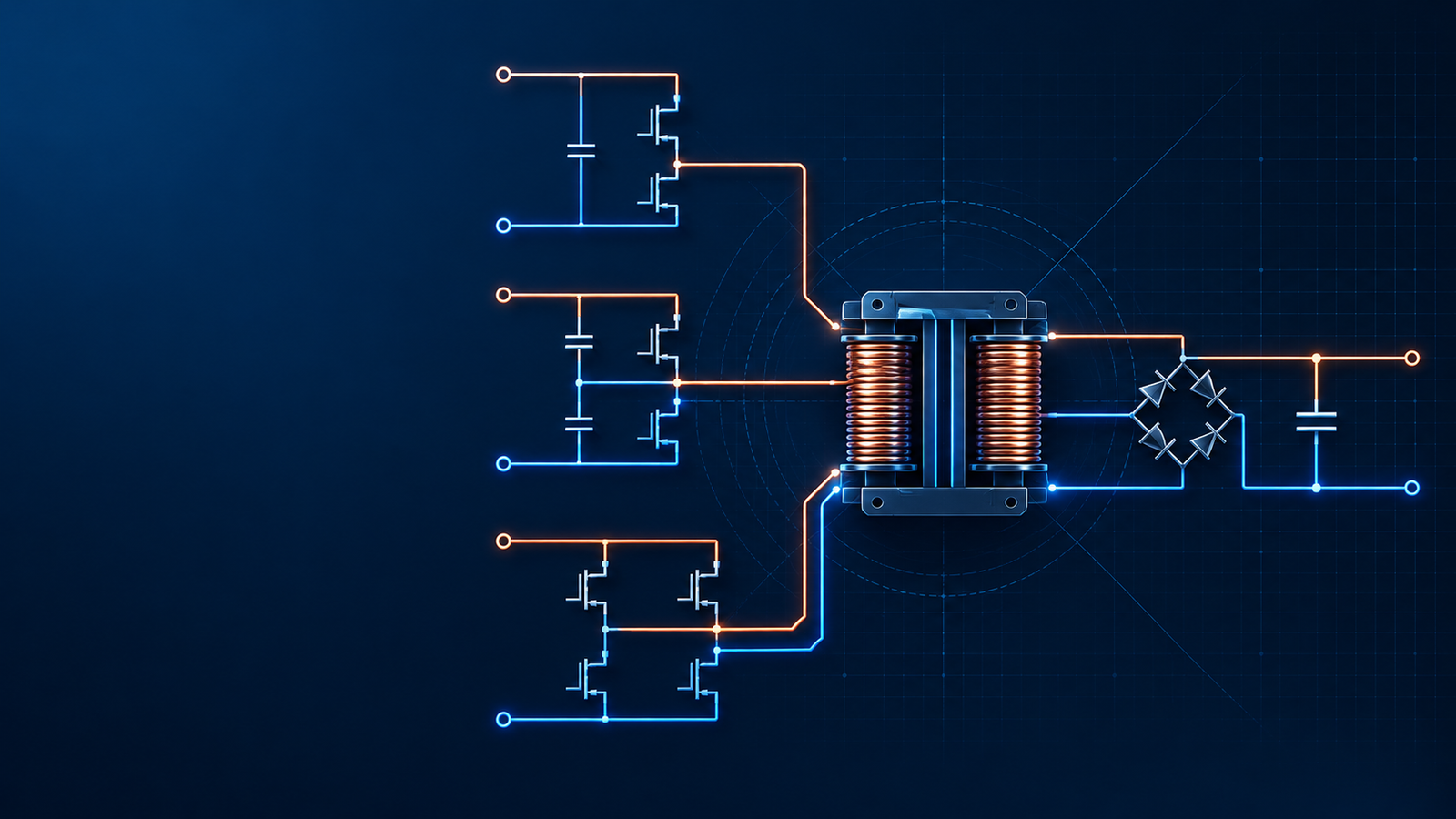
A switching power supply works differently. Its main power device is not held half-on like a variable resistor. It switches on and off at high frequency, often from tens of kilohertz into the megahertz range depending on topology and power level. The controller adjusts duty cycle, frequency, or both, while inductors, transformers, and capacitors store and transfer energy to the load. Because the power device spends far more time either fully on or fully off, losses are much lower than in a linear regulator.
That one design choice explains most of the practical differences between SMPS and linear supplies.
How each architecture is built
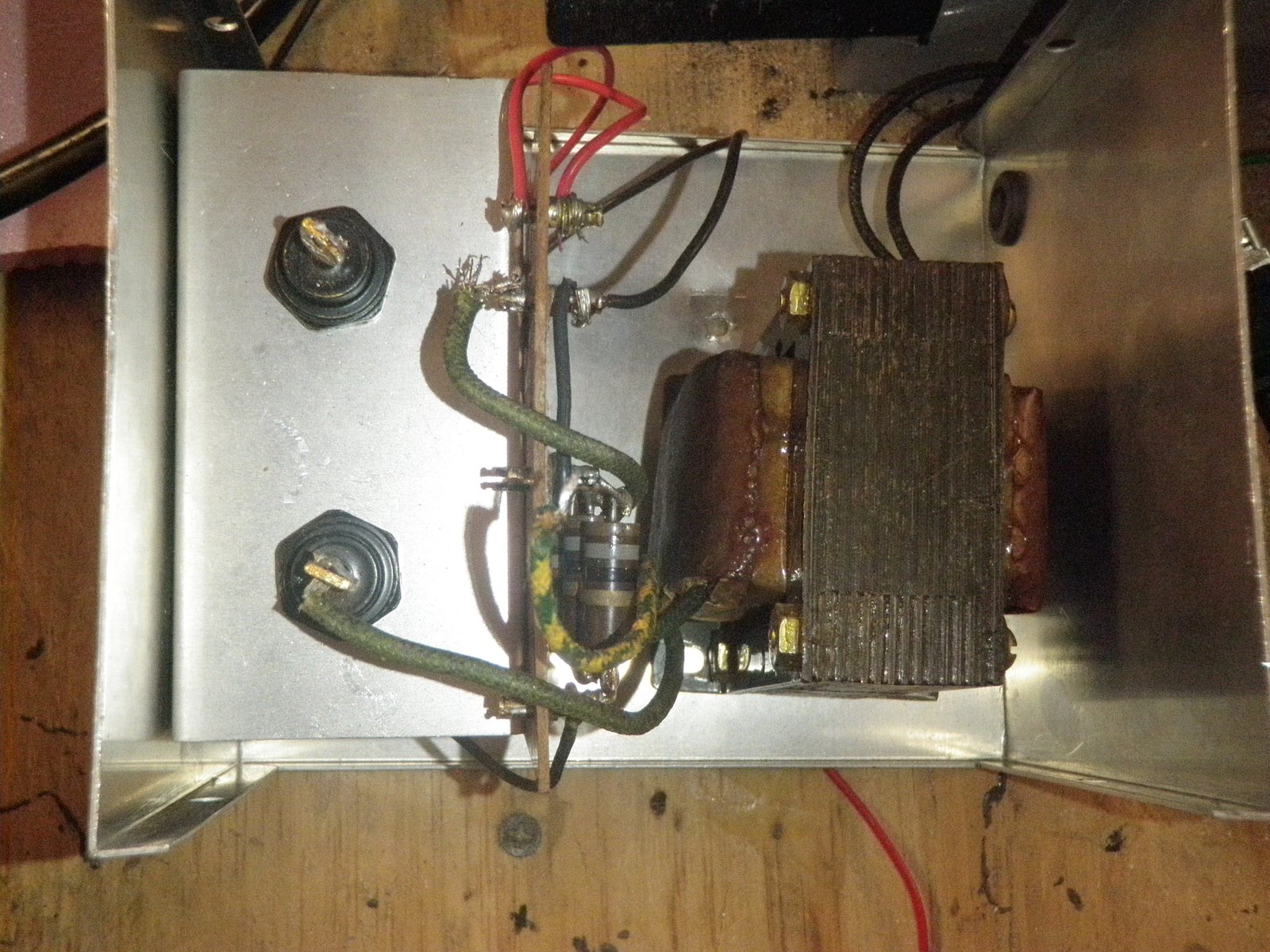
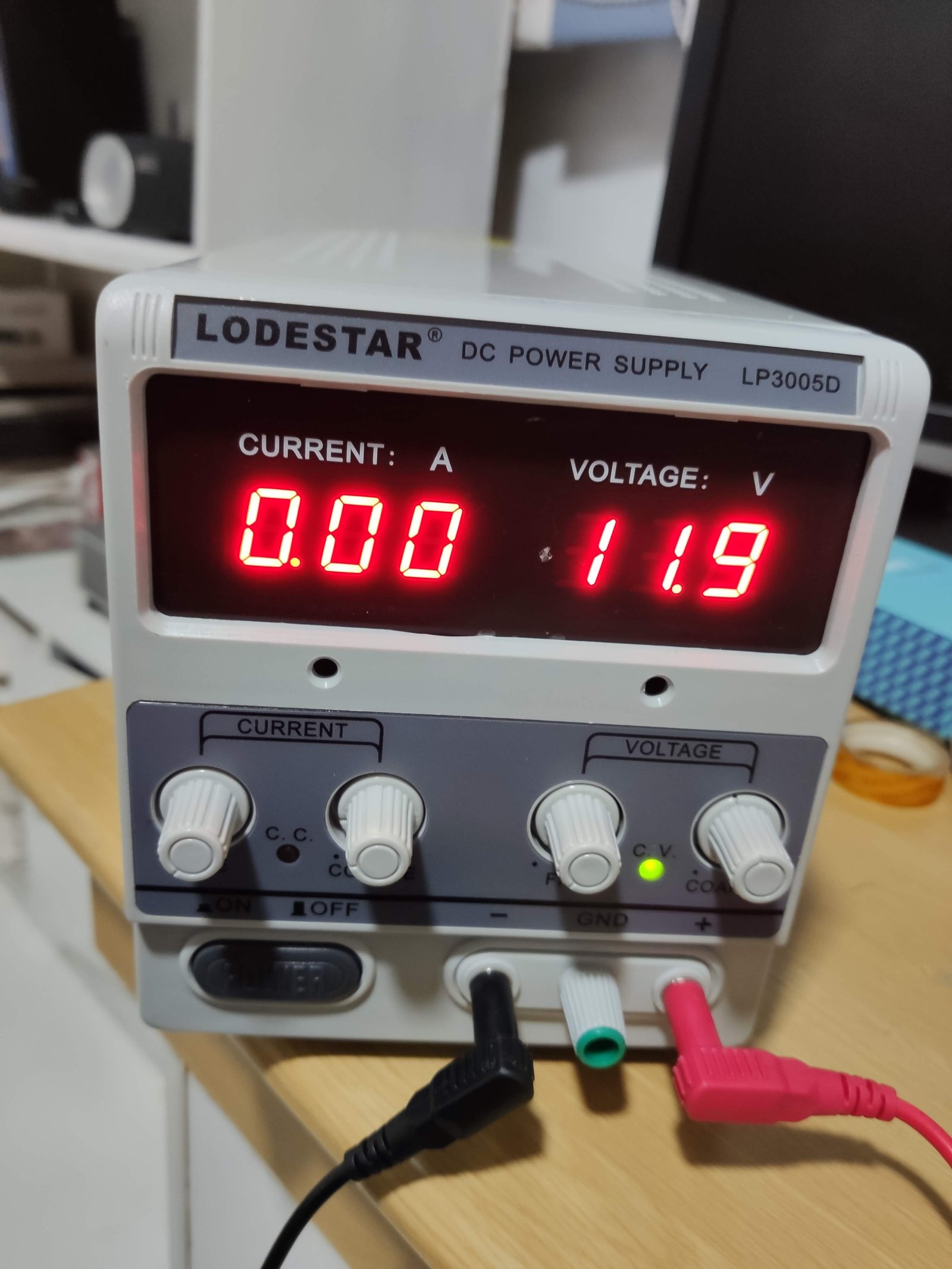
In a classic AC-input linear supply, mains voltage is stepped down by a bulky line-frequency transformer, then rectified and filtered, and finally regulated by a linear stage. This is familiar in laboratory supplies, low-noise analog rails, and older wall adapters.
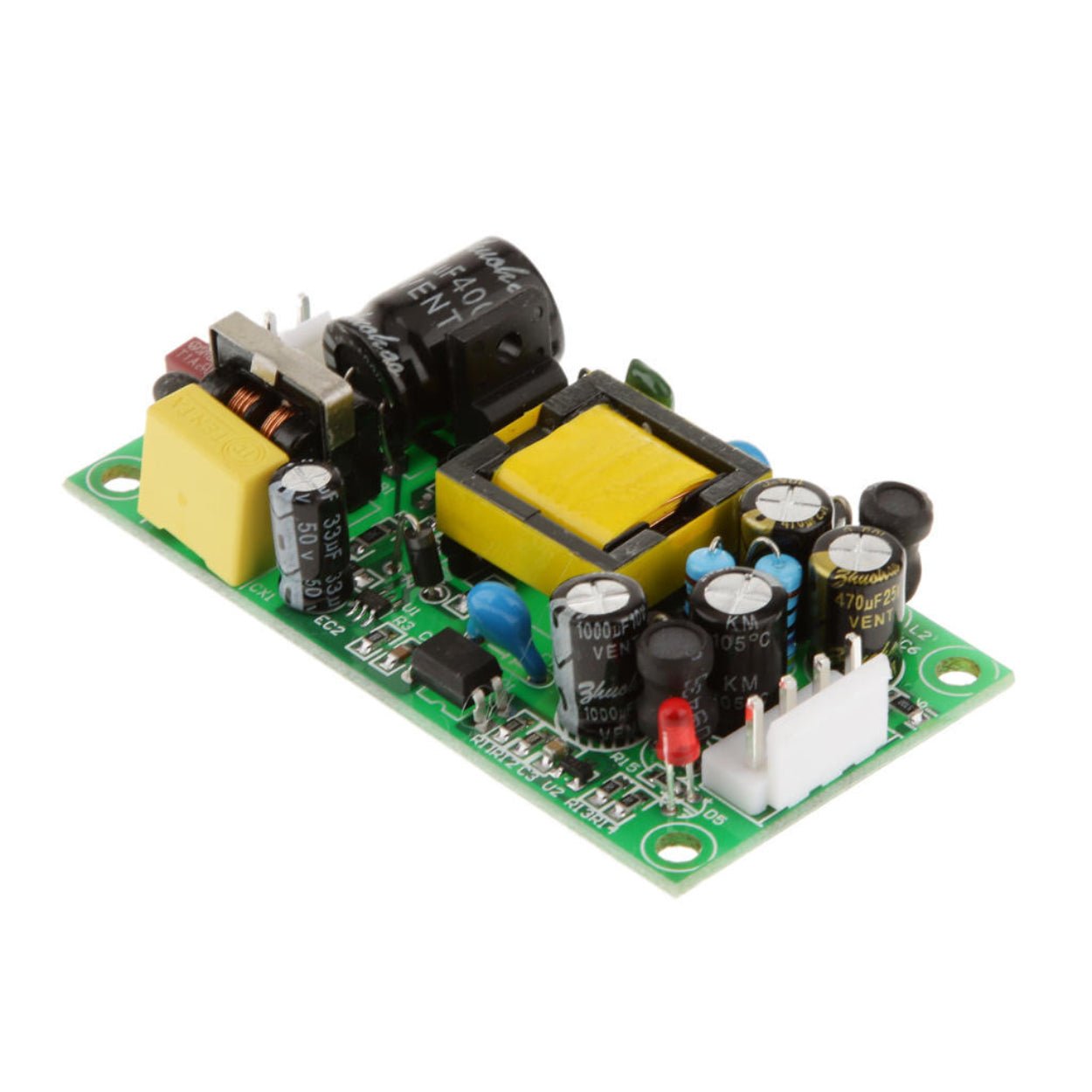
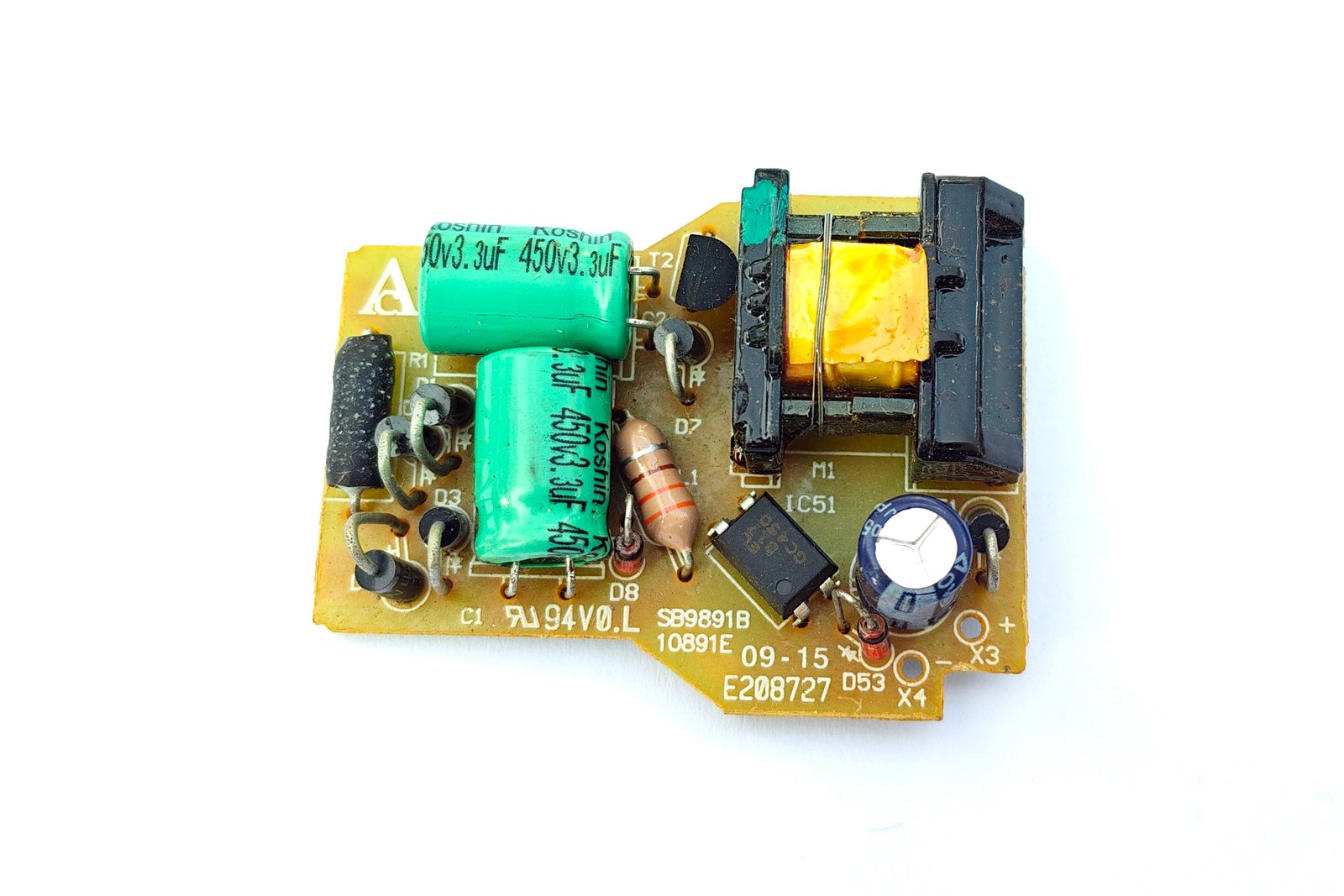
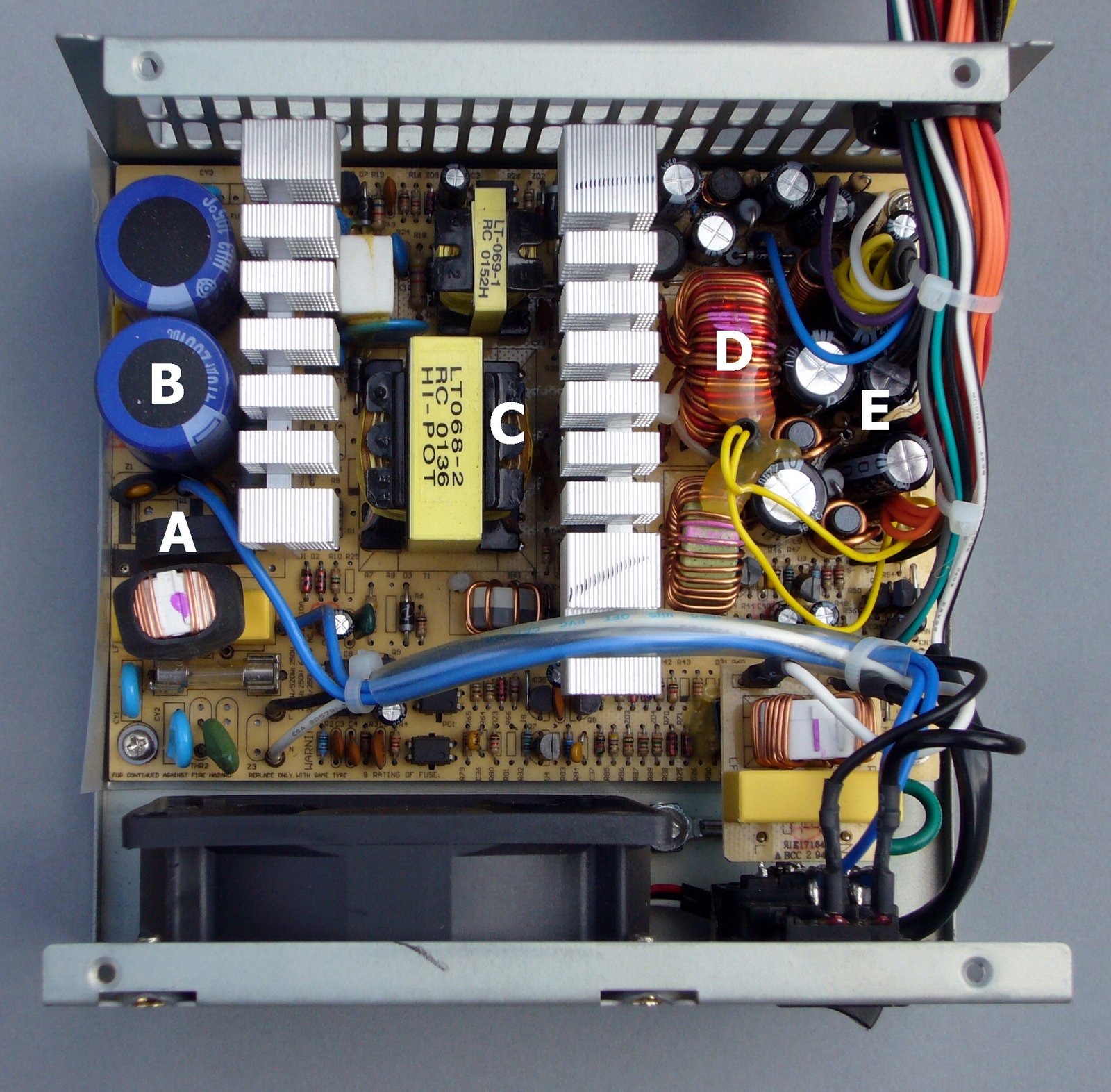
In a switching supply, the incoming AC or DC is first rectified if necessary, then chopped at high frequency. Energy is transferred through an inductor or transformer, filtered, and regulated through a feedback loop. Because the magnetics operate at much higher frequency, the transformer or inductor can be much smaller for the same power level.
Side-by-side comparison
| Comparison item | Linear power supply | Switching power supply |
|---|---|---|
| Operating method | Pass device stays in linear region and burns off excess voltage | Power device switches rapidly and transfers energy through magnetics |
| Typical efficiency | Often 40% to 65%, depending on voltage drop and load | Commonly 80% to 95%, especially at medium and higher power |
| Heat generation | High when voltage drop or current is high | Much lower for the same output power |
| Size and weight | Larger and heavier because of low-frequency transformer and heatsinking | Smaller and lighter because of high-frequency conversion |
| Output noise | Very low ripple and low broadband noise | Has switching ripple and high-frequency noise that must be filtered |
| EMI behavior | Produces little radiated or conducted switching noise | Requires good EMI and EMC design |
| Input range | Usually narrow and transformer-dependent | Often supports wide input ranges such as 100-240 VAC |
| Best fit | Low-noise, low-power, analog-sensitive rails | General equipment power, industrial control, computing, telecom, automation |
Those efficiency numbers are not marketing trivia. They directly affect enclosure temperature, fan requirements, derating, and electricity cost. In a control cabinet with several power rails, the difference between a 55% efficient design and a 90% efficient one can be the difference between passive cooling and thermal trouble.
Why linear supplies are still used
Linear power supplies have not disappeared because they solve a real problem well: they deliver very clean output. Ripple is low, broadband noise is low, and the absence of a switching node makes them easier to integrate into sensitive analog systems.
This matters in circuits such as precision sensor references, instrumentation front ends, low-noise audio stages, high-resolution ADC rails, and certain medical or lab electronics where a few millivolts of switching noise can become a real measurement problem.
Their transient behavior can also feel predictable. In straightforward low-power designs, engineers like the simplicity of a transformer, rectifier, capacitors, and regulator IC. Fewer moving parts in the control scheme often mean easier debugging.
The penalty is familiar: poor efficiency, heavy thermal loss, larger size, and limited flexibility on input range.
Why switching power supplies dominate modern equipment
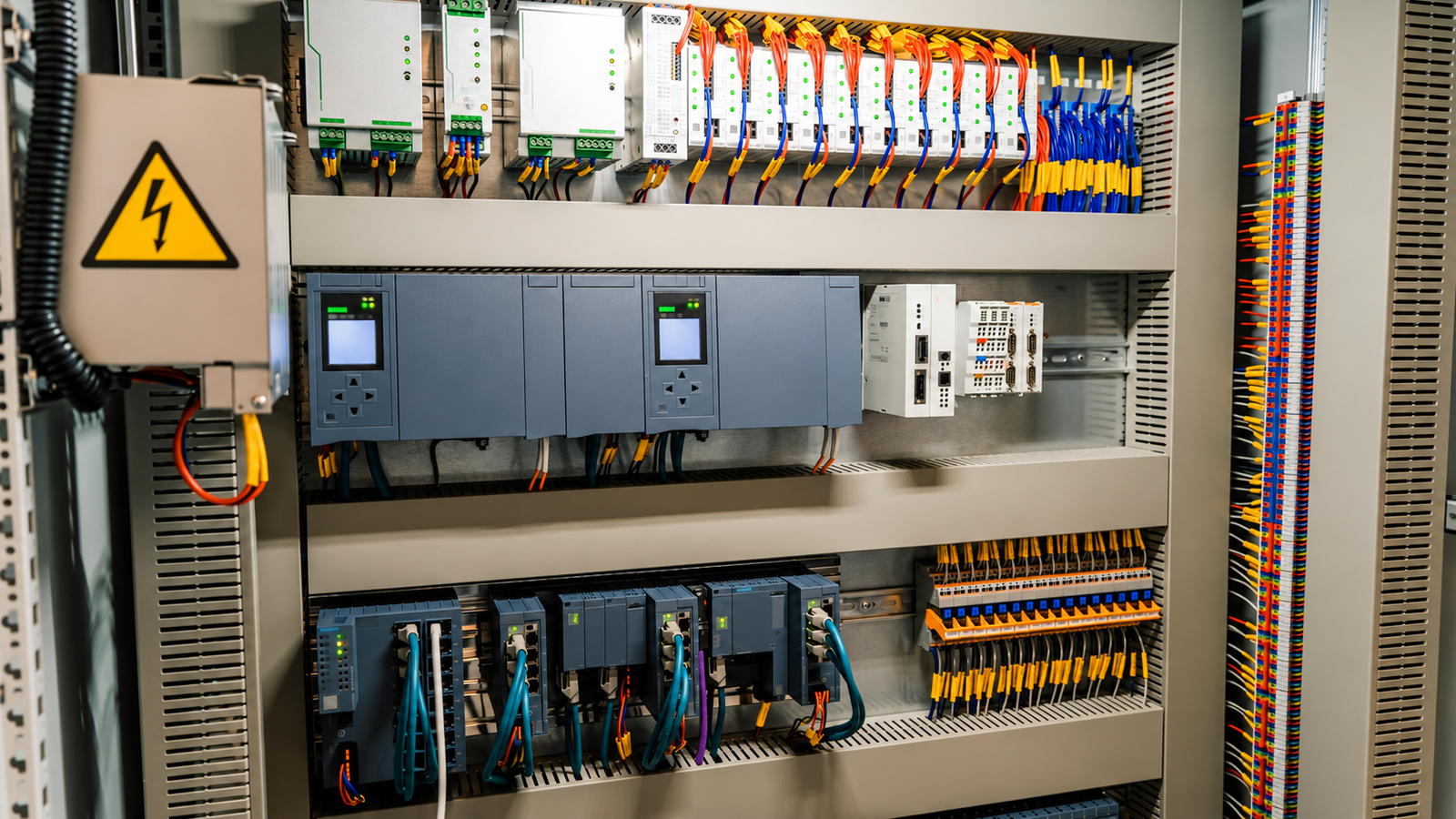
Switching power supplies became the default because most equipment needs power density and efficiency more than it needs the absolute lowest noise floor. A phone charger, DIN-rail supply, monitor adapter, industrial PC supply, robot controller, and PLC cabinet power supply all benefit from smaller magnetics, lower heat, and wider input tolerance.
For global equipment makers, wide-range AC input is a major advantage. A well-designed SMPS can support 100-240 VAC operation without a large 50/60 Hz transformer selected for one region. That simplifies product planning, inventory, and field deployment.
The same efficiency advantage scales well into industrial DC systems. A 24 V switching supply feeding control boards, relays, communication modules, and actuators wastes less power and reduces cabinet heating. In many applications, that is the deciding factor.
The tradeoff: noise and EMC work
The weakness of a switching supply is not mystery. It is noise management.
Because the power devices switch quickly, the output includes switching ripple, and the circuit can generate both conducted and radiated EMI. Poor layout, weak filtering, or a careless grounding scheme can inject noise into encoder signals, analog inputs, communication lines, or measurement circuits.
This does not mean every switching supply is noisy in practice. A well-designed SMPS with proper layout, common-mode filtering, output filtering, shielding, and loop control can be very clean. It simply will not match the intrinsic low-noise baseline of a good linear supply without extra design effort.
That is why many mixed-signal systems use a combined architecture. A switching supply handles the main power conversion efficiently, and a downstream LDO or other linear regulator cleans up the rail for sensitive analog or sensing sections.
Typical applications and selection logic
| Application | Better default choice | Reason |
|---|---|---|
| PLC cabinet main 24 V rail | Switching power supply | High efficiency, compact size, wide input compatibility |
| Precision analog reference rail | Linear power supply or post-regulated rail | Low ripple and low broadband noise |
| Battery-powered embedded device | Switching power supply | Better efficiency extends runtime |
| Lab instrumentation front end | Linear or hybrid approach | Clean rail matters more than conversion efficiency |
| Robotics controller main power | Switching power supply | Power density and thermal control matter |
| Sensor + ADC subsystem inside a larger machine | Hybrid: SMPS plus LDO | Keeps system efficient while cleaning sensitive rails |
In practice, a rule of thumb often works: once power moves beyond a modest level, engineers usually start with a switching supply unless the noise requirement is unusually strict. The thermal penalty of a linear solution becomes hard to justify as power rises.
A practical example
Suppose a system needs 5 V at 2 A from a 12 V input.
With a linear regulator, the voltage drop is 7 V. At 2 A, the regulator must dissipate 14 W as heat. The output power is only 10 W. That means the regulator is turning more power into heat than the load is actually using.
With a switching supply at 90% efficiency, delivering the same 10 W output requires only about 11.1 W input, so power loss is close to 1.1 W. That is still real heat, but it is a very different thermal design problem.
For a buyer or mechanical engineer, that difference changes enclosure size, airflow, heatsink need, reliability margin, and sometimes the whole system packaging approach.
Common points of confusion
One confusion is the phrase "ordinary power supply." A transformer-based supply is not automatically the same thing as a linear regulated supply. The transformer only handles voltage conversion and isolation. What comes after it determines whether the regulation path is linear or switching.
Another point is LDO classification. An LDO is still a linear regulator. It improves one weakness of older linear designs by reducing the required input-output voltage difference, but it does not become a switching supply.
A third confusion is the idea that every switching supply has severe ripple. That is too broad. Output ripple depends on topology, controller design, switching frequency, layout, capacitor choice, and filtering. Good SMPS design can reduce ripple substantially. It just starts from a noisier mechanism than linear regulation.
What industrial buyers should evaluate
| Evaluation factor | Why it matters | What to ask |
|---|---|---|
| Efficiency | Affects thermal load, electricity use, and derating | What is the efficiency at typical load, not only peak load |
| Ripple and noise | Affects sensors, communication, and analog accuracy | Is ripple specified under realistic load and bandwidth conditions |
| Input range | Affects deployment flexibility | Does the unit support the intended AC or DC variation range |
| EMC compliance | Affects system certification risk | Which EMC standards has the supply passed |
| Thermal behavior | Affects service life and cabinet integration | What derating applies at high ambient temperature |
| Load type | Affects startup and stability | Can the supply handle pulsed loads, motors, or high inrush devices |
If the application includes precision sensing, motion feedback, or data acquisition, the supply decision should not stop at output voltage and current. Noise and grounding behavior deserve the same attention as wattage.
A useful hybrid approach
Many real systems do not choose one architecture exclusively. They stack them.
The main incoming rail is generated by a switching supply because it is efficient and practical. Then one or more linear regulators clean selected branches for analog circuitry, references, RF sections, or low-noise sensor power. This is common in robotics, instrumentation, industrial control boards, and communication equipment.
That hybrid approach is often the most economical engineering answer. It keeps the thermal and size advantages of an SMPS while avoiding avoidable noise trouble where precision matters.
Conclusion
The real difference between a switching power supply and a linear power supply is the way they regulate voltage. A linear supply burns off excess energy to stay stable. A switching supply transfers energy in controlled pulses and filters it into usable DC.
That difference leads to the tradeoff most buyers and engineers already feel in practice. Linear supplies are cleaner and simpler, but inefficient, hot, and bulky at higher power. Switching supplies are efficient, compact, and flexible, but they demand better attention to ripple, EMI, and layout.
For most industrial equipment, SMPS is the default choice. For low-noise analog rails, linear regulation still has a clear place. And for many serious designs, the best answer is both: a switching front end for efficient bulk power and a linear cleanup stage where signal integrity matters. SIPURUI supports industrial switching power supply applications where efficiency, reliability, and cabinet integration need to be balanced against real-world noise requirements.
Buyer Checklist
- Confirm whether the load prioritizes low noise or high efficiency before choosing the architecture.
- Review real operating input range, not only nominal voltage, before selecting a supply.
- Check thermal behavior, derating, and cabinet airflow when comparing linear and switching designs.
- For mixed-signal equipment, consider an SMPS front end with linear cleanup on sensitive branches.