A practical guide to waterproof LED switching power supplies, covering output modes, IP ratings, thermal design, surge protection, applications, selection, and installation.
Overview
Outdoor LED failures are often blamed on the light source, but the power supply is frequently the weaker link. A driver mounted behind a sign, inside a streetlight, or below a landscape fixture must convert AC power reliably while dealing with rain, dust, condensation, voltage surges, and heat trapped inside the luminaire.
A waterproof LED switching power supply is built for that job. It combines switch-mode power conversion with an enclosure and cable-entry system designed to resist environmental exposure. The enclosure rating matters, but it is only one part of a reliable installation. Output type, thermal loading, surge immunity, wiring, and certification must all match the LED load and the place where the equipment will operate.
This guide explains what these power supplies are, the features that distinguish them from ordinary enclosed supplies, their common applications, and the checks an OEM or lighting buyer should make before approving a model.
What is a waterproof LED switching power supply?
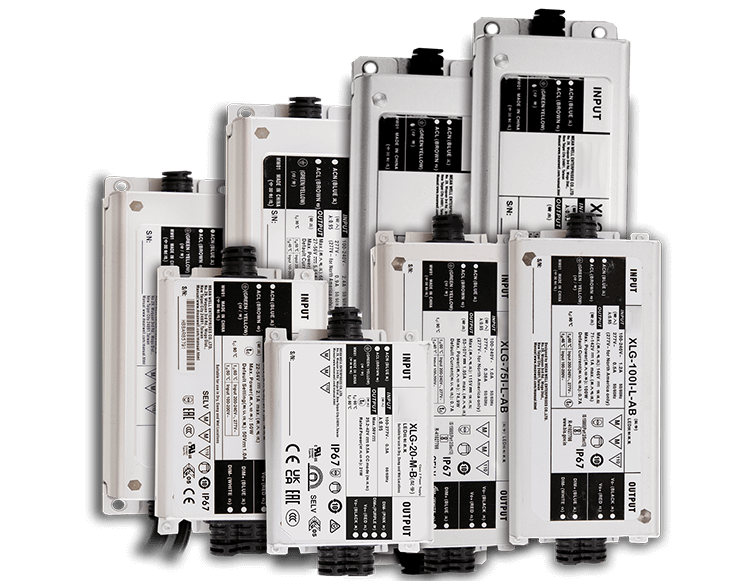
A waterproof LED switching power supply converts mains AC into regulated DC for an LED load. High-frequency switching allows the unit to be smaller and more efficient than a traditional linear supply. The waterproof version adds a sealed or encapsulated construction that limits the entry of dust and water.
Depending on the lighting system, the output may be constant voltage, constant current, or a hybrid mode. Constant-voltage supplies are common with 12 V, 24 V, or 48 V LED strips, signage modules, and assemblies that already contain current-limiting circuits. Constant-current drivers regulate the current through an LED string and are widely used in streetlights, floodlights, high-bay fixtures, and other luminaires where the LEDs are connected directly to the driver.
The word “waterproof” should never replace a precise rating. IEC 60529 uses an IP code to describe enclosure protection against solid objects and water. In an IP67 marking, the first digit indicates dust protection and the second indicates protection during temporary immersion under standardized test conditions. That does not mean the product can operate indefinitely underwater, tolerate every chemical, or survive water collecting around cable joints. Installation conditions still matter.
The features that matter in real installations
Sealed construction and controlled cable entry
Outdoor LED supplies often use a gasketed metal enclosure, a molded plastic case, or full potting around the electronics. Potting can help block moisture, support components against vibration, and move heat toward the enclosure. It can also make the unit heavier and effectively non-repairable.
The weak points are often outside the housing. A rated enclosure cannot compensate for an unsealed splice, an upward-facing cable gland, or a junction box that fills with water. Cable material, strain relief, connector rating, and the installer’s termination method belong in the same environmental review as the power supply itself.
Efficiency and thermal behavior
Higher conversion efficiency reduces the heat generated inside the driver and inside the luminaire. That helps both the power electronics and the nearby LEDs. Still, the headline efficiency number does not tell the whole story. Buyers should inspect the efficiency curve at the expected input voltage and load, then check the manufacturer’s derating curve.
The important temperature is usually the specified ambient or case temperature measured at a defined point, not a general claim that the product “works in extreme heat.” A sealed driver installed in direct sun or inside a small metal sign cabinet can run much hotter than the surrounding air. Maintaining output margin and providing a conductive mounting surface are often more useful than selecting a larger IP number.
The correct output mode
Choosing constant voltage when the LED assembly expects constant current can cause unstable operation, overheating, or premature failure. The reverse mismatch can prevent the luminaire from reaching its intended output.
| LED load | Typical supply choice | What the buyer should confirm |
|---|---|---|
| 12 V or 24 V LED strip | Constant voltage | Strip voltage, total wattage, cable drop, and whether each branch has current limiting |
| Signage modules | Constant voltage | Module voltage, parallel branch current, wiring length, and cold-start load |
| Streetlight or floodlight LED string | Constant current | LED forward-voltage range, rated current, maximum open-circuit voltage, and dimming method |
| Luminaire family using several LED boards | Constant power or adjustable constant current | Programming range, connector pinout, thermal limits, and production settings |
Some modern outdoor drivers offer an adjustable current or constant-power operating window. This can reduce the number of SKUs needed for a family of luminaires, but it also creates a configuration-control task. The factory setting should be recorded, locked where possible, and verified during final testing.
Surge, fault, and abnormal-condition protection
Outdoor lighting is exposed to switching events, long cable runs, and lightning-induced surges. A driver data sheet should state the surge test level and test method rather than use a general phrase such as “lightning protected.” The required level depends on the installation category, regional practice, and whether a separate surge protective device is fitted in the luminaire or distribution panel.
Common protective functions include short-circuit, overcurrent, overvoltage, and overtemperature protection. Buyers should also check how the unit recovers. Automatic recovery is suitable for some applications; latch-off behavior may be safer or easier to diagnose in others. Protection limits must coordinate with the LED board so that a driver fault does not expose the LEDs to damaging current or voltage.
Power factor, harmonic current, and EMC
Power factor is not simply a marketing score. It affects input current and system loading, while harmonic-current and electromagnetic-compatibility requirements influence whether a luminaire can be sold in its target market. The applicable thresholds vary with product power, classification, and region.
For a B2B project, request test reports for the actual driver model and input range. Do not assume that a family brochure, a logo on a marketplace image, or a certificate for a similar wattage covers the unit being purchased.
Dimming and control isolation
Outdoor drivers may support 0–10 V, PWM, resistance dimming, timer profiles, or DALI. The control method must match the building controller or luminaire electronics. Confirm the dimming range, minimum output, dim-to-off behavior, control-wire polarity, and whether the control circuit is isolated from the power output.
UL 8750 includes requirements for LED equipment and wired controls in North American lighting products, while IEC 61347-2-13 addresses particular safety requirements for electronic controlgear used with LED modules. The exact certification route depends on the finished luminaire and the sales market, so a component approval should be checked against the intended end product.
Reliability that can be evaluated, not guessed
A quoted lifetime or MTBF value is meaningful only when its conditions and calculation method are known. Lifetime may be tied to case temperature and electrolytic-capacitor life. MTBF is a statistical reliability estimate, not a promise that every unit will run for that number of hours.
Useful supplier evidence includes thermal data, component derating rules, burn-in or production test coverage, warranty terms, and failure-analysis support. For high-access-cost installations such as roadway poles or building façades, service labor can exceed the price difference between two drivers. Reliability should therefore be evaluated as part of total installed cost.
IP65, IP67, or IP68: how should a buyer choose?
The second digit of an IP code describes specific water tests. Up to IPX6, the focus is water jets. IPX7 covers temporary immersion under standardized conditions. IPX8 covers continuous immersion under conditions agreed between manufacturer and user. These ratings do not automatically establish UV resistance, salt-spray performance, corrosion resistance, or suitability for high-pressure cleaning.
| Environment | Typical starting point | Additional checks |
|---|---|---|
| Covered outdoor sign cabinet | IP65 may be adequate | Condensation, ventilation, cable entries, and drain path |
| Exposed façade or landscape fixture | IP66 or IP67 is commonly considered | Wind-driven rain, UV exposure, pooling water, connector rating, and corrosion |
| Ground-level or flood-prone installation | IP67 may be a minimum project requirement | Drainage, temporary immersion depth/time, cable-joint sealing, and local electrical code |
| Fountain or continuously submerged equipment | Do not select on IP67 alone | Explicit IP68 conditions, product approval for the application, isolation, and local safety rules |
The best rating is the one supported by the installation design. A properly mounted IP65 driver in a ventilated, weather-sheltered cabinet may outlast an IP67 driver left in standing water with poorly sealed splices.
Where waterproof LED power supplies are used
Street, roadway, tunnel, and area lighting
These luminaires often use constant-current drivers with high power factor, surge protection, and programmable dimming. Long service intervals are important because pole access, traffic control, and labor make field replacement expensive. Wide input-voltage capability may also matter where mains quality is inconsistent.
Architectural façade and wall-washing systems
Façade lighting uses both constant-current luminaires and constant-voltage linear fixtures. Color-changing installations add control wiring and longer cable runs. Designers should account for voltage drop, synchronized dimming, connector sealing, and heat accumulation behind cladding.
Outdoor signs, channel letters, and light boxes
Signage commonly uses 12 V or 24 V constant-voltage supplies feeding parallel LED modules. The load calculation must include all modules and should leave a practical margin rather than running the supply continuously at its nameplate limit. Large signs benefit from shorter DC runs or multiple distributed supplies to reduce voltage drop.
Landscape, pathway, and garden lighting
These systems face irrigation water, soil moisture, fertilizers, and vulnerable ground-level junctions. A waterproof supply does not make ordinary connectors suitable for burial. Placing the supply above likely water level and using rated junction hardware are basic design decisions.
Horticultural and agricultural lighting
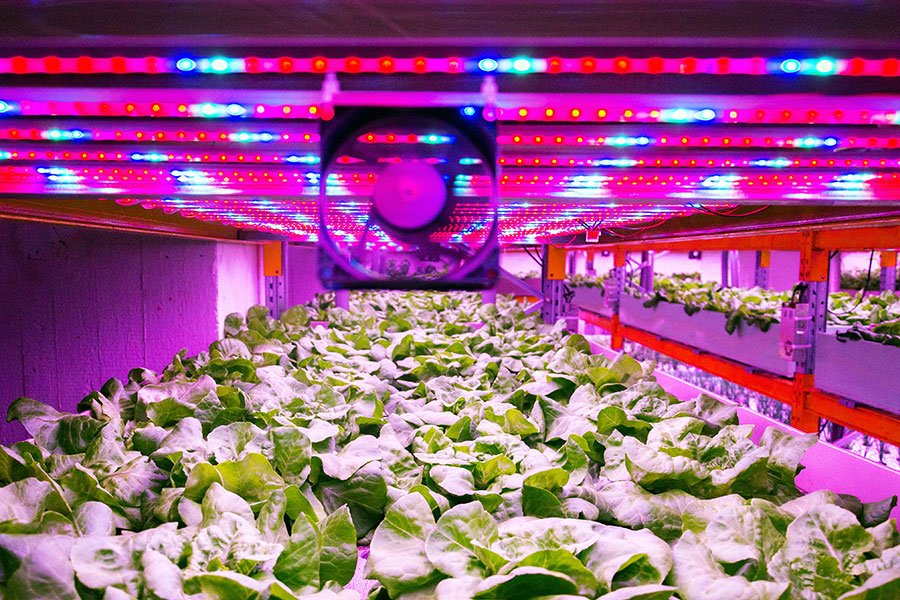
Greenhouses and livestock facilities can combine humidity, dust, cleaning chemicals, and long operating hours. Low ripple, stable current, thermal margin, and appropriate corrosion resistance deserve attention alongside the IP code. Where washing is routine, the specified cleaning method should be compared with the enclosure’s actual water test.
Marine, harbor, and selected industrial locations
Salt, conductive dust, chemicals, and hazardous-area classifications create requirements beyond ordinary weatherproofing. Buyers may need salt-spray evidence, conformal-coating details, a suitable enclosure material, or a specifically marked driver such as a model evaluated for a defined hazardous location. “Waterproof” alone is not enough.
A practical selection checklist
Start with the LED load, then work outward to the installation and market requirements.
| Selection item | Questions to put on the approval sheet |
|---|---|
| Electrical input | What nominal voltage, tolerance, frequency, inrush current, and mains quality must the driver handle? |
| Output | Is the load constant voltage or constant current? What are the voltage window, current, power, ripple, and cable-drop limits? |
| Power margin | What continuous load percentage is planned, and how does ambient or case temperature change allowable output? |
| Environment | What IP rating, UV resistance, corrosion performance, vibration resistance, and cleaning exposure are required? |
| Protection | What are the surge test levels and the behavior during short circuit, overload, overvoltage, and overtemperature? |
| Controls | Is 0–10 V, PWM, resistance, timer, or DALI required? Is dim-to-off needed, and is the control circuit isolated? |
| Compliance | Which safety, EMC, harmonic-current, and luminaire standards apply in the destination market? Are certificates model-specific and current? |
| Service | What are the warranty, production test, traceability, change-control, and failure-analysis arrangements? |
For volume purchasing, test samples in the real luminaire rather than on an open bench only. Measure case temperature at high ambient conditions, confirm startup at minimum and maximum input voltage, operate the dimming interface, and test representative cable lengths. A short pilot installation can expose condensation, connector, and thermal problems that are invisible in a catalog comparison.
Installation mistakes that shorten service life
The most common failures are often avoidable. Mounting the driver where water pools around it defeats the purpose of a sealed enclosure. Installing it against insulation or inside an unventilated cavity raises case temperature. Long undersized DC cables cause voltage drop in constant-voltage systems, while loose or poorly insulated connections create heat and moisture paths.
Do not drill the housing, cut molded leads too close to the case, or replace a supplied cable gland with an unrated fitting. Keep drip loops where appropriate, place junctions in rated enclosures, and follow grounding requirements for Class I products. If the luminaire manufacturer specifies a particular mounting orientation or maximum case temperature, treat those limits as part of the electrical design.
Conclusion
A waterproof LED switching power supply is more than an ordinary AC/DC converter inside a sealed box. The right unit must match the LED load, survive the expected water and dust exposure, stay within its thermal limits, tolerate site-specific electrical disturbances, and carry the approvals needed for the finished lighting product.
For OEMs and project buyers, a useful specification starts with output mode and environmental conditions, then adds derating, surge, control, certification, and service requirements. SIPURUI can support waterproof power-supply selection for LED signage, landscape lighting, architectural systems, and other outdoor equipment. Share the LED load data, input range, installation conditions, and target market so the power supply can be evaluated as part of the complete system rather than as a stand-alone wattage number.