If you look inside an industrial control cabinet, LED lighting system, telecom rack, or even a modern charger, there is a very good chance you will find one key component working quietly in the background: the switching
Overview
If you look inside an industrial control cabinet, LED lighting system, telecom rack, or even a modern charger, there is a very good chance you will find one key component working quietly in the background: the switching power supply.
Most users never notice it. Yet without it, modern electronics would not function the way they do today.
As electronic devices continue becoming smaller, faster, and more power-dense, the demand for efficient power conversion has increased dramatically. That is exactly why switching power supplies have become one of the most important technologies in modern electrical engineering.
But what exactly is a switching power supply? Why has it largely replaced the traditional linear power supply? And how do engineers choose the right model for real-world industrial applications?
This guide explores the working principle, advantages, applications, and future development of switching power supplies-and explains why SIPURUI switching power supplies continue to be trusted across a wide range of industries.
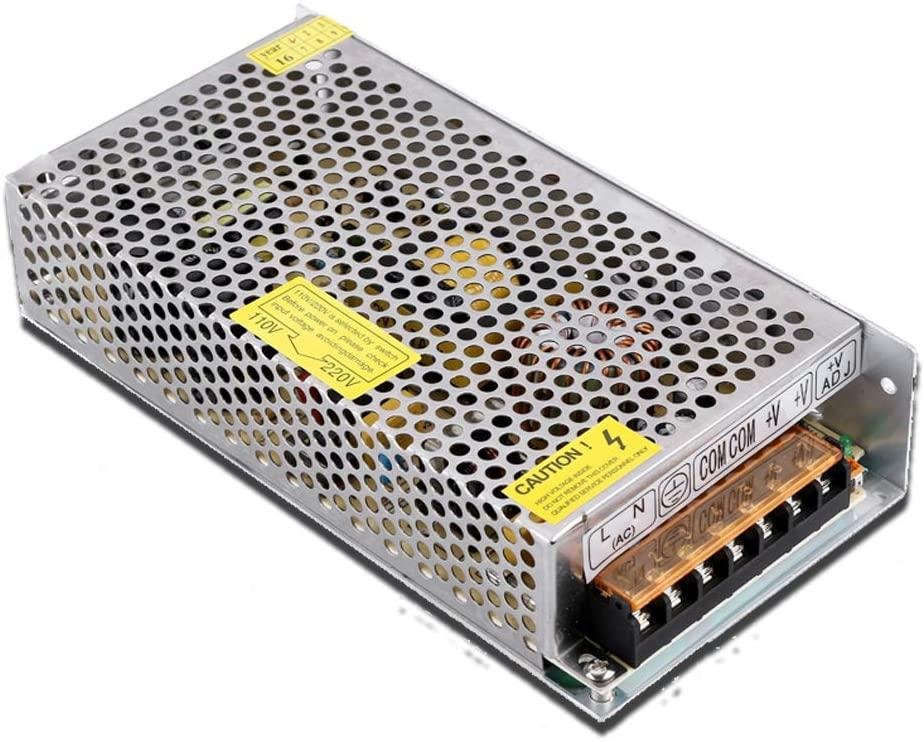
What Is a Switching Power Supply?
A switching power supply, also known as an SMPS (Switch Mode Power Supply), is an electronic device that converts electrical energy from one voltage level to another through high-frequency switching technology.
In most AC/DC applications, its main job is to convert incoming AC power from the electrical grid into stable DC voltage required by electronic equipment.
At first glance, that may sound simple. But the method behind it is very different from traditional power conversion.
Unlike linear power supplies, which regulate voltage by converting excess energy into heat, a switching power supply rapidly switches semiconductor devices on and off thousands of times every second. By doing this, it transfers power more efficiently while minimizing energy loss.
This high-speed operation makes it possible to achieve excellent voltage regulation while keeping the overall power supply compact, lightweight, and highly efficient.
That is why switching power supplies are now widely used across industrial automation, LED systems, communication equipment, control cabinets, medical electronics, security systems, and smart devices.
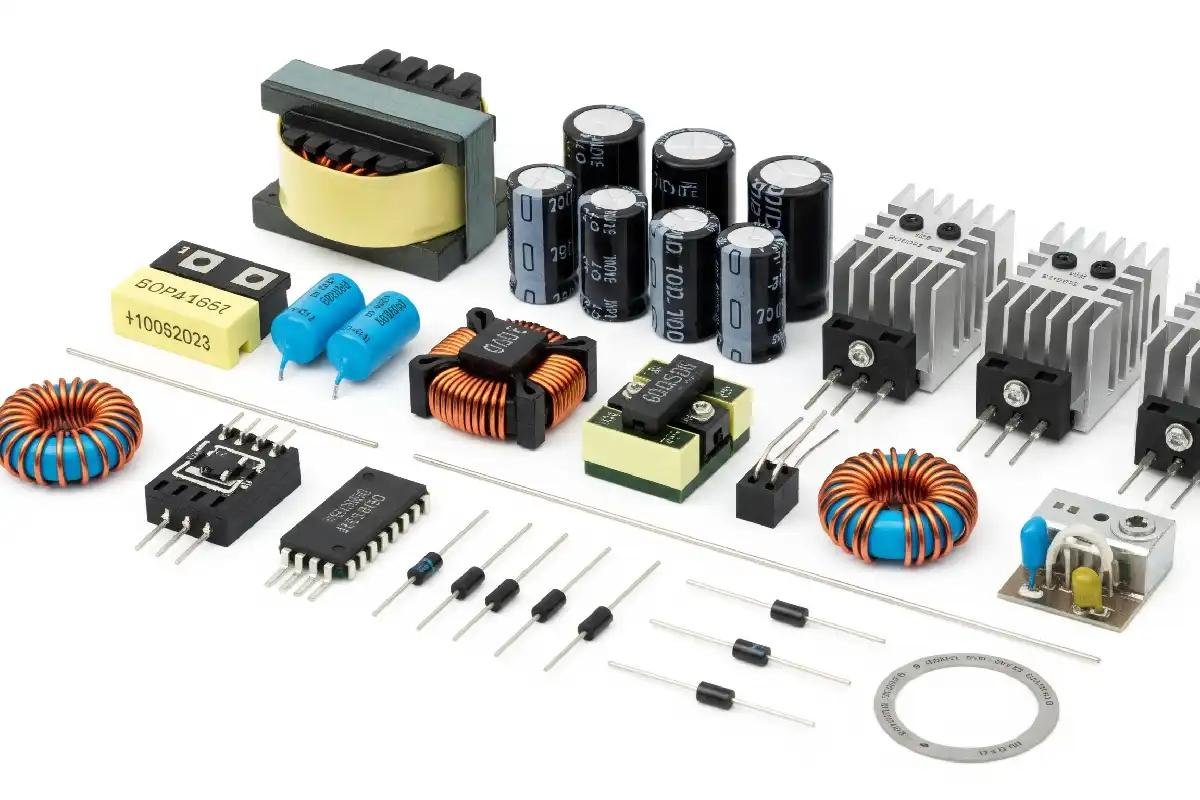
Why Have Switching Power Supplies Become So Popular?
For decades, linear power supplies were common in power conversion systems. They were simple in design and offered relatively low noise output.
However, as electronics evolved, their limitations became increasingly obvious.
Traditional linear power supplies are bulky because they rely on low-frequency transformers operating at 50Hz or 60Hz. Larger transformers require more copper, larger magnetic cores, and more installation space. As output power increases, so do size and weight.
Heat is another major concern. Because voltage regulation in linear designs often wastes excess energy as heat, efficiency is lower and thermal management becomes more difficult.
Switching power supplies solve these problems by operating at much higher frequencies. This allows smaller transformers, higher efficiency, lower heat generation, and more compact overall design.
A direct comparison helps illustrate the difference:
| Feature | Switching Power Supply | Linear Power Supply |
|---|---|---|
| Efficiency | 85-95% | 40-60% |
| Physical Size | Compact | Larger |
| Weight | Lightweight | Heavy |
| Heat Generation | Low | High |
| Cooling Requirement | Lower | Higher |
| Power Density | High | Lower |
Because of these advantages, switching power supplies have become the standard power solution in modern electronic design.
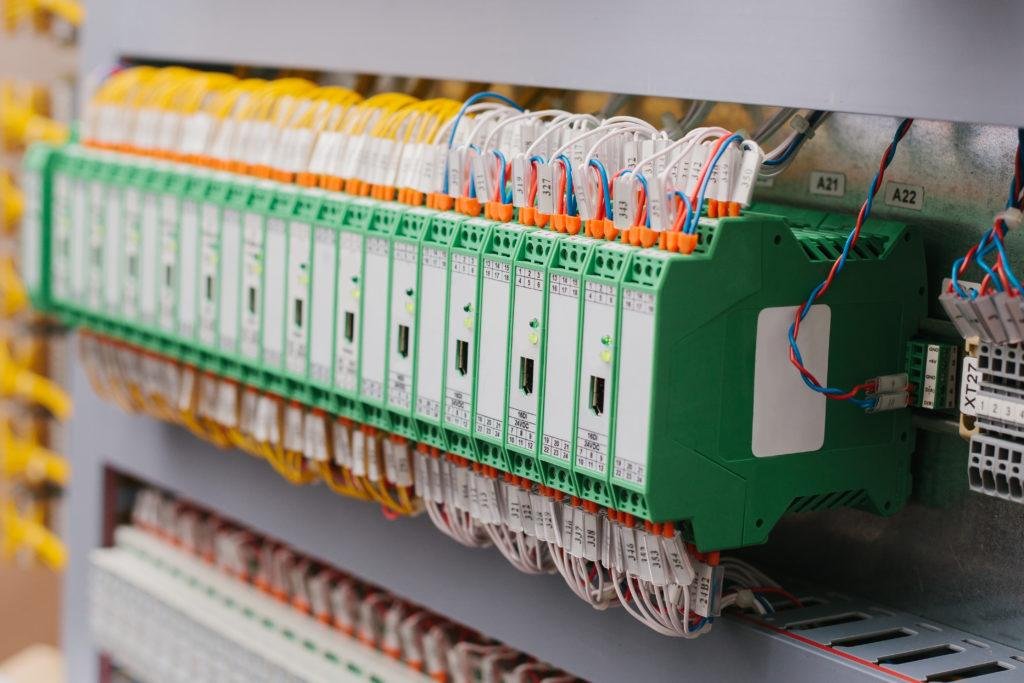

How Does a Switching Power Supply Actually Work?
Although switching power supply designs vary by application, most AC/DC models follow the same fundamental conversion process.
The process begins with AC input from the mains.
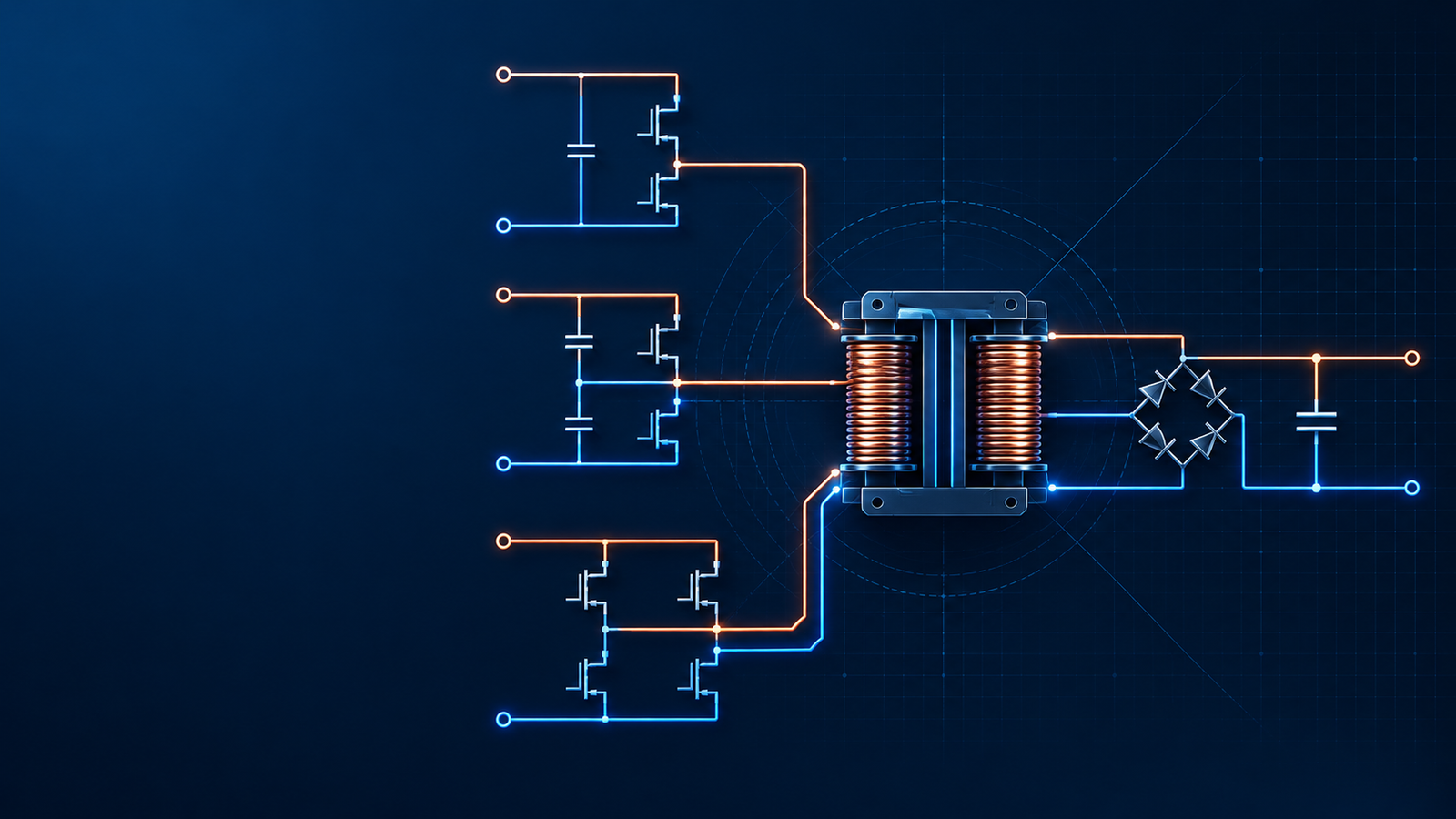
This incoming alternating current first passes through a rectifier circuit, where it is converted into pulsating DC voltage. A smoothing capacitor then reduces ripple and stabilizes the waveform.
Next comes power factor correction (PFC), which improves how the power supply draws current from the electrical grid. This stage is especially important in industrial and higher-power applications, where efficiency regulations and harmonic control matter.
After that, the power enters the switching stage-the core of the system.
At this point, MOSFET switching devices rapidly turn on and off at high frequency, converting the DC voltage into high-frequency pulses. These pulses pass through a transformer or inductor network, where the voltage is stepped down or adjusted to the required level.
Finally, the output is rectified and filtered again to deliver stable DC voltage to the load.
The power supply continuously monitors output voltage through feedback control. If the load changes, the switching duty cycle adjusts automatically to keep output stable.
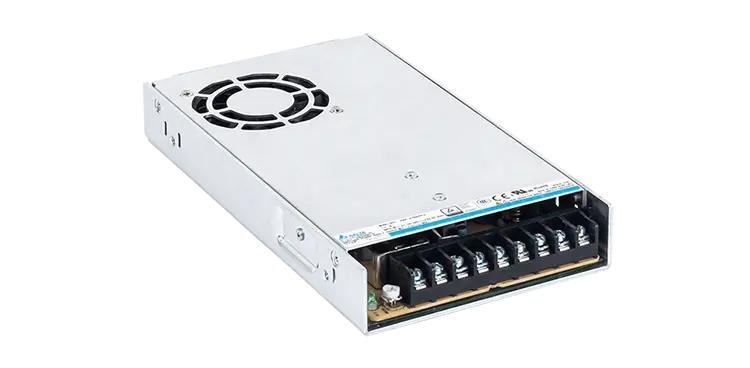
What Happens Inside a Switching Power Supply?
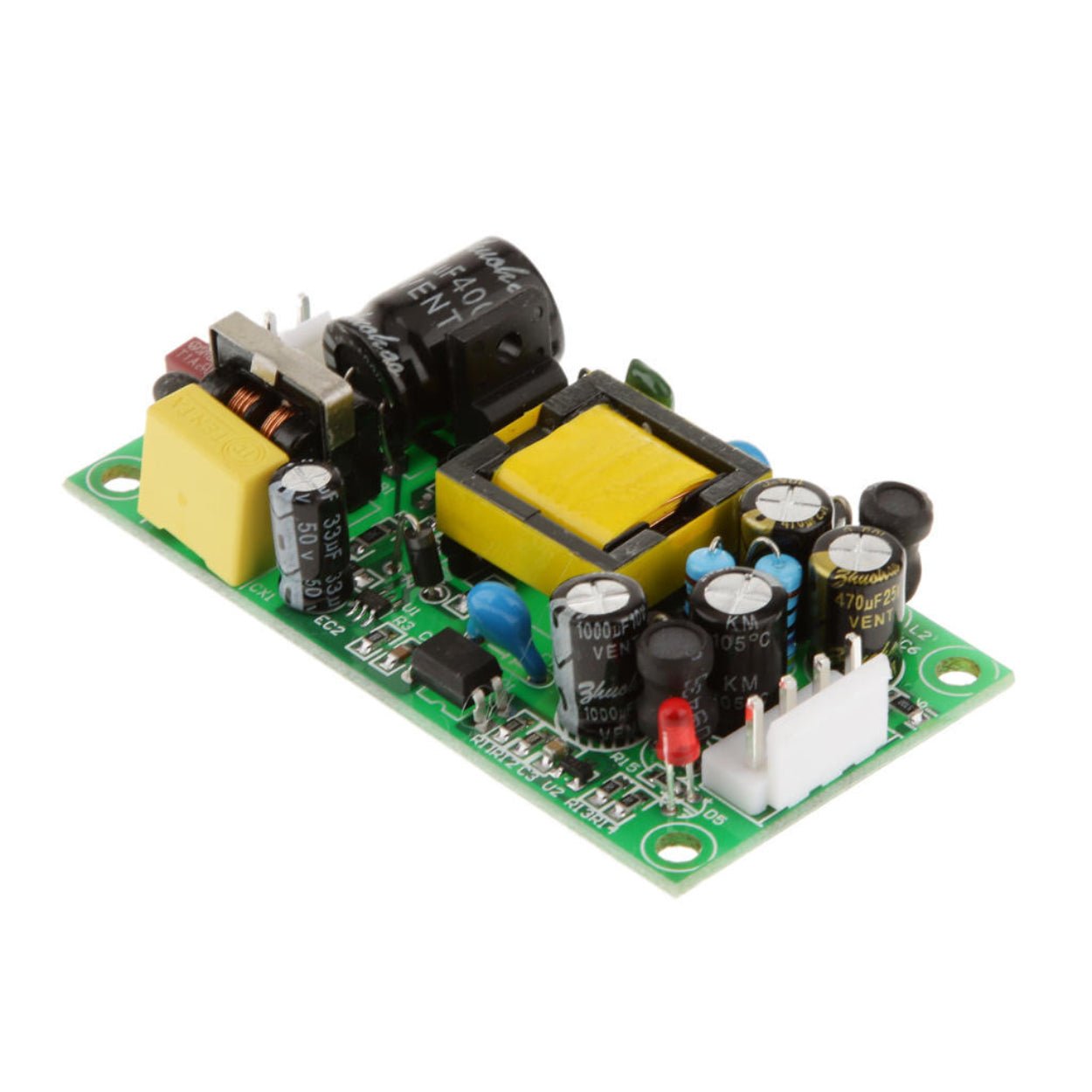
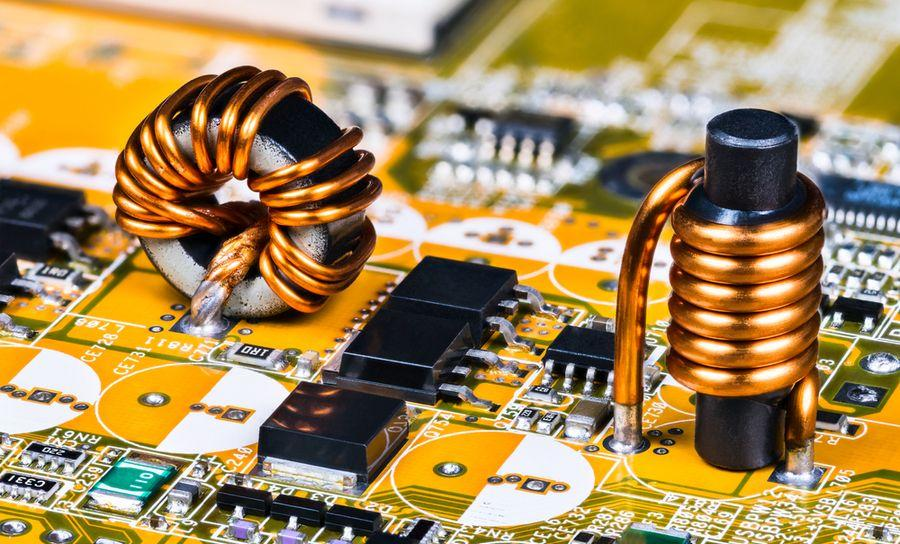
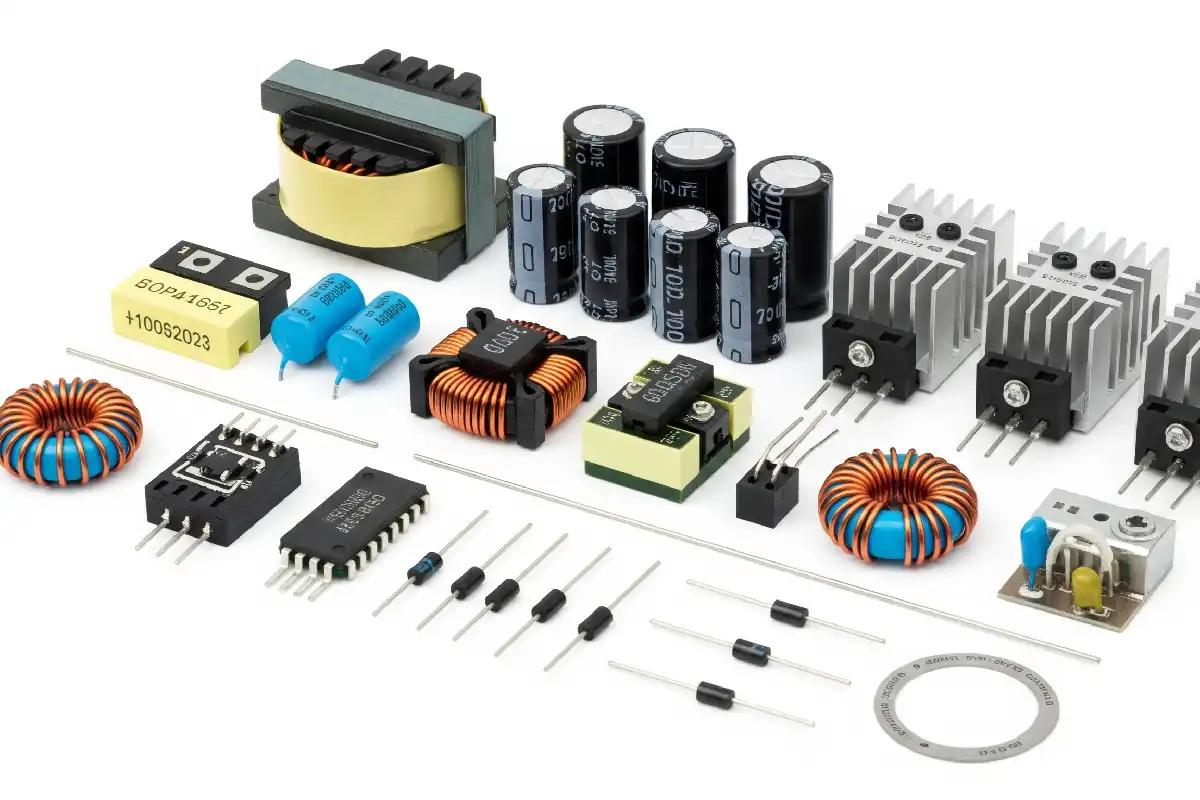
Inside a modern switching power supply, every component has a specific role.
The rectifier converts AC into DC.
The capacitor stores energy and smooths voltage ripple.
The switching transistor performs rapid on/off conversion.
The transformer provides voltage conversion and, in many designs, electrical isolation.
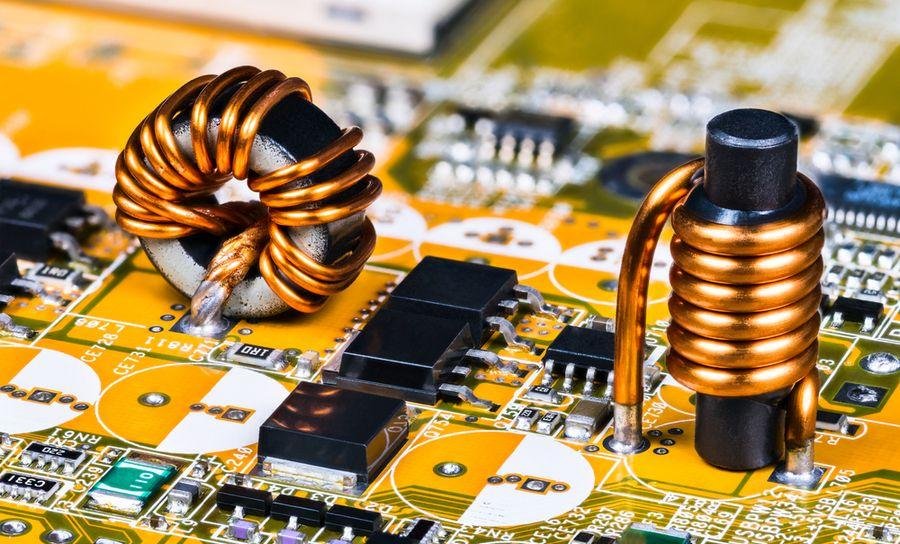
Inductors and output capacitors stabilize the final output voltage.
The controller IC monitors performance and regulates switching behavior in real time.
Although hidden inside a compact housing, these components work together as a complete power conversion system.
This engineering integration is one reason switching power supplies can achieve such high efficiency while remaining physically compact.
Where Are Switching Power Supplies Used Today?
Switching power supplies are now used in nearly every sector that depends on stable electrical power.
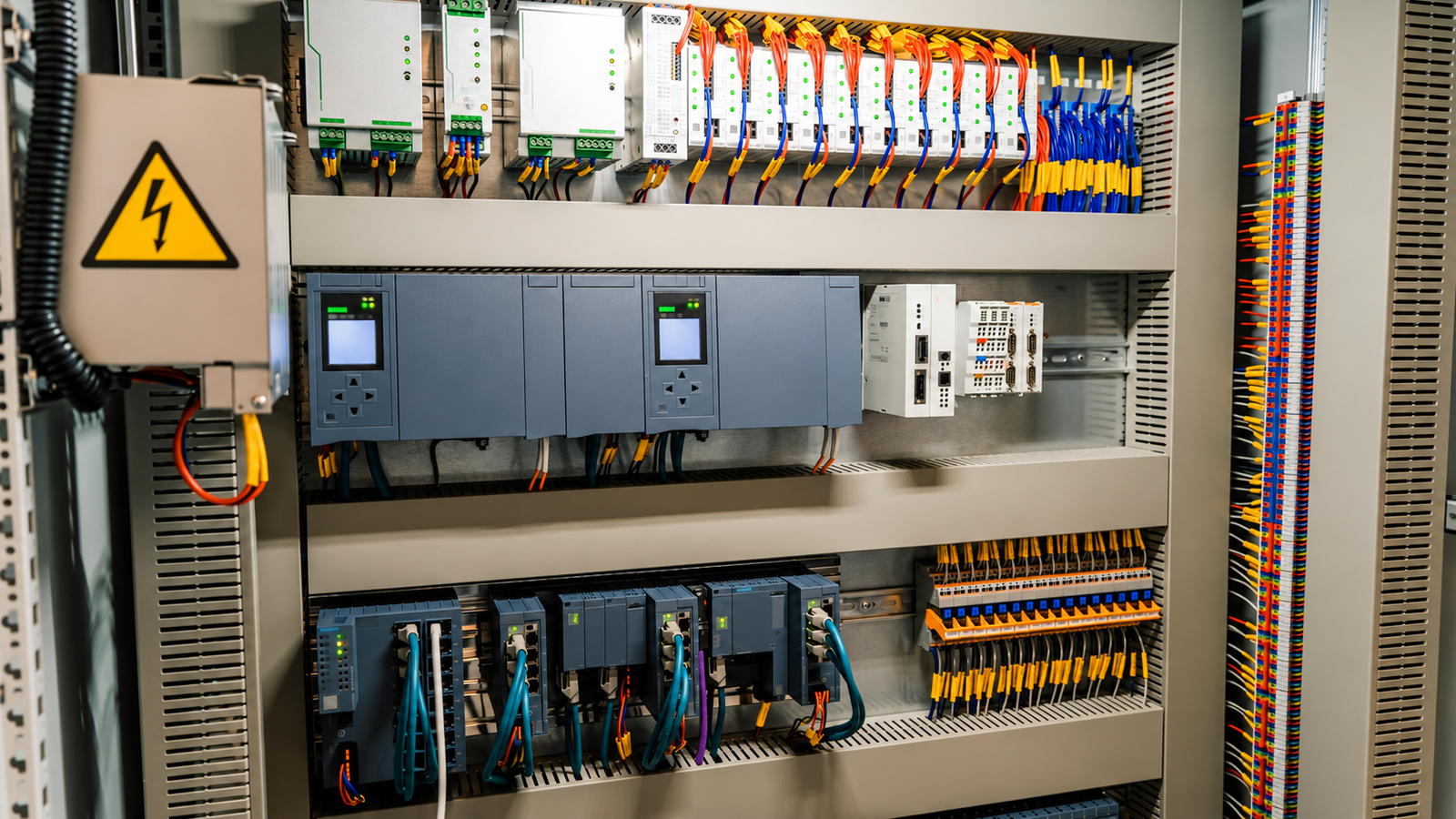
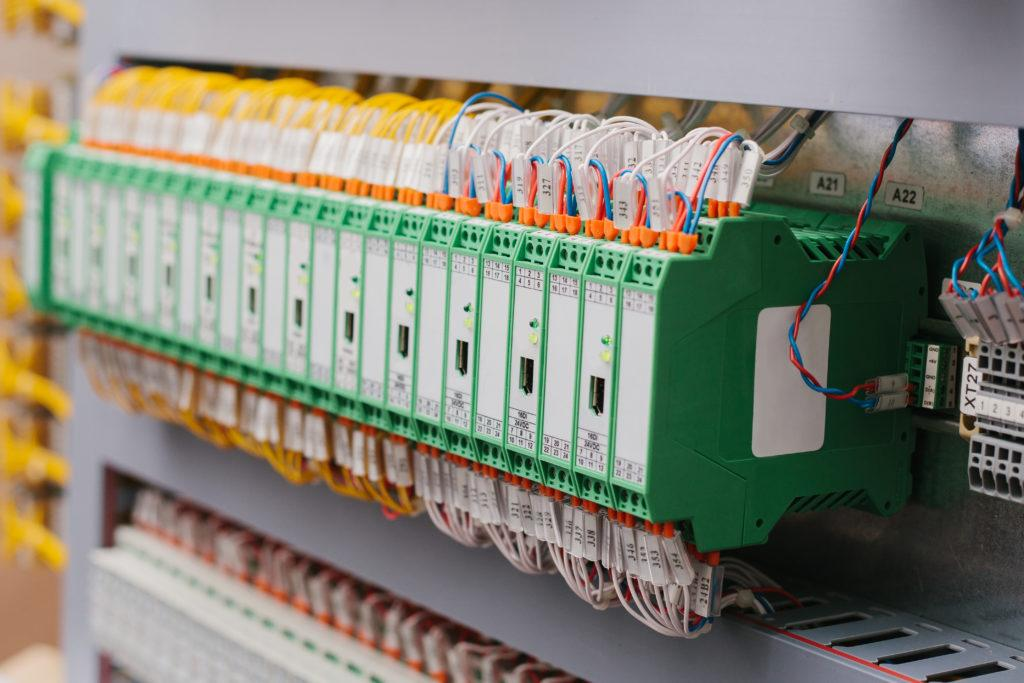
In industrial automation, they power PLCs, relays, control boards, HMIs, servo systems, and machine sensors.
In LED lighting applications, they provide regulated output for LED strips, signage systems, architectural lighting, and industrial fixtures.
In telecom infrastructure, they support routers, communication cabinets, base stations, and network power distribution.
They are also widely used in CCTV systems, medical devices, charging systems, embedded control modules, IoT devices, and smart home electronics.
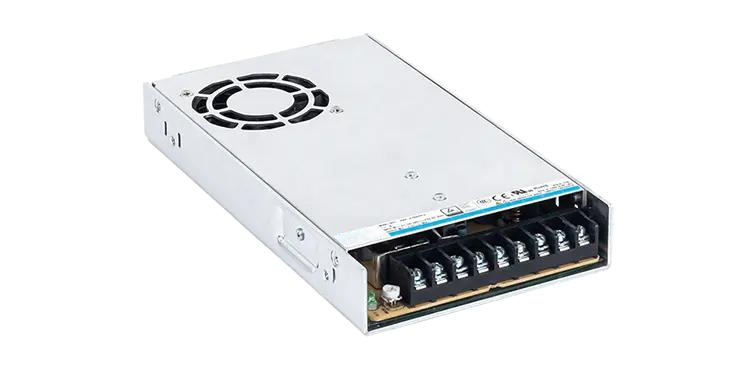
At SIPURUI, many customers use switching power supplies in industrial installations where stable long-term performance is critical. These include factory automation projects, electrical control panels, machine manufacturing, and integrated OEM equipment.
Choosing the Right Switching Power Supply for Industrial Applications
Selecting the correct switching power supply involves much more than choosing output voltage.
In real applications, engineers typically evaluate the entire operating environment before making a decision.
Input voltage range is important, especially for equipment exported globally.
Efficiency directly affects temperature rise and long-term energy consumption.
Ripple and noise performance can influence sensitive downstream electronics.
Protection functions such as overload protection, short-circuit protection, and over-voltage protection are essential for system reliability.
Environmental temperature, ventilation conditions, cabinet layout, and installation method all play important roles as well.
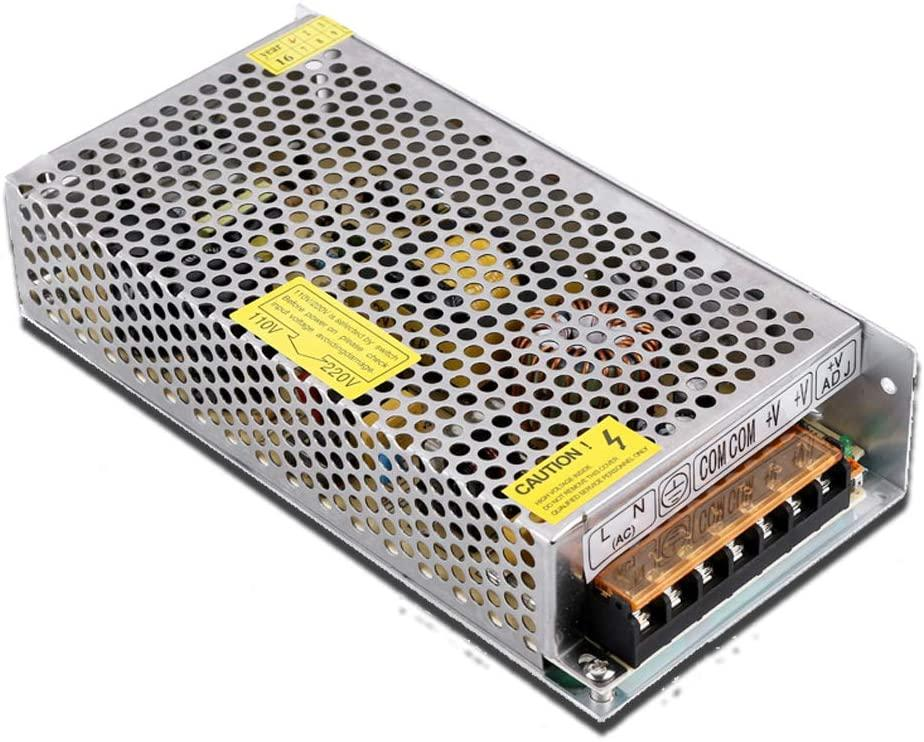
A commonly used industrial reference configuration is shown below:
| Specification | SIPURUI 24V Industrial Switching Power Supply |
|---|---|
| Input Voltage | 85-264VAC |
| Output Voltage | 24VDC |
| Rated Current | 10A |
| Output Power | 240W |
| Efficiency | Up to 92% |
| Cooling Method | Natural Air Cooling |
| Protection | OVP / OCP / SCP |
| Application | PLC / Industrial Control / Automation |
For many industrial customers, long-term stability matters more than peak output figures.
A power supply must continue delivering stable voltage not just during startup-but after thousands of operating hours.
Why More Customers Choose SIPURUI Switching Power Supplies
At SIPURUI, we design switching power supplies around real application requirements.
Our focus is not simply delivering rated output power. It is ensuring reliable operation under continuous industrial use.
This means stable DC output, consistent efficiency, strong thermal performance, low ripple, and durable protection under demanding conditions.
Whether used inside automation cabinets, LED installations, machine systems, or OEM electrical assemblies, SIPURUI switching power supplies are built to provide dependable power conversion where it matters most.
Customers value not only performance specifications, but also long-term reliability, installation flexibility, and consistent manufacturing quality.
The Future of Switching Power Supplies
The future of switching power supply technology continues moving toward higher efficiency, smaller size, and smarter integration.
With the rise of industrial automation, renewable energy, EV charging infrastructure, and connected electronics, demand for reliable AC/DC conversion continues to grow worldwide.
New semiconductor technologies such as GaN and SiC are improving switching performance even further.
Power supplies are becoming more compact while delivering more output power than ever before.
Thermal performance continues improving. Power density keeps increasing. Digital control is becoming more intelligent.
For manufacturers and system designers, the switching power supply is no longer just a support component-it has become a critical part of total system performance.
Final Thoughts
Switching power supplies have become one of the most important technologies in modern electronics because they solve multiple engineering challenges at once.
They deliver efficient power conversion, stable voltage regulation, compact size, lower heat generation, and broad application flexibility.
From industrial automation and LED lighting to telecom infrastructure and intelligent control systems, their role continues expanding.
As power requirements become more demanding, choosing the right switching power supply becomes increasingly important.
At SIPURUI, we believe reliable power is the foundation of reliable equipment.
And behind every reliable system is a power supply designed to perform-efficiently, safely, and consistently over time.
Buyer Checklist
- Confirm input and output voltage before model selection.
- Check wattage, load margin and operating temperature.
- Review installation space, airflow and protection requirements.
- Share project quantity and application details for quotation support.