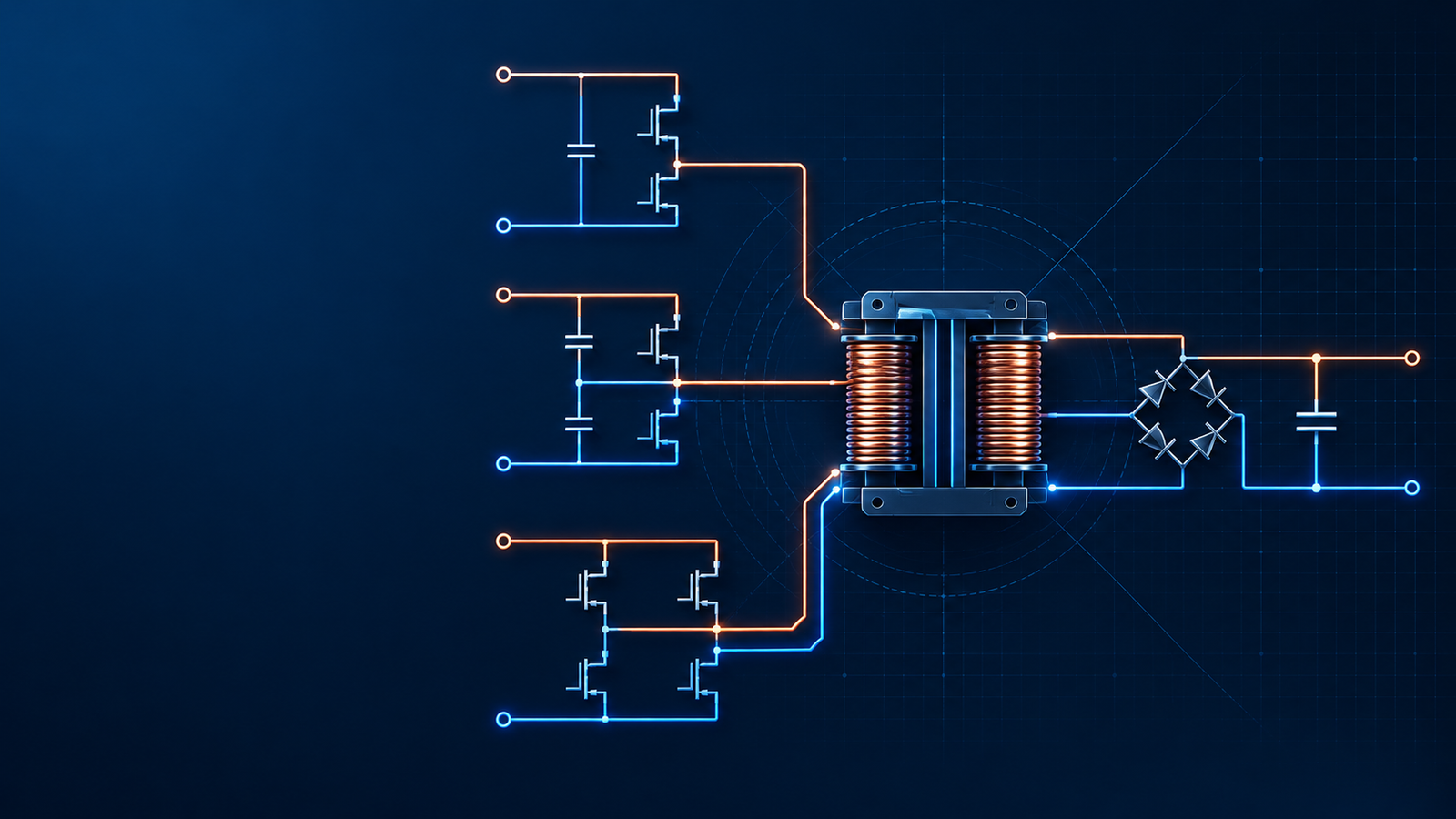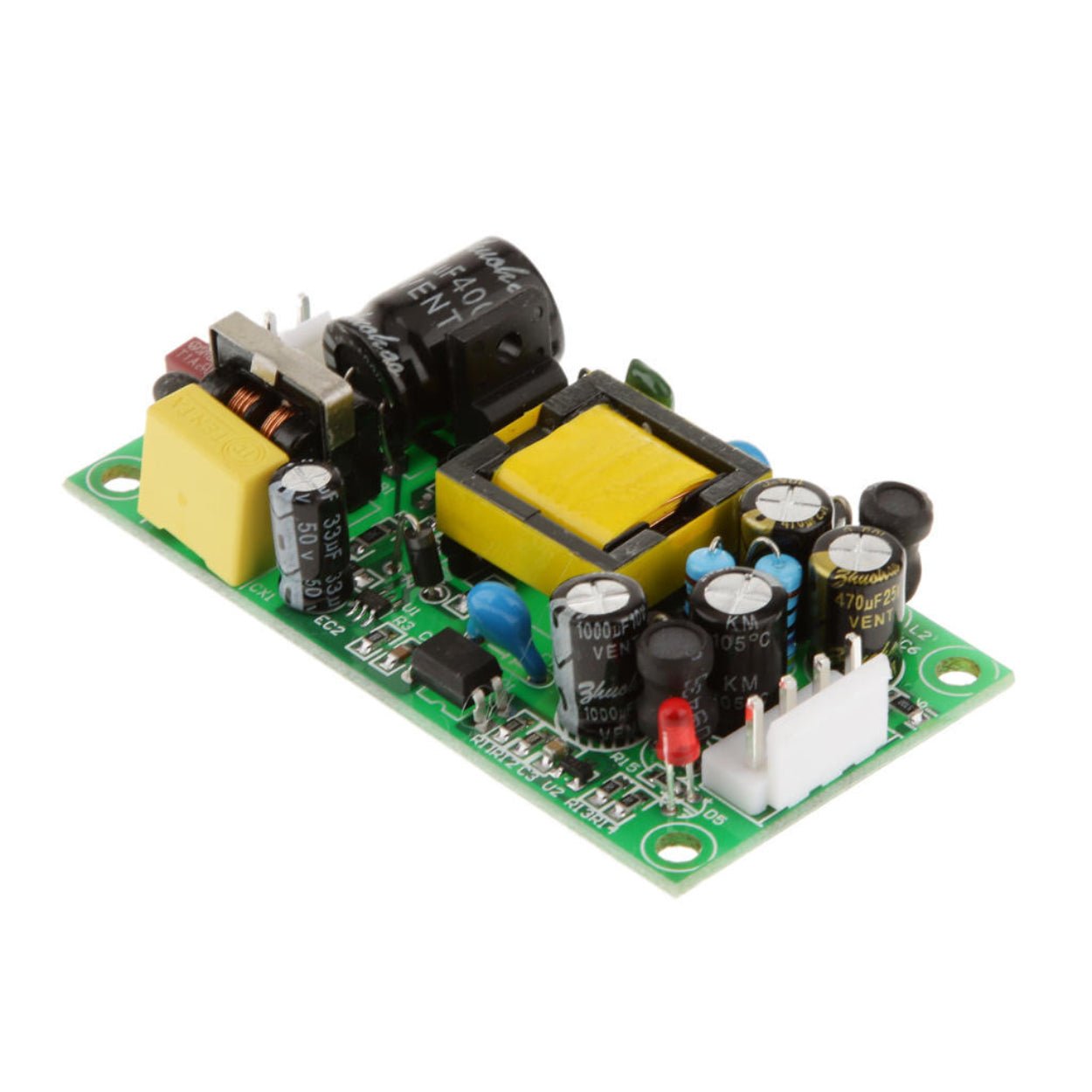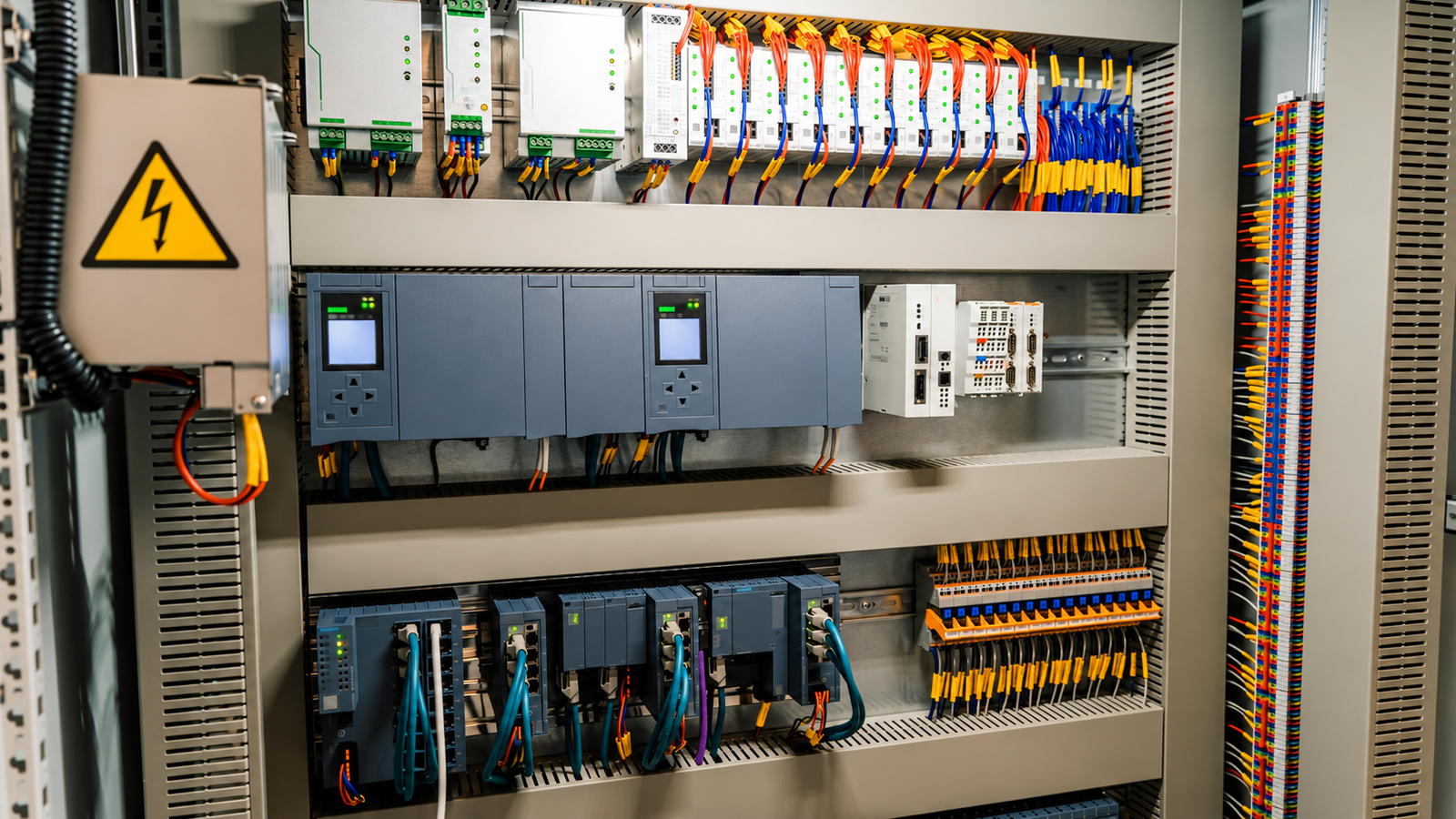
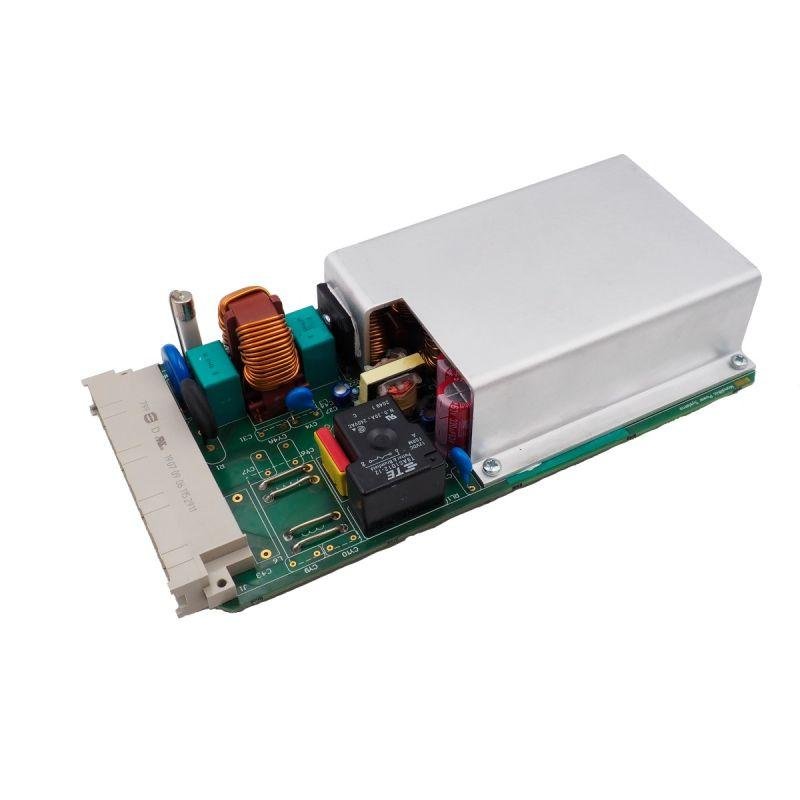
Understanding the Real Engineering Logic Behind Flyback, Forward, AHB, and LLC Topologies
Overview
Understanding the Real Engineering Logic Behind Flyback, Forward, AHB, and LLC Topologies
The power supply industry is changing rapidly. A few years ago, a 65W laptop adapter was considered relatively compact. Today, a modern GaN charger can deliver more than 140W of output power while remaining small enough to fit into a pocket. At the same time, high-power server power supplies are reaching efficiency levels close to 98%, while industrial systems continue operating reliably under increasingly demanding conditions.
Behind these changes is not simply better semiconductor technology. The real transformation is happening at the topology level.
The internal architecture of a switching power supply determines how electrical energy is transferred, how switching devices behave under load, how much heat is generated, and how efficiently the entire system operates. It affects everything from thermal management and EMI performance to transformer size and long-term reliability.
This is why topology selection has become one of the most important engineering decisions in modern power electronics.
Different applications require completely different design priorities. A low-cost adapter for consumer electronics focuses heavily on manufacturing cost and simplicity. A telecom power system prioritizes stability and reliability. A GaN fast charger demands extremely high power density, while AI server infrastructure is optimized almost entirely around efficiency and thermal performance.
As a result, modern switching power supplies are largely built around four mainstream architectures: Flyback, Forward, Asymmetrical Half-Bridge (AHB), and LLC Resonant topology. Each of these topologies dominates a specific application range because each solves a different engineering problem.
Understanding why these architectures exist - and why they continue evolving - is essential for anyone involved in modern power supply design.
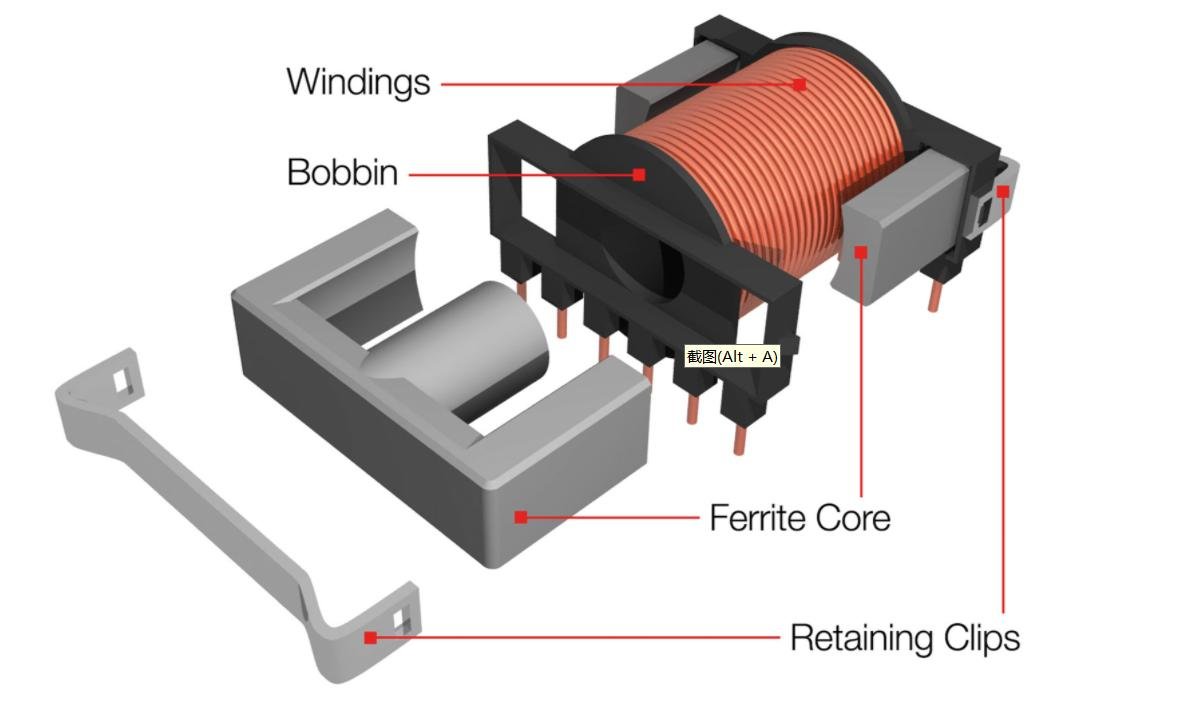
Why Does Topology Matter More Than Ever?
In traditional low-frequency power systems, efficiency limitations were often accepted as unavoidable. Heat generation was controlled using larger heatsinks, bigger enclosures, and conservative power density targets. However, modern electronic systems no longer allow that approach.
USB PD charging standards continue increasing power levels. AI servers consume enormous amounts of electricity. Energy storage systems require higher conversion efficiency to reduce thermal loss. EV charging infrastructure must operate continuously under extremely demanding conditions.
At the same time, customers expect products to become smaller, lighter, quieter, and more energy efficient.
These requirements are pushing traditional hard-switching architectures closer to their practical limits. The industry is therefore moving rapidly toward soft-switching topologies capable of operating at higher frequencies with lower switching losses.
The evolution from conventional Flyback designs toward AHB and LLC architectures is a direct reflection of this broader industry transition.
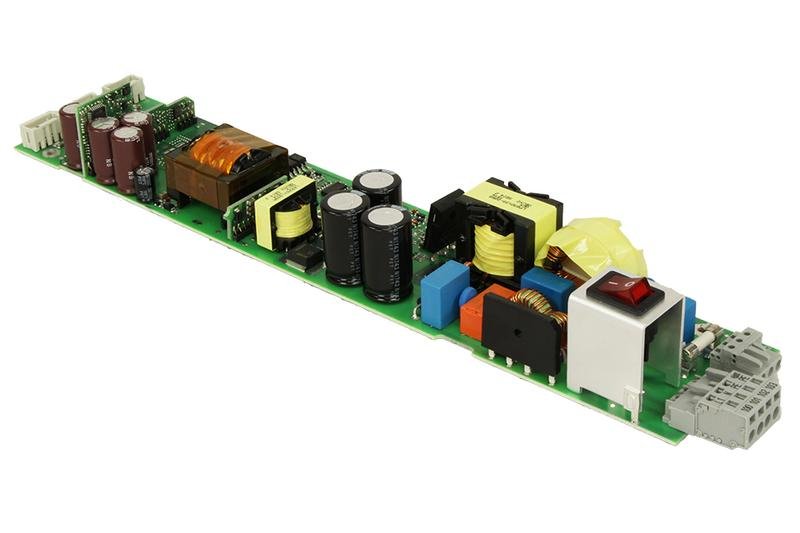
Why Does Flyback Topology Still Dominate Consumer Electronics?
Despite being one of the oldest switching power supply architectures, Flyback topology remains the most widely used isolated converter design in the global electronics industry. The reason is simple: for low-power applications, few topologies can compete with its cost efficiency and structural simplicity.
In a Flyback converter, energy is first stored inside the transformer during the MOSFET conduction period and then released to the secondary side after the switching device turns off. Unlike other topologies that rely on separate magnetic structures for energy transfer and storage, the Flyback transformer performs several functions simultaneously within a single component. This significantly reduces component count and simplifies PCB layout, which is particularly important in cost-sensitive consumer products.
This architectural simplicity explains why Flyback topology continues to dominate applications such as smartphone chargers, router adapters, smart home devices, LED drivers, and standby power supplies. In these markets, manufacturing cost remains one of the most important competitive factors, and Flyback provides a highly practical balance between efficiency, performance, and BOM optimization.
Modern quasi-resonant and Active Clamp Flyback technologies have also improved efficiency considerably compared with earlier hard-switching generations. SIPURUI low-power adapter platforms, for example, increasingly integrate optimized quasi-resonant Flyback control schemes to improve standby performance and reduce thermal stress in compact designs.
However, Flyback topology becomes increasingly difficult to optimize as output power rises. Because energy transfer occurs in discrete storage-and-release cycles, peak current stress increases rapidly at higher wattage levels. This creates greater switching losses, larger voltage spikes caused by leakage inductance, and more challenging thermal behavior.
Once output power moves beyond roughly 100W, maintaining both high efficiency and low temperature rise becomes significantly more complicated. This is one of the main reasons older high-power adapters often appear noticeably larger and hotter than modern soft-switching designs.
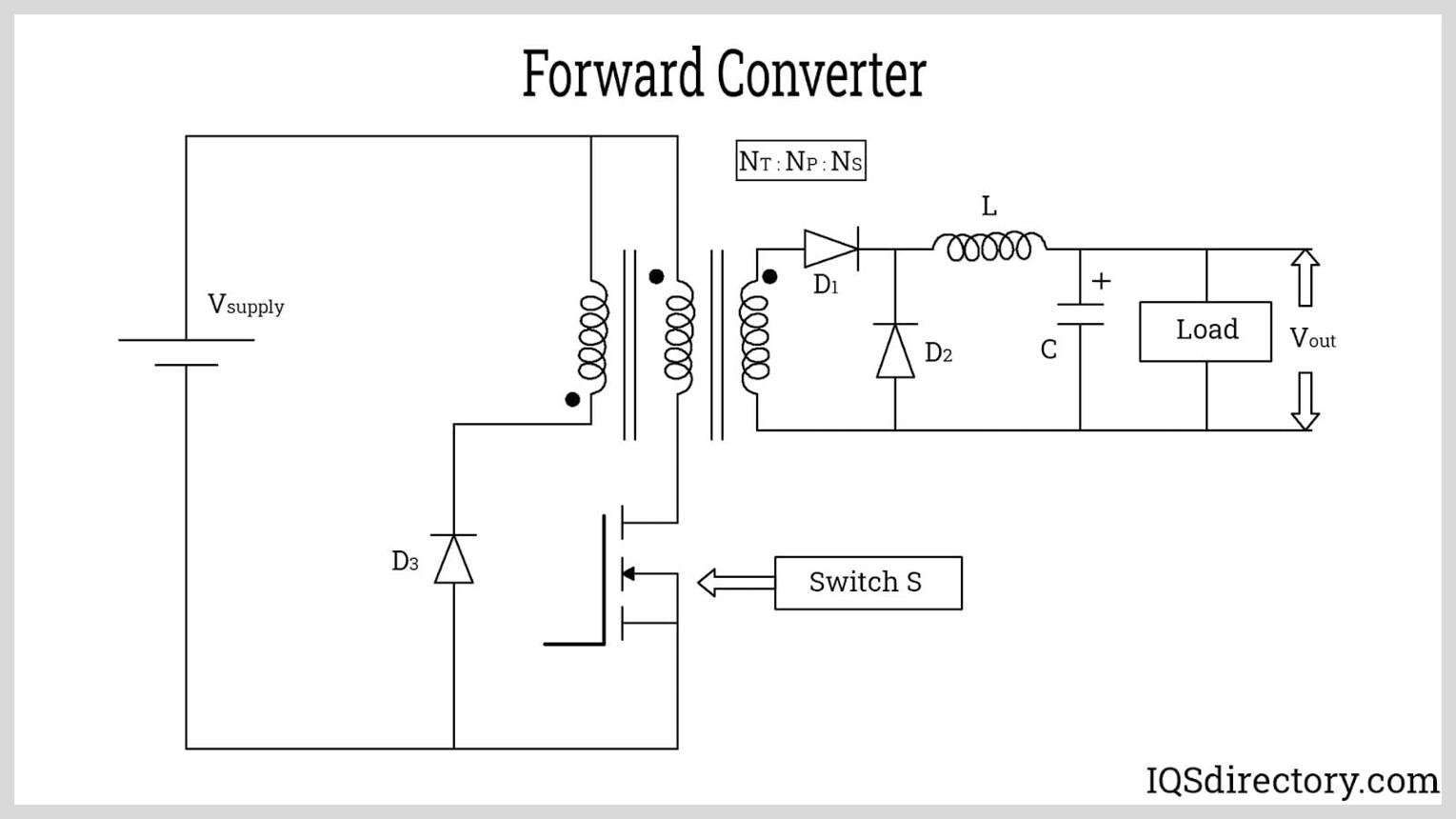

Why Did Forward Topology Become the Standard for Industrial Power Supplies?
As power requirements increased beyond the most comfortable operating range of Flyback converters, Forward topology emerged as one of the most important architectures for industrial and telecom systems.
The key difference lies in how energy is transferred. Instead of storing energy inside the transformer before releasing it, a Forward converter transfers energy directly from the primary side to the secondary side while the switching device is conducting. This fundamentally changes how the converter behaves under load.
Because energy transfer is continuous during the conduction interval, output ripple is generally lower and transient response becomes significantly faster. These characteristics are especially important in industrial automation systems, communication infrastructure, and medical electronics where output stability directly affects system reliability.
Forward topology also improves transformer utilization because the magnetic core no longer functions primarily as an energy storage element. This allows better thermal performance and makes the architecture more scalable in medium-power applications.
For many years, Forward converters represented the dominant solution for systems operating between approximately 100W and 500W. Even today, many industrial power supplies continue using Forward or Active Clamp Forward designs because they offer excellent reliability and stable long-term operation.
SIPURUI industrial PSU platforms still utilize optimized Forward architectures in applications where electrical robustness and output stability are prioritized over extreme miniaturization.
Nevertheless, Forward topology introduces additional complexity compared with Flyback systems. The transformer core must be properly reset during each switching cycle, which requires additional reset circuitry such as reset windings or active clamp networks. These extra components increase both design complexity and manufacturing cost.
As high-frequency soft-switching architectures became more commercially viable, many applications that previously relied on Forward topology gradually transitioned toward more efficient resonant solutions.
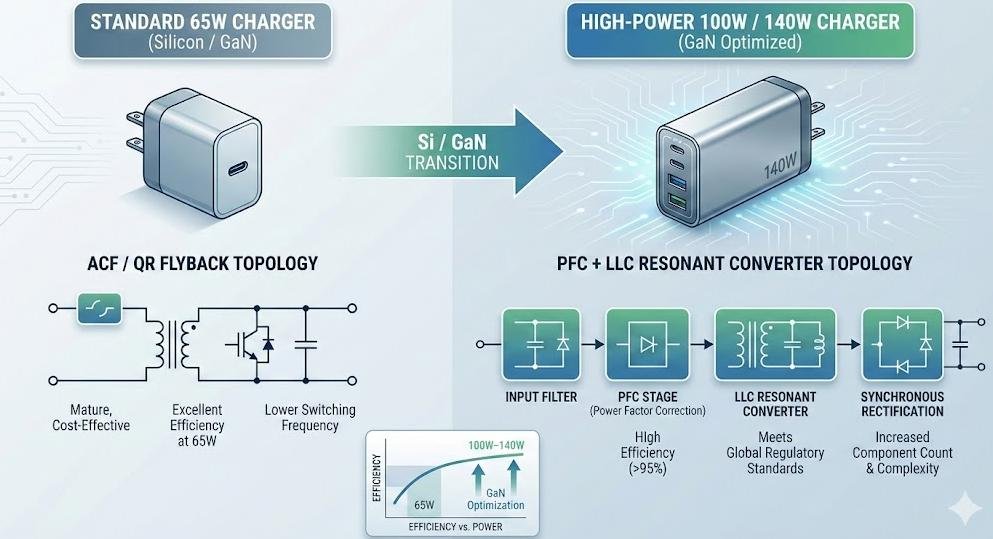
Why Has AHB Become So Important in GaN Fast Chargers?
The rapid growth of USB PD fast charging fundamentally changed the power adapter industry. As charging power levels moved beyond 65W and approached 100W, 140W, and even higher, conventional Flyback architectures began encountering serious thermal and efficiency limitations.
This created ideal conditions for the rise of Asymmetrical Half-Bridge topology, commonly known as AHB.
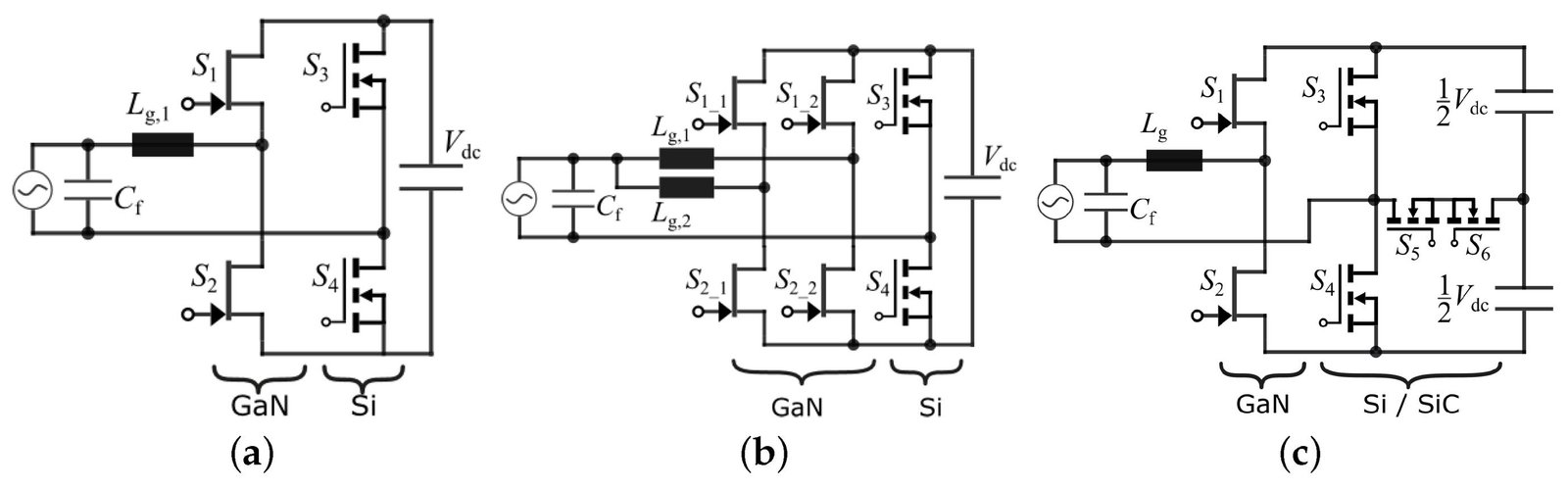
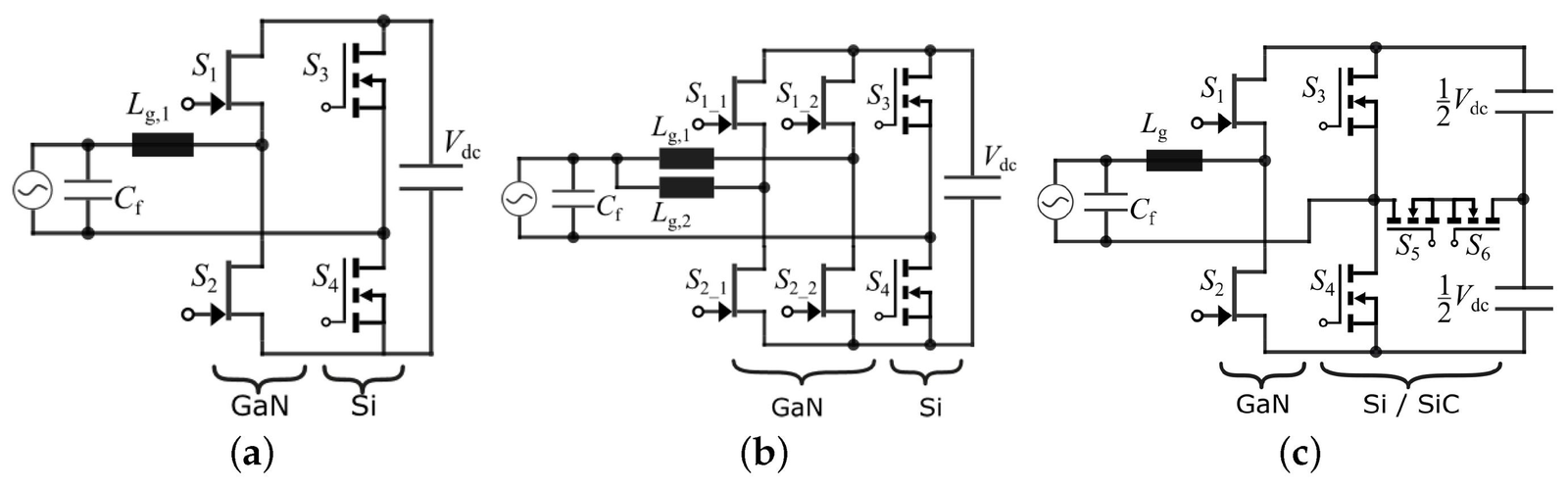
AHB became especially important because it supports Zero Voltage Switching (ZVS), one of the most effective methods for reducing switching loss in high-frequency power converters. In conventional hard-switching systems, MOSFETs often turn on while significant voltage still exists across the device, generating large switching losses and heat. AHB minimizes this problem by ensuring that switching transitions occur under near-zero voltage conditions.
The reduction in switching loss allows converters to operate at significantly higher frequencies without excessive thermal stress. Higher frequency operation directly reduces transformer size, magnetic volume, and overall system footprint.
This is one of the main reasons modern GaN chargers can deliver dramatically higher power density compared with older silicon-based adapters.
The relationship between GaN semiconductors and AHB topology is particularly important. GaN devices are capable of extremely fast switching speeds and low switching losses, but these advantages can only be fully utilized if the surrounding topology supports efficient soft-switching behavior. AHB provides precisely that environment.
As a result, many modern high-end fast chargers now rely on AHB + GaN combinations to achieve efficiency levels above 95% while maintaining compact mechanical dimensions.
SIPURUI GaN charging platforms increasingly integrate AHB architectures because they offer an excellent balance between efficiency, thermal performance, and high-frequency operation.
However, AHB design is significantly more complex than conventional Flyback systems. Engineers must carefully optimize switching dead-time, ZVS operating range, EMI suppression, and light-load performance. PCB layout also becomes much more sensitive at higher switching frequencies, requiring careful control of parasitic inductance and noise coupling.
Even so, AHB has rapidly become one of the defining architectures of modern high-power USB PD charging systems.
When efficiency becomes the primary engineering target, LLC resonant topology is often the preferred solution.
Today, LLC converters are widely used in AI servers, telecom rectifiers, energy storage systems, EV charging infrastructure, and high-end industrial power supplies because they provide extremely high conversion efficiency together with excellent thermal behavior.
The core advantage of LLC lies in its resonant operating mechanism. Instead of abruptly switching current and voltage as in conventional hard-switching systems, LLC converters use a resonant tank composed of inductive and capacitive elements to create smooth sinusoidal energy transfer. This allows the converter to achieve both Zero Voltage Switching on the primary side and Zero Current Switching on the secondary side.
The result is dramatically reduced switching loss, lower EMI generation, and much lower thermal stress.
In large-scale AI server deployments, even a small efficiency improvement can create enormous operational savings. A multi-kilowatt server power supply operating at 94% efficiency dissipates significantly more heat than one operating at 98%. Across thousands of servers, that difference directly affects cooling infrastructure, electricity consumption, and long-term reliability.
This is why LLC topology has become increasingly important in modern data center and renewable energy systems.
SIPURUI high-power PSU platforms increasingly combine PFC front-end stages with LLC resonant converters in order to achieve the efficiency and thermal performance required by modern infrastructure applications.
However, LLC remains one of the most technically demanding power topologies to design successfully. Engineers must carefully optimize resonant inductance, magnetizing inductance, transformer parameters, gain characteristics, and operating frequency range. Improper resonant design can easily create instability, poor light-load behavior, or reduced efficiency.
Despite these challenges, LLC continues to dominate applications where efficiency, power density, and thermal performance are considered mission-critical.
The Future of Power Supply Topology
The evolution of switching power supply topology is closely tied to the broader development of semiconductor technology and global energy efficiency requirements.
As GaN and SiC devices continue advancing, switching frequencies will increase further, enabling even smaller magnetic components and higher power density. At the same time, AI computing, renewable energy systems, and electrified transportation will continue driving demand for ultra-efficient power conversion architectures.
This trend strongly favors soft-switching topologies such as AHB and LLC.
Nevertheless, traditional architectures like Flyback and Forward will continue playing important roles because different applications still require different balances between cost, efficiency, reliability, and complexity.
Ultimately, there is no universally superior topology. The best solution is always the one that most effectively matches the electrical, thermal, mechanical, and economic requirements of a specific application.
That balance remains the foundation of modern power supply engineering.
Buyer Checklist
- Confirm input and output voltage before model selection.
- Check wattage, load margin and operating temperature.
- Review installation space, airflow and protection requirements.
- Share project quantity and application details for quotation support.