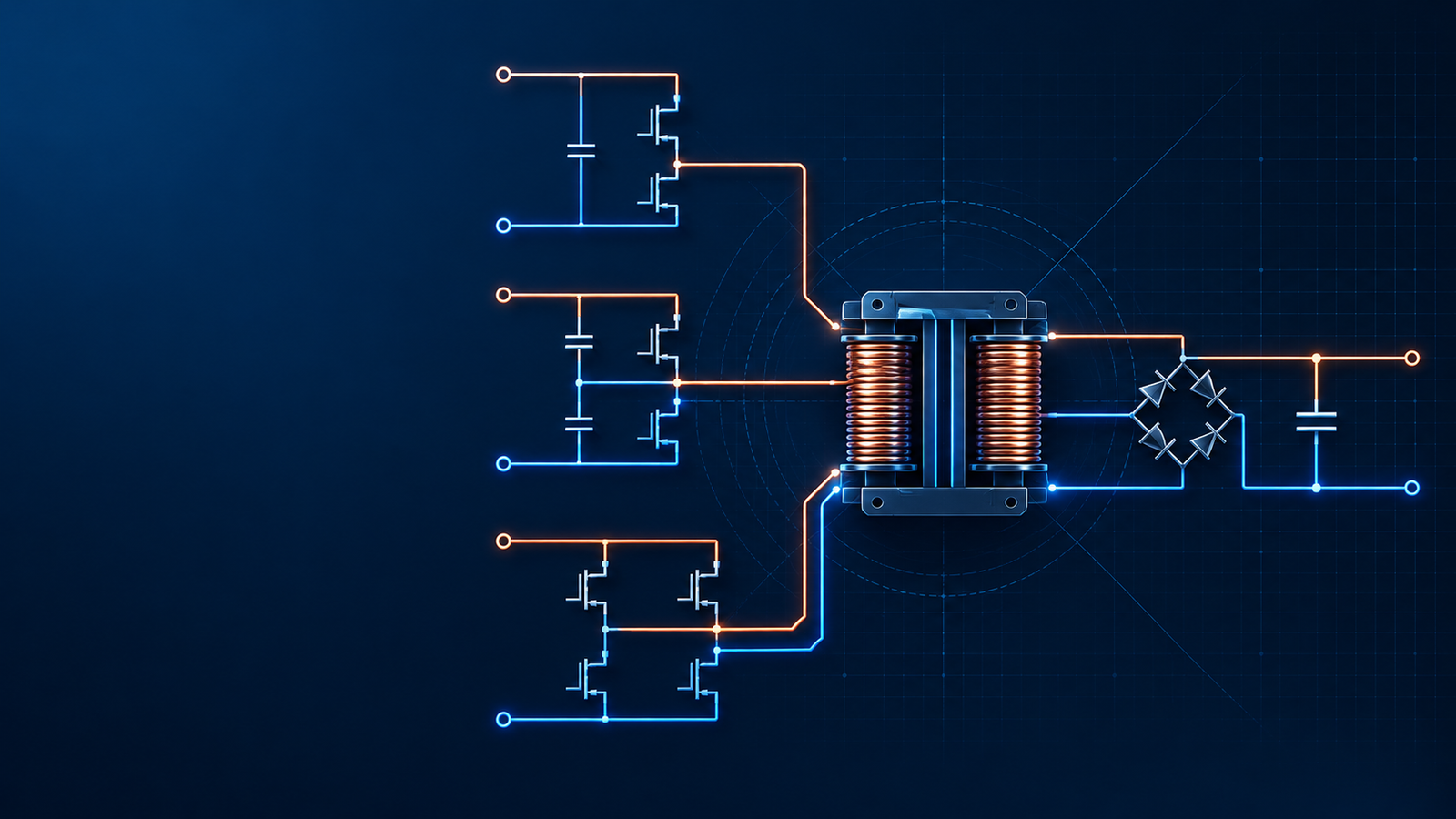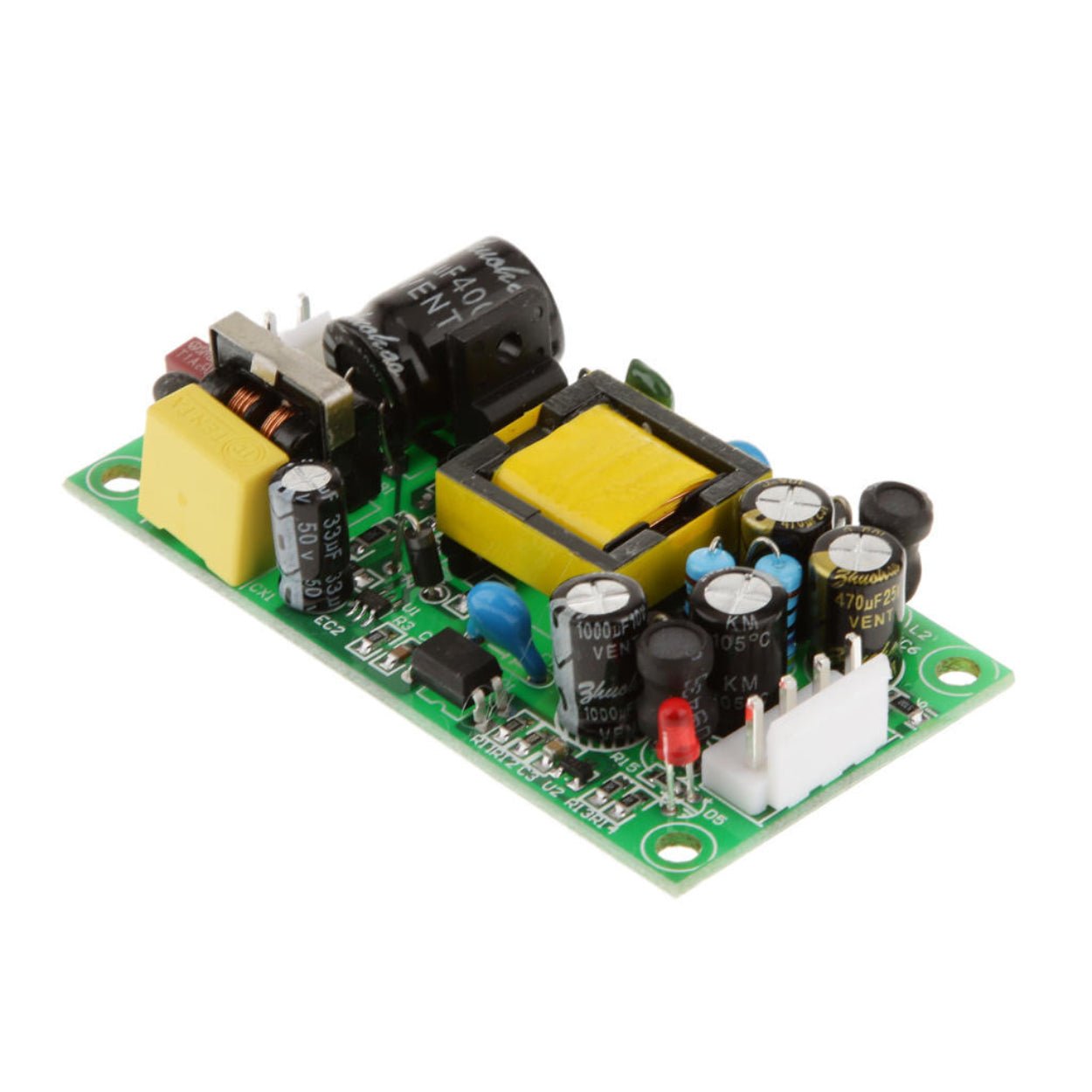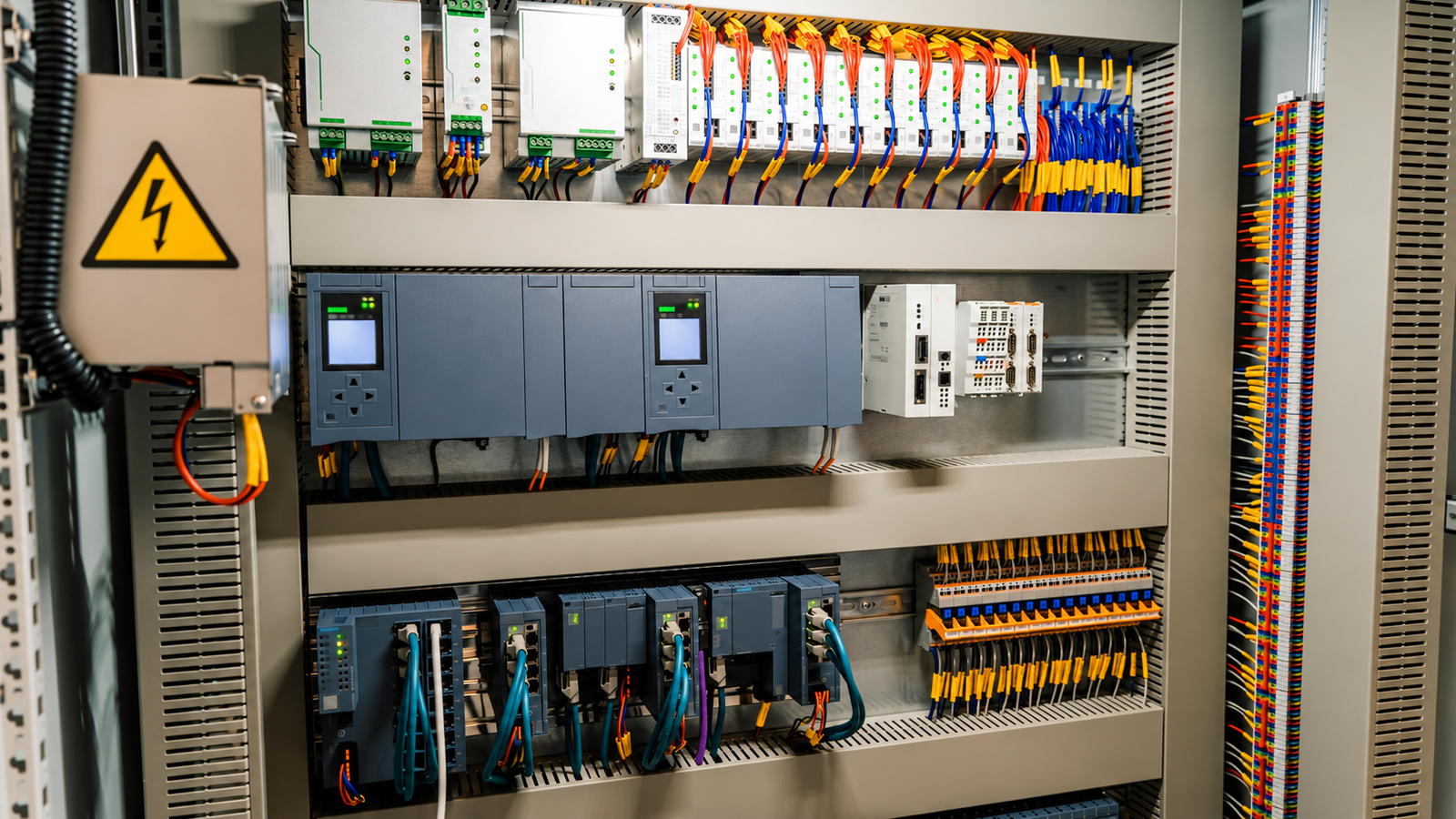
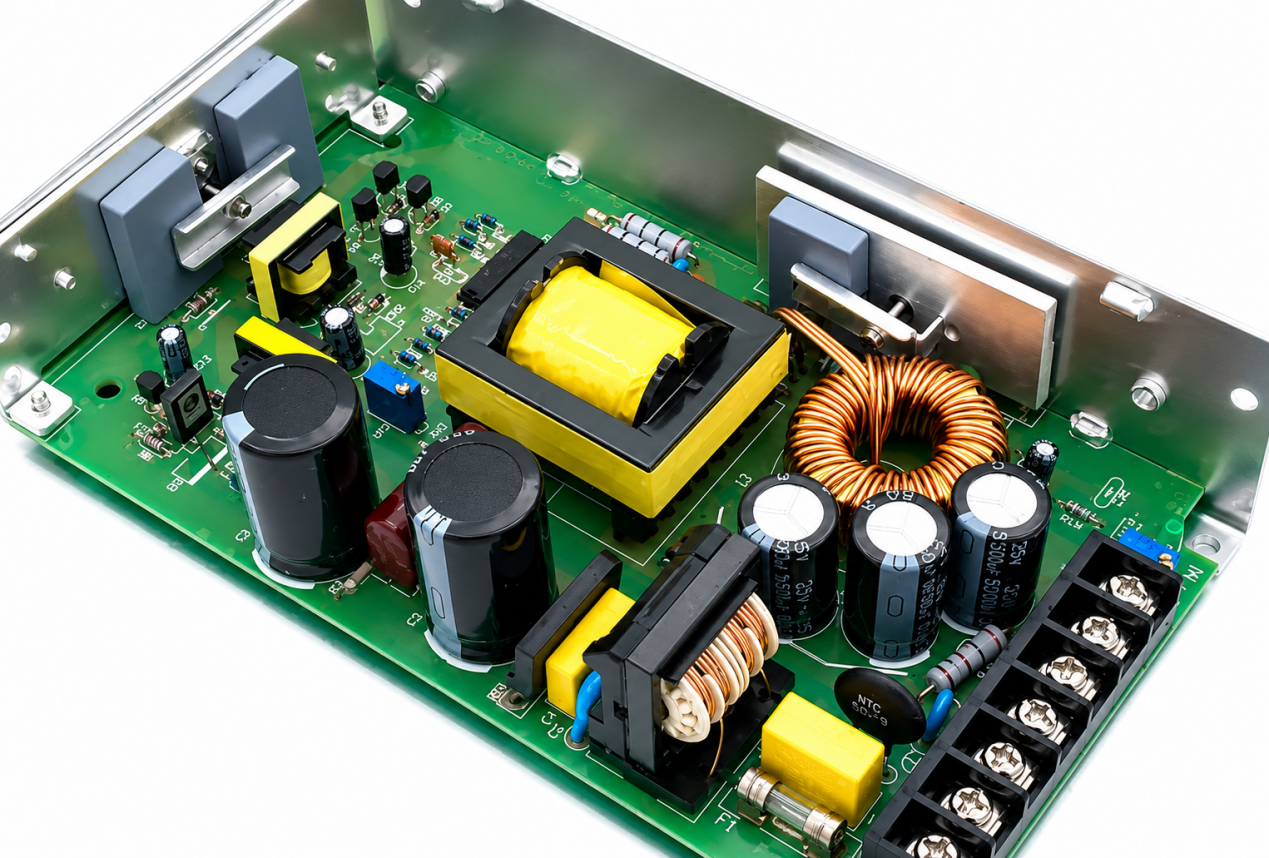
Switching power supplies are widely used in industrial automation, LED lighting, communication systems, security equipment, and countless other electronic applications.
Overview
Switching power supplies are widely used in industrial automation, LED lighting, communication systems, security equipment, and countless other electronic applications. Whether installed inside a control cabinet, integrated into industrial machinery, or used to power sensitive electronic devices, they play a critical role in providing stable and reliable DC power.
However, many users notice that their switching power supply becomes warm or even hot during operation. This often raises concerns about safety and reliability. Is the power supply overloaded? Is it failing? Or is the temperature rise simply a normal part of operation?
The truth is that heat generation is an unavoidable characteristic of every switching power supply. Since electrical energy is constantly being converted and regulated, a small portion of that energy is inevitably lost and transformed into heat. Understanding the sources of this heat can help users determine whether a power supply is operating normally and identify potential issues before they affect performance.
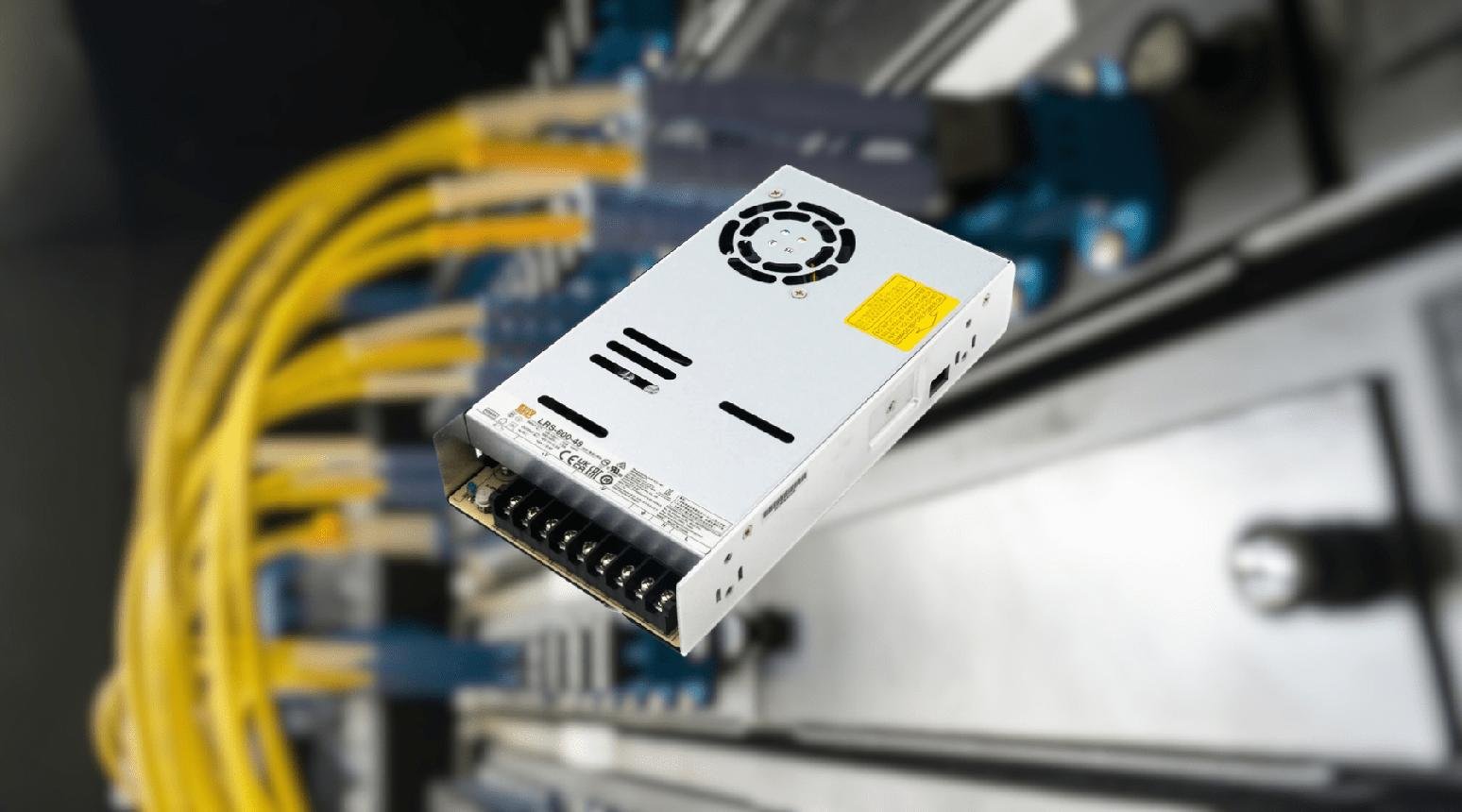
Power Conversion Naturally Generates Heat
The primary purpose of a switching power supply is to convert electrical energy from one voltage level to another while maintaining a stable output. Although modern power supplies are highly efficient, no energy conversion process can achieve perfect efficiency. Some of the incoming electrical energy is always lost during operation.
This lost energy does not simply disappear. Instead, it is converted into thermal energy that accumulates inside the power supply. Even a high-efficiency unit operating at 90% efficiency still converts approximately 10% of its input power into heat. As output power increases, the amount of heat generated also increases.
For example, a 300W power supply operating near its rated output may dissipate dozens of watts of heat internally. Without proper thermal management, this heat can quickly raise the temperature of critical components and affect long-term reliability.
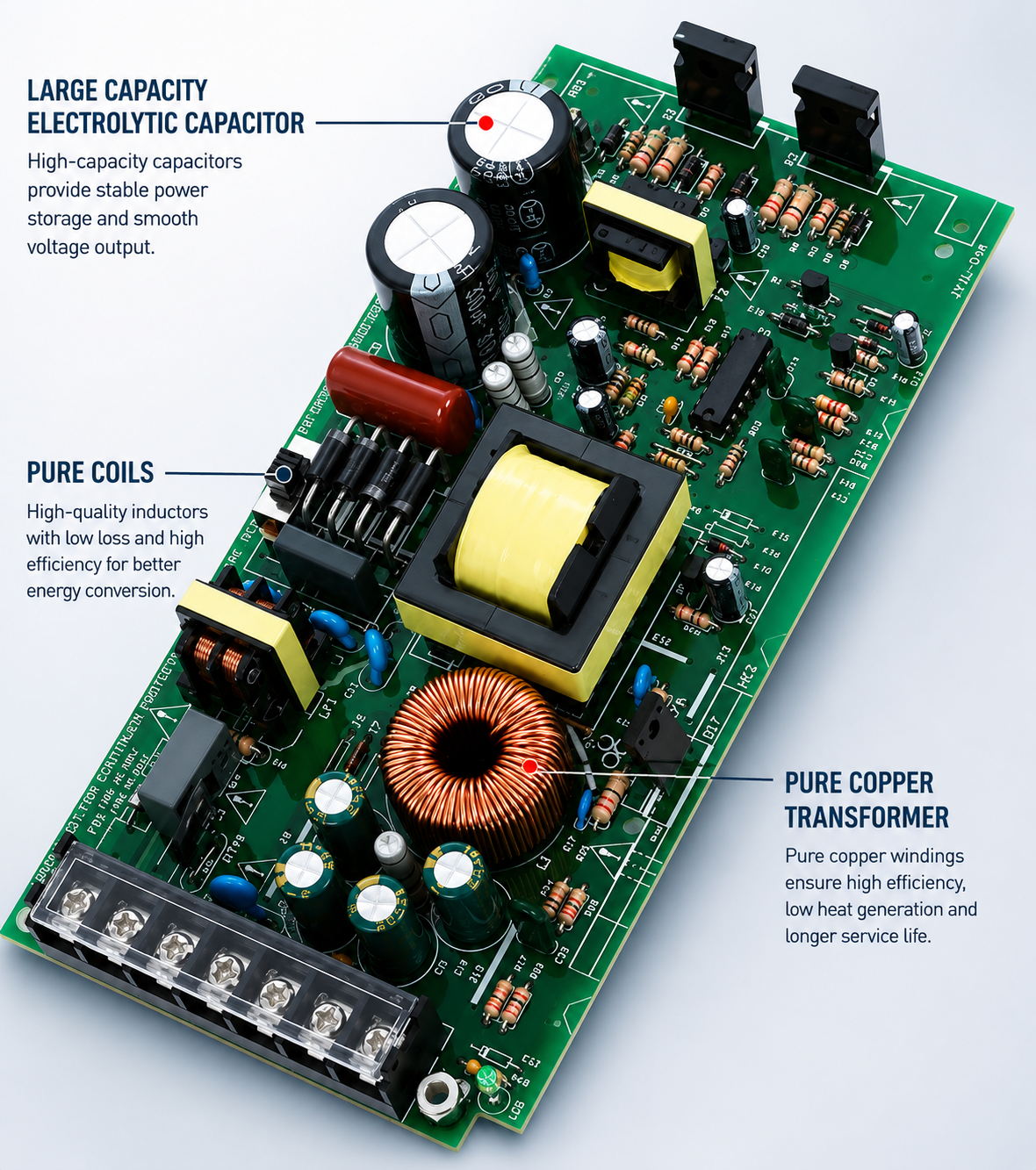
Electronic Components Are Major Sources of Heat
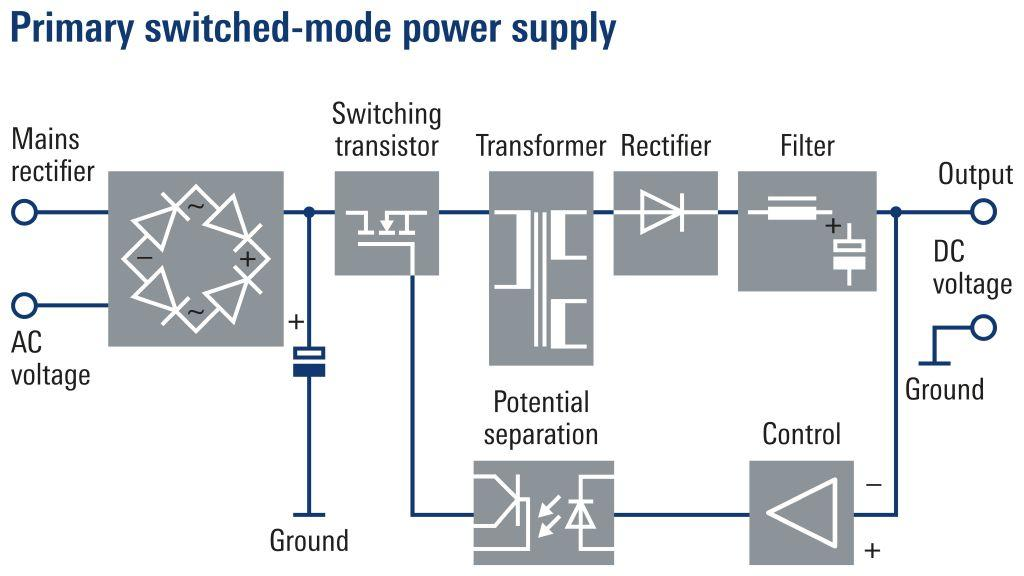
Several key components inside a switching power supply contribute directly to heat generation. Among them, MOSFETs, rectifier diodes, transformers, and inductors are responsible for handling and processing most of the electrical energy flowing through the system.
Whenever current passes through a semiconductor device, a certain amount of resistance is encountered. This resistance creates power loss in the form of heat, a phenomenon commonly referred to as conduction loss. The higher the current flowing through the component, the greater the amount of heat produced.
At the same time, switching power supplies rely on high-speed switching technology to regulate voltage. Power transistors continuously turn on and off thousands of times every second. Although each switching event consumes only a tiny amount of energy, the cumulative effect over millions of switching cycles creates a significant amount of heat.
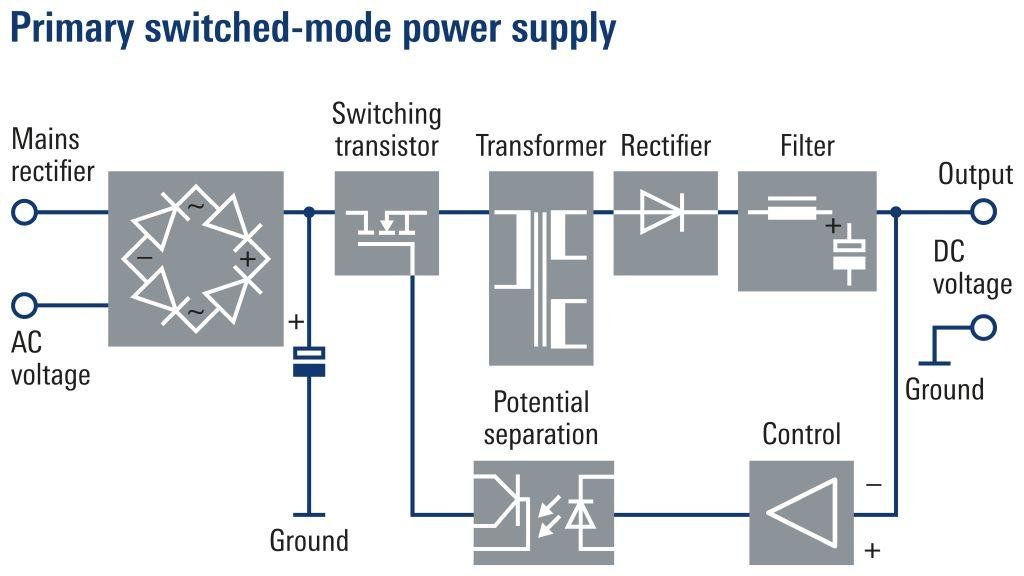

High-Frequency Switching Increases Thermal Stress
One of the biggest advantages of switching power supplies is their ability to operate at high frequencies. Compared with traditional linear power supplies, high-frequency switching allows for smaller transformers, reduced weight, and improved efficiency. This is one of the reasons switching power supplies have become the preferred solution in modern electronic systems.
However, high-frequency operation also creates additional thermal challenges. Magnetic components such as transformers and inductors experience continuous changes in magnetic flux. These changes generate hysteresis losses and eddy current losses within the magnetic core, both of which produce heat.
Another factor is the skin effect. At higher frequencies, electrical current tends to flow near the surface of conductors instead of utilizing the entire conductor cross-section. This effectively increases resistance and contributes to additional heating. As switching frequencies increase, engineers must carefully balance efficiency, power density, and thermal performance.
Overloading Significantly Increases Temperature
While heat generation is normal, excessive temperatures are often linked to operating conditions. One of the most common causes is overload operation. When a power supply is required to deliver more power than its rated capacity, current levels rise throughout the system, increasing losses in semiconductors, transformers, and conductors.
As current increases, internal components must work harder to process the additional energy. This leads to a rapid increase in heat generation and places greater stress on critical parts. Over time, excessive temperatures can accelerate component aging and reduce overall reliability.
Modern switching power supplies typically include overcurrent protection and thermal shutdown features to prevent catastrophic failures. Nevertheless, relying on these protections as part of normal operation is not recommended. Choosing a power supply with adequate capacity remains the best strategy for maintaining safe operating temperatures.
Poor Ventilation Can Turn Normal Heat Into a Serious Problem
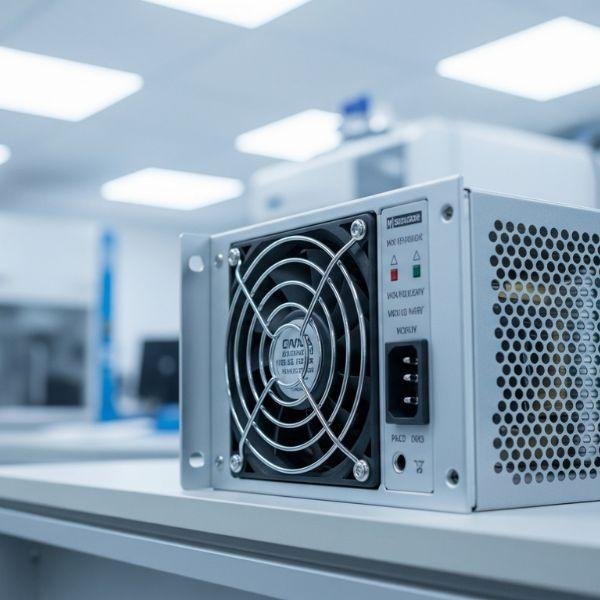
In many cases, the amount of heat being generated is not excessive. Instead, the problem is that the heat cannot escape efficiently. Even a high-quality switching power supply can experience elevated temperatures if installed in an environment with inadequate airflow.
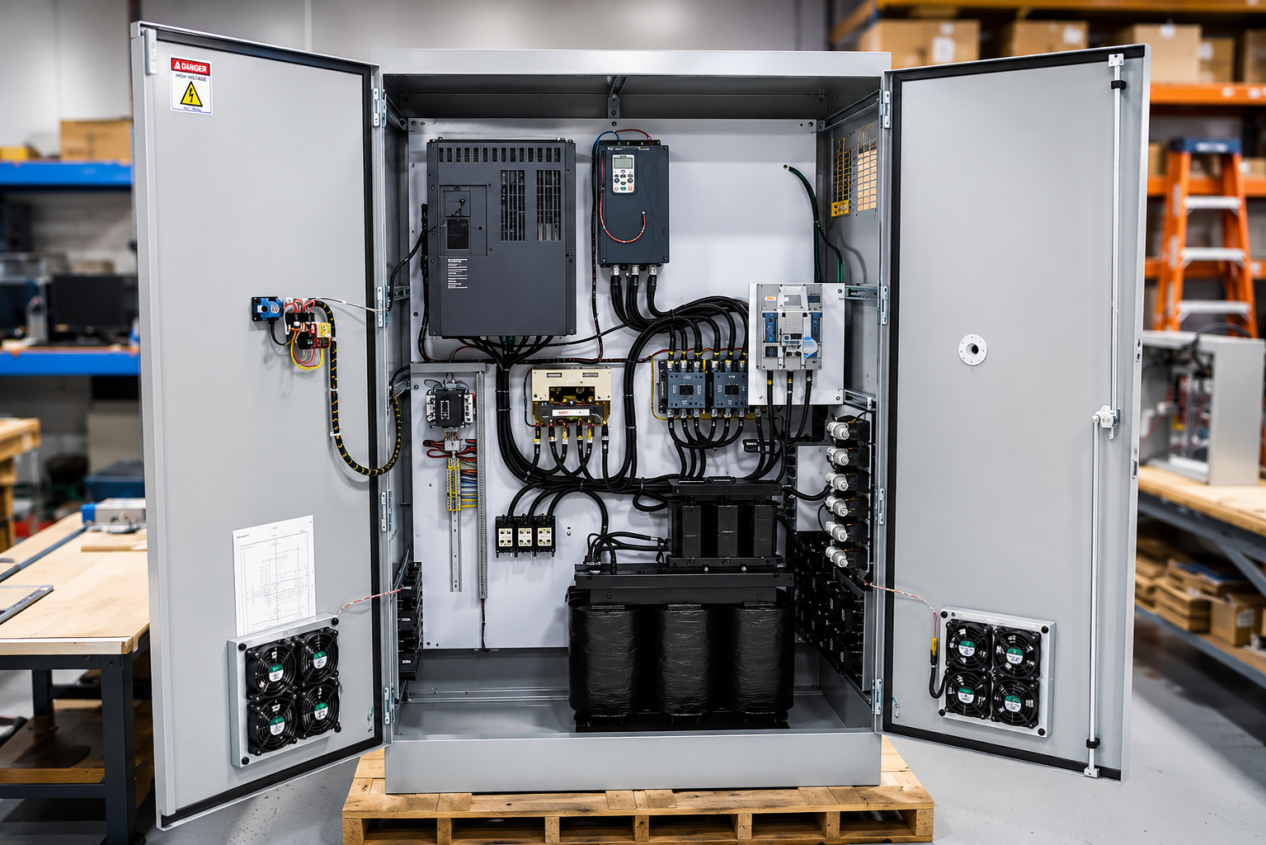
This issue frequently occurs inside industrial control cabinets where multiple heat-generating devices are installed close together. Without sufficient ventilation, heat accumulates inside the enclosure and gradually raises the operating temperature of all components.
Ambient temperature also plays a critical role. A power supply installed in a hot factory environment will naturally operate at a higher temperature than one installed in a climate-controlled facility. As surrounding temperatures increase, the effectiveness of heat dissipation decreases, making proper airflow increasingly important.
Component Quality Directly Affects Thermal Performance
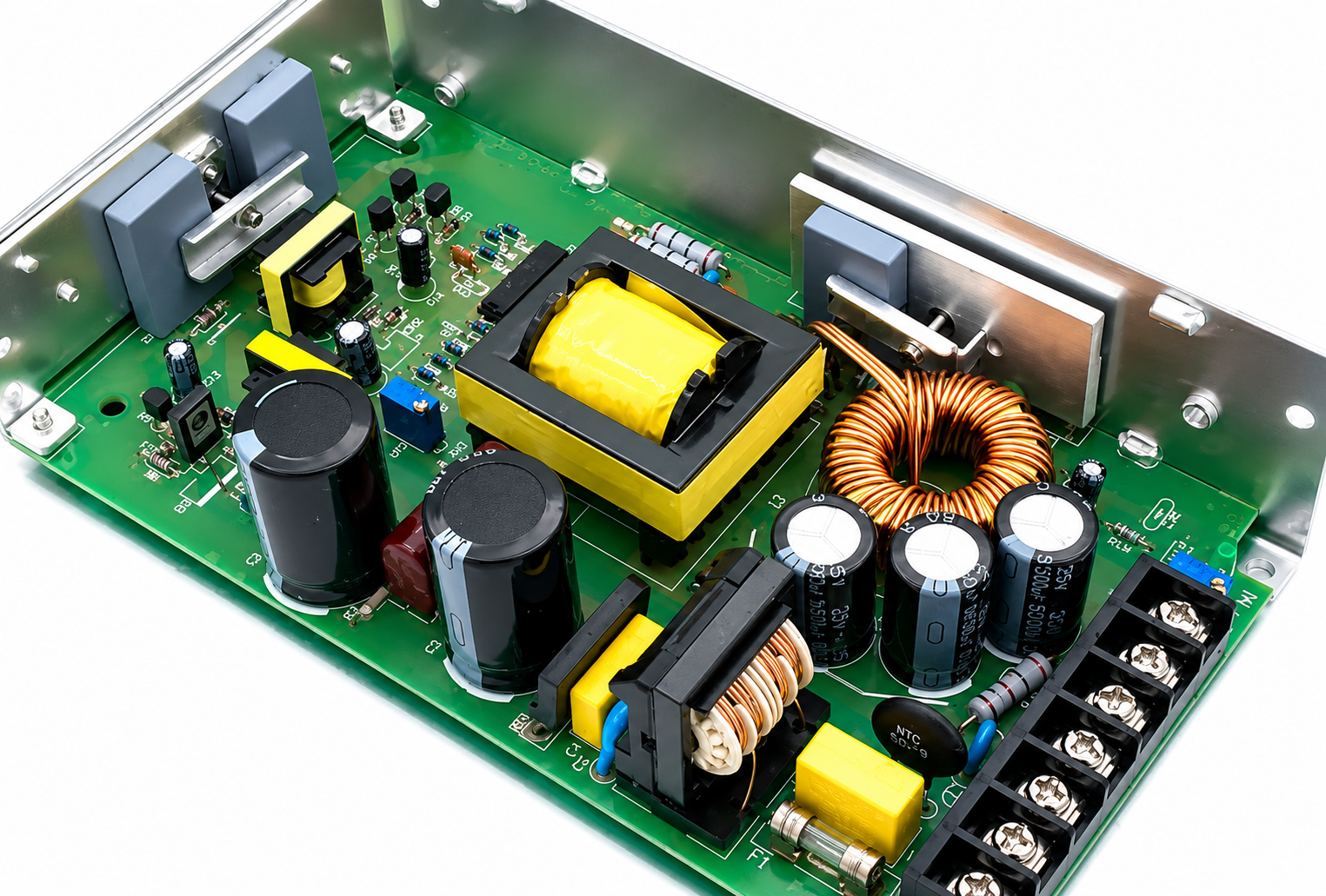
Not all switching power supplies perform equally under identical operating conditions. The quality of internal components has a direct influence on efficiency, temperature rise, and long-term reliability.
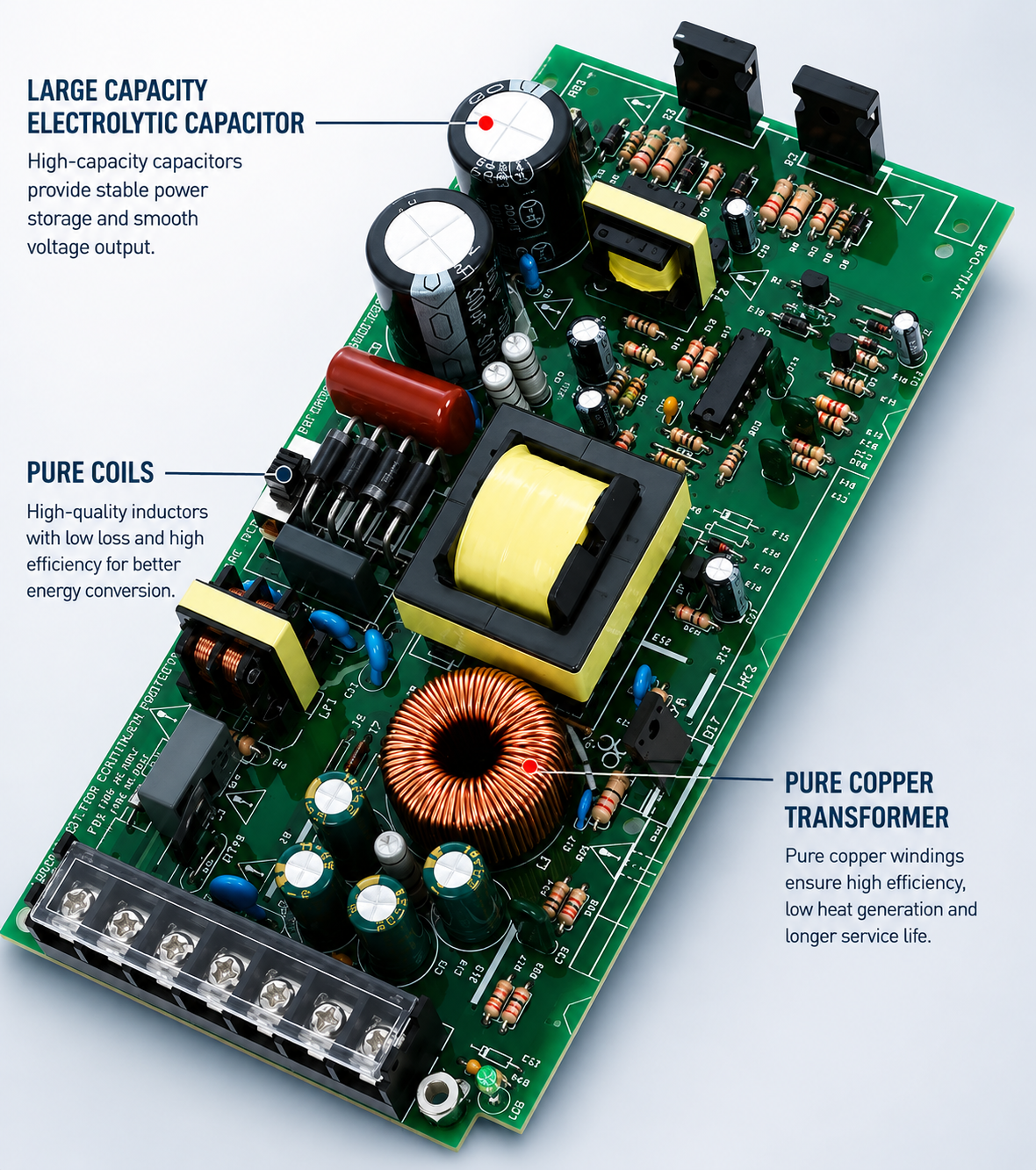
High-quality MOSFETs, capacitors, transformers, and magnetic materials are designed to minimize energy losses and improve thermal performance. By reducing wasted energy, these components help maintain lower operating temperatures and improve overall system stability.
In contrast, lower-quality components often exhibit higher resistance and poorer electrical characteristics. As a result, they generate more heat while delivering the same output power. Over time, this additional heat accelerates wear and increases the likelihood of premature failure.
How to Reduce Heat in a Switching Power Supply
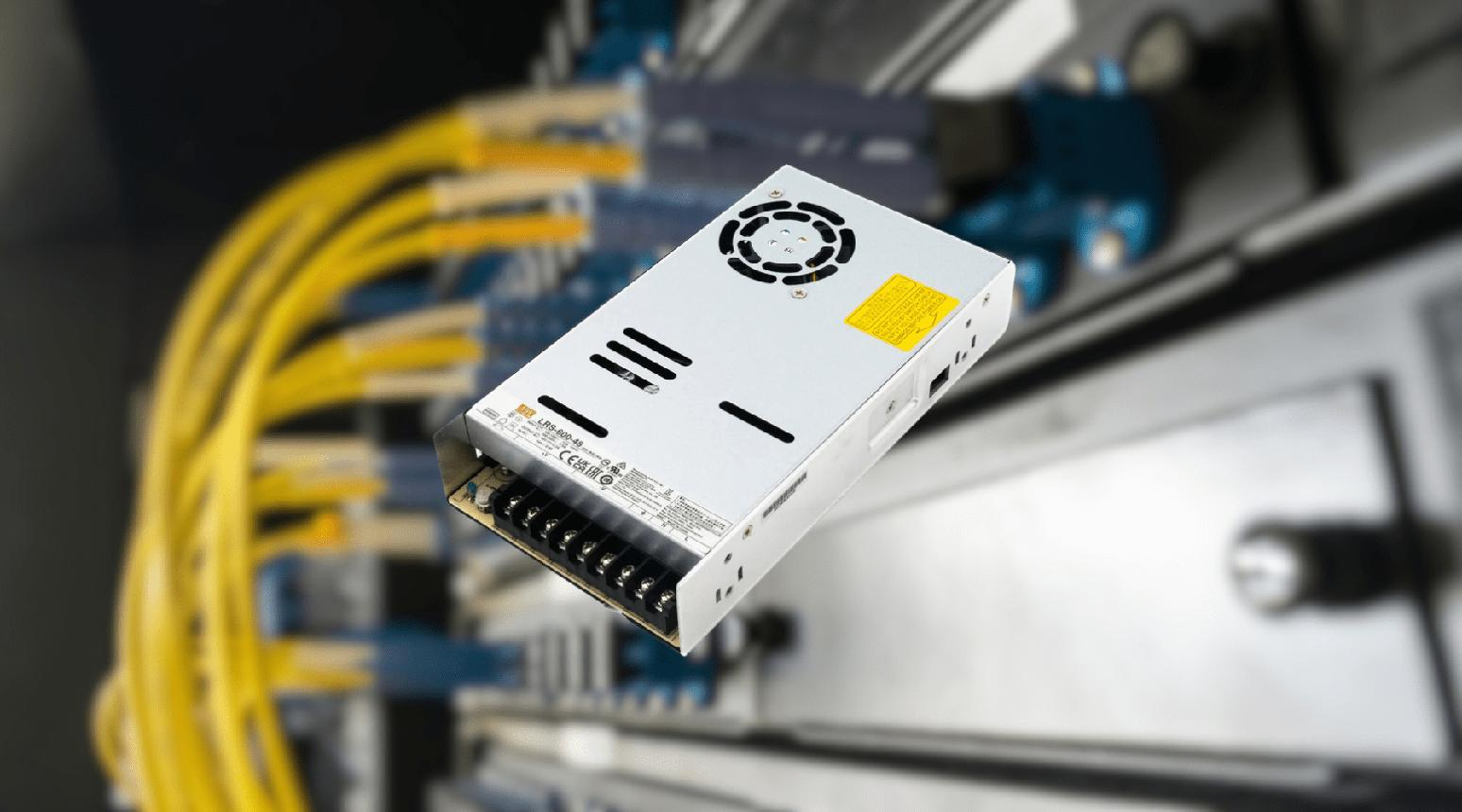
Although heat generation cannot be completely eliminated, several practical measures can significantly reduce operating temperatures. Selecting a power supply with sufficient power margin is one of the most effective strategies. Many engineers recommend operating a power supply at approximately 70% to 80% of its rated capacity rather than continuously running it at full load.
Proper installation is equally important. Adequate spacing around the power supply allows heat to dissipate more effectively and prevents thermal buildup inside enclosed spaces. In higher-power applications, forced-air cooling may also be used to improve heat removal.
Regular maintenance should not be overlooked. Dust accumulation can block ventilation openings and reduce cooling efficiency. Keeping the power supply and surrounding equipment clean helps maintain consistent airflow and stable operating temperatures.
Conclusion
Heat generation is a natural and unavoidable part of switching power supply operation. Energy conversion losses, semiconductor switching, high-frequency magnetic effects, overload conditions, ventilation limitations, and component quality all contribute to the temperature rise observed during normal use.
While moderate heating is expected, excessive temperatures should never be ignored. By understanding the causes of heat generation and implementing proper installation, ventilation, and maintenance practices, users can improve reliability, extend equipment lifespan, and ensure long-term stable operation of their switching power supplies.
Buyer Checklist
- Confirm input and output voltage before model selection.
- Check wattage, load margin and operating temperature.
- Review installation space, airflow and protection requirements.
- Share project quantity and application details for quotation support.