
Industrial equipment fails far more often because of poor power design than because of controller or software issues. PLC crashes, unstable sensors, overheating cabinets, and unexpected shutdowns often trace back to incorrect power supply selection.
So how do you actually choose the right industrial power supply for automation systems, CNC machines, or industrial control panels?
This guide explains how engineers and system integrators select industrial power supplies in real projects, including technical considerations such as input range, load calculation, environmental conditions, and certification requirements.
What Is an Industrial Power Supply?
An industrial power supply converts incoming electrical power into a stable voltage suitable for industrial equipment such as PLCs, motors, sensors, and communication modules.
Unlike consumer adapters, industrial power supplies must operate continuously, reliably, and safely in demanding environments.
What Makes an Industrial Power Supply Different from a Consumer Power Supply?
| Feature | Industrial Power Supply | Consumer Power Supply |
|---|---|---|
| Operating Environment | Harsh (heat, vibration, dust) | Indoor |
| Lifespan | 5–10+ years | 2–3 years |
| Efficiency | Typically 90–95% | 70–85% |
| Protection Functions | Full protection suite | Limited |
| Certifications | UL, CE, RoHS, IEC | Basic safety |
Industrial power supplies must handle:
∙24/7 operation
∙large load fluctuations
∙electromagnetic interference
∙wide temperature ranges
For example, a PLC control cabinet may contain:
∙PLC controller
∙sensors
∙HMI
∙relays
∙communication modules
All of these often rely on a 24V DC industrial switching power supply.
Where Are Industrial Power Supplies Used?
Industrial power supplies are essential in modern manufacturing and automation systems.
Common applications include:
∙Industrial automation systems
∙CNC machines
∙robotic production lines
∙LED industrial lighting
∙security and surveillance systems
∙telecommunications infrastructure
A typical automation cabinet may require multiple outputs such as:
| Device | Typical Voltage |
|---|---|
| PLC Controller | 24V DC |
| Sensors | 12V / 24V |
| Industrial Router | 12V |
| Relay Modules | 24V |
| Industrial Camera | 12V / 24V |
Because of this, power supply stability directly affects system reliability.
What Types of Industrial Power Supplies Are Available?
Not all industrial power supplies have the same form factor or installation method. Selecting the correct type depends on cabinet design, space constraints, and power demand.
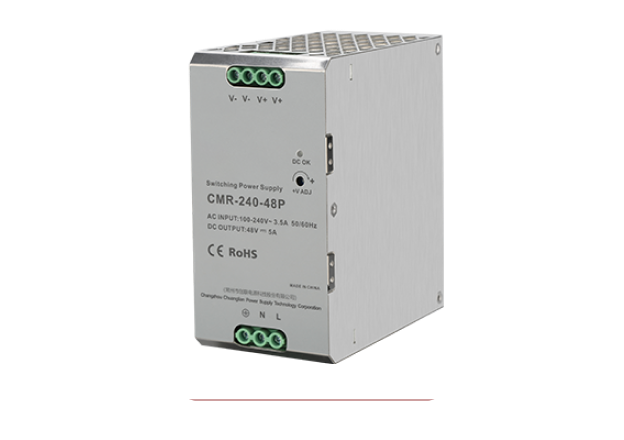
DIN Rail Power Supply
DIN rail power supplies are the most widely used solution in industrial control cabinets.
They are mounted directly onto standard DIN rails used in automation panels.
Key advantages include:
∙Compact design
∙Easy installation
∙Modular cabinet layout
∙High efficiency (often above 92%)
Typical output powers range from 30W to 960W.
Common use cases:
∙PLC systems
∙factory automation
∙building automation
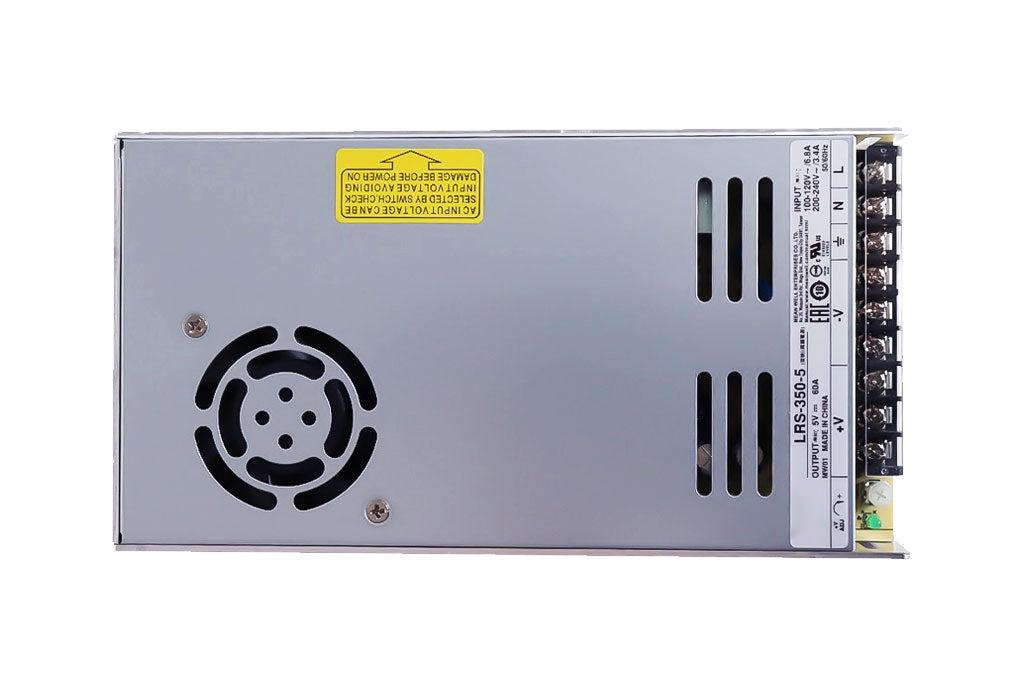
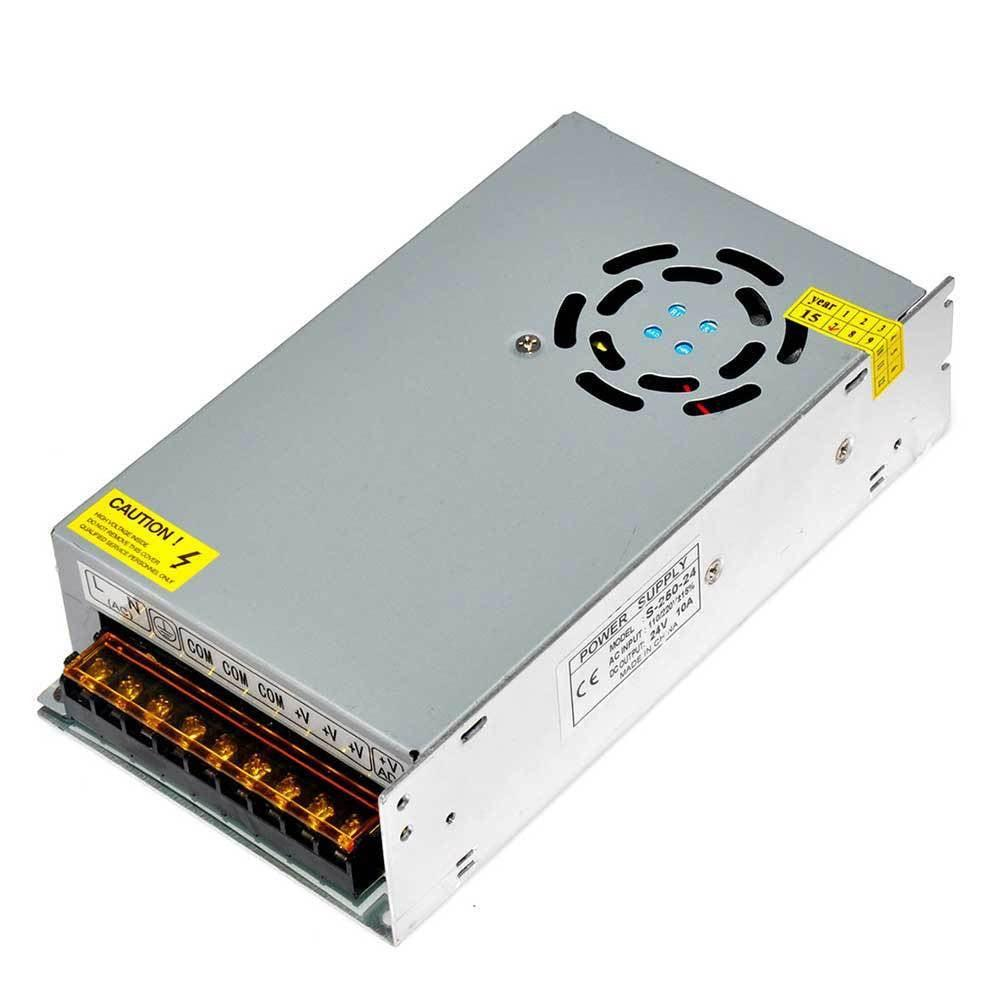
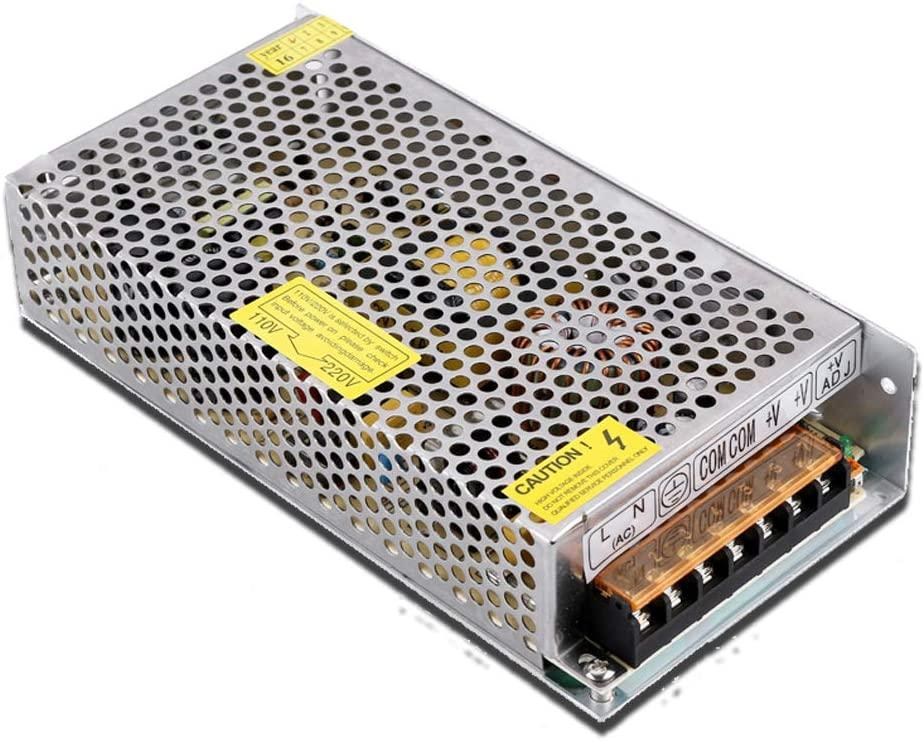
Enclosed Switching Power Supply
Enclosed switching power supplies use a metal casing with screw terminals and are widely used in industrial equipment.
Features include:
∙High power density
∙strong heat dissipation
∙stable performance
Typical applications:
∙LED lighting systems
∙industrial machinery
∙test equipment
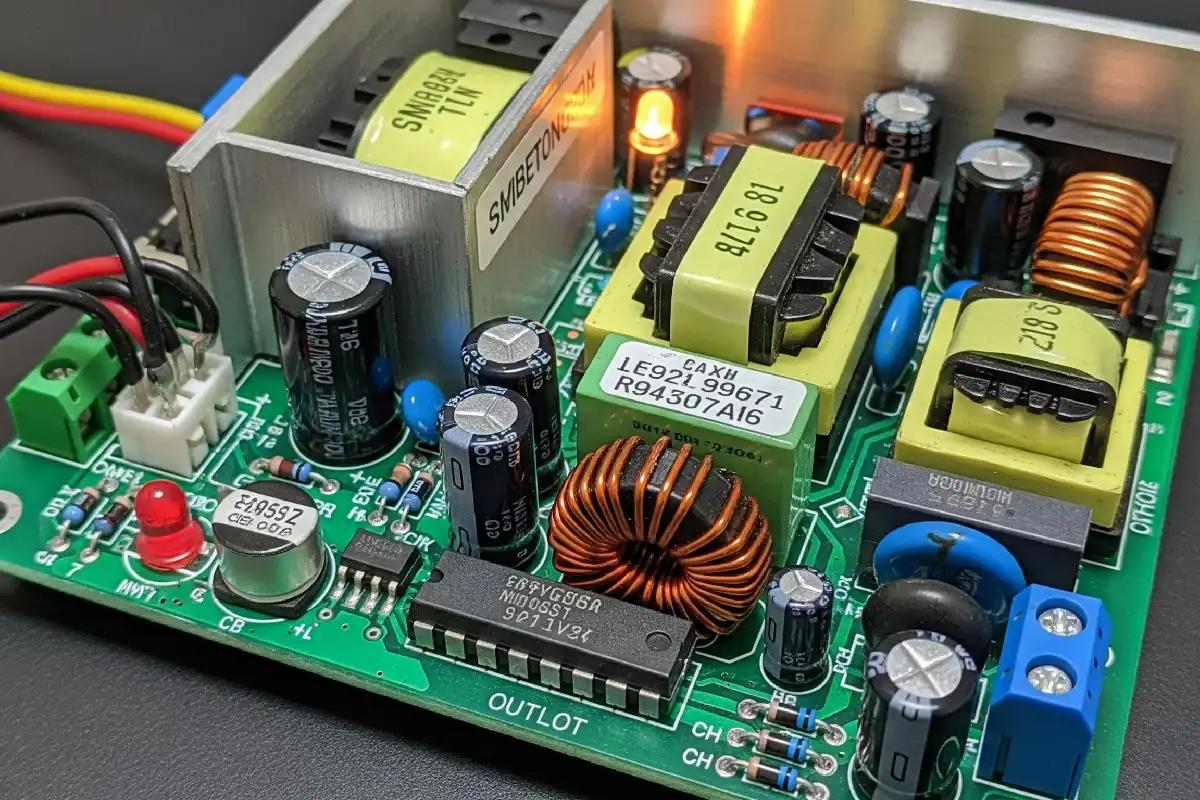
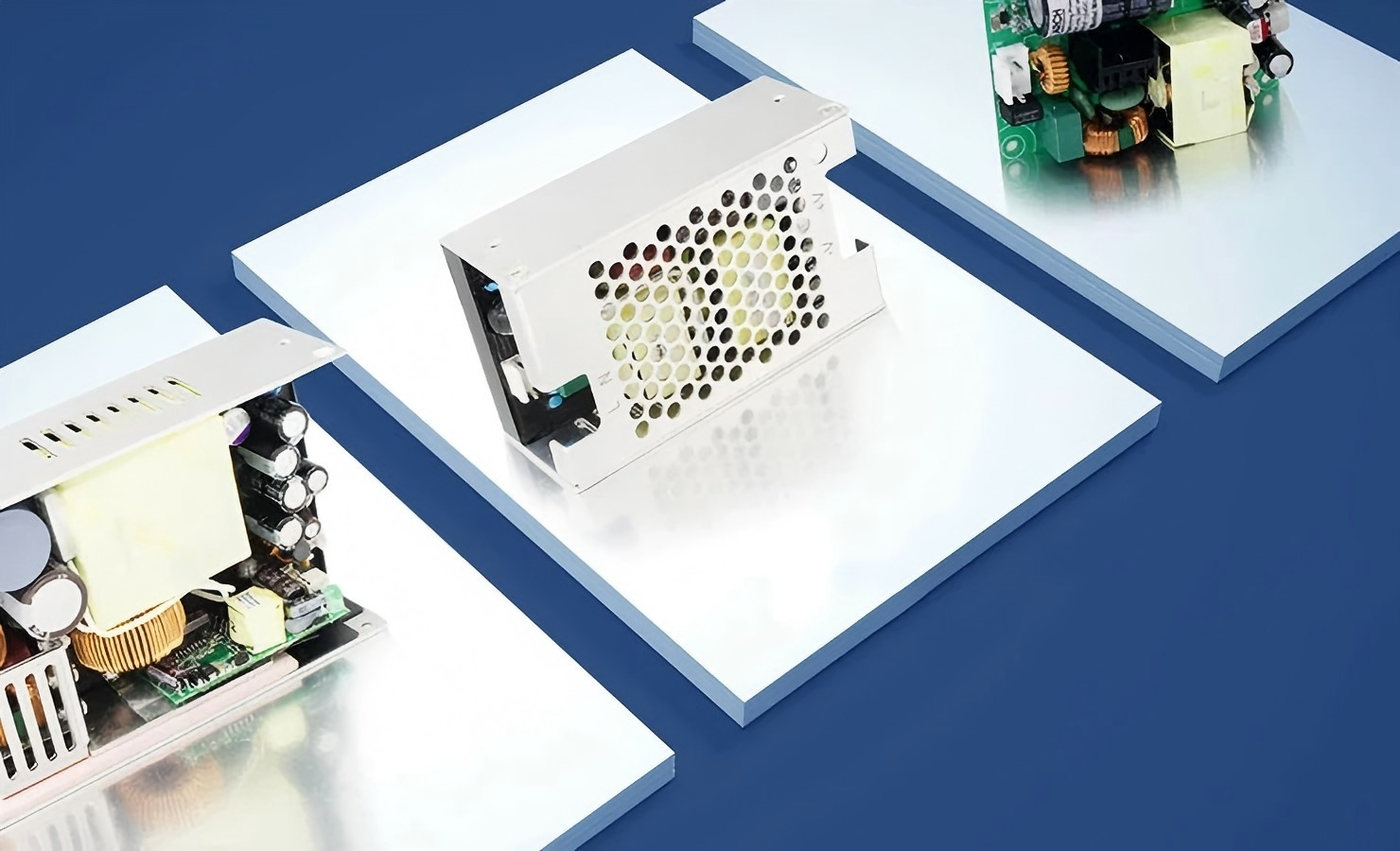
Open Frame Power Supply
Open frame power supplies are PCB-based power supplies without protective enclosures.
They are often integrated inside larger equipment.
Advantages include:
∙very compact size
∙lower cost
∙flexible integration
Common applications:
∙medical equipment
∙telecom hardware
∙industrial instruments
Modular Power Supply
Modular power supplies allow engineers to combine multiple output modules in one chassis.
These are typically used in:
∙laboratory systems
∙telecom infrastructure
∙advanced industrial control systems
Advantages include:
∙flexible output voltages
∙high scalability
∙hot-swappable modules
What Factors Really Matter When Choosing an Industrial Power Supply?
Choosing a power supply involves much more than simply selecting a voltage and wattage.
Engineers must consider electrical characteristics, environmental conditions, and safety compliance.
How Important Is the Input Voltage Range?
Industrial environments rarely have perfectly stable input power.
Power supplies must tolerate wide input ranges to avoid shutdowns.
Typical industrial input ranges include:
| Input Type | Voltage Range |
|---|---|
| Single-phase AC | 85–264V AC |
| Three-phase AC | 320–575V AC |
| DC input | 120–370V DC |
Wide input ranges ensure compatibility with global electrical standards.
For example:
∙North America: 120V / 240V
∙Europe: 230V
∙Industrial systems: 400V three-phase
A wide input range power supply can support multiple markets without redesign.
How Do You Calculate the Required Output Voltage and Current?
The most common industrial voltage is 24V DC.
However, power supplies may also output:
∙5V DC
∙12V DC
∙48V DC
To calculate the required current:
Power=Voltage×CurrentPower = Voltage × CurrentPower=Voltage×Current
Example:
If your system requires:
∙PLC: 24V / 1A
∙sensors: 24V / 2A
∙relays: 24V / 1.5A
Total current = 4.5A
Required power:
24V × 4.5A = 108W
Engineers typically add 20–30% margin to avoid overload.
Recommended power supply:
150W power supply
Why Is Power Rating So Critical?
Selecting the correct power rating prevents thermal stress and early failure.
Typical industrial power levels include:
| Power Rating | Typical Applications |
|---|---|
| 30–60W | small control circuits |
| 120–240W | PLC cabinets |
| 350–480W | industrial machines |
| 600–1000W | robotics and large automation systems |
Choosing an undersized power supply often causes:
∙overheating
∙voltage drop
∙unstable equipment
Should You Care About Efficiency and Heat Dissipation?
Absolutely.
Efficiency directly affects energy consumption and heat generation.
Modern switching power supplies typically achieve:
| Power Supply Type | Efficiency |
|---|---|
| Basic switching PSU | 80–88% |
| Industrial PSU | 90–94% |
| High-end industrial PSU | 94–96% |
Higher efficiency results in:
∙lower cabinet temperature
∙longer component life
∙reduced electricity cost
For example:
A 600W power supply with 90% efficiency generates:
60W heat
At 95% efficiency:
30W heat
This difference can significantly reduce cooling requirements.
What Protection Features Are Essential?
Industrial power supplies must protect both themselves and connected equipment.
Essential protection features include:
Over-Voltage Protection (OVP)
Prevents output voltage from exceeding safe levels, protecting sensitive electronics.
Over-Current Protection (OCP)
Stops excessive current that could damage cables or components.
Short-Circuit Protection (SCP)
Automatically shuts down output if a short circuit occurs.
Additional protections may include:
∙over-temperature protection
∙surge protection
∙input undervoltage protection
These protections are critical for industrial reliability.
What Operating Temperature Should You Design For?
Industrial environments can be harsh.
Typical power supply temperature ratings include:
| Temperature Range | Application |
|---|---|
| 0°C – 50°C | indoor equipment |
| -10°C – 60°C | factory automation |
| -25°C – 70°C | outdoor or heavy industry |
Many industrial power supplies also include derating curves, meaning output power decreases at high temperatures.
For example:
∙100% load at 40°C
∙80% load at 60°C
Engineers must consider cabinet airflow and ventilation.
Why Are Certifications and Safety Standards Important?
Industrial power supplies must comply with international safety standards.
Common certifications include:
| Certification | Region | Purpose |
|---|---|---|
| CE | Europe | product safety compliance |
| UL | United States | electrical safety |
| RoHS | Global | environmental compliance |
| IEC/EN 62368 | Global | electrical equipment safety |
Using certified power supplies ensures:
∙regulatory compliance
∙safer equipment
∙easier export to global markets
Where Are Industrial Power Supplies Used Most Often?
Industrial power supplies power many different systems.
Industrial Automation
Automation cabinets require reliable 24V power distribution for PLCs, sensors, and control modules.
CNC Machines
CNC machines require power supplies for:
∙control boards
∙servo drivers
∙monitoring systems
Stable power prevents machining errors.
LED Lighting Systems
Industrial LED lighting systems often use constant voltage switching power supplies.
Security and Surveillance Systems
Power supplies support:
∙industrial cameras
∙network switches
∙access control systems
Reliable power ensures continuous monitoring.
What Are the Most Common Mistakes When Selecting a Power Supply?
Even experienced engineers sometimes overlook key details.
Choosing Too Small a Power Supply
Undersizing the power supply leads to:
∙overheating
∙voltage instability
∙reduced lifespan
Ignoring Peak Load
Some devices require startup current 2–3× higher than normal.
Examples include:
∙motors
∙LED drivers
∙capacitive loads
Poor Cabinet Ventilation
Power supplies require airflow.
Improper cabinet design can cause:
∙thermal shutdown
∙reduced efficiency
∙premature failure
Industrial Power Supply Selection Checklist
Before choosing a power supply, engineers should review the following checklist.
Electrical Requirements
∙input voltage range
∙output voltage
∙current requirements
∙power margin
Environmental Conditions
∙temperature
∙humidity
∙dust levels
∙vibration
Installation Method
∙DIN rail mounting
∙panel mounting
∙integrated PCB installation
Safety and Compliance
∙CE certification
∙UL listing
∙RoHS compliance
Using this checklist helps ensure reliable power system design.

Final Thoughts: How Do You Choose the Right Industrial Power Supply?
Choosing the correct industrial power supply is essential for system stability, efficiency, and long-term reliability.
Engineers should always evaluate:
∙voltage and current requirements
∙power rating with safety margin
∙operating temperature
∙protection functions
∙certifications and safety standards
With the right selection approach, industrial power supplies can operate reliably for more than a decade, ensuring stable performance across automation systems, CNC machines, and industrial equipment.