
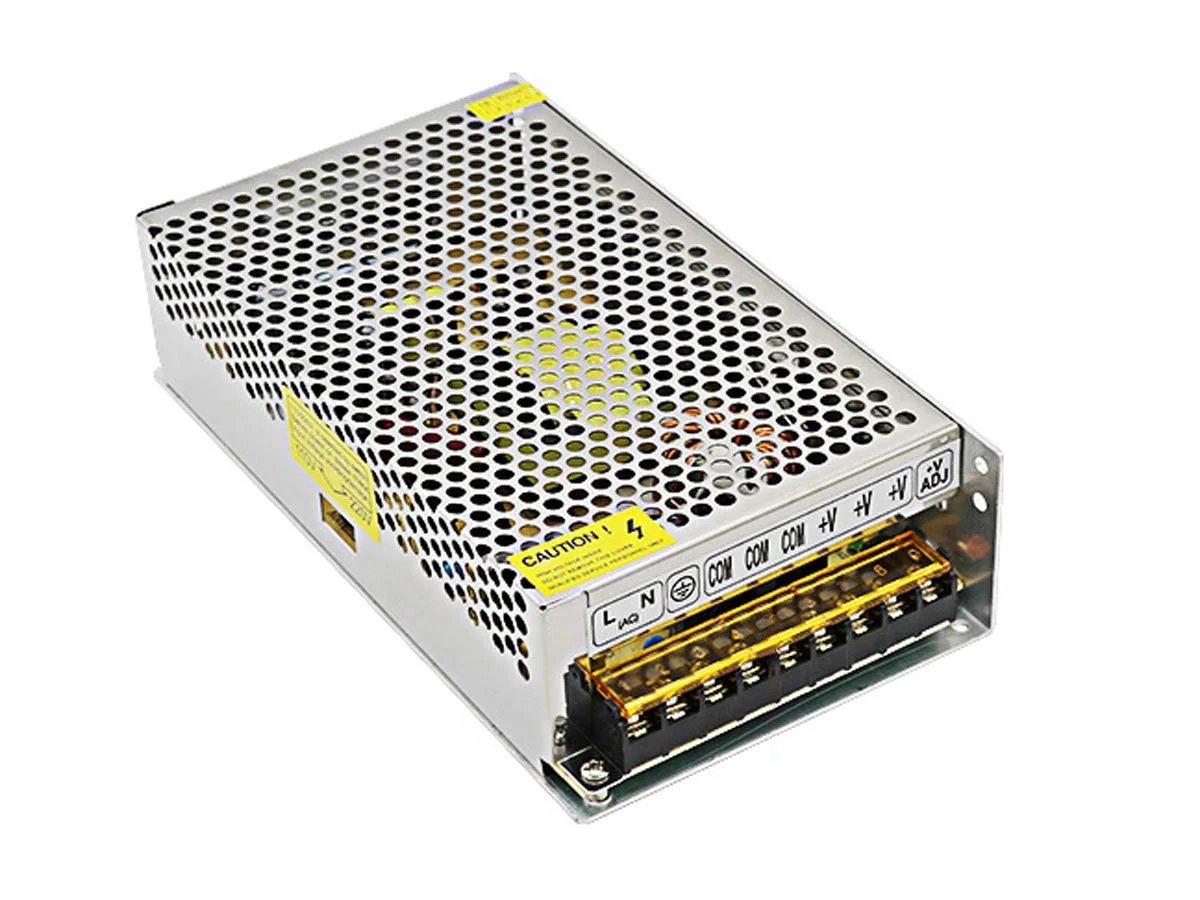
Introduction: Why Are Switching Power Supplies Everywhere Today?
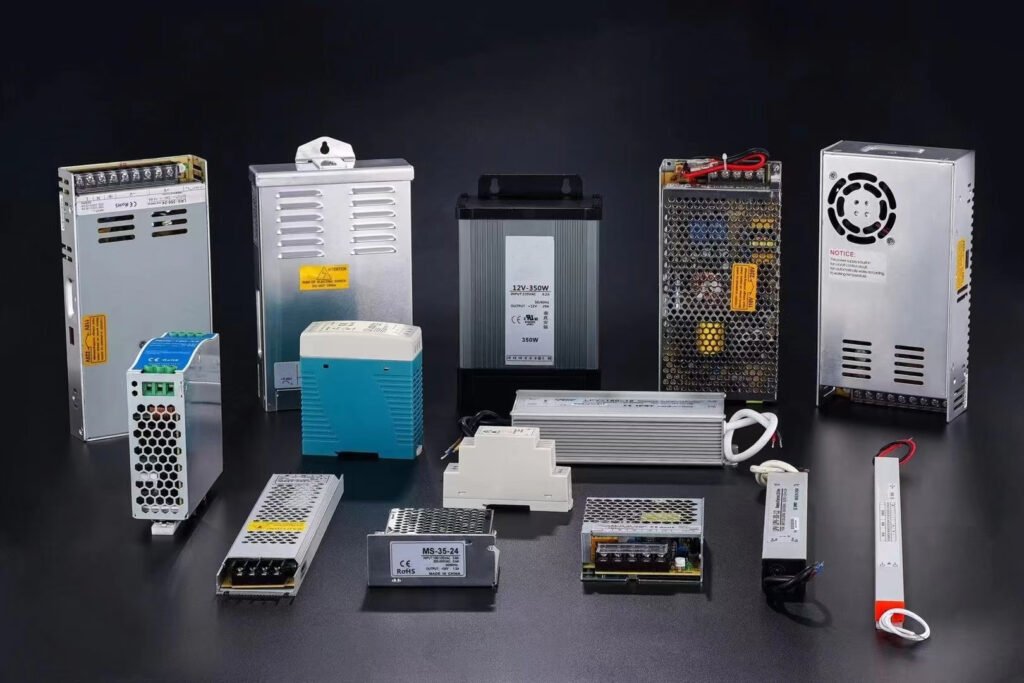
Walk into any modern industrial facility, data center, or even your home, and you will find one common component quietly powering everything: the switching power supply. From CNC machines to telecom infrastructure, from LED drivers to IoT devices, switching-mode power supplies (SMPS) have become the backbone of modern electronics.
But why has this technology replaced traditional linear power supplies so rapidly? And more importantly, how can engineers and buyers select the right switching power solution for their specific applications?
A switching power supply is fundamentally an electronic system that converts electrical energy efficiently by rapidly turning semiconductor devices on and off at high frequency, enabling precise voltage regulation with minimal energy loss . This seemingly simple principle has enabled dramatic improvements in efficiency, size, and performance.
In this article, we will explore not only how switching power supplies work, but also how modern designs—such as those developed under the SIPURUI brand—leverage advanced topologies like active PFC and LLC resonance to deliver high efficiency, reliability, and scalability.
What Makes a Power Supply “Switching” — And Why Does It Matter?
At the core of a switching power supply is one key idea: instead of continuously dissipating excess voltage as heat, the system regulates energy by switching electronic components fully on or fully off.
This approach is radically different from linear power supplies. In a linear design, excess energy is simply burned off as heat, resulting in efficiencies often below 50%. In contrast, switching regulators can achieve efficiencies above 90%, and in optimized designs even approach 95% or higher .
The reason is simple: when a transistor is fully on, it behaves like a low-resistance path; when fully off, it blocks current. In both states, energy loss is minimal. The control system adjusts the duty cycle (on/off ratio) to regulate output voltage precisely.
This shift from “dissipate” to “switch” is what makes modern power electronics possible.
How Does a Switching Power Supply Actually Work?
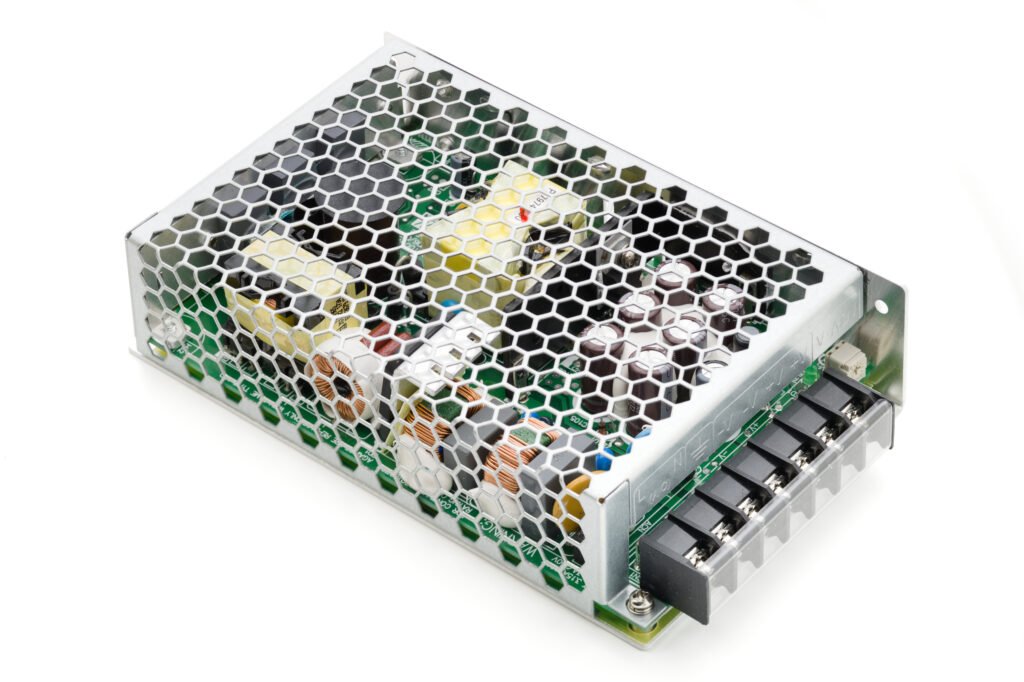
Understanding SMPS operation requires looking at the full conversion chain. Although designs vary, most AC/DC switching power supplies follow a similar architecture consisting of three key stages.
From AC to Stable DC: A Step-by-Step Energy Transformation

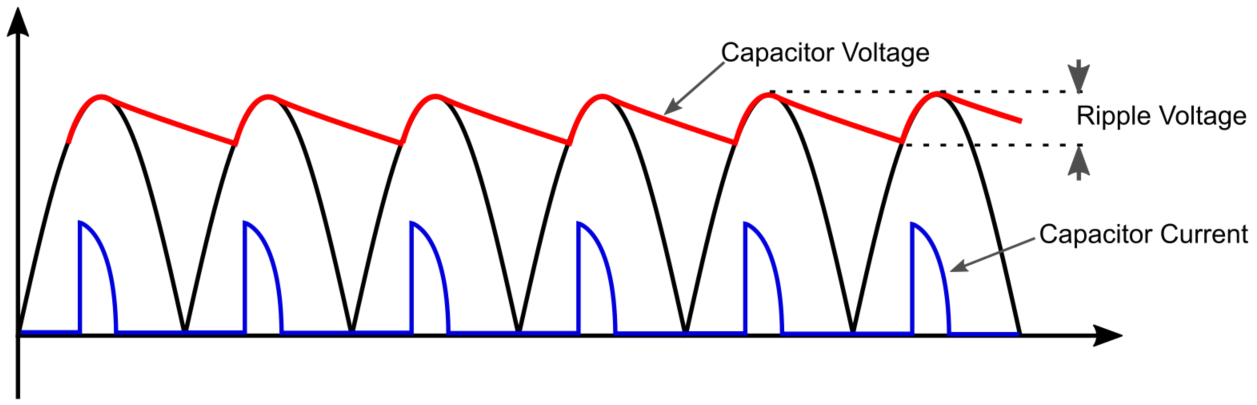
The process begins with rectification, where AC voltage is converted into pulsating DC using a diode bridge. However, this waveform still contains significant ripple, meaning it fluctuates rather than remaining constant.
To smooth the signal, capacitors store energy during voltage peaks and release it during drops, producing a more stable DC voltage. This stage alone, however, introduces harmonic distortion and inefficient current draw.
This leads to the second stage: power factor correction (PFC). Without PFC, current is drawn in short spikes, reducing efficiency and polluting the grid with harmonics. Active PFC circuits reshape the current waveform so that it follows the voltage waveform, significantly improving power factor and reducing distortion .
Finally, the high DC voltage—often 300V to 400V—is converted into a lower, regulated output using high-frequency switching and transformer or inductor-based topologies. This is where the real engineering complexity lies, and where SIPURUI power supplies differentiate themselves through optimized control algorithms and topology selection.
Which Topology Should You Choose — And Why Does It Matter So Much?
Choosing the right topology is not just a design detail—it directly affects efficiency, cost, safety, and performance.
Different applications require different approaches. The table below summarizes the most widely used SMPS topologies and their characteristics.
Common Switching Power Supply Topologies
| Topology | Power Range | Isolation | Efficiency | Typical Applications |
| Buck (Step-down) | Low–Medium | No | Very High | Industrial control, embedded systems |
| Boost (Step-up) | Low–Medium | No | High | LED drivers, battery systems |
| Flyback | <150W | Yes | Medium | Adapters, chargers |
| Forward | 100–500W | Yes | High | Telecom, industrial |
| LLC Resonant | 200W–2kW+ | Yes | Very High | Servers, high-end power systems |
Flyback converters remain dominant in low-power applications due to simplicity and low cost, especially below 100W . However, for higher power and efficiency requirements, LLC resonant converters have become the industry standard because they enable soft switching, significantly reducing switching losses .
Modern SIPURUI switching power supplies often integrate PFC + LLC architectures, which have become mainstream due to their ability to optimize efficiency while reducing component count .
Why Are Modern SMPS Designs So Much More Efficient Than Before?
Efficiency is no longer just a performance metric—it is a regulatory requirement in many markets.
Several technological advancements have contributed to the efficiency improvements seen in modern switching power supplies:
- High-frequency switching (20kHz–500kHz) reduces transformer size and loss
- Active PFC improves power factor up to 0.99
- Synchronous rectification reduces diode losses
- Resonant switching (LLC) enables near-zero switching loss
The combined effect of these technologies is shown below.
Linear vs Switching Power Supply Performance Comparison
| Parameter | Linear Power Supply | Switching Power Supply (SIPURUI) |
| Efficiency | 30–50% | 90–95%+ |
| Size | Large | Compact |
| Heat Generation | High | Low |
| Power Density | Low | High |
| Input Range | Limited | Wide (90–250V typical) |
| EMI | Low | Requires filtering |
This dramatic improvement explains why switching power supplies have become the dominant solution across industries.
What Defines a High-Quality Switching Power Supply Today?
Not all SMPS designs are equal. In today’s market, high-performance power supplies—such as SIPURUI’s industrial series—are defined by several key characteristics.
First, efficiency must remain high across different load conditions, not just at peak load. This requires advanced control strategies and adaptive switching.
Second, thermal management is critical. Even small efficiency losses can translate into significant heat at high power levels, affecting reliability.
Third, electromagnetic compatibility (EMC) must be carefully controlled. High-frequency switching introduces noise, which must be filtered to meet regulatory standards.
Finally, protection features such as over-voltage, over-current, and short-circuit protection are essential for system safety.
Key Specifications of a Modern SIPURUI SMPS Series
| Specification | Typical Value |
| Input Voltage Range | 85–265V AC |
| Output Voltage Options | 5V / 12V / 24V / 48V |
| Efficiency | Up to 94–96% |
| Power Factor | >0.95 (with active PFC) |
| Protection Features | OVP / OCP / SCP / OTP |
| Cooling | Natural convection or fan |
These parameters are not just marketing figures—they determine real-world reliability and performance.
Where Are Switching Power Supplies Used — And Why Are They Critical?
Switching power supplies are now embedded in nearly every modern system.
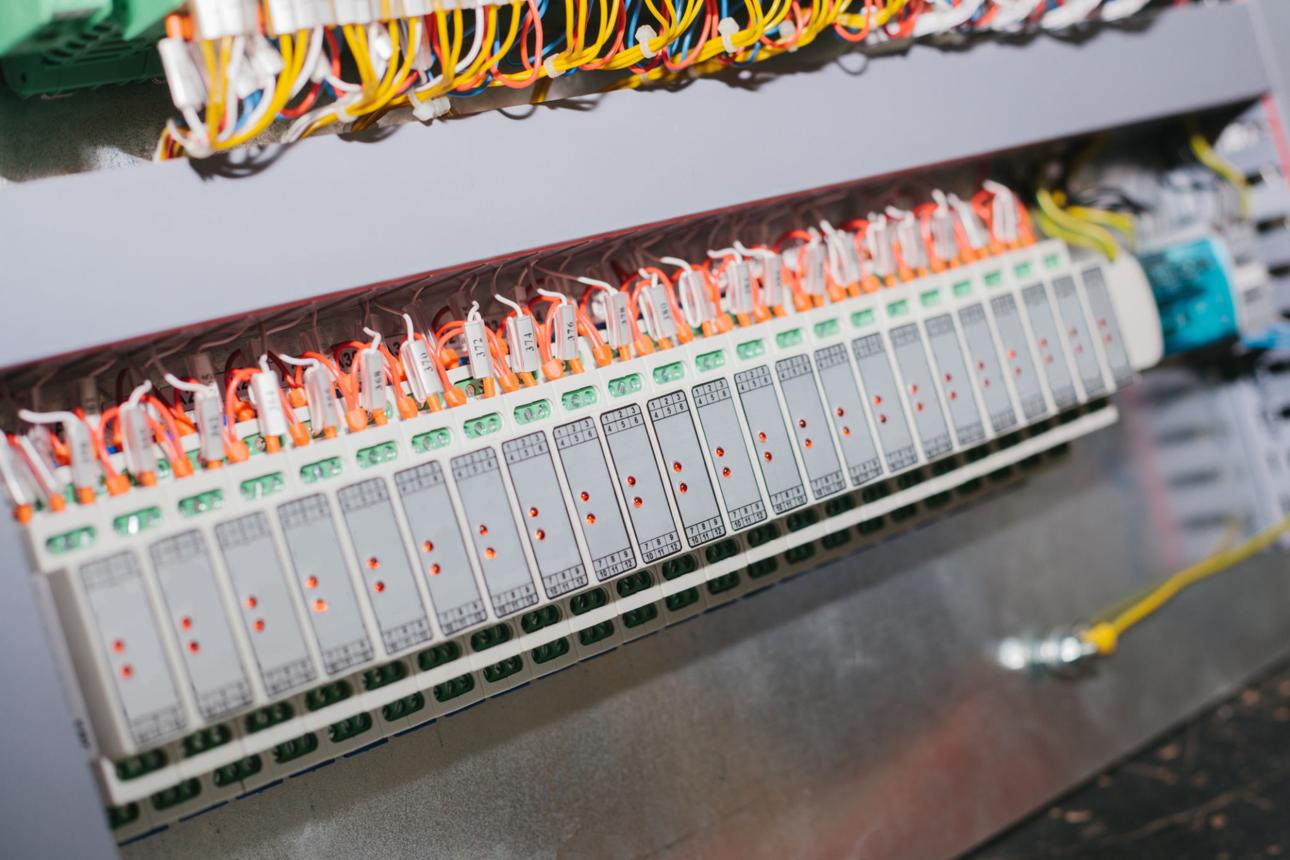
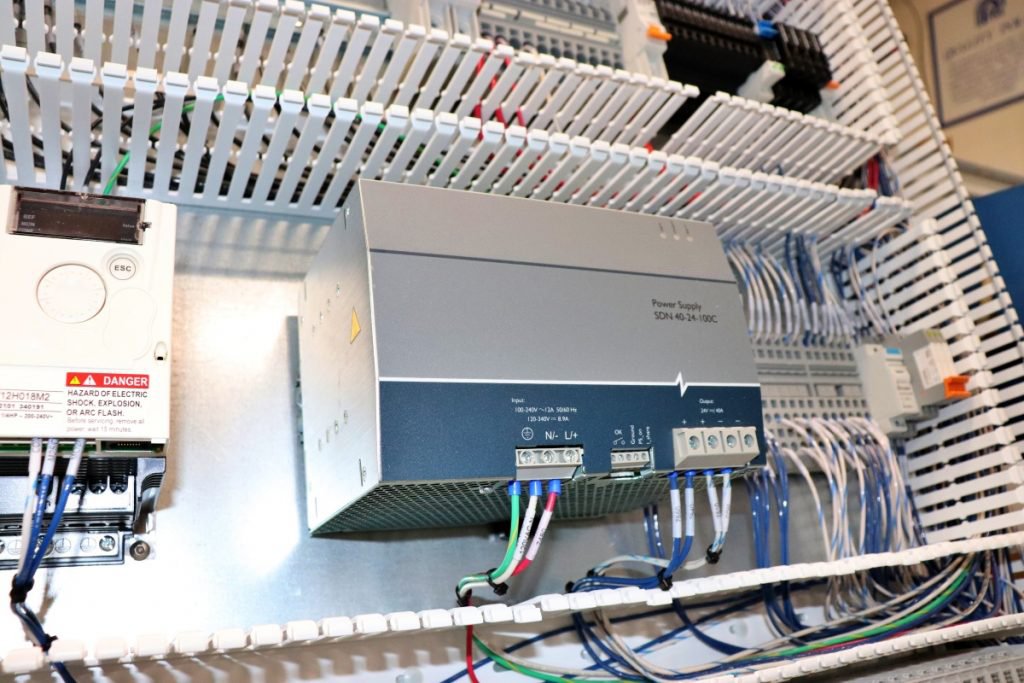
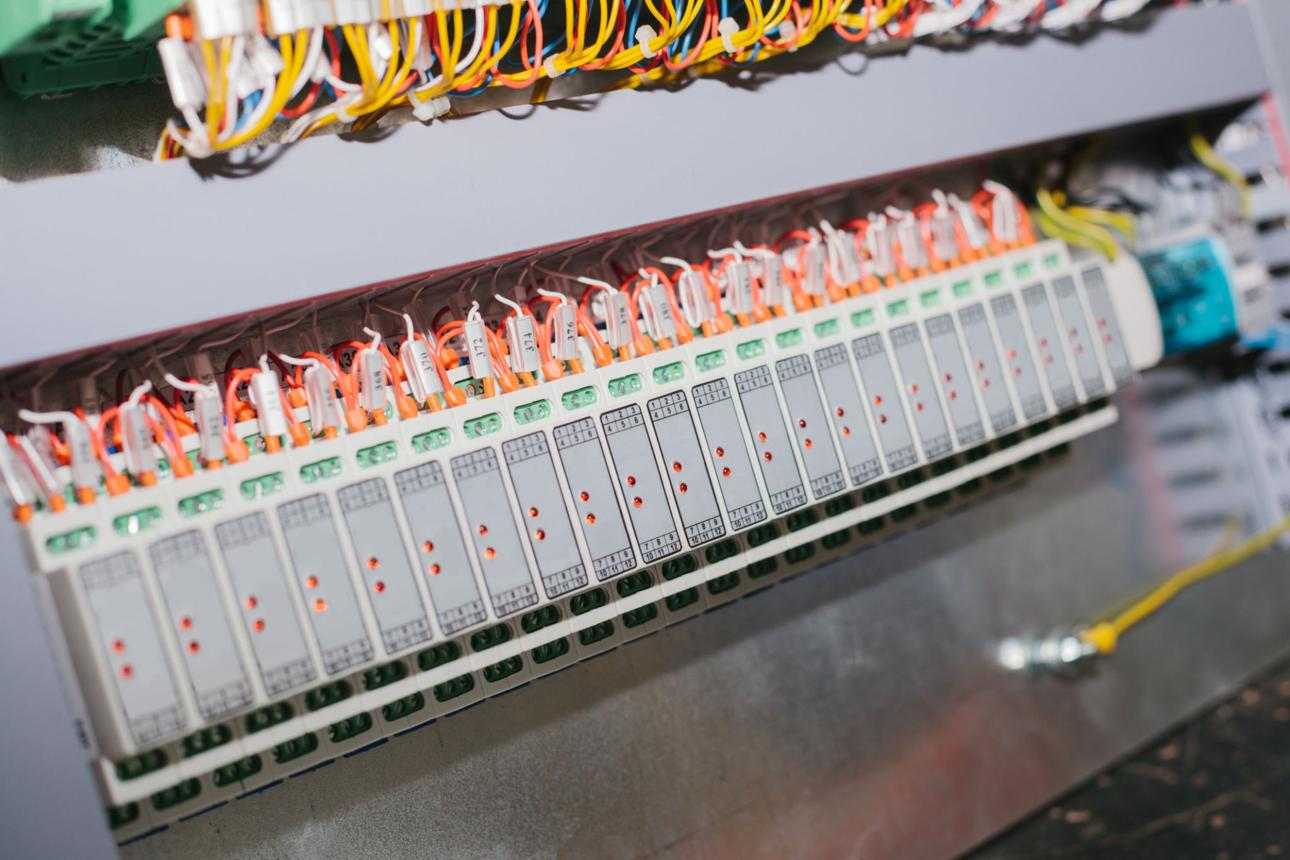
In industrial automation, they power PLCs, CNC controllers, and robotics systems. In data centers, high-efficiency SMPS designs reduce energy consumption at scale. In consumer electronics, compact switching supplies enable lightweight and portable devices.
Their ability to handle wide input ranges, deliver stable outputs, and operate efficiently under varying loads makes them indispensable.
What Challenges Still Exist in SMPS Design?
Despite their advantages, switching power supplies are not without challenges.
High-frequency switching introduces electromagnetic interference, which requires careful PCB layout and filtering. Component selection is critical, as poor-quality capacitors or semiconductors can significantly reduce lifespan.
Thermal stress is another major issue. Failure rates increase significantly with temperature, making heat management a key design consideration .
This is why modern designs increasingly rely on integrated control ICs and optimized layouts—areas where SIPURUI continues to invest in R&D.

Conclusion: How Should You Choose the Right Switching Power Supply?
The evolution of switching power supplies has transformed how electrical energy is converted and used. With efficiencies exceeding 90%, compact designs, and scalable architectures, SMPS technology is no longer optional—it is essential.
When selecting a switching power supply, the key questions to ask are:
- What power level and topology does your application require?
- Do you need isolation for safety?
- What efficiency and thermal performance are necessary?
- Are compliance and EMC requirements critical?
By answering these questions and choosing a reliable manufacturer such as SIPURUI, engineers can ensure both performance and long-term reliability.
In a world where energy efficiency, compact design, and high performance are increasingly critical, switching power supplies will continue to define the future of power electronics.